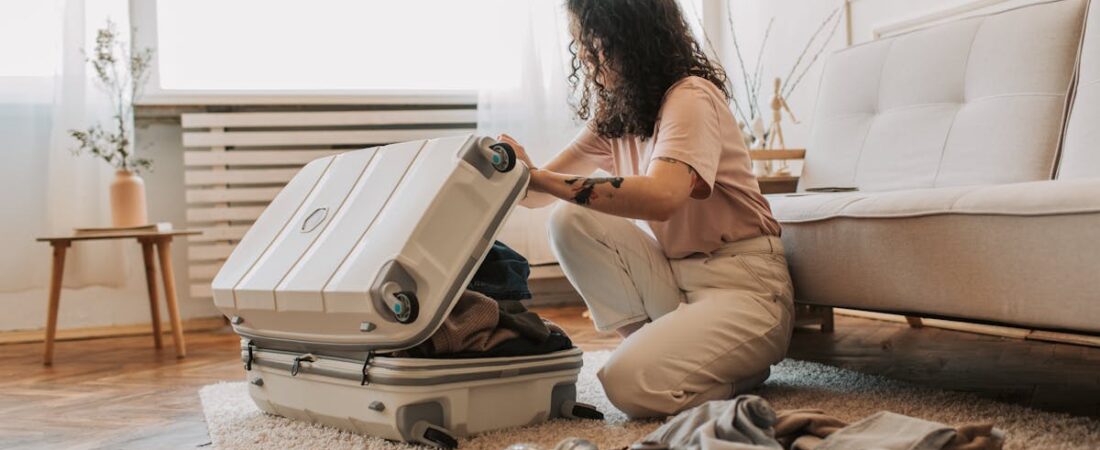
Pack for repeatable days: laundry, groceries, sleep, charging, weather shifts, and neighborhood errands. That mindset matters more than any exact packing list.
A one- to three-month stay sits in an annoying middle ground. It is too long to pack like a weekend trip and too short to justify hauling your whole life with you. If you get the balance wrong, you feel it quickly.
Apartment stays also expose every bad packing decision. You are more likely to cook a little, wash clothes regularly, spread your stuff across one room, and deal with the same small inconveniences over and over. The best things to pack are usually the ones that make ordinary days easier, not the ones that seem clever before departure.
Think in systems, not item counts
The better packing question is not “how many shirts?” It is “can I comfortably repeat the next seven days?” Think clothing, medication, charging, laundry, documents, and a few basic comforts. If those systems work, exact item totals matter a lot less.
That framing keeps you from solving the wrong problem. People start piling items into the bag because they are trying to prepare for every possible version of the trip. But longer apartment travel is mostly made of regular days: getting dressed, buying groceries, walking the neighborhood, charging devices, sleeping reasonably well, and reacting to weather that changed faster than the forecast suggested. Pack for those days first. The weird one-off problem is usually easier to buy or borrow your way through than to carry for months just in case.
Clothing should survive repetition
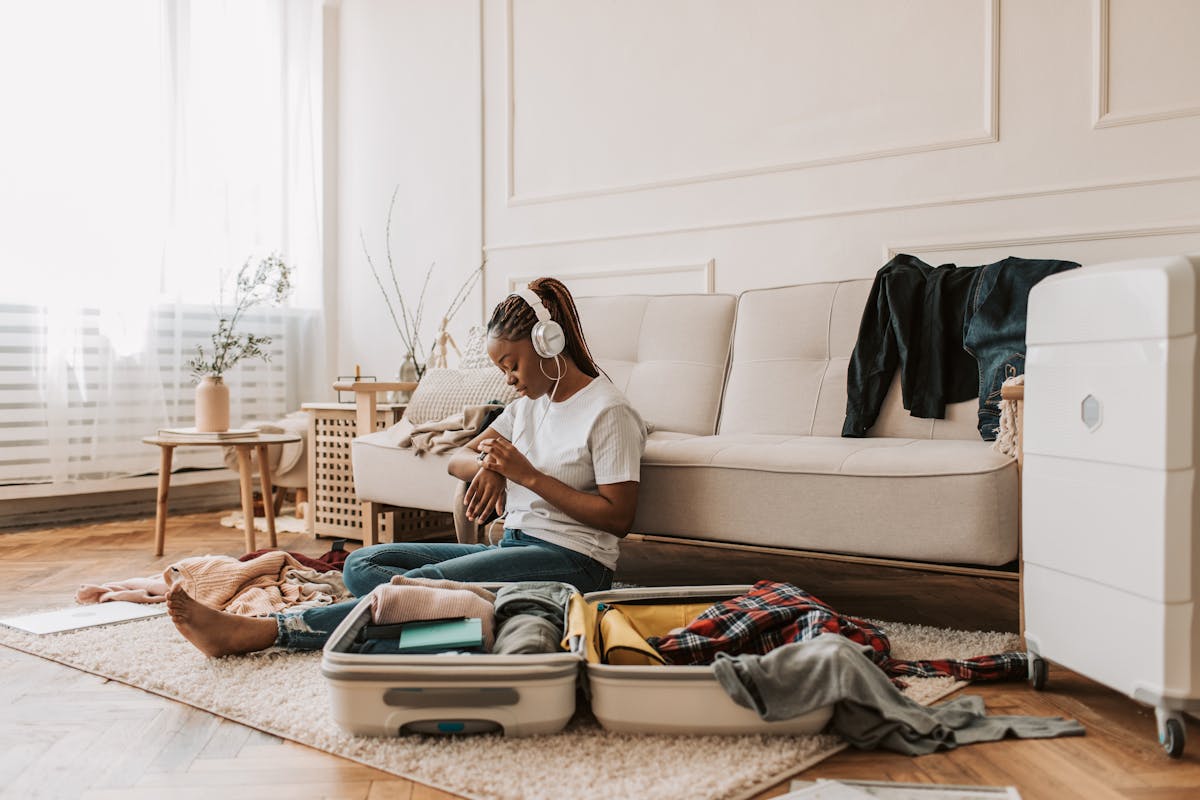
Apartment travel rewards easy-to-repeat clothing more than airport-outfit fantasy. Layers matter. Laundry rhythm matters. Shoes that can handle real walking matter. A small set of clothes that work well together beats a larger set built around separate ideas of who you might become overseas.
A good clothing setup for this kind of stay usually looks a little boring, and that is fine. Think enough tops and underwear for about a week, a couple pairs of bottoms you actually reach for, sleepwear, socks that work with your main shoes, and one or two layers for cool evenings or overly air-conditioned trains and buses. You are not trying to win a packing contest. You are trying to make getting dressed easy on day eighteen.
If you will have laundry access, either in the apartment, in the building, or at a nearby laundromat, let that fact reduce what you carry. If laundry is uncertain, bring a little more of the items you burn through fastest, especially underwear and socks. Those are cheap insurance against annoying gaps in the washing schedule. Extra jeans, fourth-pair shoes, or three dressier “maybe” outfits usually are not.
- Pack colors and fabrics that work together without thought
- Favor layers over bulky single-purpose items
- Bring shoes you have already walked in for hours
- Assume you will repeat outfits, because you will
- Leave room for one local purchase if the weather surprises you
Pack around your laundry reality
Longer apartment stays become much easier when you know how clothing gets clean. That sounds obvious, but people often pack first and think about laundry second. Reverse that. If the apartment listing shows a washer, great, but do not assume it is fast, intuitive, or generous in capacity. Some apartment machines are tiny, some take forever, and some leave clothes damp enough that drying space matters more than the wash itself.
This is where a few small items can earn their keep. A sink stopper, a short travel clothesline, or a couple of lightweight clips can help when you need to wash a shirt or underwear between larger loads. You do not need to build a camping-laundry system. You just want enough flexibility that a delayed wash day does not become a clothing crisis. If the stay is closer to three months than one, that little bit of laundry logic pays off quickly.
Shoes are a volume problem and a life problem
Shoes take space fast, so they need to earn it. For most apartment stays, one primary walking pair and one secondary pair are enough. The primary pair should handle long neighborhood days, transit, and uneven sidewalks without making your feet miserable. The secondary pair can be lighter, nicer, or more weather-specific depending on the trip. Anything beyond that should answer a very clear need.
If you know you will be hiking, attending formal events, or dealing with heavy rain, then yes, your shoe plan changes. But most people overpack shoes because they are imagining different versions of themselves instead of the actual trip. One dependable pair you trust beats two pairs you are still trying to break in. Apartment travel has a way of exposing bad footwear because you are not just sightseeing for two afternoons. You are living there.
Your apartment changes the equation
If you have a washer, a decent sink, or space to air-dry clothing, you can pack lighter. If the apartment is tiny, under-equipped, or awkwardly laid out, your bag needs to help more. A couple of compact organizers can matter a lot because the room itself may not do much for you.
This is why packing cubes and small pouches can be more useful on longer stays than on short trips. In a hotel, you can get away with a bit of mess because you are not really settling in. In an apartment, your bag and the room have to function together for weeks. If there is one chair, almost no drawer space, and a kitchen counter already crowded with random appliances, your own organization is what stops the place from feeling cluttered by day four.
Think about what you will want immediate access to once you arrive: sleep gear, toiletries, chargers, medications, and a change of clothes. If those are easy to find, the apartment starts feeling usable faster. If they are buried under everything else, arrival feels more chaotic than it needs to.
Bring the comfort items that actually earn space
Longer stays are where small comforts prove themselves. Maybe it is a sleep mask that actually works, a medication pouch you trust, a compact coffee setup, or one sweatshirt that makes a chilly apartment feel less bleak. The point is not indulgence. It is being honest about which items make daily life better often enough to earn the space.
The best test is frequency. If you use an item four or five days a week at home, it probably deserves real consideration. If you mostly like the idea of using it while traveling, be skeptical. Apartment travel makes that difference obvious fast. A thin packable tote for groceries or laundry is often genuinely useful. A complicated gadget that solves a problem you have never actually had usually is not.
Comfort items are also where people can sensibly personalize without blowing up the whole bag. One pillowcase you like, one mug-sized coffee setup, one small candle-free room-freshening option, one notebook, one collapsible tote, one pair of house socks. The exact item matters less than the honesty behind it. Bring the few things that make ordinary evenings feel easier, not a second suitcase of aspirational coziness.
Do not ignore the admin layer
Packing lists love to focus on clothes and gadgets, but longer stays also need admin support: document copies, medication logic, charging gear, backup payment access, and a place for the scraps of paper and receipts that accumulate once the trip becomes normal life.
This is the category that saves you when something small goes wrong. Keep your passport, primary payment cards, backup card, insurance details, transit confirmations, and prescription information in a system you can explain in one sentence. If your setup requires you to remember that one paper is in a shoe and another is in the laptop sleeve and a third is in the side pocket “for safety,” it is not a system. It is future confusion.
It also helps to pack one plain folder or zip pouch for the paper clutter longer stays create. Apartment check-in instructions, train tickets, laundromat change, receipts for cash-heavy places, and local SIM packaging all have a way of multiplying. A dedicated place for that mess keeps it from spreading across tables and disappearing at the worst moment.
Toiletries and medication should be boringly dependable
For a stay this length, toiletries sit in an awkward middle. You do not want to haul a giant personal-care warehouse across the ocean, but you also do not want to spend your first evening jet-lagged and hunting for contact solution or the one skin product that keeps your face from revolting. Bring enough of the essentials to cover arrival plus a buffer, especially for anything brand-specific or medically important.
Medication deserves more seriousness than the average packing list gives it. Bring enough for the full stay if you realistically can, plus a little margin for delays. Keep it in original packaging when appropriate, carry the most important medication in your personal item, and make sure you know the generic names if you ever need help replacing something locally. The goal here is not paranoia. It is reducing the odds that a routine health need turns into an international scavenger hunt.
A practical apartment-stay packing structure
- Clothing that works in repeatable combinations for about a week
- One dependable outer layer and any truly necessary weather gear
- Walking-friendly shoes you already trust, plus one secondary pair
- Medication, document, and payment systems you can find half-asleep
- Compact charging and power gear that covers your nightly routine
- Basic toiletries and arrival-day essentials in your personal item
- A few comfort items that meaningfully improve daily life
- Enough organization to keep a small apartment from turning chaotic
- One foldable tote or bag for groceries, laundry, or overflow errands
What to keep in your personal item, not the main bag
On a trip this long, the personal item matters almost as much as the main suitcase or backpack because it protects your first 24 hours if anything gets delayed. Think documents, medication, chargers, a toothbrush, one clothing change if needed, basic toiletries, and whatever you need to sleep or function on arrival. If your checked bag goes wandering, you want the problem to be inconvenient, not destabilizing.
This also makes apartment arrival smoother. You can get inside, shower, charge your phone, take your meds, and sleep without tearing through the entire main bag. On the first night, when you are tired and probably a little disoriented, that kind of easy access feels bigger than it sounds.
Pack for maintenance, not just arrival
The first few days are easy to imagine. The third week is harder. That is where good packing shows up. Can you keep the place tidy? Can you do laundry without hating the process? Can you find your meds and cables quickly? Can you handle a weather swing without buying a bunch of emergency junk?
Try a simple thought experiment before zipping the bag. Picture an ordinary Tuesday abroad. You wake up, get dressed, make coffee or tea, head out for errands, come back with groceries, charge devices, do a small wash load, and notice the forecast changed for tomorrow. Does your packing setup support that day without much friction? If yes, you are close. If not, the answer usually is not more stuff. It is better selection and better access.
If your bag can handle those maintenance moments, you packed well. That matters a lot more than whether your airport setup looked beautifully optimized.
For apartment stays, add the right adapter before packing extra gadgets. This travel power adapters guide explains when a universal adapter is enough and when a simple backup plug is smarter.