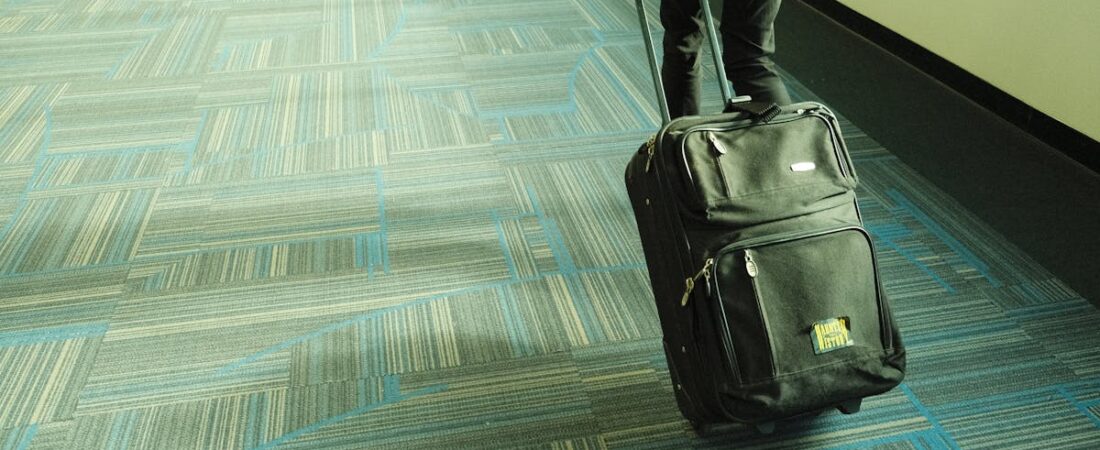
For longer travel, the right bag is the one that still makes sense on day twenty-two, in apartments, grocery runs, laundry days, and awkward staircases, not just in the airport.
Luggage advice gets strange pretty quickly because so much of it is built for short vacations, frequent work trips, or minimalist one-upmanship. Long-stay travel is different. You need enough structure for ordinary life, but not so much bag that the bag becomes its own recurring hassle.
It helps to think about luggage less as part of your travel personality and more as household equipment you happen to move through airports. Is it easy to pull, lift, and stash? Can you unpack without taking over the whole room? Can you live out of it for a while without the apartment turning into piles of clothes, chargers, and receipts? Those questions matter a lot more than whether the bag fits the right travel archetype.
Start with how the trip will actually move
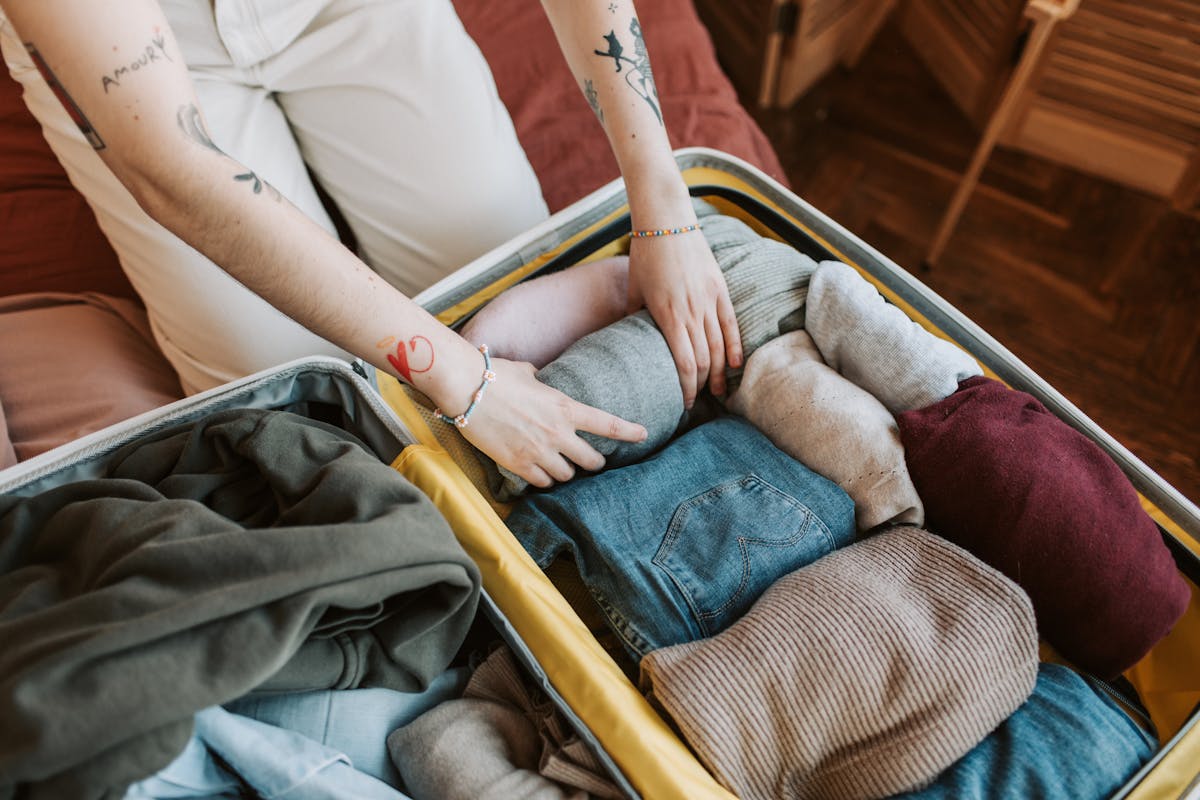
Before you compare materials, wheels, or compression features, map the trip honestly. Are you going to one apartment for six weeks with only airport-to-car-to-building transfers? A medium or large roller may be fine. Are you changing cities every seven to ten days, taking trains, and walking the last stretch to rentals? A more compact setup starts looking smarter quickly. The movement pattern should decide the bag category more than any product description.
This is where people get fooled by images of smooth terminals and tidy hotel lobbies. Long-stay trips usually include less glamorous moments: dragging a bag over cracked sidewalks, lifting it into a train rack, getting buzzed into a building with no elevator, waiting outside a rental because check-in is delayed, or juggling groceries and luggage at the same time on arrival day. A bag that only feels great on polished airport floors is not really doing the job.
A useful shortcut is to count your likely friction points. Stairs? Uneven pavement? Tight regional train storage? Tiny apartment entryways? Frequent transfers? Every yes pushes you toward lighter, simpler, and easier to lift. Fewer friction points give you more freedom to prioritize capacity.
Choose the size for your stay rhythm, not your anxiety
Longer travel makes people want to compensate with volume. The thought process is understandable: if I will be gone for months, I should probably bring more. But length of stay does not always scale neatly with bag size because laundry, local shopping, and routine repetition take over. A giant suitcase often reflects anxiety about edge cases more than real need.
Instead of asking whether a bag can hold everything you might want, ask whether it can hold what you will actually maintain. You are going to wear the same shoes repeatedly, wash clothes, recharge the same devices, and use the same toiletries on rotation. If the bag gets so large that it is hard to lift into a car trunk, drag up stairs, or store in a small bedroom, the extra theoretical capacity may cost more than it gives back.
- One-base stay with easy transfers: a medium checked roller can make sense
- Multi-city stays with trains or stairs: smaller roller or travel backpack usually wins
- Trips where you need work gear plus normal clothing: choose structure and access before maximum volume
- Trips with easy shopping access: leave some room instead of pre-packing every contingency
If you have ever looked at your packed suitcase and thought, I can deal with this as long as nobody makes me carry it very far, take that feeling seriously. That is usually the clearest sign that you packed for reassurance, not for the trip you are actually taking.
Roller or backpack is mostly a route question
People love to turn this into an identity debate, but the better answer is simpler. Rollers are great when surfaces are decent and you do not have to carry the bag for long. Backpacks are great when the route itself is unpredictable. Neither is morally superior. They just fail in different ways.
A roller works well for airport transfers, paved sidewalks, rideshares, and apartment stays where the bag mostly rests in one place after arrival. It also gives you more obvious organization and easier access for many packing styles. The downside shows up on stairs, old sidewalks, gravel, broken curbs, and transit days where you keep lifting instead of rolling.
A travel backpack helps when you have to stay mobile through awkward environments, but it can become its own form of punishment if it is overpacked or badly shaped for your frame. It also tends to hide clutter better, which sounds nice until you are kneeling on the apartment floor looking for one cable buried under five soft layers.
If you are torn, do not choose based on which style feels more serious or adventurous. Choose based on what the ugliest transit day will ask your body to do.
Apartment living changes bag priorities
On a longer stay, your bag becomes part of the room. Can it open without swallowing all the floor space? Can you access the things you need most without fully exploding it? Does it let you separate laundry, daily-use gear, and documents without constant reshuffling? These boring questions matter a lot once the trip stops feeling like transit and starts feeling like normal life somewhere else.
Small rentals expose bad bag design fast. A clamshell that needs a huge clear footprint gets annoying in a studio where the only open space is between the bed and the wall. A soft duffel with no internal logic turns into a heap by the second week. A bag with a few genuinely useful compartments, decent structure, and easy top access can make a temporary place feel much more manageable, even when the apartment itself is a little awkward.
Think about the first ten minutes after arrival. You want to grab toiletries, chargers, medications, sleep gear, and maybe a clean change of clothes without pulling everything apart. The easier that is, the faster the place starts feeling functional.
What to value most
- Easy movement through real-world transit and sidewalks
- Enough structure to keep the inside from becoming chaos
- Practical access to important items
- A size you can actually lift, store, and live with once you arrive
- Compatibility with a smaller personal-item or day bag
- Handles, straps, and wheels that feel dependable under a realistic load
Durability still matters, of course, but practical durability is not just about whether the shell survives baggage handling. It is also about whether the zippers, handle, corners, and wheels keep behaving when the bag is packed the way you actually travel, not the way a showroom demo suggests.
What people overvalue
People overvalue prestige, theoretical capacity, and how travel-worthy a bag looks online. A bag that photographs well but is annoying in a third-floor walk-up is not helping you. A giant shell with no internal logic is not helping you either. Neither is a hyper-technical bag full of features you will never use once you are settled.
They also overvalue buying for a fantasy future version of themselves. Maybe you imagine you will need formal clothes twice a week, a full camera setup, or five different weather contingencies. Sometimes those needs are real. Often they are just stress dressed up as preparation. Long-stay packing gets better when you buy luggage for the likely trip, not the most demanding possible version of it.
Wheels, handles, and access matter more than fancy materials
Marketing loves shell materials because they are easy to compare on a product page. In practice, bad wheels and an annoying handle will sour you on the bag long before you start caring about the polymer story. For longer travel, movement quality matters. The bag should roll straight, feel stable, and not wobble like it is already tired. The handle should lock where you need it and not make you hunch your shoulders every time you move.
Access matters too. If the main compartment is a black hole and the exterior pockets are useless, the bag will create repeated friction. Good luggage lets you reach the obvious things quickly and keep the apartment setup from becoming a scavenger hunt.
You do not need to become a luggage engineer here. Just pay attention to the parts you will touch constantly: wheels, handle, zippers, carry handles, and the main opening layout. Those are the parts you live with.
Pair the big bag with a smarter small bag
A lot of luggage problems are really two-bag problems. The main bag gets blamed for issues that actually start with a bad personal-item setup. Your smaller bag should cover the essentials you need during transit and for the first day or so: documents, medications, charging gear, one clothing change if needed, and anything that would be a real headache if your checked bag went wandering.
It also helps if that second bag can keep working after arrival. A small backpack or tote that handles groceries, train snacks, laundry runs, or a café work session is more useful than an awkward personal item that only makes sense on flights. The combo should work as a system: one main bag for the bulk of the load, one smaller bag for fragile, important, and daily-use items.
- Main bag carries clothing, extra shoes, bulk toiletries, and less urgent gear
- Small bag carries documents, meds, electronics, wallet items, and first-night essentials
- After arrival, small bag becomes your neighborhood bag instead of dead travel weight
Two practical examples
Example one: you are spending six weeks in one city, working from an apartment, with only one outbound and one return flight. A medium roller plus a small backpack is probably reasonable. The roller can carry a week of repeatable clothes, one secondary pair of shoes, work gear, and a few apartment-comfort items without becoming a constant burden because you are not moving often.
Example two: you are doing two months across three cities, mostly by train, with apartment check-ins that may involve stairs and early arrivals. Here, a smaller roller or well-sized travel backpack plus a personal item is usually the safer choice. You will feel the difference every time you lift the bag onto transit, store it temporarily, or haul it down a block while waiting for check-in.
Same trip length, different movement pattern, different best answer. That is why generic luggage advice often fails.
A quick pre-buy checklist
- Can you lift the fully packed bag without drama?
- Can you imagine opening it in a small apartment without taking over the room?
- Does the route involve more rolling or more carrying?
- Will the smaller companion bag handle your first 24 hours if the main bag is delayed?
- Are you choosing extra size for real needs or for nerves?
- Would this bag still feel reasonable on a bad transit day?
The best bag usually feels slightly boring
That is not an insult. Good long-stay luggage usually feels a little boring, which is often exactly what you want. It rolls, opens, organizes, and then mostly disappears into the background. When you stop thinking about the bag after arrival, that is usually a good sign.
The real question is simple: does this luggage support the kind of travel life you are actually about to live? If yes, that matters more than whatever category label the brand put on it. Long-stay travel tends to reward bags that are steady, practical, and a bit unglamorous. Usually that is just another way of saying they work in real life.