Quick answer: Do not rely on one card, one phone, one login method, or one perfect banking app while you are abroad. Build a small access system before you leave: at least two payment methods from different issuers, a reachable U.S. number or other working verification path, backup codes or authenticator recovery, saved bank contact routes, transaction alerts you know how to verify safely, and enough emergency cash to buy time without panicking.
Money lockouts abroad usually do not begin with one dramatic failure. They begin with a few ordinary weak spots lining up at the worst possible moment. A debit card gets declined at a foreign ATM. The bank app asks for a text code on a U.S. number that is not receiving messages. The backup card is in the same wallet that just disappeared. A replacement card can only be mailed to your U.S. address. Then a fake fraud-alert text lands while you are tired, embarrassed, and trying to pay for a ride.
That is the mess we are trying to prevent. This guide is for Americans planning a one- to three-month stay abroad, a part-time base, or a retirement-minded trial run. It is not legal, tax, or financial advice. It is practical setup work so normal banking friction does not become the main event of your first month.
If you are building the wider foundation, start with the money access backup plan, then connect it to phone service for a one- to three-month stay and digital document organization. Those three things belong together. Your card, phone number, email, password manager, and document folder are all part of the same access system.
Related: A lockout plan works better when your money access, document copies, phone recovery, and emergency contacts are built as one system. Use How to Build a Simple Money-and-Documents Backup System Before a Longer Stay Abroad as the broader setup.
Why money gets blocked more easily abroad
Banks and card issuers are supposed to watch for unusual activity. That protection is useful when someone steals your card number. It can also be irritating when you are the unusual activity: a foreign ATM, a new IP address, a different device, a hotel Wi-Fi network, a purchase in a new currency, then three more attempts because the first one failed.
The harder part is identity verification. Modern accounts often assume you can prove who you are with a phone, app prompt, email account, passkey, authenticator code, password manager, previous device, mailing address, or physical card. At home, those pieces feel invisible because they usually work. Abroad, one missing piece can stop the whole chain.
The goal is not to avoid every fraud alert. You cannot control that. The goal is to make sure one blocked card or one unreachable code does not leave you unable to pay for food, lodging, medicine, transport, or the next safe place to sit down and think.
Carry more than one way to pay
For a longer stay, one debit card is not a plan. A sturdier setup is a primary debit card for ATM withdrawals, a backup debit card from a different bank or credit union, at least one credit card for hotels, deposits, flights, and emergencies, and a modest amount of arrival cash. If possible, keep one card separate from your daily wallet.
The different-issuer part matters. If both cards depend on the same bank login, one account freeze can knock out both. If one card network is not accepted, another may work. If an ATM eats a card, the spare should not be the next card you were about to slide into the same machine. This is not elaborate prepper behavior. It is the same basic redundancy you already use when you save a document in more than one place.
Before leaving, check each account for foreign transaction fees, ATM fees, daily withdrawal limits, card replacement rules, and travel-notice settings. Some issuers no longer ask for travel notices. Others still allow or recommend them. Either way, confirm your own account’s current policy instead of relying on an old travel tip.
Also make room in the budget for friction. Deposits, temporary lodging, clinic visits, phone setup, taxis, and replacement items can hit before you feel settled. The first-90-days budget guide is useful here. A blocked card is far less frightening when you have a separate emergency buffer instead of every dollar tied up in the first rental.
Fix two-factor authentication before the trip
Two-factor authentication is often where the real lockout happens. Many banks, credit cards, email accounts, insurance portals, payment apps, and password resets still depend on text messages, phone calls, app prompts, or trusted devices. If your U.S. number stops receiving codes abroad, or your only trusted device is stolen, a money problem can quickly become an account-recovery problem.
Make a list of the accounts that control your money or identity: checking, savings, credit cards, brokerage accounts if you use them, email, password manager, phone carrier, cloud storage, insurance, Social Security, Medicare, and payment apps. For each account, answer four plain questions: how do I log in, how do I receive a code, how do I recover access if my phone is lost, and what happens if I am outside the United States?
Where the account allows it, add backup methods while you are still calm and sitting at home. That may mean an authenticator app, backup codes, a second trusted number, a backup email, a hardware security key, a passkey on another device, or a trusted laptop that stays signed in. Google’s own account-recovery guidance is a useful reminder that lost-phone recovery may depend on options you set up beforehand, and that some recovery processes can take days. That is not something to discover while standing outside an ATM.
Be careful with SMS-only accounts. Sometimes a bank gives you no better option. If that is the case, keep your U.S. number alive in a way you understand, and test it. Do not casually cancel, park, or remove the number that your bank uses to decide whether you are you.
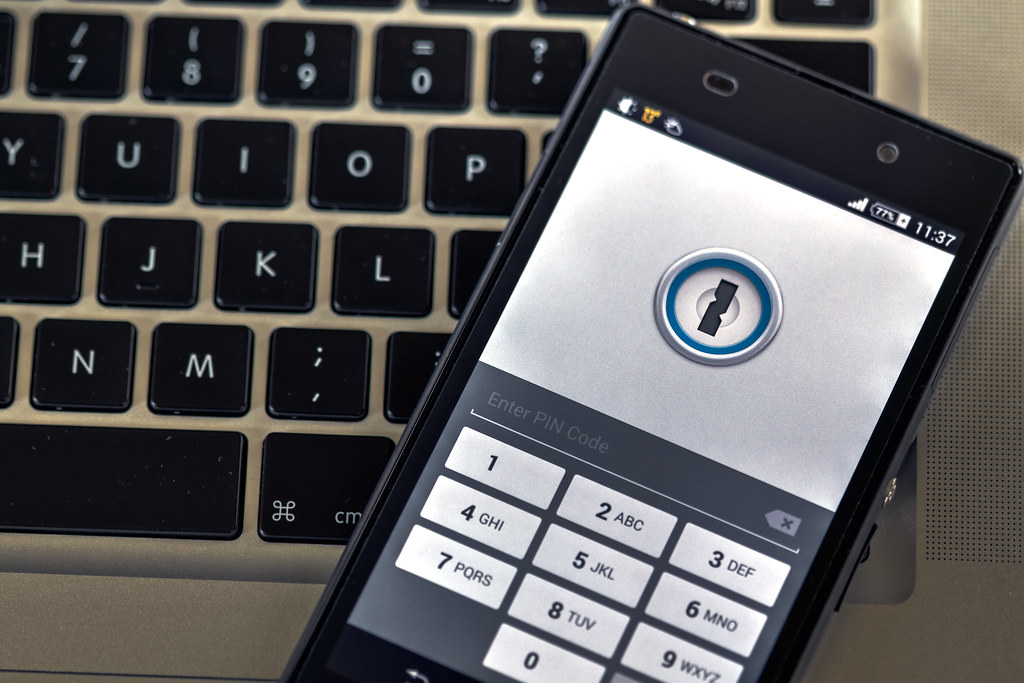
Do not make your password manager the only door
A password manager is still one of the better tools for this kind of life. CISA recommends long, random, unique passwords, and a password manager makes that realistic. Reused passwords are the thing that turns one stolen login into a wider financial mess.
But the password manager itself needs a recovery plan. Know the master password. Confirm how you would get in if your phone was gone, Face ID failed, or your laptop died. Save emergency recovery codes in a secure offline place. If your password manager offers an emergency-contact feature, set it up before the trip rather than during a crisis. The wrong setup is having every financial account protected by strong passwords that you can only reach from the phone you just lost.
Save bank contact routes that work from abroad
Before departure, save direct phone numbers for every bank and card issuer. Do not rely only on the number printed on the back of the card, because that card may be gone. Save the normal U.S. number, any international collect number the issuer provides, the fraud department route, and the secure-message path inside the app or website. Keep one copy in your digital documents folder and a minimal paper copy in your luggage.
Ask each issuer how emergency replacement actually works abroad. Visa and Mastercard both describe emergency card or cash services in some circumstances, but those services generally depend on issuer approval, eligibility, location, and card type. Treat card-network help as a useful channel, not a magic promise. The practical question is: if this card disappears in Mexico, Portugal, Thailand, or wherever you are going, what happens next?
Then solve the mailing-address problem. If a replacement card goes to your U.S. address, who receives it? Can they forward it securely? Will the issuer ship internationally? Is there a reliable address abroad for a one- to three-month stay, or would that create more risk? You do not need a fancy system, but you do need an answer before the card is missing.
Use alerts without letting scammers steer you
Transaction alerts are worth turning on. Push notifications, email alerts, and low-dollar transaction alerts can help you notice a problem quickly. Prompt reporting matters. Card network policies and U.S. consumer protection rules generally place a lot of weight on fast action and reasonable care, though the details depend on the account, card type, timing, and facts. If something looks wrong, contact the financial institution immediately through a route you verified yourself.
The catch is that fraud alerts train you to react quickly. Scammers know this. The FTC warns that phishing messages often impersonate banks or card companies, claim suspicious activity, and push people to confirm personal or financial information through links or attachments. Abroad, those messages can feel more believable because you really are making unusual transactions.
Use one rule: when money is involved, do not click links from texts or emails. Open the official app yourself, type the website yourself, or call a number you saved before the trip. If a message says your account is locked, assume it might be fake until you verify it through a route you chose, not the route the message handed you.
Test the system while you are still home
The week before departure is the time to break things gently. Log in to every important account from the phone and laptop you plan to carry. Restart the devices and confirm the password manager still opens. Check the authenticator app. Confirm backup codes are saved somewhere secure. Confirm email recovery does not depend only on the phone you might lose.
Do a few small money tests too. Use each card for a normal purchase. Review ATM and transfer limits. If you plan to move money between accounts, make a small test transfer. If you use payment apps to reimburse family or pay bills, confirm they still work on the device you will take. If your bank has card lock and unlock controls, find them before you are trying to do it from a café with weak Wi-Fi.
After arrival, test in a controlled way before you are desperate. Use an ATM in a safe location during business hours. Make a small card purchase. Confirm the alert arrives. Confirm you can log in on local Wi-Fi and mobile data. This belongs beside the first-day checks for apartment Wi-Fi, phone signal, water, locks, and neighborhood basics. The first-24-hours apartment checklist is a good place to connect that habit.
If you are already locked out, slow down first
If the lockout happens anyway, your first job is not to solve everything in five minutes. Your first job is to stop making the lockout worse. Repeated failed logins, repeated ATM attempts, and rushed password resets can trigger more security holds.
- Step away from repeated attempts. Take a minute before trying the same card, password, or code again.
- Use the backup payment method. Pay for food, transport, or a safe place to sit with the backup card or emergency cash.
- Contact the institution through a verified route. Use the app, saved international number, secure message, or website you typed yourself.
- Explain the facts plainly. Say where you are, what transaction failed, what device you have, and which verification methods still work.
- Ask for the next practical option. Depending on the issuer, that might be a card unlock, temporary travel note, replacement card, emergency cash option, limit change, or alternate verification process.
- Stay suspicious of “fix your account” messages. A real lockout is exactly when fake help becomes tempting.
If you suspect identity theft rather than a simple travel block, shift into a broader response. The FTC’s identity theft guidance points consumers toward monitoring statements, checking credit reports, and reporting identity theft for help. If your passport, phone, and wallet are all gone, this is no longer just a banking problem; it is a documents, phone, money, and safety problem. The State Department’s travel planning guidance is a reminder to prepare emergency contacts and key information before departure, not after everything is missing.
A simple pre-departure checklist
- Carry two or more payment cards, preferably from different issuers.
- Store one card separately from your daily wallet.
- Keep small arrival cash and a realistic emergency buffer.
- Check foreign transaction fees, ATM fees, withdrawal limits, and travel-notice settings.
- Save bank, card, and fraud contact routes offline and on paper.
- Confirm how your U.S. number, authenticator app, backup codes, passkeys, or security keys will work abroad.
- Test password manager recovery and memorize the master password.
- Turn on transaction alerts, but commit to not clicking financial links in texts or emails.
- Understand replacement-card rules and your mailing plan.
- Update your document folder with non-sensitive emergency contact notes.
This is not glamorous travel planning. That is the point. Good money access should become boring background infrastructure, not the thing that decides whether your first week works.
Build the system before you leave. Test it once you arrive. Keep enough backup access that one blocked card is an inconvenience instead of a crisis. Then you can spend your energy on the parts of living abroad that actually deserve it: the neighborhood, the food, the healthcare setup, the language, the rhythm, and whether this place fits your real life.
Money access also depends on the base you choose. A good daily-life base keeps cash, cards, clinics, pharmacies, groceries, and backup lodging within a realistic recovery plan instead of scattering them across town.
Money access belongs in the city decision, not just the packing checklist. Before you shortlist a city for a month abroad, confirm that cards, cash, ATMs, backup accounts, and recovery options work from the neighborhoods you can actually rent.
Read next
Planning tool
Build the broader setup around money access
The First 90 Days Abroad System keeps money access, phone access, document backups, housing checks, and emergency contacts in one practical planning bundle.
References and further reading
- U.S. State Department: International Travel Checklist
- FTC: What To Know About Identity Theft
- FTC: Credit Freezes and Fraud Alerts
- FTC: How To Recognize and Avoid Phishing Scams
- CISA: Use Strong Passwords
- Google Account Help: Fix common issues with 2-Step Verification
- CFPB: Regulation E § 1005.6 — Liability of consumer for unauthorized transfers
- Visa: Travel with Visa / emergency card services
- Mastercard: Zero Liability Protection