
Quick answer: Treat your first 90 days abroad as a setup period, not as normal local life. Plan for temporary housing, deposits, taxis, phone setup, healthcare, prescription logistics, grocery mistakes, and an emergency buffer before you decide whether the destination really fits your long-term budget.
Budget numbers get more useful after the arrival fog clears. Pair this with the honeymoon-period test so you are judging the repeatable month, not just the first exciting week.
The first budgeting mistake many Americans make is comparing a settled local budget with their first month on the ground. It sounds reasonable until you land tired, pay for a hotel, take too many taxis, buy the wrong SIM plan, eat out because the apartment has one dull knife, and discover that the “cheap” rental needs a deposit, another payment, and a small pile of household basics.
That does not automatically mean the country is too expensive. It usually means you are not living like a settled local yet. You are living like a newcomer, and newcomers pay for friction.
This guide is for Americans trying to build a realistic first-90-days budget for a trial stay, part-time base, or retirement-minded move abroad. The point is not to scare you off. It is to catch the fantasy math before it becomes a cash crunch.
The first 90 days are not your final monthly budget
A stable local budget usually comes later, after you know where to shop, which neighborhoods suit you, how buses and taxis work, which clinics are trustworthy, how rent is negotiated, and which restaurants are normal weekly choices instead of emergency convenience. In the first 90 days, part of what you are buying is information.
For a cautious single person, I would split the money into three buckets: normal monthly living costs, setup costs, and emergency buffer. If your target settled budget is $1,800 per month, do not assume the first 90 days will neatly cost $5,400. A safer planning number might be $6,500 to $8,500, depending on the country, season, housing choice, health needs, and how much you can solve before arrival.
That range is broad on purpose. A healthy person in a lower-cost city with a month-to-month furnished apartment may settle in fairly cheaply. Someone arriving in high season, paying for ten hotel nights, needing private medical care, replacing luggage items, and handing over a two-month rental deposit can spend much more.
Before choosing the country, use the site’s broader country comparison framework. Before choosing the city, use the first-base decision guide. Your first-90-days budget is where that research meets real life.
Month one is the danger zone
The first month is where many budgets get bruised. You may pay for temporary lodging before signing a rental. You may overpay for airport transport because you do not yet know the bus route. You may eat near tourist zones because you are tired. You may buy cleaning supplies, towels, bedding, a power adapter, water, medicine, and kitchen basics in the same week.
If you are trying to live abroad on a modest income, month one should not be treated as proof of the destination’s true cost. Think of it as a controlled burn. You spend a little more, carefully, to avoid locking yourself into the wrong apartment, wrong neighborhood, or wrong medical setup.
A practical rule: if you can afford it, keep your first lodging flexible for at least seven to fourteen nights. That can cost more than grabbing the cheapest long-term apartment immediately. But it may save you from a three-month mistake with bad stairs, mold, noise, weak internet, poor heat, or a location that looks central on a map but feels difficult after dark.
For apartment-specific checks, pair this article with how to find a good apartment for a one- to three-month stay and what to verify in the first 24 hours.
Build the budget from categories, not vibes
Start with a simple worksheet. Put your expected monthly living budget on one line. Then add separate lines for every setup item that will not repeat every month. That separation matters. It keeps one expensive arrival month from convincing you, too early, that the whole destination is unaffordable.
- Temporary lodging: hotel, guesthouse, Airbnb, or short-stay apartment while you inspect neighborhoods.
- Move-in cash: first month, deposit, possible agency fee, utilities, cleaning, and small household items.
- Transportation setup: airport transfer, taxis while learning, transit card, intercity test trips, or occasional car rental.
- Food learning curve: eating out, buying pantry basics, finding cheaper markets, and replacing wrong purchases.
- Phone and internet: unlocked phone check, eSIM or SIM, data top-ups, backup roaming, and apartment internet verification.
- Healthcare and prescriptions: travel medical coverage, cash-pay clinic visits, labs, medication refills, and translation help.
- Admin and documents: copies, passport photos, translations, visa extensions, residency consults, bank/card problems, mailing documents, and the basics covered in the digital document organization guide.
- Emergency buffer: flight change, lost phone, deposit dispute, urgent hotel, stolen card, appliance failure, or medical surprise.
If that list feels a little annoying, good. It is better to see the mess on paper before you move than to discover it one transaction at a time.
Use ranges, then make them personal
For a modest first stay in many lower-cost or mid-cost destinations, temporary lodging might run roughly $35 to $120 per night. A furnished apartment move-in might require two to three months of rent in cash flow if the first month, deposit, and a fee are all due close together. Local transport setup might be only $50 to $150, or several hundred dollars if taxis and intercity trial trips start piling up.
Food is where people often underestimate the learning curve. You may eventually cook cheaply from local markets. But in the first month you may not know which market is fair, what brands taste right, how the stove works, or whether the apartment kitchen is actually usable. Someone who expects to spend $300 per month on food later might spend $450 to $700 in the first month without doing anything wildly irresponsible.
Phone setup may be a small line item, but it matters. If your U.S. phone is unlocked and eSIM-ready, you may spend very little. If you need backup roaming, a local SIM, data top-ups, or a cheap second phone, the number changes. The site’s phone service setup guide walks through that more carefully.
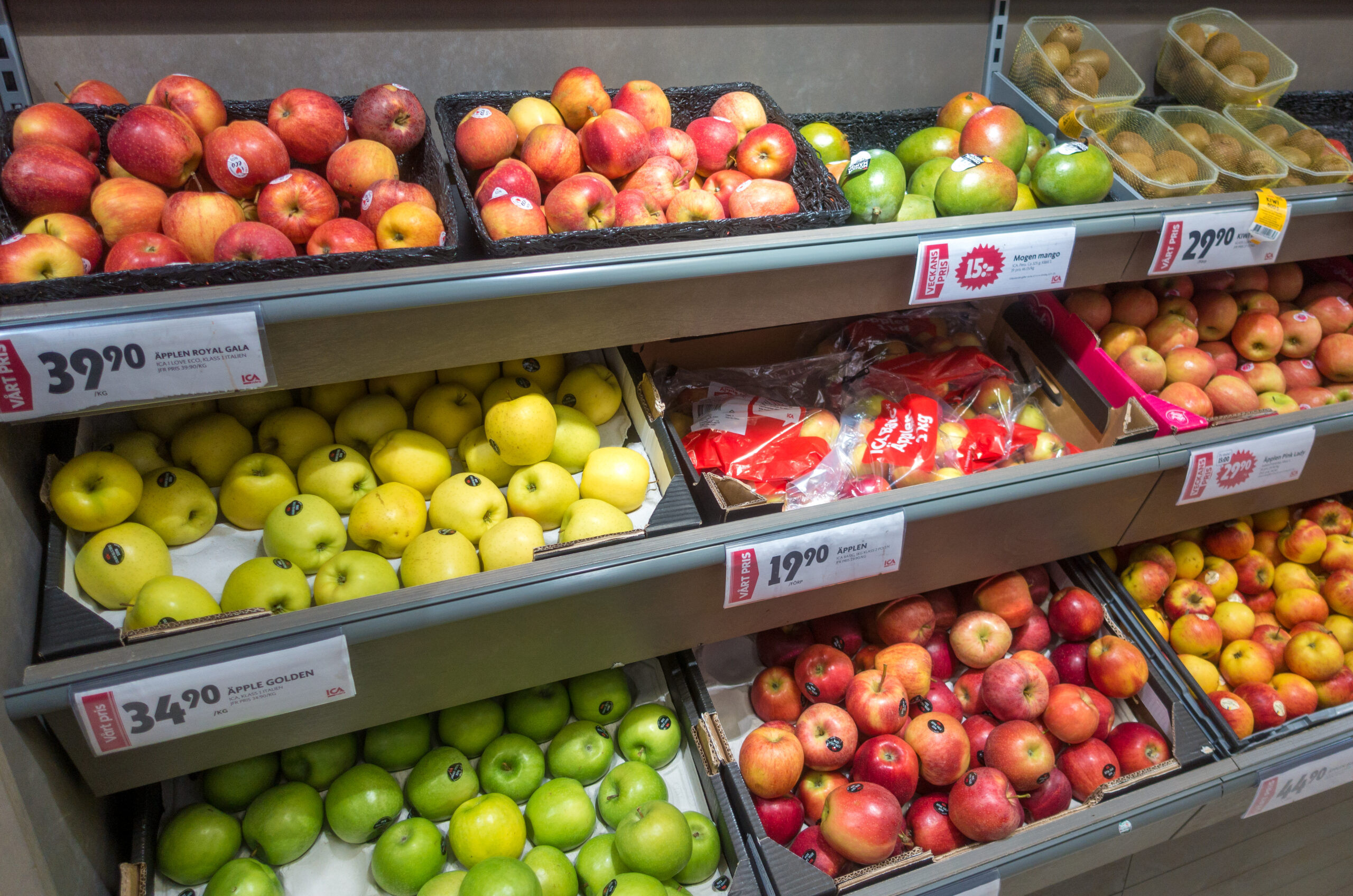
Fresh fruits and vegetables in 2020 01 by Frankie Fouganthin, licensed under CC BY-SA 4.0, via Wikimedia Commons.

Housing deposits can distort the whole first quarter
The biggest first-90-days surprise is often not the rent itself. It is the cash flow around getting housed. A $700 apartment may sound manageable until the landlord wants the first month plus a $700 deposit. If an agency fee applies, or if you must overlap temporary lodging while inspecting places, your first housing month can suddenly require $1,700 to $2,500 before you have even built a normal grocery routine.
This is why “I found a country where rent is $600” is not a complete budget. You need to know whether furnished rentals are common, whether utilities are included, whether cash payment is expected, whether deposits are routinely returned, what lease length is normal, and whether the low rent is available in the season you are arriving.
If your savings are tight, do not solve the problem by taking the cheapest apartment sight unseen for a long period. Solve it by shortening the first experiment, choosing a less seasonal arrival date, staying in a practical neighborhood first, and keeping your housing commitments reversible until the place proves itself.
Healthcare and prescriptions need their own line item
Healthcare is one of the places where Americans hear “cash-pay care abroad is cheaper” and stop planning too soon. It may be cheaper than U.S. prices. That does not mean it is free, immediate, English-speaking, or available in the exact city you picked.
Medicare generally has limited coverage outside the United States, and the exceptions are narrow. If you are Medicare-age or close to it, build your first-90-days budget as if routine foreign care, urgent private visits, labs, and prescriptions may be out-of-pocket unless you have a specific plan that says otherwise. Also check medication legality, availability, brand names, dosage equivalents, and documentation before you go.
A reasonable first-90-days healthcare line might include travel medical insurance or international coverage, one private doctor visit, a medication refill cushion, and money for translation or transport to a better clinic if the first option is not right. If you take essential prescriptions, read the prescription refill guide before you book. For the insurance-versus-cash decision, use the travel insurance vs. cash-pay healthcare article. None of this replaces medical advice; it is simply the budget line that keeps health needs from being treated as an afterthought.
Add a buffer that is boring enough to work
The emergency buffer is not glamorous. It is the money that keeps a problem from becoming a crisis. For many modest single-person trial stays, I would rather see at least one extra month of expected local living costs set aside before arrival. In practical terms, that might mean $1,500 to $4,000, depending on destination, health needs, return-flight cost, and housing risk.
That buffer is not for upgrading your apartment because the balcony is nicer. It is for a clinic visit, a flight change, a stolen phone, a deposit fight, a night in a hotel after a bad rental, or a family emergency back home. If using the buffer would leave you stranded, the move is not fully funded yet.
This is especially important for readers living on Social Security, pensions, part-time income, or savings that cannot be easily replaced. A country can be affordable and still be a poor choice if the first problem wipes out your safety margin. The $2,000 to $3,000 per month country guide is useful, but your first-90-days cash cushion still has to be personal.
When does local-level spending become realistic?
Local-level spending becomes more realistic when you have a repeatable routine. You know the grocery store that locals actually use. You know which bus line saves taxi money. You know the pharmacy that can handle your medication. You have a landlord who responds. You know whether your apartment needs heating, cooling, water delivery, or backup internet. You have stopped buying replacement items every week.
For some people, that happens around week six. For others, it takes the full 90 days. If language, mobility, health, or bureaucracy is difficult, it can take longer. There is no prize for pretending you adapted faster than you actually did.
A good sign is when your second month is clearly calmer than your first, and your third month has fewer surprise categories. If spending is still chaotic after 90 days, the issue may be the city, the apartment, the season, your routines, or the whole country fit.
Wonderlane, “Women shopping in traditional dress – tan Punjabi, red Saris, and blue Chubas (Tibetan dress) with striped apron, sidewalk in a public market, Pratik Photo Studio, man on phone, workers, Kathmandu, Nepal,” Flickr, Creative Commons Attribution 2.0 Generic (CC BY 2.0). Source: https://www.flickr.com/photos/71401718@N00/5498110067. License: https://creativecommons.org/licenses/by/2.0/.
Mistakes to avoid in the first 90 days
- Using YouTube rent as your budget: a single apartment tour does not include deposits, seasonality, utilities, furniture gaps, or neighborhood tradeoffs.
- Arriving in peak season with off-season expectations: beach towns, popular capitals, and expat hotspots can change dramatically by month.
- Skipping temporary lodging: the cheapest long booking can become expensive if the apartment is wrong.
- Forgetting return-flight money: a trial stay should include a clean exit plan.
- Assuming healthcare will be simple: verify clinics, prescriptions, insurance, and documentation before you need them.
- Comparing yourself to locals too soon: locals have family networks, language, long-term leases, known shops, and years of habit.
A simple first-90-days formula
Here is the clean version. Take your expected settled monthly budget and multiply it by three. Add temporary lodging overlap. Add likely move-in cash above normal rent. Add phone, transport, healthcare, prescription, document, and household setup costs. Then add an emergency buffer you will not touch unless something truly goes wrong.
If the total makes the move feel impossible, that is not failure. It is useful information. You can choose a shorter trial stay, a cheaper season, a simpler city, a more furnished rental, a stronger insurance plan, or a slower timeline. What you should not do is pretend your day-one spending will match someone who has lived there for five years.
The first 90 days abroad are not about winning the cheapest-life contest. They are about building a life that can repeat. Once the setup costs fade and your routines become ordinary, you can judge whether the destination is truly affordable for you. Until then, budget like a newcomer. That is the honest math.
Planning tool
Want the first-90-days budget as a working system?
The First 90 Days Abroad System includes the budget calculator, setup checklist, destination scorecard, apartment checks, and arrival-week worksheets in one place.
References and further reading
- U.S. Department of State, Traveler’s Checklist: https://travel.state.gov/content/travel/en/international-travel/before-you-go/travelers-checklist.html
- U.S. Department of State, Country Information Pages: https://travel.state.gov/content/travel/en/international-travel/International-Travel-Country-Information-Pages.html
- CDC Yellow Book, Preparing International Travelers: https://www.cdc.gov/yellow-book/hcp/preparing-international-travelers/index.html
- CDC Travelers’ Health, Traveling Abroad with Medicine: https://wwwnc.cdc.gov/travel/page/travel-abroad-with-medicine
- Medicare.gov, Travel outside the U.S.: https://www.medicare.gov/coverage/travel-outside-the-u.s.
- Consumer Financial Protection Bureau, Sending money abroad: https://www.consumerfinance.gov/consumer-tools/sending-money/
- Numbeo, Cost of Living: https://www.numbeo.com/cost-of-living/
- Expatistan, Cost of Living Index: https://www.expatistan.com/cost-of-living/index
Related: Your emergency buffer works better when your accounts still work. Read How to Avoid Getting Locked Out of Your Money Abroad before relying on one card or one phone.
Housing costs can change quickly when deposits, utilities, cleaning, electricity caps, or early-exit rules are vague. Use these first apartment questions before booking so the first-90-days budget is based on real terms.
For a city-specific example of why first-month numbers and settled-month numbers differ, see this Da Nang monthly budget example with $1,200, $1,800, and $2,500 planning bands.
For a city-specific example of why first-month numbers and settled-month numbers differ, see this Hanoi monthly budget example with $1,100, $1,700, and $2,400 planning bands.
For a city-specific example of why first-month numbers and settled-month numbers differ, see this Ho Chi Minh City monthly budget example with $1,200, $1,900, and $2,700 planning bands.
For a city-specific example of why first-month numbers and settled-month numbers differ, see this Valencia monthly budget example with $2,000, $2,600, and $3,200 planning bands.
For a city-specific example of why first-month numbers and settled-month numbers differ, see this Alicante monthly budget example with $1,800, $2,400, and $3,000 planning bands.