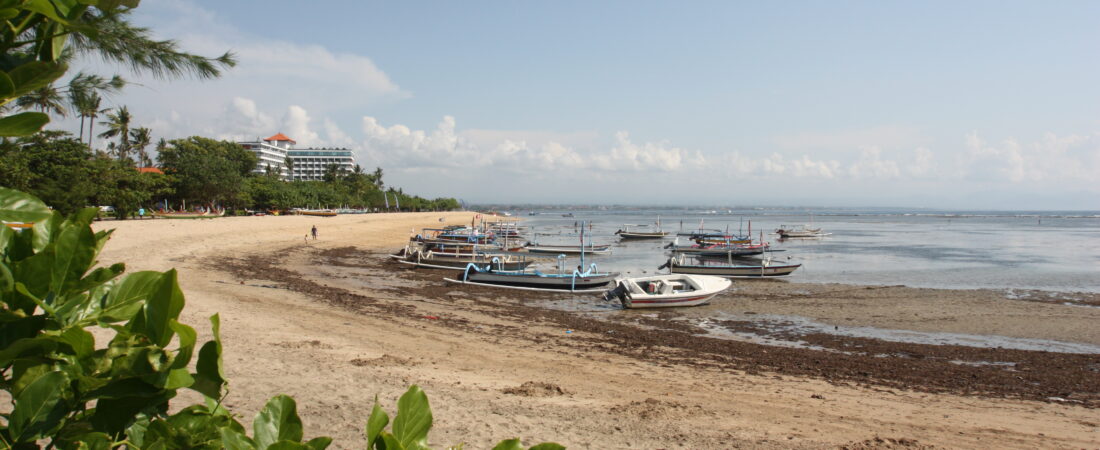
Sanur is the Bali base Americans should consider when they want a slower coastal routine without jumping straight into the busier Canggu, Seminyak, Kuta, or Ubud circuits. It has a beachfront path, cafes, hotels, villas, clinics nearby, easy access to Denpasar services, a calmer reputation, and enough visitor infrastructure to make a first month easier than a more remote island or village experiment.
But Sanur is still Bali. Traffic, visa timing, tourist-season pressure, housing standards, humidity, rainy-season movement, healthcare backup, scooter risk, and the gap between vacation comfort and normal life all matter. Sanur can be a good test base for the right person. It is not a magic workaround for Indonesia logistics.
Quick answer: Sanur can make sense for Americans who want a gentler Bali test base with a coastal walking path, cafes, private clinics nearby, furnished rentals, and a slower pace than Bali’s louder tourist zones. It is a weak fit if you need strong public transit, low traffic stress, simple long-stay permission, deep specialist healthcare, or a cheap local lifestyle from day one. For a solo test stay, plan roughly $1,500 to $3,800 a month depending on season, housing standard, transport, insurance, dining, visa costs, and medical cushion.
Who Sanur is best for
Sanur is best for Americans who want Bali with fewer nightlife and scene-driven pressures. It suits slower travelers, semi-retirees, couples, and remote workers who want beach access, cafes, yoga or walking routines, restaurants, pharmacies, clinics, and an easier first landing than a remote Indonesian island. It can feel more settled and less performative than trendier Bali areas.
It is also useful for people who want Denpasar and airport access without living in the middle of the busiest party zones. That does not mean Sanur is empty or cheap. It means the practical week can be calmer if you choose housing carefully and avoid assuming the beach path solves every errand.
Compare it in the dashboard: Sanur is now linked in the City Fit Dashboard, where you can compare it against Cebu City, Da Nang, Kuala Lumpur, Penang, Bangkok, Chiang Mai, Tbilisi, Chania, Split, Valletta/Sliema, and other possible first bases by budget, healthcare comfort, airport access, walkability, internet, stay-rule friction, and daily-life ease.
Monthly budget reality
Bali can be cheaper than many U.S. coastal areas, but Sanur is not priced like a hidden local town. Numbeo’s Bali page and LivingCost’s Bali estimates point to lower everyday costs than the United States, while practical Bali cost guides show a wide spread between modest local routines and villa-heavy expat comfort. For newcomers, the real swing factors are furnished housing, air conditioning, transport, imported habits, insurance, clinics, restaurants, and how often you move around the island.
Use these first-pass planning bands:
- Lean solo test: about $1,300 to $1,900 a month if you choose modest housing, avoid premium villa expectations, eat simply, use taxis selectively, and keep travel and wellness spending controlled.
- Comfortable solo stay: about $2,000 to $3,800 a month for a better apartment or small villa, stronger internet, more rides, restaurants, insurance, clinic cushion, coworking or gym, and fewer housing compromises.
- Comfortable couple stay: about $3,200 to $5,800 a month if you want a better villa, regular dining out, private healthcare planning, more taxis or drivers, and a buffer for visitors or island trips.
The cheap-Bali mistake is pricing a local room while expecting a quiet, bright, furnished place with fast internet, cooling, good water pressure, reliable access, and a safe transport routine. Price the actual unit you would book, then add electricity, laundry, mobile data, taxis or drivers, visas, Bali levy, insurance, clinic visits, and rainy-day convenience.

Housing and neighborhoods
Most first-timers should compare the beachside strip, quieter lanes inland from the beach, Sindhu, Semawang, Mertasari, and practical access toward Denpasar or Renon if medical and errands matter. Beach-adjacent housing is convenient and pleasant, but it can be more expensive, more tourist-shaped, and less normal than it looks from a short stay. Inland housing can be better value, but transport and walking comfort change quickly.
Ask boring housing questions before paying: internet speed and backup, air conditioning cost, power reliability, water pressure, dampness or mold, construction noise, road noise, scooter parking, flood or drainage issues, laundry, kitchen reality, and how you will get groceries without renting a scooter if you do not ride one confidently. In Bali, the right villa or apartment can make the month feel easy. The wrong one can make paradise feel like maintenance.
Healthcare and prescriptions
Sanur has access to clinics, pharmacies, dentists, and private medical options nearby, and Denpasar gives more support than a remote beach town. The U.S. Embassy in Indonesia maintains medical-assistance information, American Citizen Services, and a U.S. Consular Agency in Bali. Those are planning resources, not a promise that the U.S. government pays medical bills or that every facility will match U.S. expectations.
If you have a chronic condition, narrow medication, mobility issue, heart history, or specialist need, check before you make Sanur your base. Identify the clinic or hospital you would use, bring generic medication names, verify prescription availability, understand insurance reimbursement, and know when Singapore, Bangkok, Jakarta, or returning home would be the safer backup. Sanur can be comfortable for routine care. It should not be treated as a deep medical hub.
Healthcare planning shortcut: If Sanur is appealing but medical access is a deciding factor, the Medical Prep Abroad Kit is the worksheet version of the pre-trip health check: prescriptions, records, insurance questions, emergency contacts, and clinic backup.
Visa timing and arrival rules
For Americans, Indonesia is not a place to casually improvise a long stay. The official Indonesian eVisa portal is the source to check before booking, and its e-VOA information page describes a visitor visa for tourism and other short purposes with a 30-day stay. The same official portal offers visa tracking and extension services, while secondary Bali visa guides commonly explain the tourist visa-on-arrival pattern as 30 days with one 30-day extension for a maximum of 60 days.
Check the current rule close to travel, especially if your plan depends on two months rather than one. Also budget for Bali’s foreign tourist levy. The official Love Bali portal and FAQ list the levy at Rp 150,000 per person, roughly about $9 to $10 depending on exchange rates. Visa fees, levy payments, arrival-card requirements, passport validity, onward travel, and work restrictions should all be verified before you book nonrefundable housing.
Transport, traffic, and daily routine
Sanur is more walkable than many Bali areas along the beach path and certain local streets, but it is not a transit-first city. Your routine may involve walking, taxis, drivers, bicycles, or scooters. Scooter culture is normal in Bali, but it is also a serious risk if you are inexperienced, uninsured, or trying to copy local traffic habits without local skill.
Before choosing housing, test your ordinary loop: groceries, pharmacy, clinic, ATM, laundry, cafe or coworking spot, dinner, and the route home in rain or darkness. If your life requires frequent trips to Canggu, Ubud, Seminyak, or the airport, count time and stress, not just distance. Bali maps can make short routes look easier than they feel.
Safety and everyday comfort
The U.S. State Department’s Indonesia page, updated July 7, 2026, lists Indonesia at Level 2, exercise increased caution, because of risks including terrorism, civil unrest, and natural disasters, with stronger warnings for certain Papua provinces. Bali is not those Papua areas, but a Bali plan should still include earthquake, volcano, weather, traffic, petty theft, alcohol, ocean, and medical backup thinking.
For Sanur, the more likely daily issues are heat, humidity, rain, traffic, scooter accidents, uneven sidewalks, construction noise, tourist pricing, card and phone care, and housing surprises. Keep backup cards, document copies, phone recovery steps, medical notes, and emergency contacts. Also respect local law and custom: tourist visas are not work permits, and Bali has become stricter about visitor behavior, commercial activity, and cultural respect.
Money and documents backup: Before testing Bali, build a simple money-and-documents backup system so a phone, card, passport, or clinic problem does not turn a calm month into a scramble.
Who should avoid Sanur
Skip Sanur as a first base if you need strong public transit, cool weather, low humidity, easy long-stay permission, deep specialist healthcare, or an extremely cheap local routine from day one. Also be cautious if you dislike scooter-heavy roads, tropical rain, uneven sidewalks, or tourist-town pricing.
Sanur may also be wrong if you are trying to decide whether you love Indonesia as a whole. Bali is culturally and practically distinct, and Sanur is only one version of Bali. If your decision is really about Southeast Asia comfort, compare Sanur with Cebu City, Da Nang, Kuala Lumpur, Penang, Chiang Mai, and Bangkok before assuming one beach month answers the whole region.
Best way to test Sanur
Book one month, not a six-month fantasy. Spend the first week solving basic logistics: SIM or eSIM, groceries, pharmacy, clinic research, laundry, ATM, transport, and internet. Spend the second week repeating a normal weekday. Spend the third week testing nearby alternatives and routes. By week four, compare Sanur against at least two other Southeast Asia bases.
Those alternatives should include one urban-service base and one calmer coastal or smaller-city option. Cebu City may beat Sanur on English and urban services. Da Nang may offer a calmer city-beach rhythm for some readers. Kuala Lumpur may beat both on transit and infrastructure. Sanur should win because its slower Bali routine fits your ordinary week, not because Bali looked good on vacation.
Worksheet shortcut: If Sanur is one of several Southeast Asia bases on your shortlist, the Destination Shortlist Kit is the worksheet version of this decision. Use it to compare Sanur against two or three alternatives before you commit a longer stay.
Bottom line
Sanur is a strong Bali test base for Americans who want a slower coastal routine, cafes, beach walks, furnished rentals, private clinics nearby, and easier visitor infrastructure than a remote island or inland experiment. It is weaker for people who need low friction, strong transit, cool weather, deep healthcare, cheap housing, or simple permission to stay well beyond the normal visitor window.
If you can handle visa timing, Bali traffic, tropical weather, careful housing due diligence, and realistic healthcare planning, Sanur deserves a one-month test. If those are the exact things you are trying to escape, treat Sanur as a pleasant coastal visit and keep looking for a lower-friction base.
References
- U.S. State Department: Indonesia country information and travel advisory
- Indonesia Directorate General of Immigration: official eVisa portal
- Indonesia Directorate General of Immigration: e-VOA information
- U.S. Embassy and Consulates in Indonesia: American Citizen Services
- U.S. Consular Agency in Bali
- U.S. Embassy Indonesia: medical assistance
- CDC Travelers’ Health: Indonesia
- Love Bali official foreign tourist levy portal
- Love Bali FAQ
- Numbeo: Cost of Living in Bali
- LivingCost: Cost of Living in Bali
- Bali.com: Bali visa-on-arrival practical guide
Want to picture a normal week before you decide? Read the Sanur ordinary-week companion for repeatable coast walks, food, culture, and errands that complement this practical base guide.