Quick answer
Quick answer: Arequipa can be a rewarding place to test if you want a walkable historic core, clear Andean light, serious everyday food culture, and a city that has memorable sights without needing to become a nonstop vacation. Give it several normal mornings and one deliberately unglamorous afternoon. The useful question is whether the sun, altitude, walking, errands, and quieter rhythm still feel good after the white-stone center stops being new.
A scouting trip should be allowed to be enjoyable. In fact, that is the point: you are trying to learn whether the pleasures you notice as a visitor would still add up to a life you want. In Arequipa, the historic center, Santa Catalina, Yanahuara, a market stop, and a roof-level coffee can do that work—if you pair them with ordinary routes and honest notes.
Start with the historic center, then return at an ordinary hour
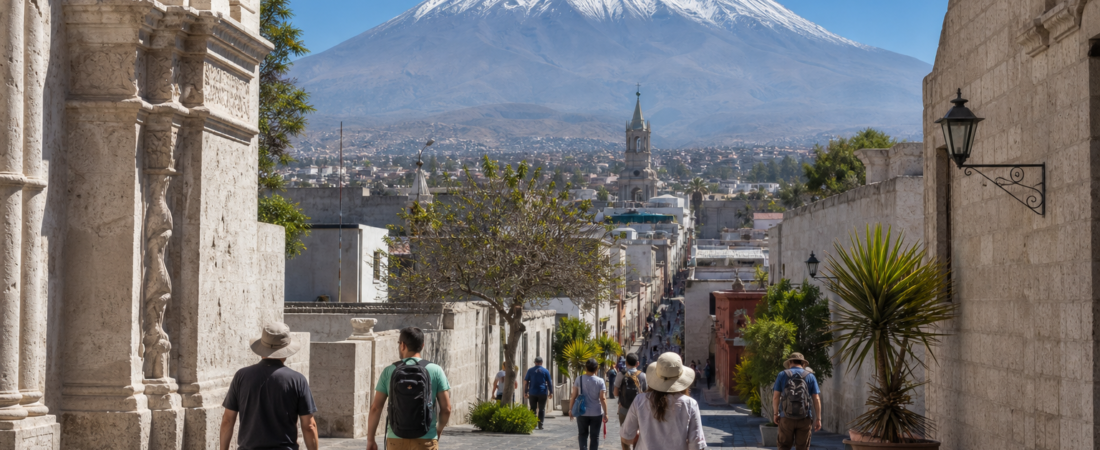
The Historic Centre of Arequipa is the obvious place to begin. Its pale volcanic-stone streets, plazas, churches, and views toward Misti make the city immediately legible. It is also a useful first test: walk it early, return when the streets are busier, and then walk back toward the place you might actually stay. Notice the paving, crossings, shade, traffic noise, and how the route feels when you are carrying water or groceries rather than taking photographs.
Peru Travel and UNESCO are useful starting points for current visitor context and the heritage setting. They cannot tell you whether a particular block will be your everyday comfort zone. That needs a repeat walk at your own pace.
Let Santa Catalina be the enjoyable half-day, not the whole verdict
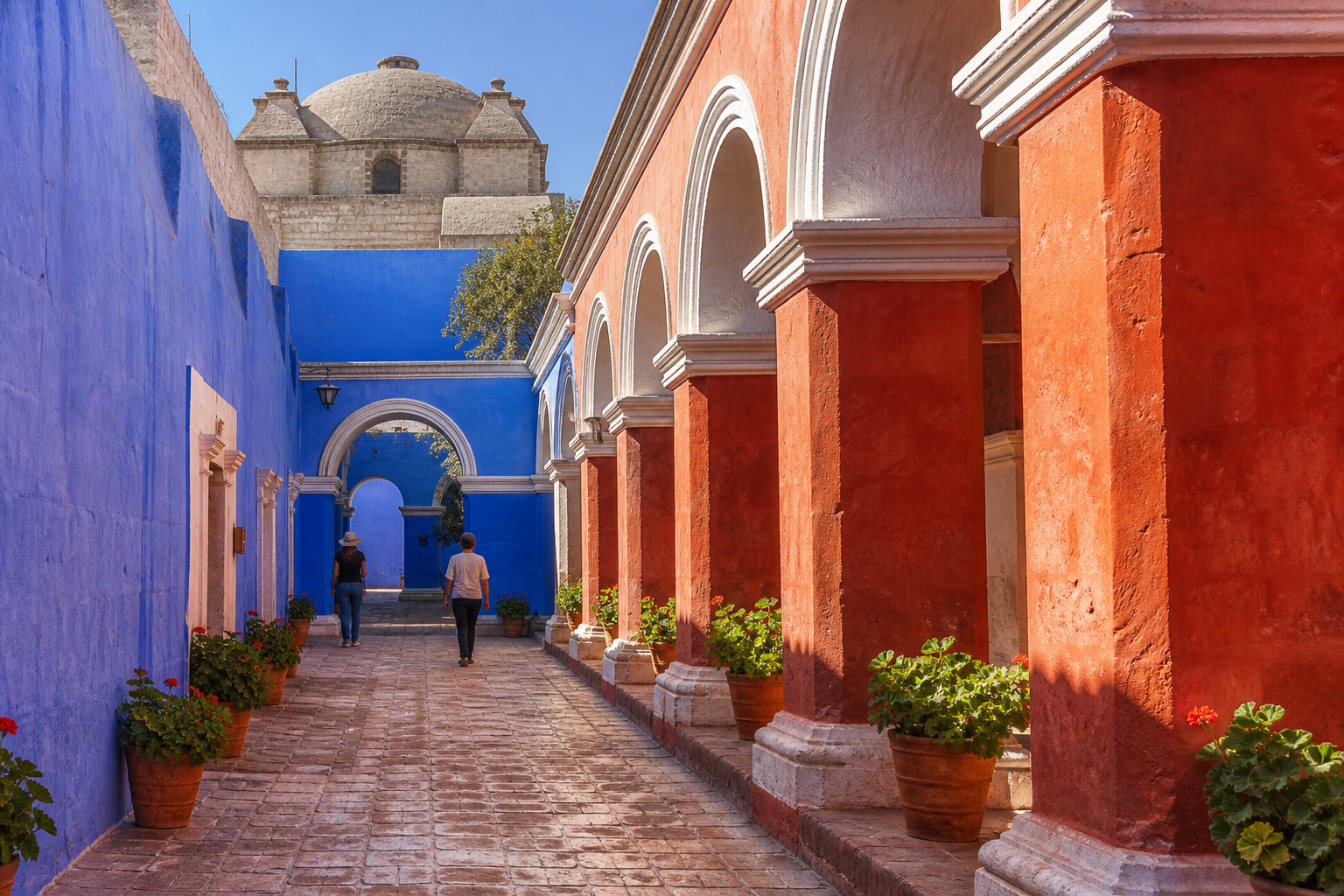
The Monastery of Santa Catalina is exactly the kind of semi-touristy stop a scouting trip should include: it is striking, easy to remember, and gives you a real reason to slow down. Its colored passages and white stone also show why Arequipa is visually distinct. Check the official Peru Travel page close to your visit for current details.
Use the visit to test something less romantic as well. Check the walk there from your lodging, the amount of midday sun, the price and ease of an ordinary lunch nearby, and whether you still have energy for a normal errand afterward. A place can be beautiful and still be a poor fit if every useful outing becomes a heat or stamina project.
Go to Yanahuara for the view—and to test your real walking radius
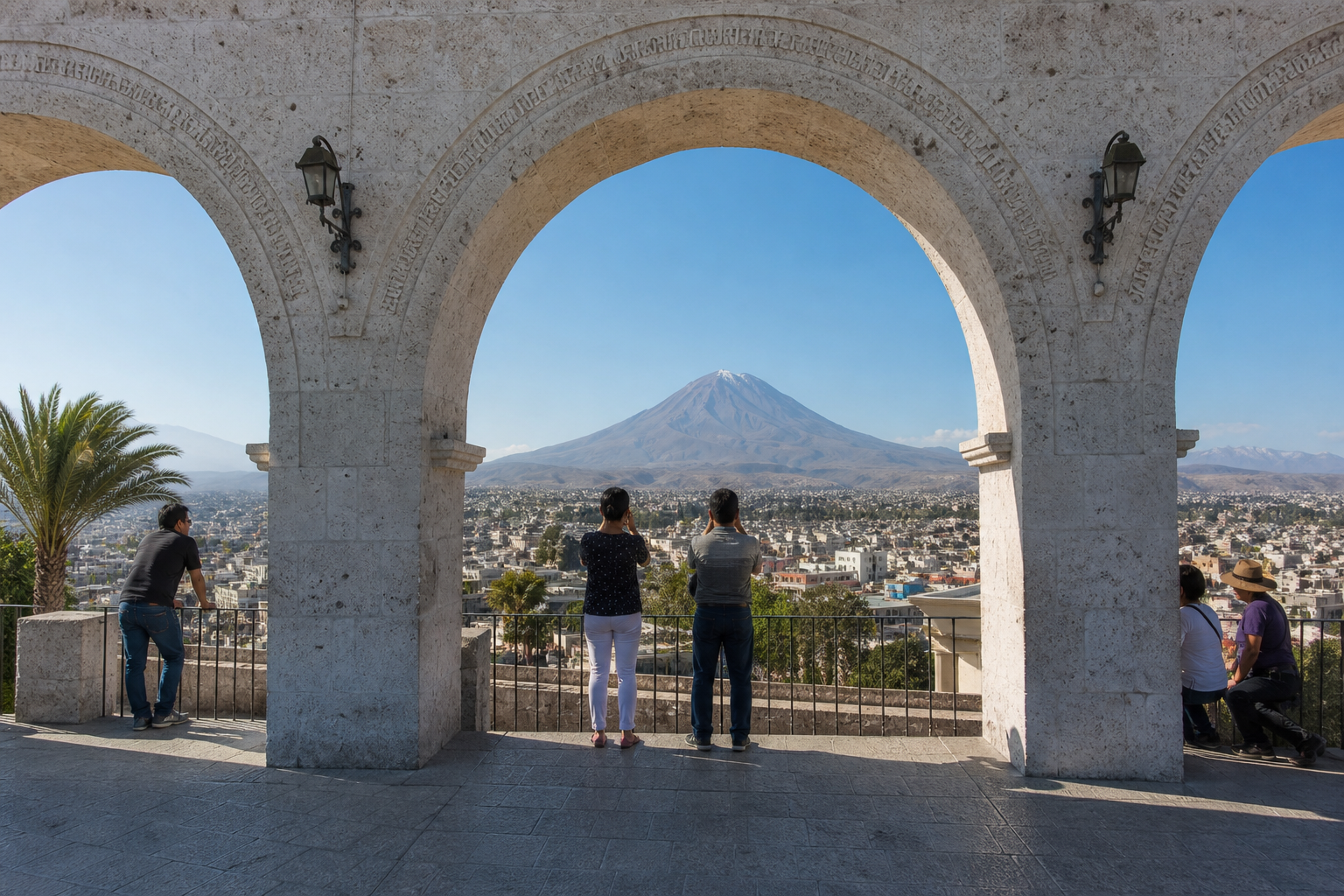
Yanahuara’s sillar-stone arches and Misti view are worth seeing. They also make a tidy reality check. Walk or use the same transport you would use on a normal day, then measure how the neighborhood feels when the viewpoint itself is no longer the purpose. Look for shade, local food options, the trip back after sunset, and the total effort involved.
Do not turn one attractive vista into a neighborhood ranking. The useful conclusion is narrower: does an uphill, sunny, scenic outing feel restorative to you, or like something you would rarely repeat?
Shop at San Camilo before you decide the food routine is easy

Mercado San Camilo adds the daily-life half of the article. A market visit can reveal more than a restaurant meal: what fresh food looks like, how crowded the aisles feel, whether you enjoy the sensory pace, and what it takes to bring a normal bag of groceries home.
Buy a few things you would realistically use. Then do the return trip at a normal time, not immediately after a sightseeing stop. If you are considering a longer stay, repeat the test near the actual rental as well; a central market is not automatically the market that will fit your ordinary week.
Give yourself one rooftop coffee and one purposely boring afternoon
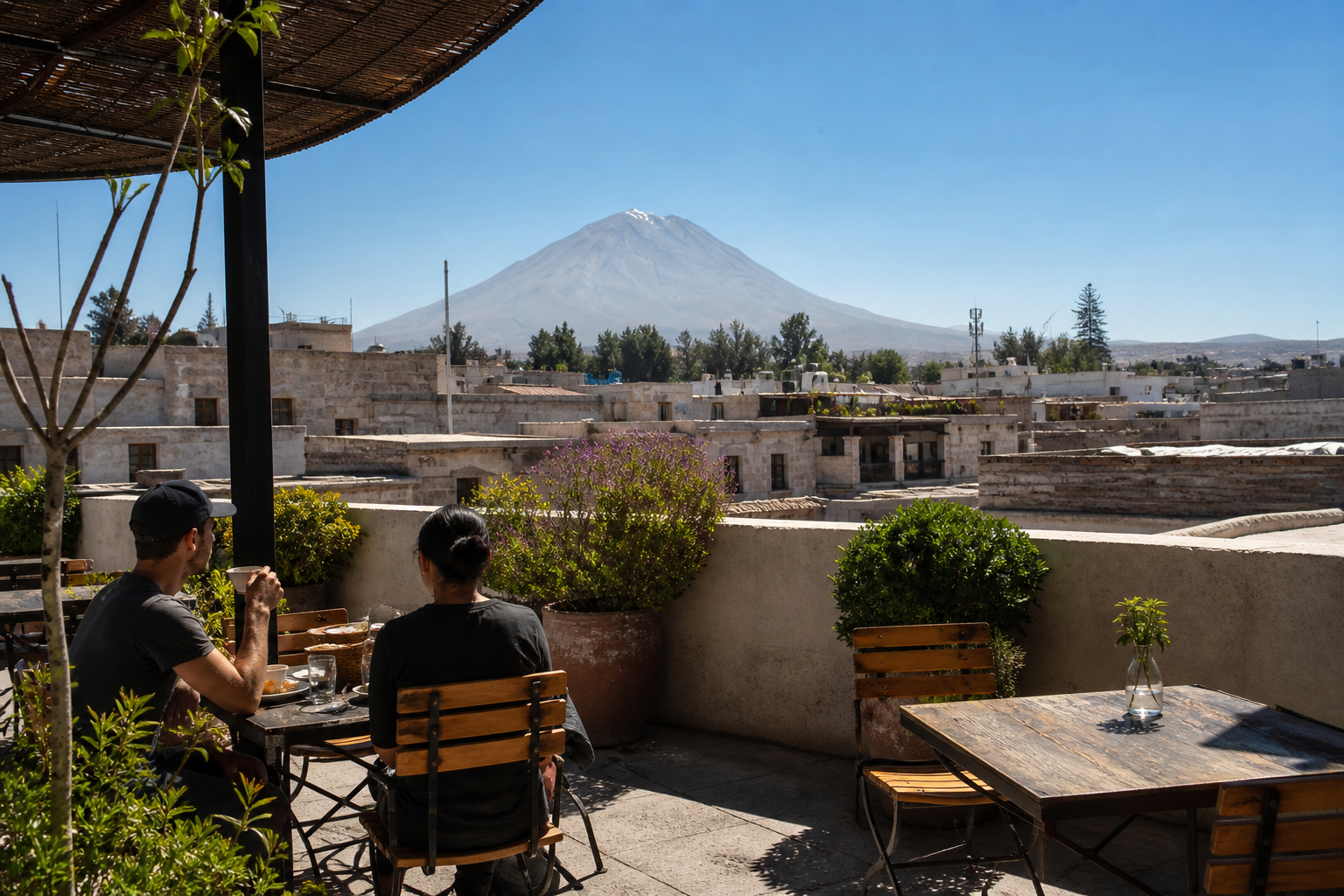
Arequipa’s rooftop views make a pleasant café stop feel like a real part of the city rather than a forced lifestyle test. Sit for an hour, look at the mountain and the rooftops, and see whether the slower pace feels nourishing or merely novel.
Then balance it with an unromantic afternoon. Test your Wi-Fi and mobile connection where you would use them, find a supermarket or pharmacy relevant to your needs, withdraw a small amount of cash if appropriate, and return home after dark by the route you would actually use. The everyday-services city test can help you record what you find. Do not make medical, banking, or immigration decisions from a scouting trip; use it to identify what you must verify directly before committing.
A three-day scouting shape
- Day 1: Historic-center walk early and again later; a simple lunch; a grocery-and-return-home test near your lodging.
- Day 2: Santa Catalina and Yanahuara; take the route you would realistically repeat; finish with an ordinary evening back in your trial neighborhood.
- Day 3: San Camilo, a café or rooftop pause, and a deliberately mundane afternoon of connectivity, errands, and route testing.
With a full week, repeat two mornings in the same neighborhood and include one day when the weather, energy level, or itinerary is imperfect. That is the better predictor of fit than trying to add more attractions. The honeymoon-period guide can help you separate first-week excitement from durable fit. If you are comparing several possible bases, use the Destination Shortlist Kit to record the tradeoffs while they are still fresh.
What to notice before calling it a candidate base
Arequipa may appeal if you like a compact center, expressive architecture, dry bright days, food shopping with texture, and a city where a good walk can be the activity. It can be a weaker fit if you need every day to be low-effort, you dislike strong sun or altitude effects, you want coastal humidity and beach access, or you find the historic-center visitor rhythm tiring.
The goal is not to prove that Arequipa is objectively right. It is to leave with a written answer to a smaller question: would I still want my ordinary Tuesday here after the first three impressive days?
References
- Peru Travel, Historical Centre of Arequipa.
- Peru Travel, Monastery of Santa Catalina.
- UNESCO, Historic Centre of the City of Arequipa.
- U.S. State Department, Peru travel advisory (check directly for current guidance).
This guide is for trip-planning and fit-testing only, not legal, medical, insurance, housing, or immigration advice.