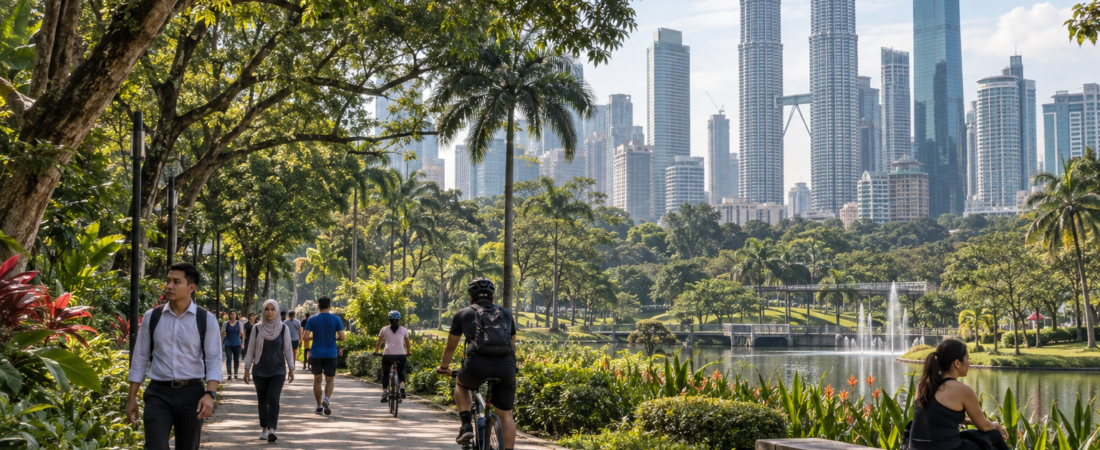
Kuala Lumpur can feel easy to enter and oddly hard to settle into. A first visit rewards the obvious moves: stay near a rail line, eat well, take the covered walkways when the weather turns, and treat a large mall as a reliable backup plan. A longer stay asks different questions. Which errands are actually walkable from your building? How much do you want to depend on ride-hailing? Where can you spend an ordinary afternoon without turning it into a shopping trip? And what makes a neighborhood feel manageable once the novelty of being in a megacity wears off?
This is not a city that needs to be “done.” It works best when you build a routine that is small enough to repeat: a dependable grocery stop, a rail or bus route you understand, a place to walk when the day cools, and a few indoor options for humid or rainy hours. The reward is less about checking landmarks off a list than making a large, fast-moving city feel legible.
Start with a neighborhood test, not a skyline view
For a longer stay, choose a base by testing your likely weekday rather than your ideal weekend. Look at the distance to food, groceries, pharmacy services, a transit station or bus stop, and a place where you would be comfortable waiting out a storm. A building can be close to a headline neighborhood but still require a ride for every small errand.
Central neighborhoods can simplify access to rail connections, offices, restaurants, and everyday services. More residential areas can offer a calmer pace and sometimes more space, but the tradeoff may be a longer walk in heat or a greater reliance on a car or ride-hailing. Neither pattern is universally better. The useful question is how often you expect to move during a normal day and how much friction you are willing to accept for each trip.
Before committing, make a short list of three real routes: home to groceries, home to the nearest transit connection, and home to a low-effort evening walk or meal. Repeat each route at the time you would normally use it. A map can show distance; it cannot fully show covered paths, crossing comfort, rain exposure, building entrances, or how the trip feels when you are carrying groceries.
Build your mobility around a few repeatable corridors
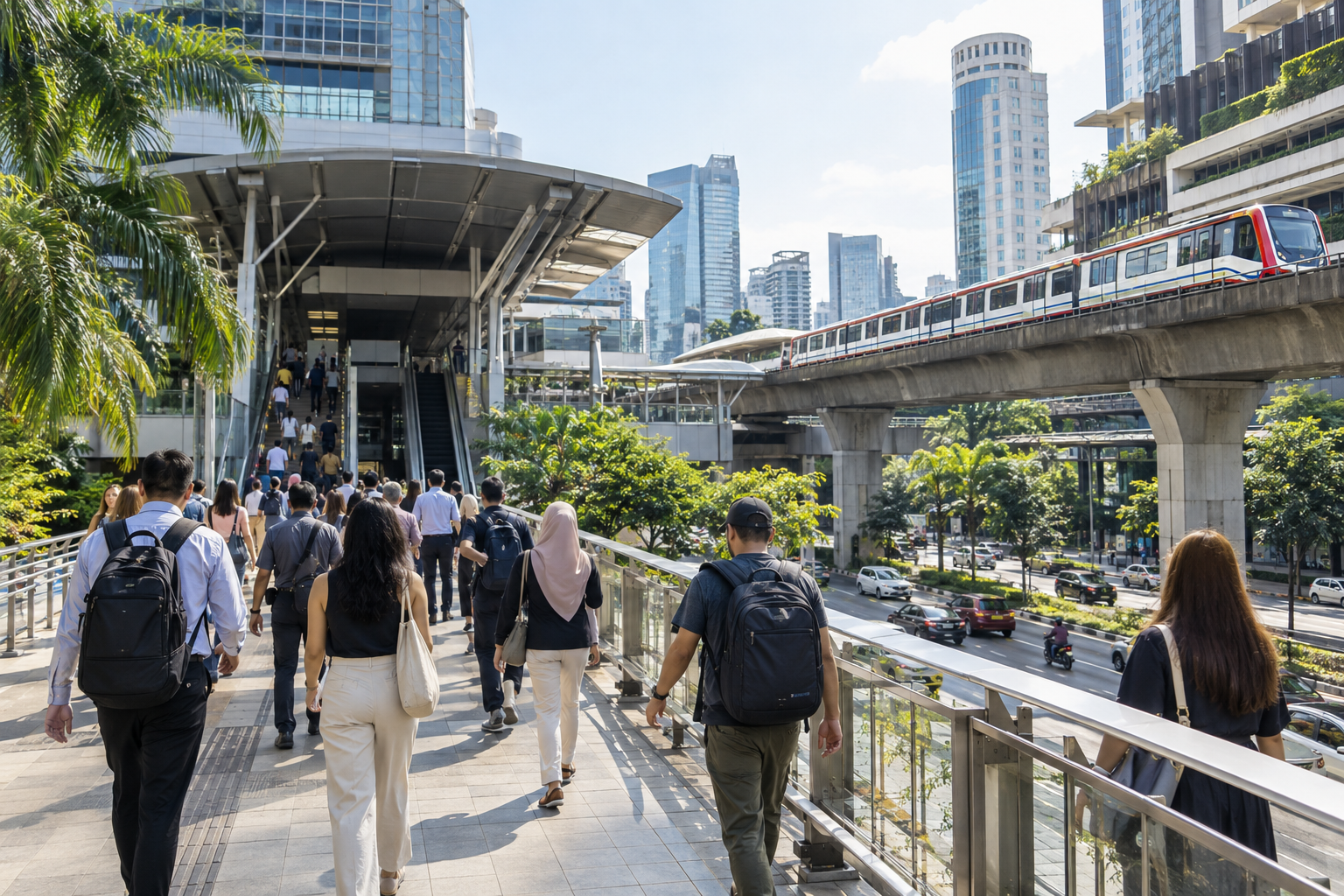
Kuala Lumpur’s public transport system is most useful when you learn the lines and stops that support your actual routine. Rapid KL is the official starting point for current rail and bus information, including service updates and network details. Treat it as a planning resource, then recheck live conditions before relying on a time-sensitive connection.
A long-stay rhythm usually improves when you identify one or two rail corridors that cover most of your needs. The goal is not to memorize the entire system. It is to know how you reach your usual work area, a central errand district, and a place you enjoy visiting on a quieter day. For trips that do not fit those corridors, decide in advance whether you will use a bus, a ride-hailing service, or simply consolidate errands.
Weather changes the cost of movement. A route that is pleasant early in the morning can become tiring in midday heat, and sudden rain can make short transfers feel much longer. Keep a small umbrella or light rain layer with you, allow extra time for transitions, and avoid scheduling every obligation back-to-back. Those habits are mundane, but they preserve the flexibility that makes a city feel livable.
Let the climate shape your calendar
The most sustainable long-stay schedule in Kuala Lumpur has both indoor and outdoor versions. Indoor spaces are not a failure of travel imagination; they are part of the city’s practical infrastructure. Libraries, museums, cafes, food halls, and malls can provide air-conditioned places to read, work, meet someone, or reset between errands.
For outdoor time, plan around cooler or less exposed parts of the day. DBKL’s public-park information is a useful official reference for public-space planning, but check local access details before making a special trip. In practice, a nearby green space or shaded walking loop that you use twice a week is often more valuable than a destination park you visit once.
This is also a good city for “split days.” Handle an errand or walk in the morning, work or rest indoors during the hottest stretch, and schedule social time or another short outing later. The rhythm may feel less spontaneous than trying to stay outside all day, but it is usually more comfortable and easier to maintain.
Keep culture in the routine, not only in the itinerary
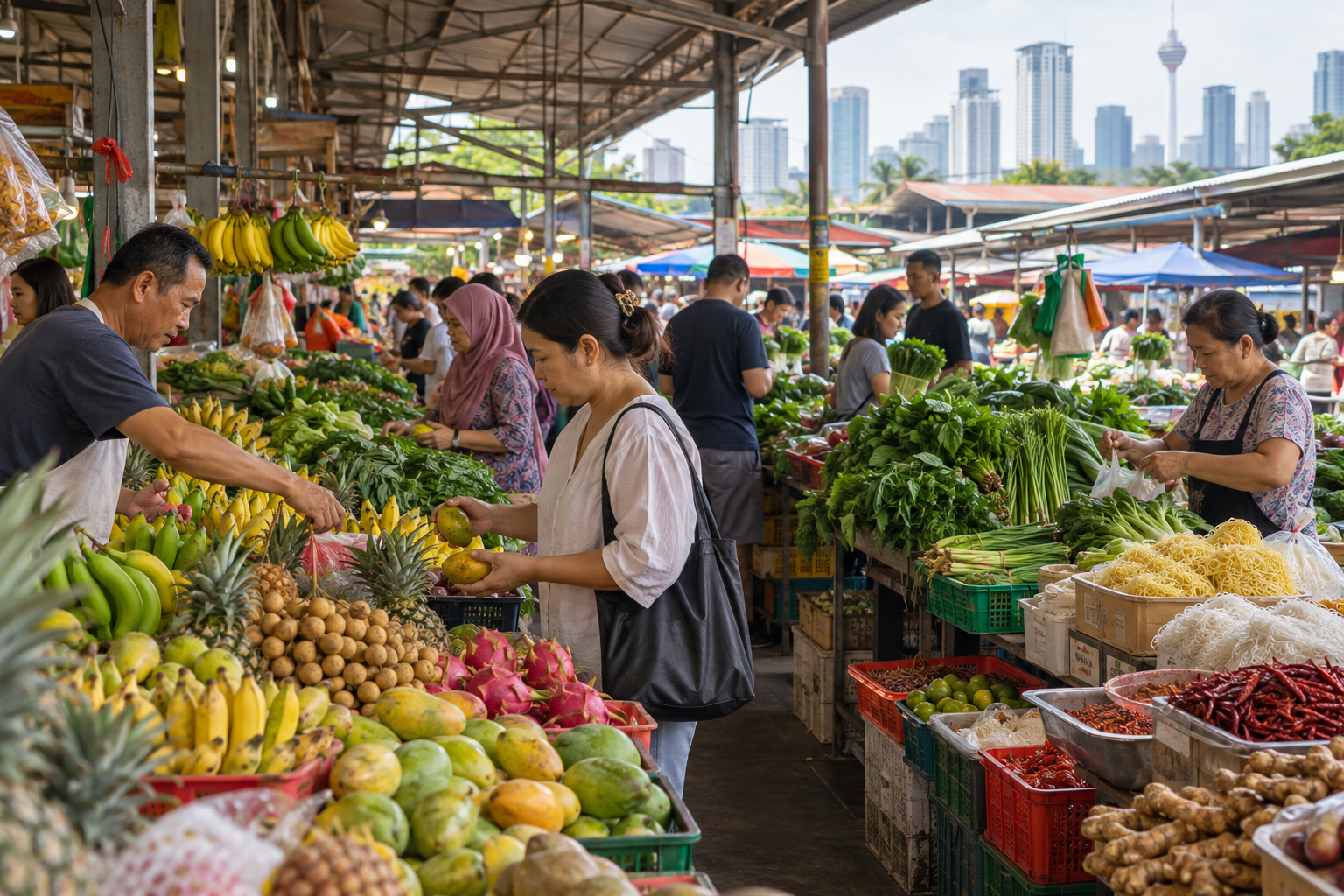
A museum visit can be an excellent long-stay habit because it gives you a structured reason to leave home without consuming an entire day. Muzium Negara is an official cultural reference point for Kuala Lumpur; review its current visitor information directly before you go, especially for hours, exhibitions, and entry conditions.
The larger lesson is to keep a few low-pressure cultural options in reserve. You do not need to turn every free afternoon into a major outing. A museum, a local market visit, a neighborhood meal, or an hour in a public park can make the week feel varied without creating the logistics burden of a full-day excursion.
Longer stays work when you leave space for days that are unremarkable. If every plan requires a reservation, a complicated transfer, or a long ride, you will eventually stop using the city. A repeatable list of nearby options makes it easier to stay curious.
Treat arrival rules as a live check, not a planning footnote
Entry and visa rules are personal, time-sensitive, and dependent on nationality and travel circumstances. The Malaysian Immigration Department’s Visa Requirement by Country page is the appropriate official starting point. Use it to identify the current category that may apply to you, then follow official instructions and obtain professional advice when your situation is complex.
For a longer stay, revisit your assumptions before booking nonrefundable housing or onward travel. Do not rely on a blog post, an old forum answer, or another traveler’s experience as a substitute for current official guidance. The practical work—confirming entry requirements, keeping copies of important documents, and understanding how your planned length of stay fits current rules—reduces avoidable stress later.
Comparing Kuala Lumpur with another possible base? Start with the practical Kuala Lumpur city guide, then use the Destination Shortlist Kit to turn the neighborhood, access, routine, and tradeoff checks in this article into a reusable worksheet.
A low-friction first-week setup
A useful first week is not about maximizing sightseeing. It is about reducing unknowns.
- Walk your immediate radius. Find groceries, food, a pharmacy, a cash-access option if needed, and a place to sit indoors.
- Practice one transit trip. Take a simple return journey during a low-pressure hour and note transfers, exits, and weather exposure.
- Create an indoor fallback list. Choose two or three places for heavy rain, heat, or an unstructured afternoon.
- Choose one outdoor routine. It may be a park, a shaded block, or a short early walk; consistency matters more than scale.
- Leave one day mostly empty. Use it to notice the gaps in your routine instead of forcing another attraction into the schedule.
Kuala Lumpur rewards this approach because it offers many ways to solve a day. The challenge is not scarcity but choice. Once you have a small set of dependable routes and places, the city becomes less about navigation and more about deciding what kind of week you want to have.
References
- Malaysian Immigration Department, Visa Requirement by Country. Accessed September 15, 2026.
- Rapid KL, Bus & Train: Rapid KL. Accessed September 15, 2026.
- Dewan Bandaraya Kuala Lumpur (DBKL), Public Park. Accessed September 15, 2026.
- Muzium Negara, Official website. Accessed September 15, 2026.