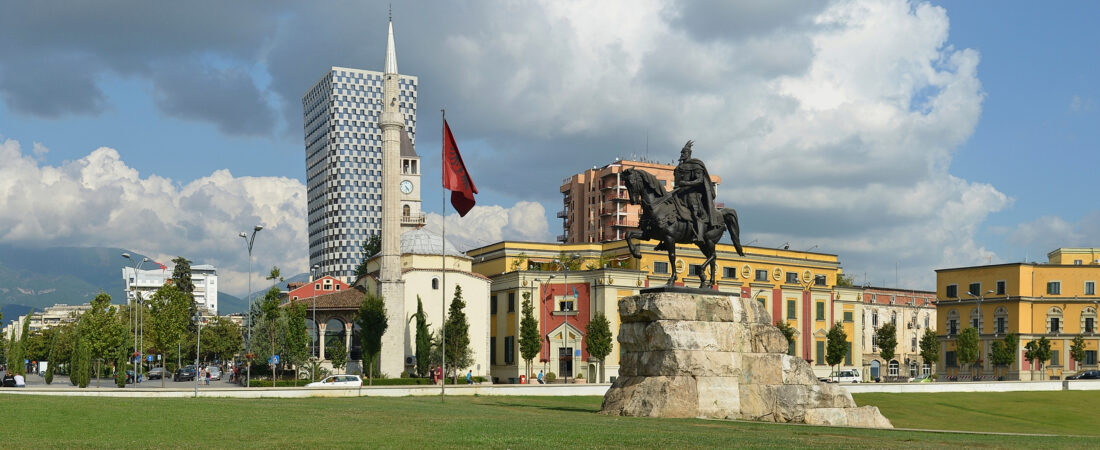
Quick fit: Albania makes the most sense for Americans who want a lower-cost foothold in Europe, like the idea of a smaller slower routine, and can live with more uneven systems than they would get in Spain or Portugal. It can feel easier day to day if you choose the right city, but it is not polished, English-smooth, or friction-free.
Albania keeps showing up on American shortlists for a simple reason: it can make Europe feel financially possible again. Rent can still come in below better-known expat markets, Americans get unusually generous stay rules, and ordinary life can be compact enough that daily errands do not eat half the day.
That is the appealing version. The misleading version is that Albania is just cheap, easy, and undiscovered. That is where expectations go wrong. Albania can be easier in some everyday ways, but it is also more cash-based, less standardized, and less polished than the Western European destinations Americans usually compare it with. The capital is more practical but less of a bargain. The prettiest coast towns are not always the easiest places to live. And healthcare confidence changes a lot depending on where you base yourself.
So the useful question is not whether Albania is “good.” It is whether Albania gives you a version of lower-cost Europe that still feels workable after the novelty wears off. For low-income to middle-class Americans, especially slower-living or retirement-minded readers, the answer usually comes down to city choice, daily habits, and how much roughness you can absorb without resenting it.
Who Albania is best for
Albania is best for Americans who care more about having a workable European base than about having a highly polished one. If your priority is manageable rent, cafés, groceries, short walks, and easy regional travel, Albania deserves a serious look. It is especially relevant for people who feel priced out of Portugal, Spain, or Italy but still want life to feel recognizably European.
It is also a better fit for people who can deal with some unevenness without turning every inconvenience into a crisis. That matters more than it sounds. Albania can feel refreshing because daily life is smaller-scale and often cheaper. It can also feel tiring if you need card payments everywhere, polished public systems, and a predictable English-language answer every time something practical goes sideways.
- Americans who want lower-cost Europe without Schengen’s usual short-stay pressure
- Readers who value compact daily life and do not need Western Europe polish
- Retirement-minded or slower-living readers who care more about sustainability than status
- People open to ordinary cities like Shkodër, Korçë, or Vlorë instead of insisting on the capital or the most photogenic coast strip
- Readers willing to treat Albania as a practical base, not a fantasy bargain
It is a weaker fit for people who want every system to feel clean, smooth, and highly standardized. Albania can be workable. It just works best when you understand the trade you are making.
What “easier everyday simplicity” actually means in Albania
Albania’s practical advantage for Americans is not luxury. It is accessibility. The U.S. State Department says Americans may enter Albania without a visa and may stay for up to one year without applying for a residency permit. That alone makes Albania easier to test than many European options. You do not need to build a complicated legal puzzle just to see whether the country fits.
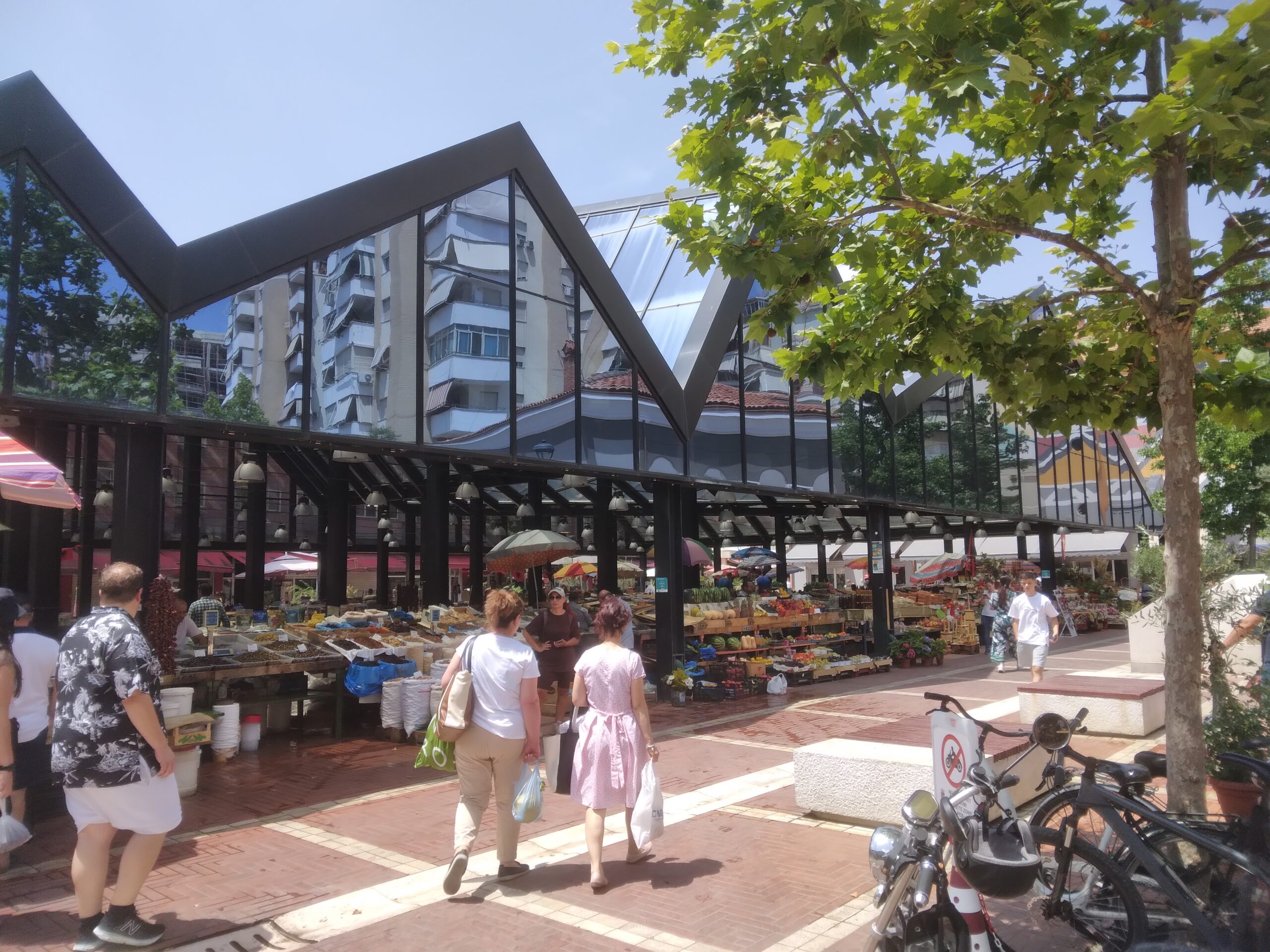
In daily life, simplicity often comes from scale. In the right neighborhood, errands can sit close together, cafés and groceries can be within walking distance, and you may not need the car-heavy lifestyle many Americans are used to. That is a real quality-of-life advantage, especially if you are tired of big-system living.
But the same State Department guidance gives the necessary caution. Albania is still primarily a cash economy. Most businesses do not accept credit cards, even though ATMs are widely available in cities. Sporadic blackouts can happen. And not every emergency operator speaks English. In plain terms, Albania can feel simpler because life is smaller and cheaper, not because the systems are more refined. That distinction matters.
Realistic costs and housing tradeoffs
The broad country averages still explain why Albania stays on so many shortlists. In the approved April 2026 Albania source pack already used in this project, a one-bedroom apartment averages about 47,360.65 lek, roughly US $510, in a city center, and about 32,689.60 lek, roughly US $350, outside the center. Broadband averages about 1,542.97 lek, or roughly US $17. A monthly public transport pass averages about 1,600 lek, or about US $17. Utilities for a roughly 915-square-foot apartment run about 8,510.98 lek, roughly US $92.
Those numbers are useful, but city choice changes the picture fast. Tirana is the easiest everyday base and also the priciest obvious one. The current LivingCost figures used in the Albania city-comparison package put a one-bedroom in central Tirana at about 65,000 lek, or about US $703, with a cheaper option around 41,700 lek, or about US $449. Shkodër looks much softer, with a one-bedroom in the center around 37,300 lek, or about US $401, and a cheaper one around 26,000 lek, or about US $279. Sarandë can look coastal and easy, but central housing there runs about 75,000 lek, or about US $807, which is a good reminder that attractive coastal Albania is not automatically the budget answer.
That is why Albania is better understood as lower-cost Europe with choices, not cheap Europe full stop. If you want the easiest city, you usually pay more. If you want the prettiest coast life, you may also pay more. If you need the monthly math to stay believable, smaller everyday cities usually make the strongest case.
For planning, honest ranges are more useful than pretending the whole country fits one neat number. A lean but workable slower-city base is often around US $1,200 to $1,700 a month. A comfortable moderate Albania base is often around US $1,700 to $2,400 a month. If you want Tirana convenience or a stronger coast setup, US $2,400+ is the safer frame.
Language and English friction
Albania is easier on English speakers than some Americans might expect, but it is not an English-first country. The current EF English Proficiency Index page puts Albania at #42 globally with a score of 532, and the retrieved Tirana city score is 557. That supports a moderate claim: English is fairly usable in parts of the country, especially in Tirana, younger urban settings, tourism-facing businesses, and some private-service environments.
That still does not mean everyday life happens smoothly in English. Landlords, utility questions, bureaucracy, healthcare staff outside better private settings, and ordinary problem-solving may happen in partial English, mixed English, or very little English at all. Even the State Department’s Albania page notes that not all emergency operators speak English, though they may try to connect you to someone who does.
The practical takeaway is simple: Albania works best for Americans who can handle some language ambiguity without spiraling. If you expect every routine to happen in clear English, you will probably find the country more tiring than its cheap-Europe reputation suggests. If you can tolerate translation apps, repetition, and a bit of patience, English is usually enough to keep Albania workable, especially in Tirana and better-known tourism markets.
Healthcare reality
Healthcare is one area where Albania needs a calm, realistic read. The WHO European Observatory says Albania’s health system is predominantly centralized, and that since 2016 residents have had access to free primary care visits and emergency services regardless of insurance status, with public specialist access shaped through referrals. The same overview says Albania had 43 public hospitals and 18 private hospitals in 2022, and that private hospitals are mainly located in Tirana.
That does not mean an American visitor should assume everything will be free, simple, or easy to navigate. What it does mean is that Albania’s best healthcare comfort is concentrated in the capital. If you want the most reassuring setup for routine private care, testing, and specialist access, Tirana is still the strongest answer.
The State Department is also blunt in a useful way: outside metropolitan areas, it may take longer to reach first responders or medical professionals, and Americans are encouraged to think about medical evacuation insurance. That is the right tone here. Albania can be workable for ordinary needs, but it is a weaker fit for readers who need high confidence in serious-care depth while living far from the capital.
Climate and seasonality
Albania’s climate is one reason people warm to it quickly, but it needs to be described honestly. Climates to Travel describes both Tirana and Vlorë as Mediterranean, with mild, rainy winters and hot, sunny summers. Tirana averages about 7.1°C (44.8°F) in January and 25.5°C (77.9°F) in August, while Vlorë averages about 8.9°C (48.0°F) in January and 26.6°C (79.9°F) in August. Those numbers look pleasant on paper, but they hide a reality many Americans underestimate: summer can get genuinely hot.
Tirana reached 43°C (109.4°F) in July 2023, according to the same climate source. Vlorë’s coast softens things somewhat, but it still has hot, sunny summers, and the most attractive coast towns feel the strongest seasonal swing because summer is exactly when demand shows up.
So Albania is not a permanent-spring fantasy. The coast is at its nicest for beach-oriented living from roughly July to September. Inland and capital-city summers can feel heavy if you dislike heat. Winters are milder than much of the U.S., but they are not postcard-perfect either. If you want weather that feels gentle all year, Albania will probably be less effortless than the mood boards suggest.
Transit, walkability, and ordinary errands
One of Albania’s underrated strengths is that everyday life can stay compact. Country-level transport averages are still low, with a monthly pass around 1,600 lek, or about US $17. In the current city-comparison source set, Tirana comes in around 1,800 lek, or about US $19.51, while Shkodër is closer to 1,100 lek, or about US $11.88. These are not world-class transit systems. They are simply reminders that Albania does not force the same expensive car dependence many Americans are used to.
Tirana is still the easiest place to build a car-light routine because it has the broadest services, the most options, and the best chance of keeping daily life geographically tight. Shkodër and Korçë can make sense for the same basic reason, just at a smaller scale. You choose them not because they are more sophisticated, but because a compact daily loop is often easier to live with and cheaper to maintain.
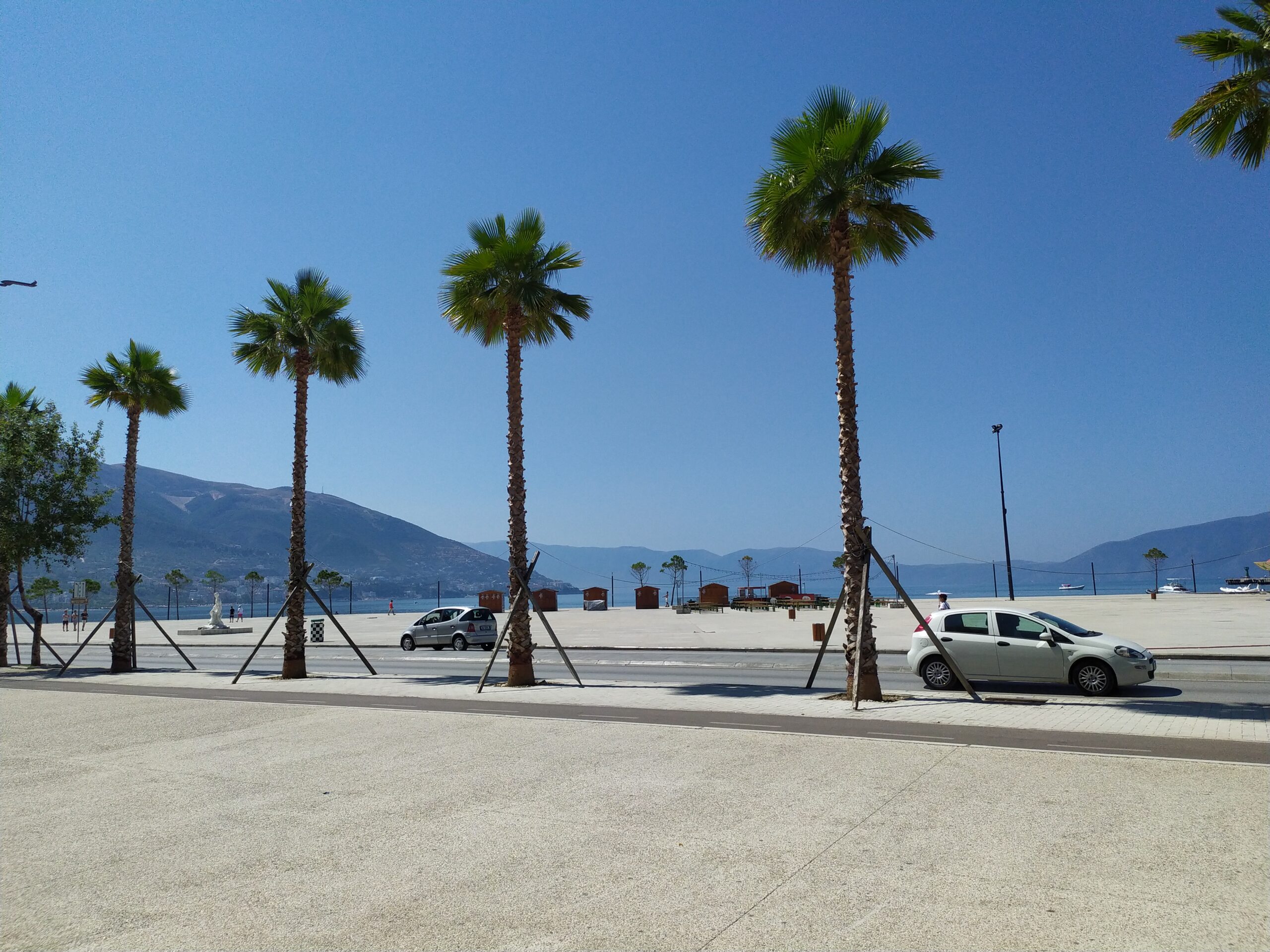
The coast shifts that logic a bit. Vlorë can work as a middle ground because it is still a real city, not just a resort mood. Sarandë and Himarë are more lifestyle-dependent. They can feel wonderfully simple if your routine is short, scenic, and seasonally aligned. They can feel less simple if you need deeper services, lower housing pressure, or a steadier year-round rhythm.
Which parts of Albania fit a slower base, and which do not
Tirana: easiest base, least slow, least cheap
Tirana is the easiest answer for Americans who want Albania with the fewest surprises. It has the strongest service depth, the best private-healthcare comfort, the broadest everyday convenience, and usually the easiest English support. It is also where Albania stops feeling obviously cheap. Tirana makes sense if functionality matters most. It is a weaker fit if your main goal is a slower, softer, lower-cost rhythm.
Shkodër and Korçë: better fits for a calmer everyday-city life
For many practical Americans, this is where Albania starts looking more convincing. Shkodër looks especially strong because the current cost figures remain far more believable than Tirana’s while still giving you a real city routine. Korçë deserves attention for similar reasons even without forcing fake-precise cost claims here. Both are better candidates for people who want a local rhythm, manageable housing, and a life that feels slower without becoming rural.
These are not the best picks for deep healthcare reassurance or international convenience. They are simply the places where Albania’s lower-cost, slower-base argument tends to hold together best.
Vlorë: the useful middle ground
Vlorë often makes more sense than the flashier coast conversation. It gives you sea access, a brighter waterfront lifestyle, and a real city structure without asking you to commit fully to Riviera fantasy. For readers who want coastal influence but still need everyday practicality, Vlorë is one of Albania’s more useful middle-ground bets.
The tradeoff is climate and summer pressure. It is hot, sunny, and more crowded when the weather is at its best. If your dream is quiet coast life with no tradeoffs, Vlorë will still ask for realism. But compared with the most romanticized southern coast choices, it is much easier to picture as a place where normal life can happen.
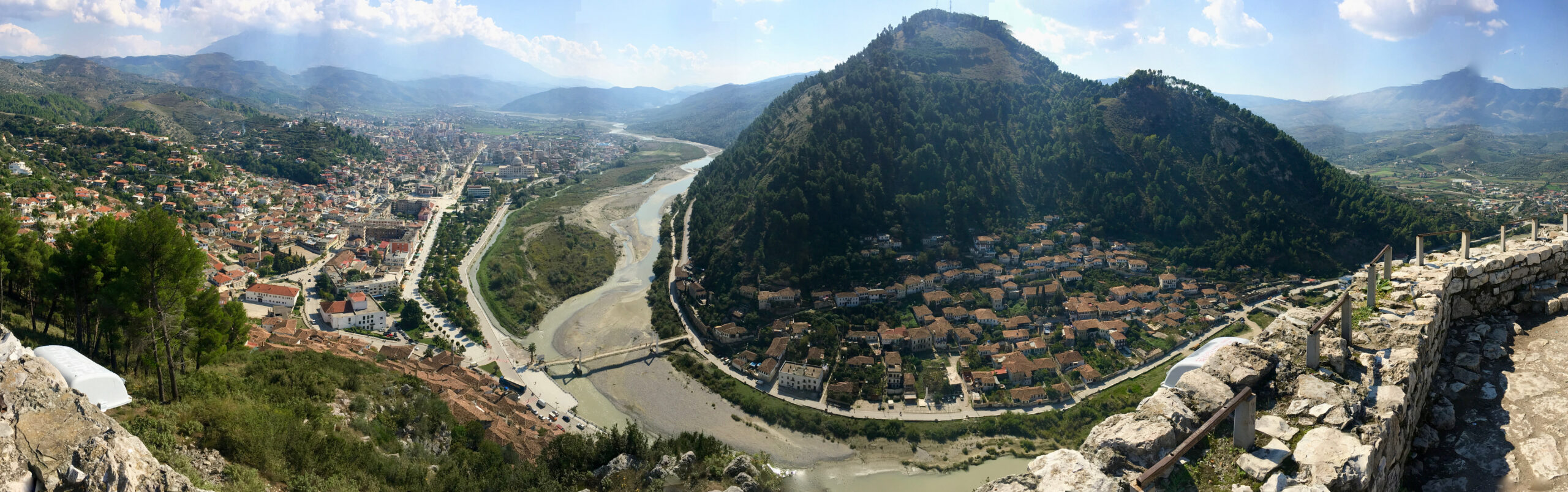
Sarandë and Himarë: beautiful, slower, and more situational than people admit
This is the Albania people sell themselves on fastest. Sea views, waterfront walks, a slower day, and a more Mediterranean mood make Sarandë and Himarë emotionally persuasive. For some readers, that really will be the right answer.
But they are weaker choices if what you actually mean by “easy” is year-round service depth, stable everyday costs, and the comfort of having more systems around you. Sarandë’s current housing figures already show how quickly a popular coast town can outrun Albania’s bargain reputation. Himarë is lovely, but it is even more clearly a lifestyle choice. These bases work best when scenery and pace are part of the point, and when you accept that off-season energy, healthcare depth, and practical redundancy are thinner.
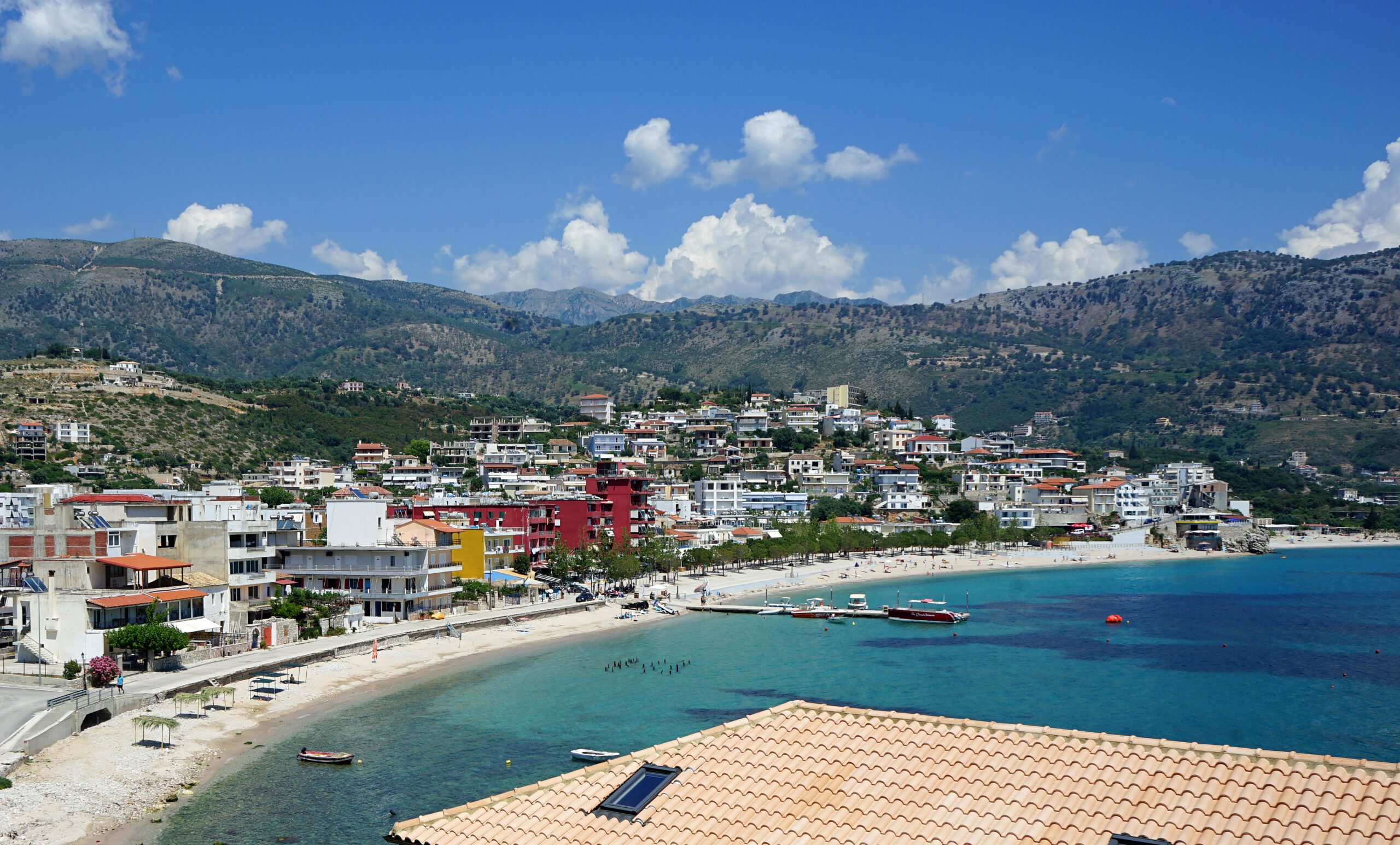
Berat and Gjirokastër: charming, but not always the easiest first base
Historic towns like Berat and Gjirokastër are a big part of Albania’s appeal. They can be beautiful, atmospheric, and genuinely attractive to slower-living readers. But they usually make more sense as lifestyle picks, scouting targets, or second-step bases than as the easiest first answer for cautious Americans. If your top priority is daily simplicity plus deeper services, these smaller heritage places may feel thinner than they look online.
Who should probably avoid Albania
- Readers who want Western Europe polish at Albania prices
- People who need strong specialist-healthcare reassurance while living outside Tirana
- Americans who expect card payments, smooth English, and standardized systems everywhere
- Readers who hate hot summers and do not want climate seasonality to shape where they live
- Anyone assuming the prettiest coast towns are automatically the easiest or cheapest long-stay bases
That is not a warning against the country. It is just the difference between choosing Albania for the right reasons and getting frustrated because you were really shopping for a different kind of Europe.
Sample monthly budget ranges
- Lean but workable slower-city base: roughly US $1,200 to $1,700 a month, especially in a Shkodër-type setup or another more local everyday city.
- Comfortable moderate Albania base: roughly US $1,700 to $2,400 a month for a more relaxed solo setup or a couple sharing costs without aiming at a polished luxury version of Albania.
- Tirana convenience or stronger-coast setup: US $2,400+, especially if you want central housing, easier healthcare comfort, or a more lifestyle-driven coast location.
These are planning ranges, not guarantees. Housing choice still drives most of the difference. That is especially true if you are choosing between Tirana convenience, a slower inland city, and a coast town that gets lifestyle-priced the moment it becomes desirable.
Final verdict
Albania can be a credible lower-cost European base for Americans, but it works best when “easy” means smaller, simpler, and more financially manageable, not polished or friction-free. That is the honest pitch. The country gives Americans an unusually generous test-stay window, a more compact daily rhythm than many U.S. cities, and a real chance to make Europe feel financially reachable again.
The catch is that Albania only looks good when you choose the right version of it. Tirana is the easiest but least cheap. Shkodër and similar everyday cities often make the monthly math work best. Vlorë can be a strong middle ground. Sarandë and Himarë make the most sense if you are willing to pay for the coast lifestyle and accept seasonality and thinner services. Smaller historic towns are appealing, but they are not automatically the easiest first base.
If you approach Albania with that level of realism, it can be one of the more interesting value plays in Europe for low-income to middle-class Americans. If you treat it like cheap paradise with no tradeoffs, it will probably feel rougher, hotter, and more complicated than expected.
Albania can also be used as a non-Schengen pressure valve in a wider plan; compare it with Portugal, Spain, Greece, and Italy in this guide to European bases for Americans on Social Security or a modest fixed income.
If Albania is on your list because it looks simpler or cheaper than the EU options, the next step is to compare Albania against Portugal and Spain on visa friction, healthcare access, rent pressure, and daily logistics.
References
- U.S. Department of State, Albania country information, https://travel.state.gov/content/travel/en/international-travel/International-Travel-Country-Information-Pages/Albania.html
- U.S. Department of State, Albania travel advisory, https://travel.state.gov/content/travel/en/traveladvisories/traveladvisories/albania-travel-advisory.html
- EF English Proficiency Index, Albania, https://www.ef.com/wwen/epi/regions/europe/albania/
- WHO European Observatory, Albania health system information, https://eurohealthobservatory.who.int/countries/albania
- Numbeo, Cost of Living in Albania, https://www.numbeo.com/cost-of-living/country_result.jsp?country=Albania
- LivingCost, Cost of living in Tirana, https://livingcost.org/cost/albania/tirana
- LivingCost, Cost of living in Shkodër, https://livingcost.org/cost/albania/shkoder
- LivingCost, Cost of living in Sarandë, https://livingcost.org/cost/albania/sarande
- Climates to Travel, Tirana climate, https://www.climatestotravel.com/climate/albania/tirana
- Climates to Travel, Vlorë climate, https://www.climatestotravel.com/climate/albania/vlore
For the capital-city version of Albania, use the standalone Tirana guide to test housing, traffic, healthcare preparation, and daily routines.
For the coastal version of Albania, use the standalone Sarande guide to test seasonal housing, hills, healthcare preparation, and daily routines.
Considering Tirana specifically? Use this two-week Tirana routine test to evaluate the exact neighborhood, apartment, and daily radius.