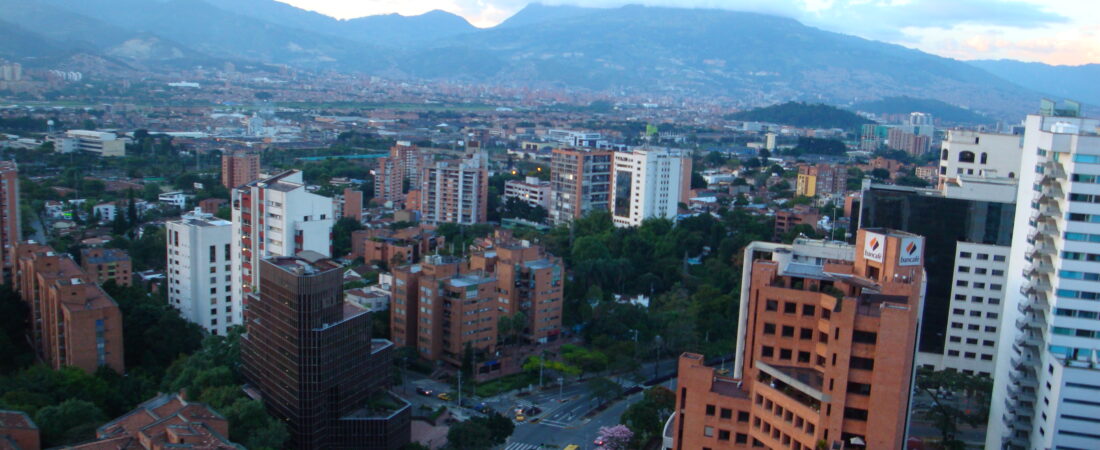
Quick fit: Medellín makes the most sense for Americans who want mild weather, good day-to-day convenience, and enough city depth to handle healthcare, errands, and ordinary life without paying full U.S. big-city prices. It is a weaker fit if your first priority is rock-bottom cost or the kind of safety calm that lets you stop thinking about your surroundings.
Medellín is one of those cities that attracts too much projection. Some Americans still picture it as a perfect eternal-spring loophole where life is easy, rent is cheap, and every hard part of relocation somehow disappears. Others hear the safety warnings and write it off as a place that could never work for ordinary long-stay life. Neither view is especially useful.
The more practical answer is that Medellín can be a strong city base for the right kind of person. The weather is genuinely appealing. The transit system is more useful than many visitors expect. The city has real healthcare depth. And compared with many U.S. metros, the overall cost can still look reasonable. But that value is not automatic. Neighborhood choice, housing expectations, ride habits, rain tolerance, and your comfort with urban friction still matter a lot.
So this is not a glossy expat pitch. It is a grounded look at whether Medellín actually works for people who want climate, convenience, and a bigger-city backup plan abroad.
Why Medellín keeps getting attention from Americans
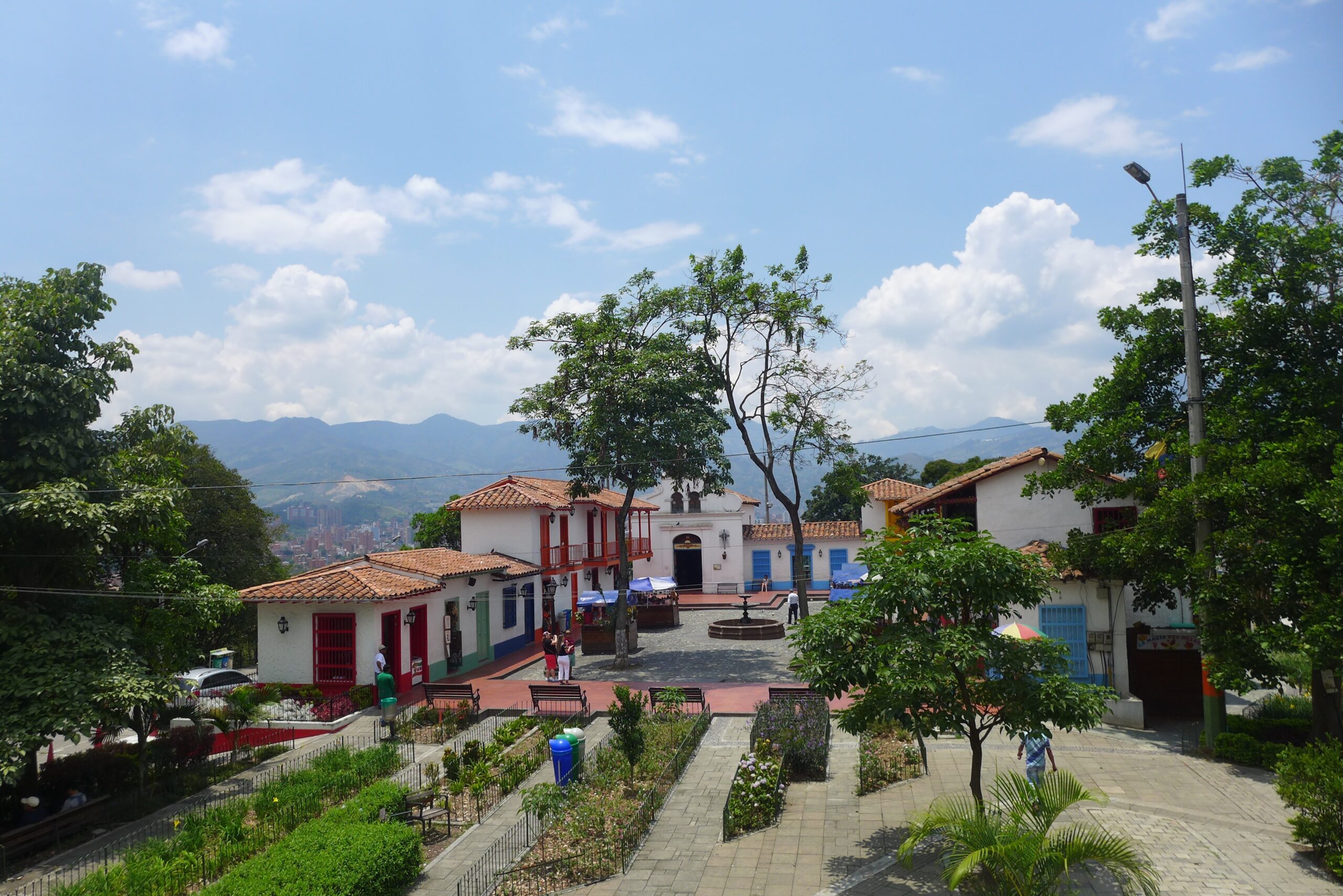
Medellín appeals to a lot of people for a pretty understandable reason. It offers a combination that is harder to find than relocation content makes it sound: warm weather without coastal heat, a city large enough to feel functional, transit that can reduce car dependence, and a cost structure that still comes in below a lot of U.S. urban life.
That matters because many lower-cost destinations ask you to trade away something important. Maybe you save money but lose healthcare depth. Maybe you get a calmer setting but feel isolated. Maybe the town is pleasant for a week and frustrating for a year. Medellín keeps showing up because it can feel more complete than that. It gives you weather and city life at the same time.
But attention has also made the city easier to oversell. The smarter way to judge Medellín is not by its reputation, but by whether you actually want a hilly, rainy, still-sometimes-tense urban base with real strengths and real friction.
The climate case is real, but so is the rain
This is the part Medellín usually gets right. Climates to Travel describes the city as tropical but moderated by altitude, with Medellín sitting around 1,500 meters, or about 4,900 feet, above sea level. The average temperature barely moves through the year, from about 22.2 °C in the coolest month to 23.2 °C in the warmest month (roughly 72 °F to 74 °F). That is why the “city of eternal spring” line has lasted.
Still, the appealing temperature story hides something important. Rain is frequent through much of the year. December through February is the driest stretch, and June through August is somewhat lighter, but Medellín is not a dry, cloudless paradise. If you want warmth without extreme heat, the climate can feel excellent. If you need endless sun, the city may feel more damp and gray than the branding suggests.
That distinction matters because weather is one of Medellín’s best reasons to choose it, but it should not become a fantasy that overrules the rest of the decision.
Cost of living: still workable, but not Colombia’s bargain answer
Medellín still looks reasonable by U.S. standards, but it should not be framed as the cheap default for Colombia. LivingCost’s city page puts one person’s monthly cost with rent at about US $1,071 and without rent at about US $557. On the same source set, Colombia overall comes in lower, at roughly US $890 with rent and US $494 without rent. That gap is useful. Medellín is not wildly expensive, but it is also not the place to choose if your main goal is finding the country’s lowest-cost serious setup.
The city is often best understood as a better-value urban base. You are paying for weather, convenience, city services, hospitals, and transit, not just square footage. If you compare it with many U.S. cities, the math can still look pretty good. If you compare it with smaller Colombian markets, Medellín looks much less like a bargain.
Housing is where budgets get distorted fast
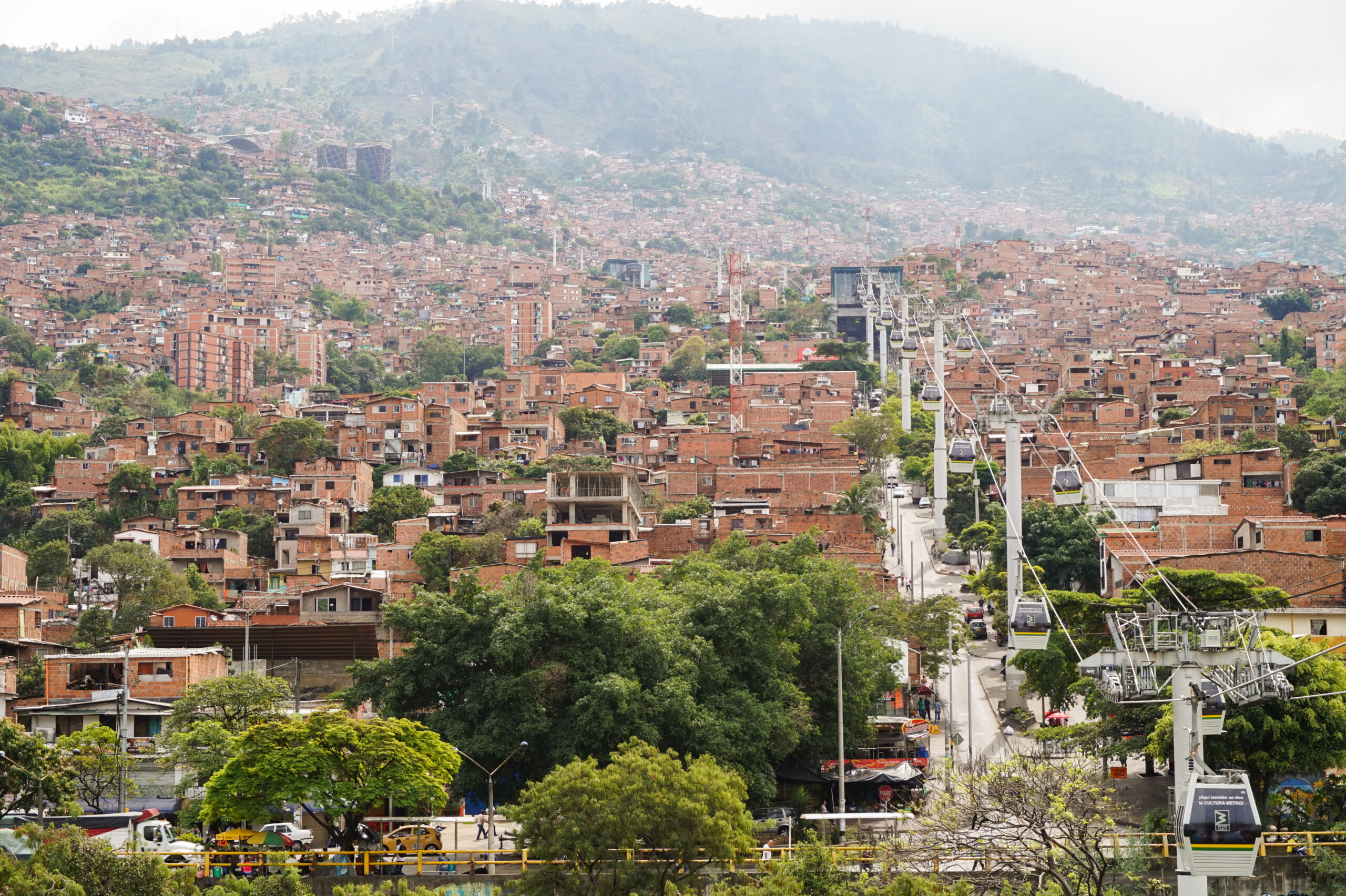
Housing is the main reason Americans misread Medellín. The FincaRaíz Medellín rental snapshot used for this project shows an average apartment rent around 4,667,997 COP per month, roughly US $1,150. That number by itself is not the whole story, because the city’s listings stretch from modest local neighborhoods to polished buildings in the areas foreigners fixate on first. But it does tell you something important: the market is no longer easy to wave away as cheap.
The same listing set showed visible examples around 1,050,000 COP in Castilla, about US $260, 1,250,000 COP in San Antonio de Prado, about US $310, and 1,600,000 COP in Robledo, about US $395. It also showed Laureles around 2,500,000 to 4,600,000 COP, roughly US $620 to US $1,135, while El Poblado started around 2,500,000 COP, roughly US $620 in the captured sample and ran far higher in polished stock.
That is the real housing lesson. Medellín can still work on a moderate budget, but only if you separate “pleasant and practical” from “most internationally marketed.” If you insist on a furnished, foreigner-heavy neighborhood while expecting local pricing, the city can get expensive fast. If you are open to a more ordinary neighborhood and resident-style renting, the numbers become much more believable.
Transit and daily convenience are part of the value
This is where Medellín often beats expectations. The Metro de Medellín official users page shows a standard Frecuente fare of 3,820 COP, about US $0.95, and an Al portador y eventual fare of 4,400 COP, about US $1.10. More important than the exact fare is what the system lets you do. Medellín’s network ties together metro, metrocable, tram, Metroplús, and other integrated routes in a way that makes a no-car routine much more realistic than in many American cities.
That convenience matters financially and psychologically. If you can live near errands, use transit often, and avoid building your life around a car, Medellín starts to feel more efficient than plenty of more expensive U.S. cities. It is not perfectly smooth. The city is hilly, traffic still exists, and some rides will feel more comfortable than others. But as a practical urban system, it is one of Medellín’s real strengths.
Healthcare depth is one of the city’s strongest arguments
For cautious retirees, people with ongoing health concerns, or anyone who just does not want to feel medically isolated, Medellín has a real advantage: it feels like a place where serious care exists. The Cámara de Comercio de Medellín’s Health City cluster emphasizes clinical excellence, digital transformation, and technology-driven development. That language is corporate, but the practical takeaway is simple: healthcare is not a side note in this city’s identity.
The Hospital General de Medellín says it provides care up to high complexity and offers 24-hour emergency attention. Hospital San Vicente Fundación Medellín says it performs more than 19,000 surgeries and 120,000 consultations each year and works across more than 70 specialties and sub-specialties. That is the kind of institutional depth many smaller low-cost destinations simply cannot match.
That does not mean healthcare will feel identical to the U.S. or that every insurance situation is simple. It means Medellín’s case is not just about saving money. It is about having a city big enough to handle more of real life when something actually goes wrong.
Stay basics for Americans are manageable, but still need attention
The U.S. Department of State’s Colombia information page says Americans do not need a Colombian visa for tourism or business stays of 90 days or less, with the same rule applying to cumulative stays of 180 days or less per calendar year. Before the first 90 days expires, travelers can request a 90-day extension from Migración Colombia. The same page also says you must show a valid U.S. passport to enter and leave Colombia if you are not a Colombian citizen.
Migración Colombia’s CheckMig system is also part of routine travel administration. Travelers can complete the form 72 hours before a trip or up to one hour before. None of this is especially dramatic, but it is a reminder that Medellín should be planned like a real move or long stay, not treated casually just because the city is popular online.

Safety, neighborhood judgment, and daily friction still matter
This is the part that should stay honest. The U.S. Department of State says violent crime is common in many areas of Colombia, that street crime can quickly become violent, and that demonstrations can shut down roads and interrupt movement. It also notes that U.S. government employees are prohibited from hailing taxis from the street or using public transportation. That does not mean ordinary residents cannot build a routine in Medellín. It means the city still asks for alertness, judgment, and some humility.
In practical terms, Medellín works better for Americans who are comfortable paying attention to building security, ride habits, neighborhood differences, and when to spend a little extra for convenience. It works worse for anyone who wants to stop thinking about safety entirely or who needs a city to feel frictionless almost immediately.
Medellín is neither frozen in its worst years nor transformed into a place where risk has become irrelevant. It is simply a real city with real tradeoffs, and the people who do best there usually respect that.
Internet and remote-work practicality
Medellín is workable for connected life, but the building matters more than the city slogan. Claro Colombia markets home internet plans from 500 Mbps to 900 Mbps and explicitly positions fiber for streaming, videoconferencing, and multiple connected devices. That is enough to support a modest claim that fast internet exists in the market.
The better question is whether the apartment you rent actually delivers what the listing implied. For remote workers, online business owners, or retirees who rely on stable video calls and services, Medellín can make sense, but it still deserves the same common-sense backup thinking you would use anywhere else.
Who Medellín fits best
- Americans who want spring-like weather without moving to a sleepy town
- People who value hospitals, specialists, and everyday city backup
- Readers who want transit and a more connected daily routine instead of car dependence
- Moderate-budget Americans who care more about functionality than prestige neighborhoods
- People who understand that value and cheapness are not the same thing
Who should probably avoid Medellín
- People whose main goal is finding the lowest-cost Colombia setup
- Anyone who needs instant low-friction confidence about safety and routine
- Readers who only want the city if they can live in the most polished foreigner-heavy areas cheaply
- People who really want beach, small-town calm, or a lighter bureaucracy burden
- Anyone hoping climate alone will make the tradeoffs stop mattering
Sample monthly budget ranges
- Lean but workable: roughly US $1,500 to $2,100 a month for one person if housing stays practical and you are not trying to rent Medellín’s most internationally marketed version of itself.
- Comfortable moderate setup: roughly US $2,100 to $3,000 a month for a solo renter or cost-sharing couple who wants more breathing room and fewer compromises.
- Higher-comfort or foreigner-heavier setup: US $3,000+, especially if you want furnished housing, a more polished building, or an area where foreign demand has already pushed prices up.
Those are decision ranges, not guarantees. Medellín is a city where the housing decision drives the whole budget more than broad “cost of Colombia” averages do.

Final verdict
Medellín is one of the better answers for Americans who want climate, daily convenience, and a real city base without paying full U.S. metro prices. That is the honest case for it. The weather is genuinely appealing. The transit system adds real day-to-day value. The healthcare depth is stronger than what many smaller markets can offer. And for the right renter, the city can still be financially workable.
But Medellín is not a miracle city. It is not Colombia’s cheapest serious option, and it is not a place where safety, bureaucracy, or housing pressure vanish because the temperature is pleasant. It works best for Americans who choose it because they want the city itself, not because they expect the city to solve every tradeoff for them.
If Medellín appeals because of climate and city services, compare it with the broader guide to Latin American cities with lower costs and good climate, including Cuenca, Querétaro, Lake Chapala, Oaxaca, Boquete, David, and Mérida.
References
- U.S. Department of State, Colombia country information page, https://travel.state.gov/content/travel/en/international-travel/International-Travel-Country-Information-Pages/Colombia.html
- U.S. Department of State, Colombia Travel Advisory, https://travel.state.gov/en/international-travel/travel-advisories/colombia.html
- Migración Colombia, CheckMig, https://apps.migracioncolombia.gov.co/pre-registro/en
- LivingCost, Cost of Living in Medellin, https://livingcost.org/cost/colombia/medellin
- LivingCost, Cost of Living in Colombia, https://livingcost.org/cost/colombia
- FincaRaíz, Medellín apartment rentals, https://www.fincaraiz.com.co/arriendo/apartamentos/medellin/antioquia
- Metro de Medellín, Usuarios / tarifas, https://www.metrodemedellin.gov.co/usuarios
- Cámara de Comercio de Medellín, Cluster Medellin Health City, https://www.camaramedellin.com.co/comunidad-cluster/cluster-medellin-health-city
- Hospital General de Medellín, https://www.hgm.gov.co/
- Hospital San Vicente Fundación Medellín, https://www.sanvicentefundacion.com/nuestras-entidades/hospital-medellin
- Climates to Travel, Medellín climate page, https://www.climatestotravel.com/climate/colombia/medellin
- Claro Colombia, home internet, https://www.claro.com.co/personas/servicios/servicios-hogar/internet/
Considering Medellín specifically? Use this ordinary-routine companion to test neighborhood errands, transit, and rain-day plans before extending your stay.