Quick answer: If you want good weather in Portugal without aiming straight at Lisbon prices, start your search with Coimbra, Aveiro, Braga or Guimarães, Setúbal, Caldas da Rainha and the Silver Coast, plus carefully priced options in Évora, Faro, and Madeira. The right choice is not simply the sunniest place. It is the place where rent, winter dampness, summer heat, healthcare access, transit, and ordinary errands line up well enough for real life.
Portugal is easy to romanticize from the United States. The winters look gentler, the cities look more walkable, and the pace sounds calmer. For Americans thinking about a one- to three-month stay or retirement-minded test run, that appeal is understandable.
The mistake is treating Portugal as one simple bargain. Lisbon is still exciting and useful, but it is also crowded, internationally discovered, and priced like a capital city people around the world want. If your budget is low-income to middle-class rather than luxury-expat, Lisbon may be better as a visit than as your first serious base.
This is not a “secret cheap Portugal” list. Portugal is under real housing pressure in several regions, and not-Lisbon does not automatically mean affordable. The better question is narrower and more practical: where can you get weather you can live with, enough services to feel steady, and less of the most intense Lisbon rent pressure?
Start with the weather tradeoff, not the postcard
Portugal is small, but its weather changes enough to matter. The north is greener, cooler, and wetter. Central Portugal often feels more balanced. The south is sunnier and drier, but summer heat, tourism, and rent competition can become the price of that sunshine. Madeira has a famously mild climate, but island life changes the whole equation.
IPMA’s 1991–2020 climate normals make the pattern clear. Porto’s annual average high is about 19.3°C, or 67°F, with roughly 45 inches of annual rain. Coimbra is warmer and somewhat drier, with an annual average high around 21.9°C, or 71°F, and about 34 inches of rain. Faro is drier and sunnier, around 22.3°C, or 72°F, with about 18 inches of annual rain.
Before choosing a town, be honest about which problem bothers you least: rain, summer heat, seasonal crowds, or higher rent. “Good weather” only helps if it supports the life you actually plan to live.
Coimbra: the strongest all-around first look
For many practical Americans, Coimbra deserves to be near the top of the list. It is not as glamorous as Lisbon or Porto, which is partly the point. Coimbra is a real city with a university identity, a historic center, train connections, hospitals and clinics, pharmacies, cafés, grocery routines, and enough daily infrastructure to make a trial stay feel less fragile.
The climate is a reasonable middle path. Coimbra is generally warmer and drier than Porto, but it does not push you as far into Algarve seasonality or Alentejo heat. That does not mean it is always comfortable. IPMA’s Coimbra/Bencanta station shows roughly 40 days a year at or above 30°C, or 86°F, so summer can be hot. Winter mornings can also be cool. Still, as a full-year compromise, Coimbra is easier to defend than many more famous choices.
Coimbra also passes the ordinary-Tuesday test better than a lot of pretty towns. You can picture groceries, a pharmacy run, a train trip, and a doctor appointment without needing Lisbon’s scale or budget. If you are choosing your first base abroad, pair it with the broader first-base decision framework.
Best for: Americans who want a calmer real city, balanced weather, and a practical base for a one- to three-month test. Watch out for: hills, older apartments, hot spells, and a smaller international scene than Lisbon or Porto.
Aveiro: mild, flatter, and easier for everyday walking
Aveiro is smaller and quieter than Lisbon, and it should not be sold as a big-city substitute. But for some Americans, especially those who want a gentler routine and less vertical daily life, Aveiro’s scale is part of the appeal. It is relatively flat by Portuguese standards, has a coastal-influenced climate, and can feel easier to understand on foot than steeper historic centers.
The weather case is strongest if you dislike hot summers. IPMA’s Aveiro station shows an annual average high around 19.7°C, or 67°F, and only about 9.5 days a year at or above 30°C, or 86°F. The tradeoff is dampness. Annual rainfall is about 975.5 mm, or 38 inches. If your mental picture of Portugal is dry Mediterranean sunshine all winter, Aveiro may feel grayer than expected.
Aveiro works best for people who want a low-key base with enough services nearby, not people who need a big expat network, major nightlife, or endless specialist options. As always, judge the exact neighborhood. A city can be walkable in theory and inconvenient in practice if your apartment is uphill from the grocery store, far from the bus stop, or isolated from clinics. Use the walkability checklist before committing to a longer stay.

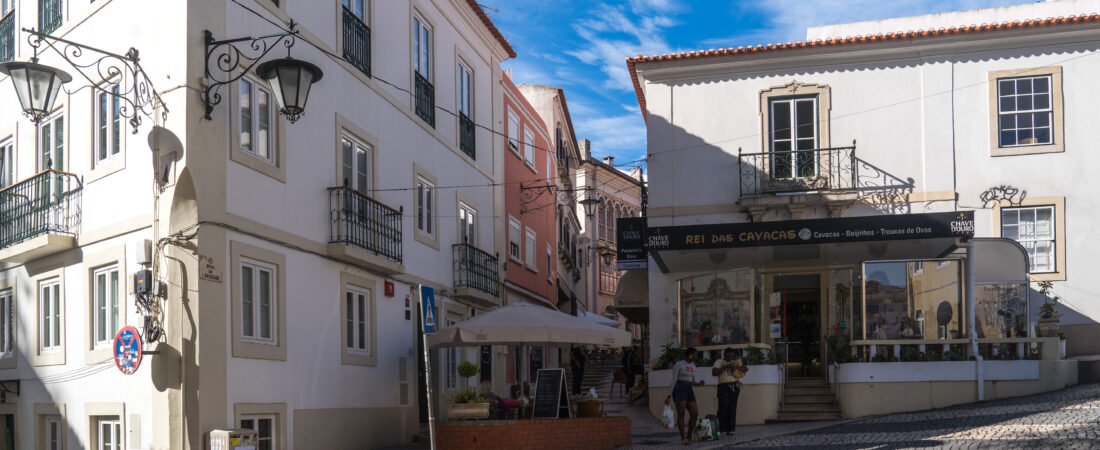
Photo by Paulo Gomes from Portugal, Wikimedia Commons, CC BY 2.0. Source: https://commons.wikimedia.org/wiki/File:Rainy_Porto_(52267492640).jpg
Braga and Guimarães: good choices if heat bothers you
Braga and Guimarães are northern options for people whose idea of good weather includes cooler summers. They are attractive, historic, and more manageable than Lisbon. If you would rather carry a jacket in winter than spend August hiding from the sun, they deserve a serious look.
The caution is rain. Northern Portugal is green for a reason. If you are coming from the Pacific Northwest or the upper Midwest and mainly want milder temperatures, that may be fine. If winter gray affects your mood, the north may disappoint you even when the thermometer looks comfortable.
Braga and Guimarães also need a practical logistics check: rental location, groceries, buses, trains, clinics, pharmacies, and access to Porto for bigger-city services. A beautiful old-town photo is not the same as a livable monthly base.
Porto or nearby towns: real city access, not a cheap secret
Porto is still one of the most practical alternatives to Lisbon because it is a real city, not a compromise town. It has major-city services, restaurants, culture, rail connections, hospitals, an airport, and a larger social pool. If you know you need urban life, Porto or a nearby town with reliable access may be more realistic than forcing yourself into a smaller place just to save money.
But Porto should not be marketed as “cheap Lisbon.” Statistics Portugal’s 2025 new-lease data showed the Porto metropolitan area below Greater Lisbon, but still meaningfully above the national median. The bigger lesson is that popular Portuguese cities are not sitting in the old bargain era. Price the actual neighborhood and the actual furnished rental, not the reputation.
The weather is also a tradeoff. Porto’s cooler summers will be a relief for some people, while its wetter winters will be a problem for others. If you are choosing Porto because you need services, transit, hospitals, culture, and a larger community, that is a strong reason. If you are choosing it only because you heard it was cheaper than Lisbon, compare it carefully with Coimbra, Aveiro, and other central or northern towns. For a wider comparison, use the existing Portugal city comparison.
Setúbal: useful Lisbon access, with spillover pressure
Setúbal is tempting for good reasons. It offers a warmer, sunnier-feeling climate, a more local city rhythm, and access to the Lisbon region without living in Lisbon itself. IPMA’s Setúbal station shows an annual average high around 22.7°C, or 73°F, and less annual rain than Lisbon. For someone who wants coastal-adjacent daily life with possible Lisbon access, that is a serious advantage.
The problem is that Setúbal is close enough to Lisbon to share some of its pressure. INE’s 2025 rent release listed the Setúbal Peninsula among Portugal’s higher-rent regions for new leases. Setúbal may still work, especially compared with the most competitive Lisbon neighborhoods, but it is not a discount bin simply because it is across the water.
Treat Setúbal as a value-and-access tradeoff. It can make sense if you want warmer weather and a real local city while staying connected to the capital region. Tight budgets should still compare it against Coimbra, Aveiro, and Silver Coast towns before assuming the Lisbon-adjacent option is the best deal.
Caldas da Rainha and the Silver Coast: calmer, cooler, and worth testing
Caldas da Rainha and the broader Silver Coast appeal to Americans who want a calmer coastal-influenced life without Algarve intensity. This is not where I would promise endless beach weather. The more realistic appeal is a slower town rhythm, access to nearby coast, useful everyday services, and less of the capital-city scramble.
The tradeoffs are winter dampness, wind, and uneven transportation. A town can look close to everything on a map and still feel limiting if bus schedules, train access, medical appointments, or grocery routines do not match your actual needs. This matters even more if you are not planning to buy or rent a car.
The Silver Coast is a strong candidate for a one-month test because the region is easier to understand by living there than by watching videos. Stay near the market, clinic, bus stop, pharmacy, and grocery store you would actually use. Confirm heat, humidity, stairs, noise, Wi-Fi, and neighborhood access; the short-stay apartment guide is especially useful here.
Évora and the Alentejo: sunny, beautiful, and genuinely hot
Évora gives you a different Portugal: historic, inland, sunny, and slower. It can be appealing if you want dry weather, a smaller city, and less coastal-tourism energy. For some people, that is a better fit than chasing the beach.
The heat is the issue. IPMA’s Évora station shows about 86.5 days a year at or above 30°C, or 86°F. July and August average highs are above 33°C, roughly 91–92°F. That is not a minor detail for older adults, people with health conditions, or anyone who expects to walk errands in summer.
Évora is best for people who like dry heat, want a slower historic setting, and can choose housing carefully for shade, cooling, and access. It is weaker for anyone who needs coastal breezes, lush greenery, or bigger-city healthcare scale nearby. If you are seriously considering it, do not judge only from an April visit. Try to understand what August afternoons and winter evenings would feel like.
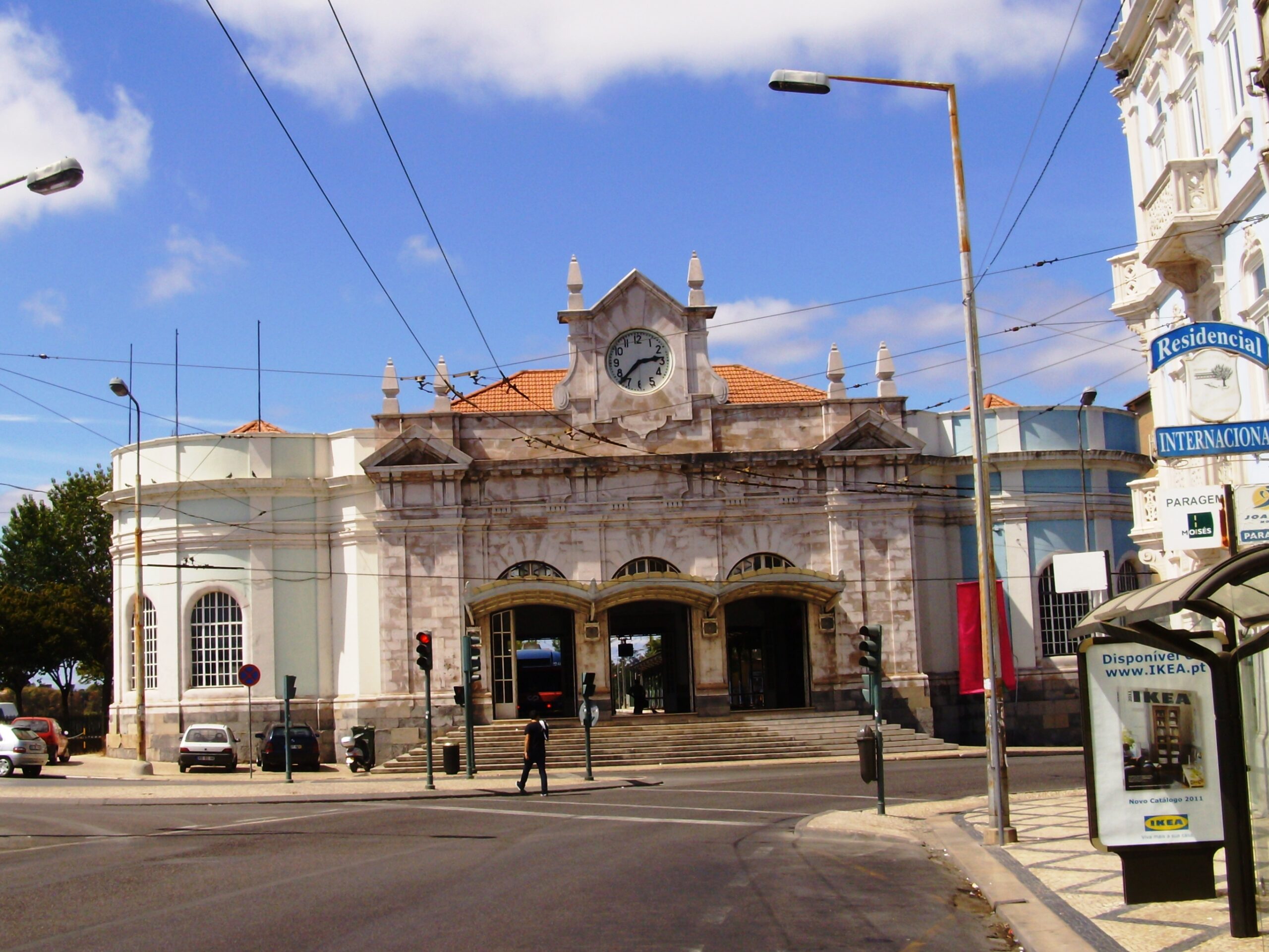
Photo by Carlos Luis M C da Cruz, public domain, Wikimedia Commons. Source: https://commons.wikimedia.org/wiki/File:Coimbra_Railway_Station.jpg
Faro and the Algarve: sunny, familiar, and easy to overpay for
If your definition of good weather is sun, the Algarve is the obvious answer. Faro’s climate normals show much lower annual rainfall than Porto, Coimbra, or Lisbon, and winter temperatures are mild by U.S. standards. English may also be easier in many Algarve areas because tourism and foreign-resident communities are established.
That convenience has a price. The Algarve can be seasonal, crowded, and expensive in the places Americans notice first. INE listed the Algarve among Portugal’s higher-rent regions for new leases in early 2025. A winter rental deal may not tell you what the same area feels like in summer, and a resort-town routine may feel thin once the sightseeing phase is over.
Faro is the most practical Algarve starting point because it is a real city with an airport, rail connections, and more infrastructure than a beach village. If the budget is tight, compare it against Coimbra, Aveiro, Setúbal, and the Silver Coast before deciding that more sun is worth every tradeoff.
Madeira: wonderful climate, different life equation
Madeira, especially around Funchal, has one of the most comfortable climates in the Portuguese world. IPMA’s Funchal station shows an annual mean around 20°C, or 68°F, and very few days over 30°C, or 86°F. If climate were the only factor, Madeira would be near the top.
But Madeira is not a mainland city with a train escape to somewhere else. Flights, shipping costs, family visits, medical specialization, rental supply, and island logistics all deserve extra attention. INE’s 2025 rent release also listed Madeira among Portugal’s higher-rent regions for new leases. That does not rule it out. It means Madeira should be chosen deliberately, not treated as a loophole around mainland prices.
Healthcare, visas, and the boring details still matter
Good weather does not replace practical setup. Portugal’s public system, the SNS, can matter for long-term residents, but access depends on legal residency and proper registration details. The official gov.pt guidance describes steps and documents such as identification, a Portuguese NIF, address, and a valid residence permit. For a short trial stay, you should not assume you will use the system the same way a resident does.
Visa and residency rules deserve the same caution. Americans considering longer stays need current consular guidance, not recycled internet numbers. Portugal’s MFA visa portal lists residence documentation and categories, including retirement or passive-income-related residency paths, but this article is not legal advice and should not be read as a D7 checklist. If you are deciding between a 90-day scouting trip and a longer move, verify the current rules before building your plan around any city.
Transportation is another quiet filter. CP’s national rail network connects major corridors, but smaller towns vary. Before you rent, check train frequency, bus routes, hills, clinics, pharmacies, grocery distance, and how your phone service will work on arrival. The phone-service setup guide can prevent a surprisingly annoying first week.
A simple way to choose
Start with the climate problem you can tolerate. If you hate heat, look north or coastal: Braga, Guimarães, Aveiro, Porto-adjacent towns, or the Silver Coast. If you hate rain and gray, look south or drier inland: Setúbal, Évora, Faro, or a carefully priced Algarve town. If you want the most balanced first look, Coimbra deserves serious attention.
Then price the real housing market, not the country. A national rent figure does not tell you what a furnished one-bedroom near transit will cost next month. Search by neighborhood, compare winter and summer pricing, ask what utilities are included, and do not assume older buildings have the heating, cooling, elevator, or humidity control you are used to.
Finally, separate a pleasant visit from a livable base. Lisbon may give the strongest first impression, but it is not the only practical answer. For many Americans, the better Portugal choice will be less famous: Coimbra for balance, Aveiro for mildness, Braga or Guimarães for cooler northern life, Setúbal for access, Caldas and the Silver Coast for a slower coastal rhythm, Évora for dry historic calm, Faro for sun with infrastructure, or Madeira for climate if island life truly fits.
The goal is not perfect weather. It is a place where weather, rent, healthcare access, transportation, and ordinary errands line up well enough that you can picture living there after the vacation glow wears off. Portugal still has real promise for that kind of life, but only if you choose city by city instead of buying the old idea that the whole country is cheap.
If Portugal is one option rather than the whole plan, compare Coimbra and Braga against the broader list of European bases for modest-budget Americans, with visa, healthcare, and Schengen limits treated as gates.
If Portugal is only one candidate, compare Portugal against Albania and Spain before assuming smaller-city Portugal solves the whole cost-of-living problem.
If Portugal is attractive but Spain is still a serious backup, use the Portugal vs Spain moderate-budget guide before narrowing to Coimbra, Braga, or other lower-pressure Portuguese bases.
References
- Portuguese Institute for Sea and Atmosphere (IPMA), Climate Normals 1991–2020: https://www.ipma.pt/en/oclima/normais.clima/1991-2020/
- IPMA, Climate Normals introduction and methodology: https://www.ipma.pt/en/oclima/normais.clima/
- Statistics Portugal (INE), House rental statistics at local level, 1st Quarter 2025: https://www.ine.pt/xportal/xmain?xpid=INE&xpgid=ine_destaques&DESTAQUESdest_boui=706289573&DESTAQUESmodo=2&xlang=en
- gov.pt, Migrants: Healthcare in Portugal: https://www2.gov.pt/en/migrantes-viver-e-trabalhar-em-portugal/migrantes-cuidados-de-saude-em-portugal
- Portugal Ministry of Foreign Affairs Visa Portal, Residency documentation: https://vistos.mne.gov.pt/en/national-visas/necessary-documentation/residency
- CP — Comboios de Portugal, Alfa Pendular service overview: https://www.cp.pt/info/en/alfa-pendular-train
- Visit Portugal, official tourism portal: https://www.visitportugal.com/en
- Settling Abroad, Portugal overview: Portugal for Americans Seeking a Slower, More Livable Overseas Base
For the other side of Portugal’s housing choice, pair this with the Lisbon standalone guide before treating any city as an automatic bargain.