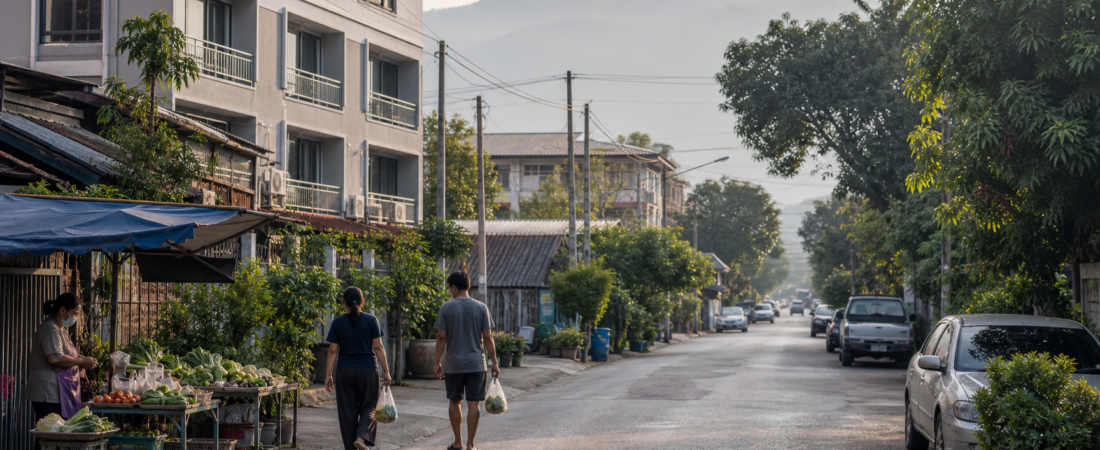
Chiang Mai can be a useful Thailand test base for Americans who want more everyday services and workability than a small resort town, without Bangkok’s size and intensity. Many neighborhoods put groceries, cafés, apartments, hospitals, and practical services close together. That can make it easier to settle into a routine. It is not, however, a permanent-cheap or friction-free answer: housing quality varies by building, local transport shapes the day, smoke and air-quality conditions can change the timing of a stay, and Thailand entry, work, tax, insurance, and healthcare decisions need current, personal verification.
Quick answer: Chiang Mai can be a strong exploratory base for Americans who want a contained Thailand city routine, lower-intensity daily life, and a practical place to test housing and work habits. Use the dashboard’s $1,500 to $2,200 monthly range as a planning band rather than a promise. It is a less suitable first choice if air-quality sensitivity, a need for capital-scale specialist services, a car-free routine in a poorly connected neighborhood, or an unverified long-stay plan would make daily life fragile.
Who Chiang Mai is best for
Chiang Mai is worth considering when you want a real city routine without Bangkok’s constant scale. It can suit someone who values food, basic errands, cafés, private-healthcare options, remote-work infrastructure, and neighborhoods where daily needs are reasonably close. It is especially useful as a trial stay for people deciding whether Thailand’s pace, heat, language environment, and housing patterns fit before they build a more committed plan.
The city is not interchangeable with all of Thailand. A familiar visitor district can feel easy while an ordinary apartment, rain-day ride, repair request, or medical errand feels more complicated. Treat a first stay as a routine test, not proof that every longer-term question has been solved.
Compare it in the City Fit Dashboard, where you can weigh Chiang Mai against Bangkok, Hua Hin, Da Nang, Penang, and other possible first bases by budget, healthcare comfort, airport access, internet, and everyday friction.
Budget: price the life you actually want
The $1,500 to $2,200 dashboard range is a broad planning band, not a quote for a furnished apartment or a guarantee of comfort. Numbeo’s Chiang Mai cost page can be a crowd-sourced directional check, but it cannot tell you the price, quality, building condition, utilities, noise, or commute of the exact apartment you would book.
Build a first-stay budget from real dates and a real address. Include furnished rent, deposits or cleaning fees, electricity for air conditioning, mobile-data backup, groceries, eating out, local rides, insurance, prescriptions, visa-related costs where applicable, and an unglamorous contingency. A low advertised rent does not help if the unit is far from the routine you need, has poor cooling, or turns every rain-day errand into a ride request.
The useful question is not “Is Chiang Mai affordable?” It is “Can I afford a Chiang Mai setup that works for my health needs, workday, neighborhood preferences, and actual dates?”
Housing and neighborhood checks
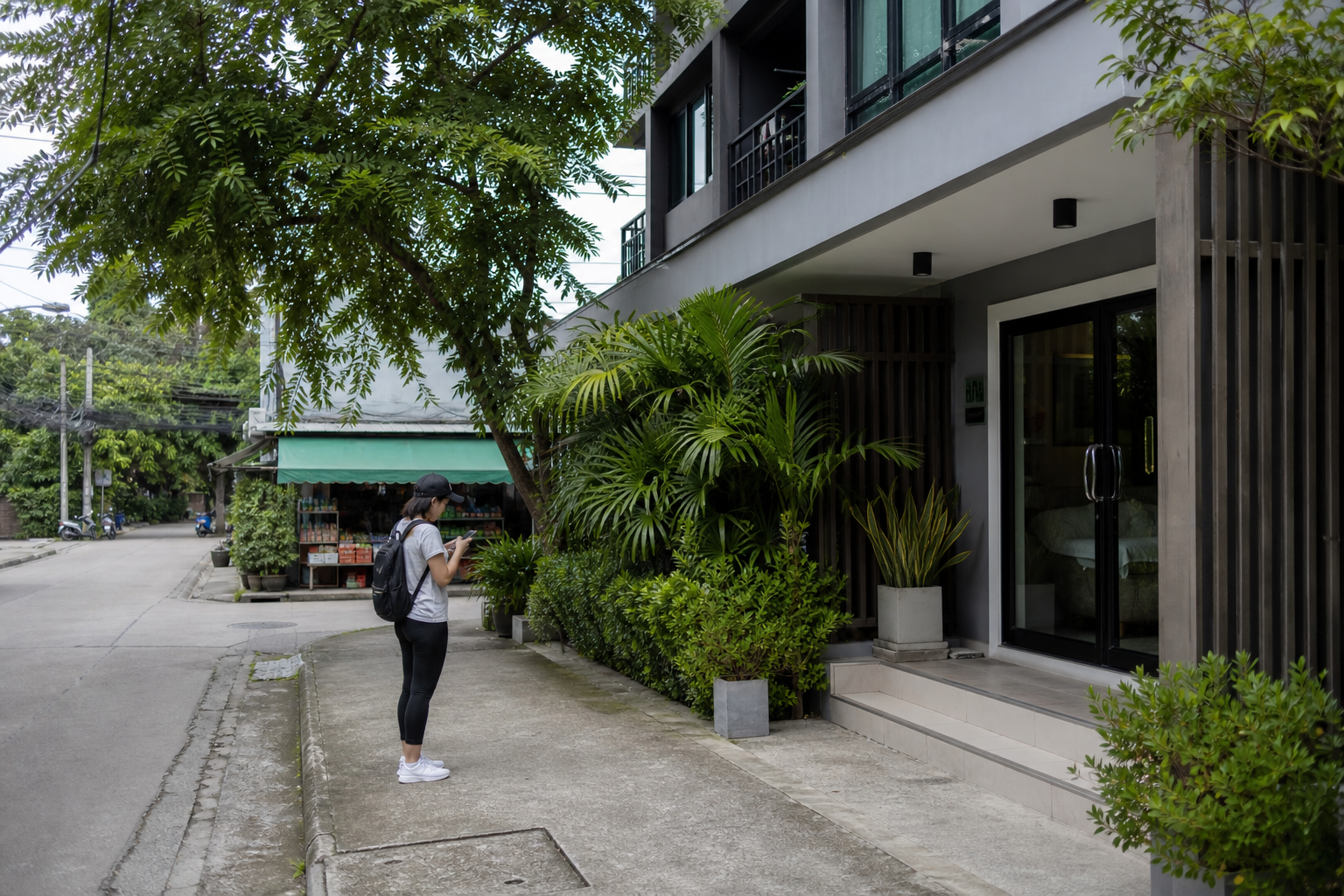
Choose a first-month address after checking the routine, not just a map pin or condo lobby. Ask for a current video walk-through and confirm the exact building, unit orientation, internet setup, air conditioning, water pressure, kitchen equipment, laundry, desk space, elevator or stair reality, street noise, and what utilities are included. Check whether construction, nightlife, traffic, or a nearby temple or school changes the noise pattern at the hours you care about.
Walk the route to a grocery store, pharmacy, cash machine, café, and the pickup point you would use in rain or heat. Some neighborhoods feel compact and simple; others become much more effortful if you do not want to use a motorbike. Test the ride-hailing wait time and pickup clarity at the building rather than assuming a central-looking map location will be easy.
For a longer stay, ask how the building handles maintenance, deliveries, mail, security, and internet outages. A clean short-stay listing can still be a poor base if ordinary problems have no clear owner or if the neighborhood becomes inconvenient outside tourist hours.
Daily life, air quality, language, and work routine
Chiang Mai can support a calmer work-and-errands rhythm than Bangkok, but calm is not the same as friction-free. English may be common in tourism-facing, medical, and coworking settings, while repairs, banking, government questions, and neighborhood services can still require patience or a translation tool. Keep your address offline, carry a payment backup, and plan how you would handle a small problem without assuming a host will always be available.
If you work remotely, test the apartment connection with the calls, uploads, and security setup you actually use. A café’s Wi-Fi or a host’s “fast internet” label is not proof of a dependable workday. Keep a mobile-data backup and notice whether the desk, cooling, noise, power reliability, and ride access make a normal week comfortable.
Air quality is a planning issue, not a footnote. Conditions and timing vary, and readers with respiratory or other health concerns should check current official information and their own clinician’s guidance before committing to a longer stay. Use current local conditions to decide when to test the city; do not rely on a remembered seasonal rule or a generic expat recommendation.
Healthcare and insurance preparation
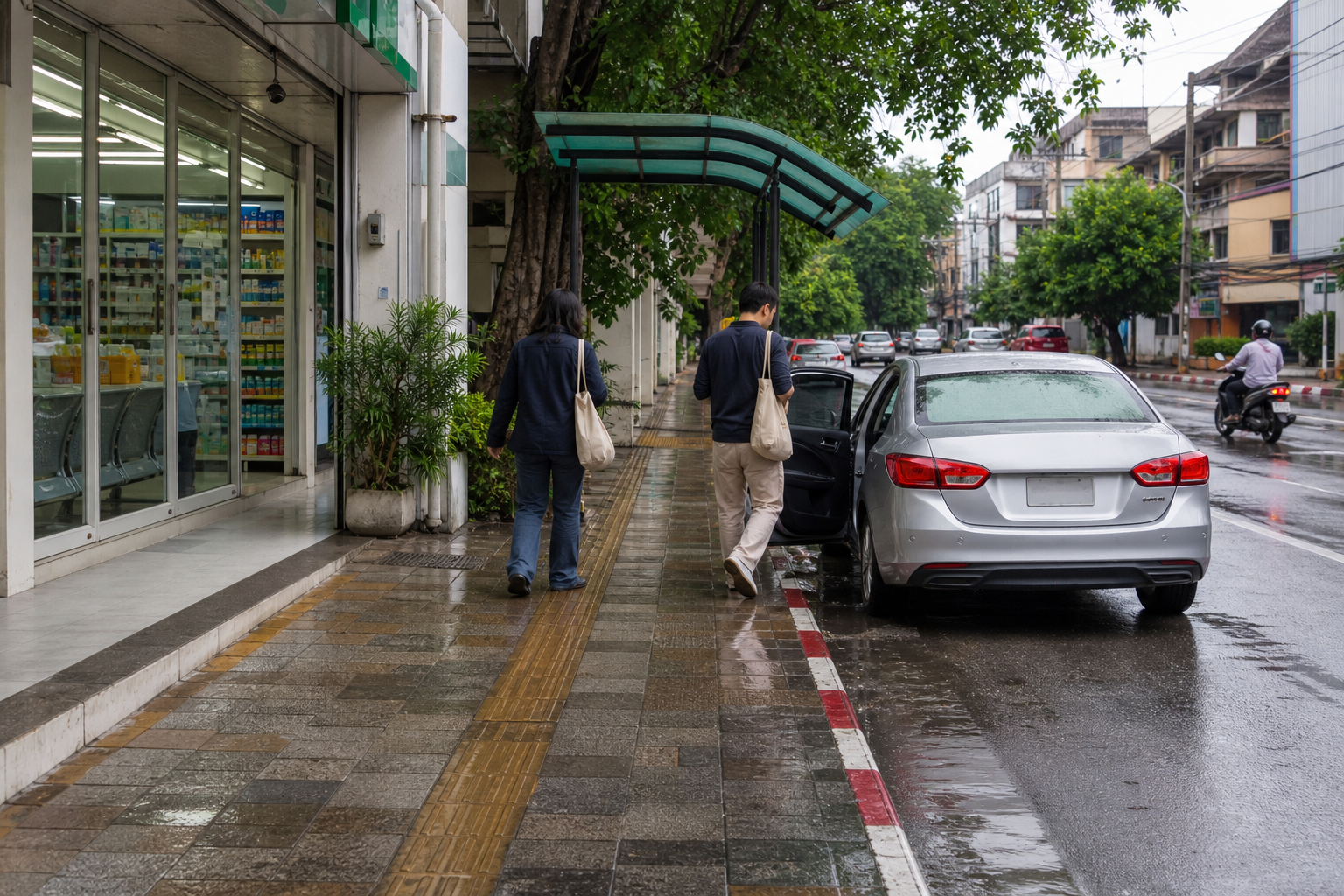
This is general planning, not medical advice. Chiang Mai may offer more private-care options than a small resort town, but that does not establish that a particular clinic, specialist, prescription, insurer, or emergency route will work for you. Before booking a long stay, identify the service you would use, how you would reach it, what payment process applies, and the backup plan if your preferred option is unavailable.
Use the CDC’s Thailand traveler view for current travel-health preparation and notices. Bring a concise medication list, sufficient routine medication where permitted, and copies of relevant records. The U.S. Embassy and Consulate in Thailand’s citizen-services page is the appropriate current reference for consular and emergency information; it is not a substitute for insurance or a local medical plan.
If prescriptions, ongoing care, or a medical buffer are central to your shortlist, use the Medical Prep Abroad Kit before deciding that Chiang Mai is the right compromise.
Entry, stay rules, and connections
Do not treat a comfortable Chiang Mai routine as proof that a longer stay is automatically permitted or simple. Passport-specific entry requirements, stay duration, extensions, registration, work permissions, tax obligations, and insurance conditions can change and may depend on facts this guide cannot know. Start with the official Thai e-Visa portal, then verify the current rule that applies to your passport, purpose, dates, and intended work arrangement before you book nonrefundable travel or make a long-term plan.
Also verify the real arrival and onward route. Airport access can look simple until an evening arrival, luggage, rain, or an unfamiliar building complicates the last leg. Price and test the route you would actually use, including ride pickup, local transport, and any connection to Bangkok or another destination. A manageable arrival is part of a useful first-base test.
A useful first-week test
Use the first week to test the Chiang Mai you would actually live. Buy a normal grocery basket. Try a pharmacy and cash withdrawal. Take a rain-day ride from the apartment. Work through a real video call and upload. Check the street in the morning, afternoon, and evening. Ask the building how maintenance and internet issues are handled. Look up current air-quality conditions and decide whether the dates still make sense for your needs.
Then compare the result with alternatives. The Thailand city comparison helps distinguish Chiang Mai’s contained-city routine from Bangkok’s scale and Hua Hin’s different pace. The Thailand country guide adds country-level planning context. Chiang Mai should win because its normal daily loop feels sustainable, not merely because a short visit felt convenient.
Sources to check before travel
- Thai e-Visa: official visa and application information
- Thailand.go.th: official public-information portal
- CDC: Thailand traveler view
- U.S. Embassy and Consulate in Thailand: citizen services
- Numbeo: cost of living in Chiang Mai
Recheck these sources before travel. Entry rules, health notices, air quality, furnished-rental availability, and local procedures can change.
If Chiang Mai is still on your shortlist, use the Destination Shortlist Kit to compare the apartment, healthcare plan, air-quality timing, route, and daily-friction questions against your alternatives.
Readers choosing between Thailand city bases can compare Chiang Mai with this Bangkok city guide for services, scale, transit, and ordinary daily routines.
Staying longer in Chiang Mai: Use this practical guide to building a repeatable week alongside the housing, air-quality, and everyday-routine checks.