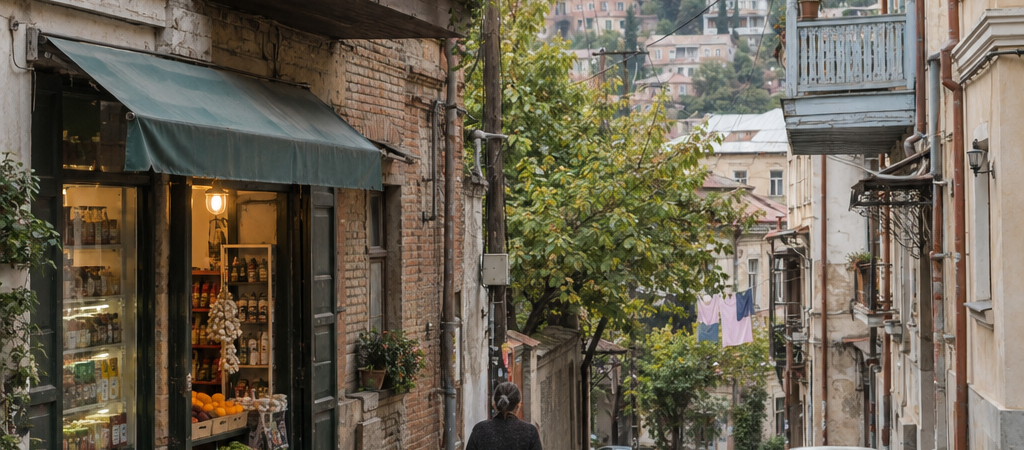
A longer stay in Tbilisi becomes easier when the city stops being a list of sights and starts becoming a set of repeatable errands. The useful question after the first week is not “What should I see next?” It is “Can I make ordinary days feel manageable here?”
This companion is for testing that rhythm. It does not replace the site’s Tbilisi city guide, and it is not visa, legal, medical, or financial advice.
Start with one small home base
Choose a neighborhood based on the errands you will repeat, not only the view from a short-term rental listing. In the first few days, walk the route you would use for groceries, coffee, a pharmacy, an ATM, transit, and a quiet indoor break. Repeat it at a different time of day. A block that feels convenient at noon can feel very different in rain, evening traffic, or on a weekend.
Keep the first week flexible. Instead of signing yourself up for a packed itinerary, make a short list of questions: Is the building entrance easy to use? Is there a reliable place to buy basics? Can you get home comfortably after dark? Does your phone connection work well enough for the routines you actually have?
Give transit a trial week
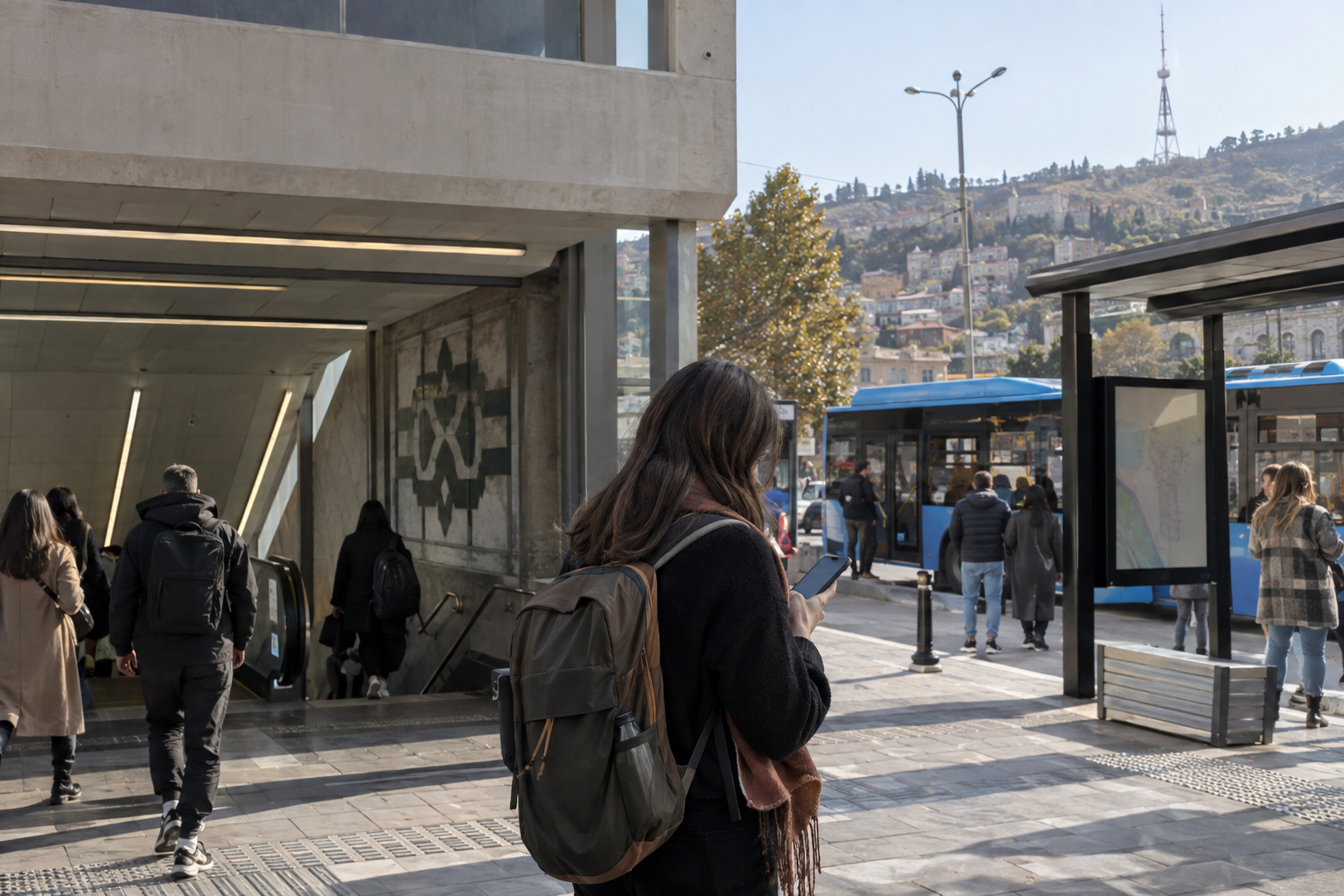
Tbilisi Transport Company publishes trip-planning, route, schedule, realtime, and stop-information tools. Its tariff page lists municipal transport coverage across metro, bus, minibus, and the Bagebi–University ropeway, alongside card and bank-card payment information. Fares and service details can change, so check the official TTC page before relying on a particular pass or route.
Use transit before you need it. Take one ordinary cross-city trip with no appointment at the other end. Notice platform access, transfers, payment steps, and what happens if your phone loses signal. That low-stakes test gives you a more useful answer than trying to learn the system on a day when you are late.
A practical backup is simple: keep the payment method you have confirmed works, enough battery for navigation, and an alternative way home. This is not about expecting trouble; it is about reducing the friction of a normal mistake.
Make an errand map before you need one
After the first transit trial, build a small map around the places that make a normal week work. Mark your grocery option, pharmacy, cash point or bank branch, a place to sit indoors for an hour, and the stop or station that gives you the clearest way home. The map does not need to cover the whole city. It only needs to answer the questions that come up when you are tired, carrying bags, or working around weather.
Test the map in pieces. Buy one or two basics instead of attempting a large shop on day one. Walk the route from your accommodation to the nearest useful stop, then repeat it in the opposite direction. If you rely on a phone for directions, save the essential locations before leaving Wi-Fi. Notice which parts of the trip are pleasant, which are merely workable, and which require more attention than you want to spend every week.
This is also a good time to separate a visitor’s checklist from a resident’s checklist. A beautiful view, a popular restaurant, or a famous neighborhood can be valuable, but they do not replace a reliable place to solve an ordinary problem. The point of the first-week map is not to judge Tbilisi quickly. It is to give yourself enough evidence to decide whether your routine can become less effortful over time.
Build a weekly public-space habit
The municipal portal groups city services including environmental protection, transport, culture, and infrastructure. For a longer stay, public space becomes part of your routine rather than an occasional attraction. Pick one walk, park edge, square, or route you can return to without planning an outing around it.
This is where seasonal reality becomes clear. Track shade, wind, rain cover, pavement, and the distance between your usual stops. If you are considering Tbilisi as a base, a handful of ordinary walks tells you more than a single scenic afternoon.
Add culture as a repeatable option
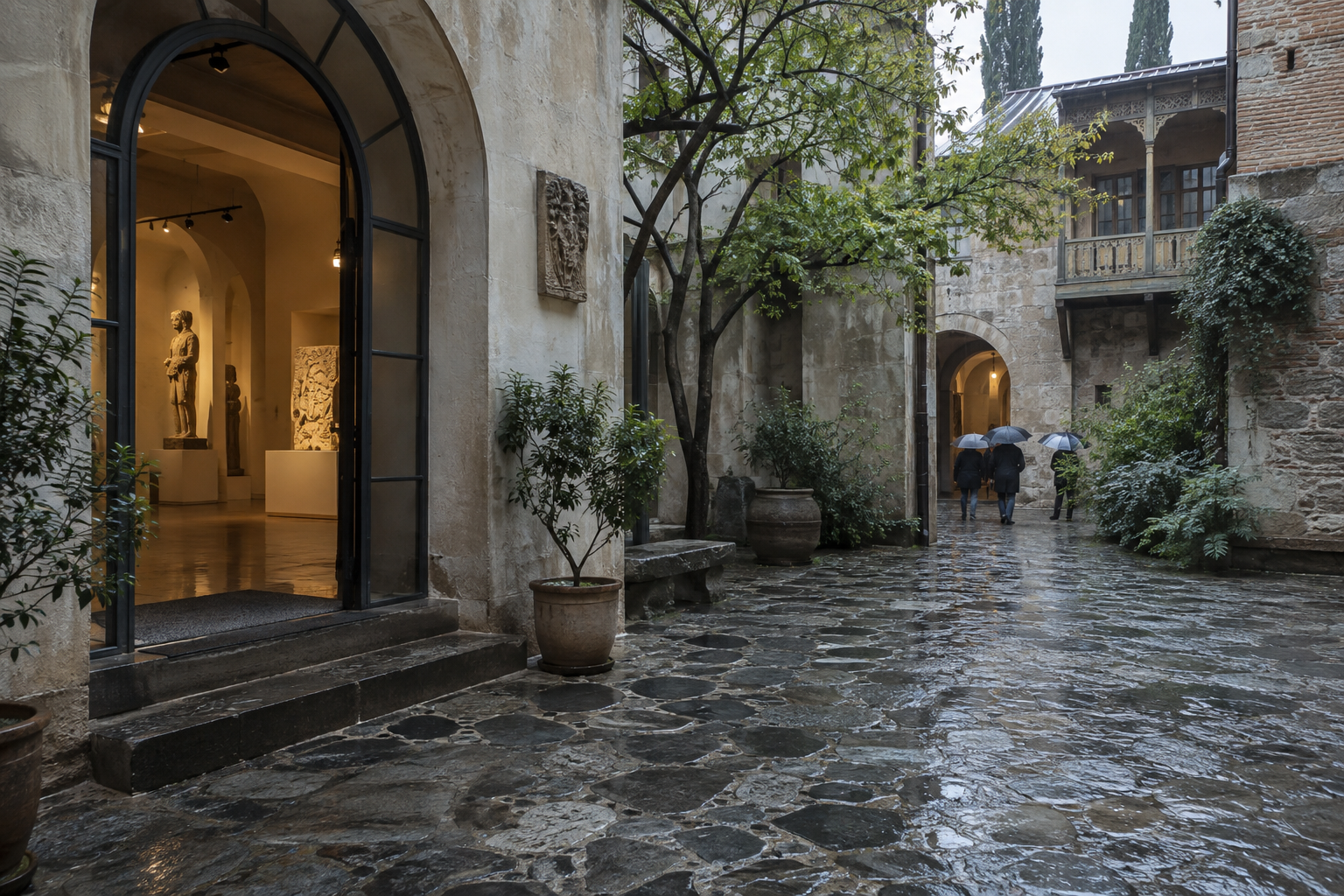
The Georgian National Museum’s visitor pages include planning, hours, tickets, accessibility, and contact information. The Simon Janashia Museum of Georgia is one option to keep in reserve for a hot, wet, or low-energy day. Check the museum directly for current admission details and opening times before you go.
The goal is not to turn every weekday into a cultural project. It is to have a few reliable choices when your usual routine needs a reset. A museum visit, a neighborhood walk, or a café work session can make a longer stay feel less like a holding pattern.
Keep a weather and energy fallback
Every longer stay benefits from a plan for the days when your preferred routine does not fit the conditions. In Tbilisi, that might mean switching a long walk for a museum visit, shortening an errand loop, or choosing a work session nearer to home. Treat that fallback as part of the routine, not as evidence that the day went wrong.
Keep one indoor option, one nearby food or grocery option, and one route home that you have already used. Before making a special trip, check the official museum page for current visitor information and check official transport tools for the route you intend to take. A small confirmation step can be more useful than relying on a saved recommendation whose hours, access, or service pattern have changed.
The useful measure is not whether every day feels exciting. It is whether a difficult-weather, low-energy, or busy-admin day still feels manageable without extensive planning. When you can adjust the day without losing the whole day, the city begins to function more like a base than a temporary stop.
Protect your admin day
Give one morning each week to practical maintenance: review bookings, refill essentials, check transit or phone needs, and confirm any upcoming appointments. Keep a modest amount of local cash and a separate payment backup, but use the arrangement that is appropriate for your own banking and security situation.
Entry and visa requirements depend on nationality, purpose, and timing. Georgia’s Ministry of Foreign Affairs provides an official entry/visa portal with country-specific guidance. Verify your own circumstances there and seek qualified advice when a decision involves residency, work, healthcare, or tax obligations.
A one-week test
Before calling Tbilisi a comfortable base, try this sequence:
- Do a grocery-and-transit errand without a rideshare fallback.
- Work or read from somewhere outside your accommodation for two hours.
- Take one unplanned walk in less-than-perfect weather.
- Plan one cultural or public-space afternoon using official hours and routing.
- Review what required more energy than expected.
If those small tests feel workable, you have the beginning of a routine. If they do not, that is useful information too. A longer stay succeeds when the ordinary parts of life are easy enough to repeat.
References
- Georgia Ministry of Foreign Affairs / GeoConsul: Entering Georgia / visa information. Accessed September 17, 2026.
- Tbilisi Transport Company: Tariffs and municipal transport information. Accessed September 17, 2026.
- Tbilisi municipal portal: Municipal services. Accessed September 17, 2026.
- Georgian National Museum: Simon Janashia Museum of Georgia visitor information. Accessed September 17, 2026.