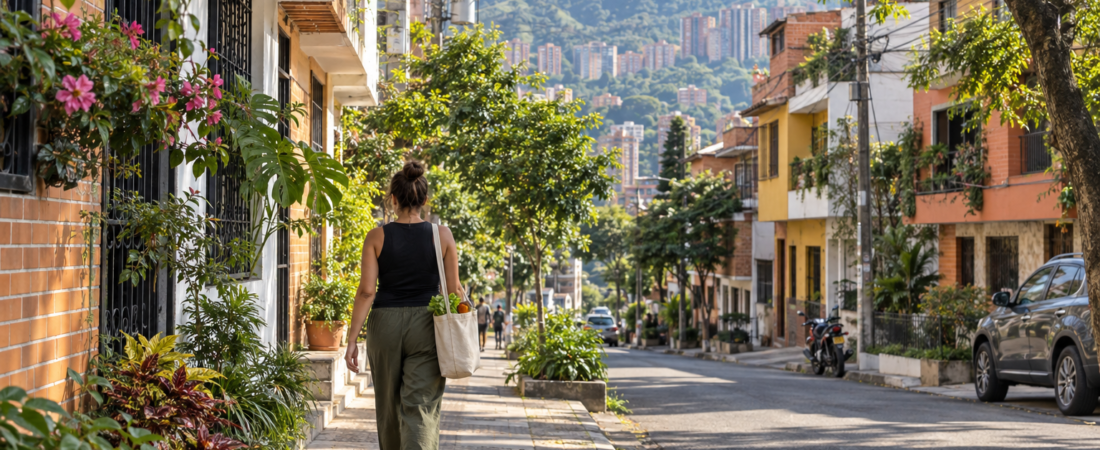
Medellín can be easy to romanticize from a short visit. The green hills, mild days, cable cars, and lively streets make an immediate impression. A longer stay asks different questions: Which neighbourhood lets you handle errands without turning every task into a project? How much of your day can move by Metro? What is the plan when the rain starts? And where can you spend an ordinary Tuesday without treating the city like a checklist?
This is a practical companion to the foundational Medellín guide. It is about building a repeatable week, not trying to decide in advance whether the city is right for everyone.
Start with a small working radius
In the first month, a smaller radius is usually more useful than a perfect citywide plan. Choose a neighbourhood based on the parts of life you will repeat: groceries, a pharmacy, a place to walk, a dependable work setup, and a sensible route to the places you expect to visit regularly.
Make two short lists before committing to a routine. The first is functional: the errands, services, and transit stops you would use on a normal weekday. The second is restorative: a café, a park, a museum, or a quiet indoor place where you can spend an hour without needing an occasion. When those lists are close together, the city feels less like a sequence of rides and more like a base.
A first-week apartment is not required to answer every long-term question. Its job is to give you a calm place to observe noise, rain, walking conditions, and the real timing of routine trips. Keep any relocation decision separate from the excitement of the first few days.
Let transit shape the week, not every hour
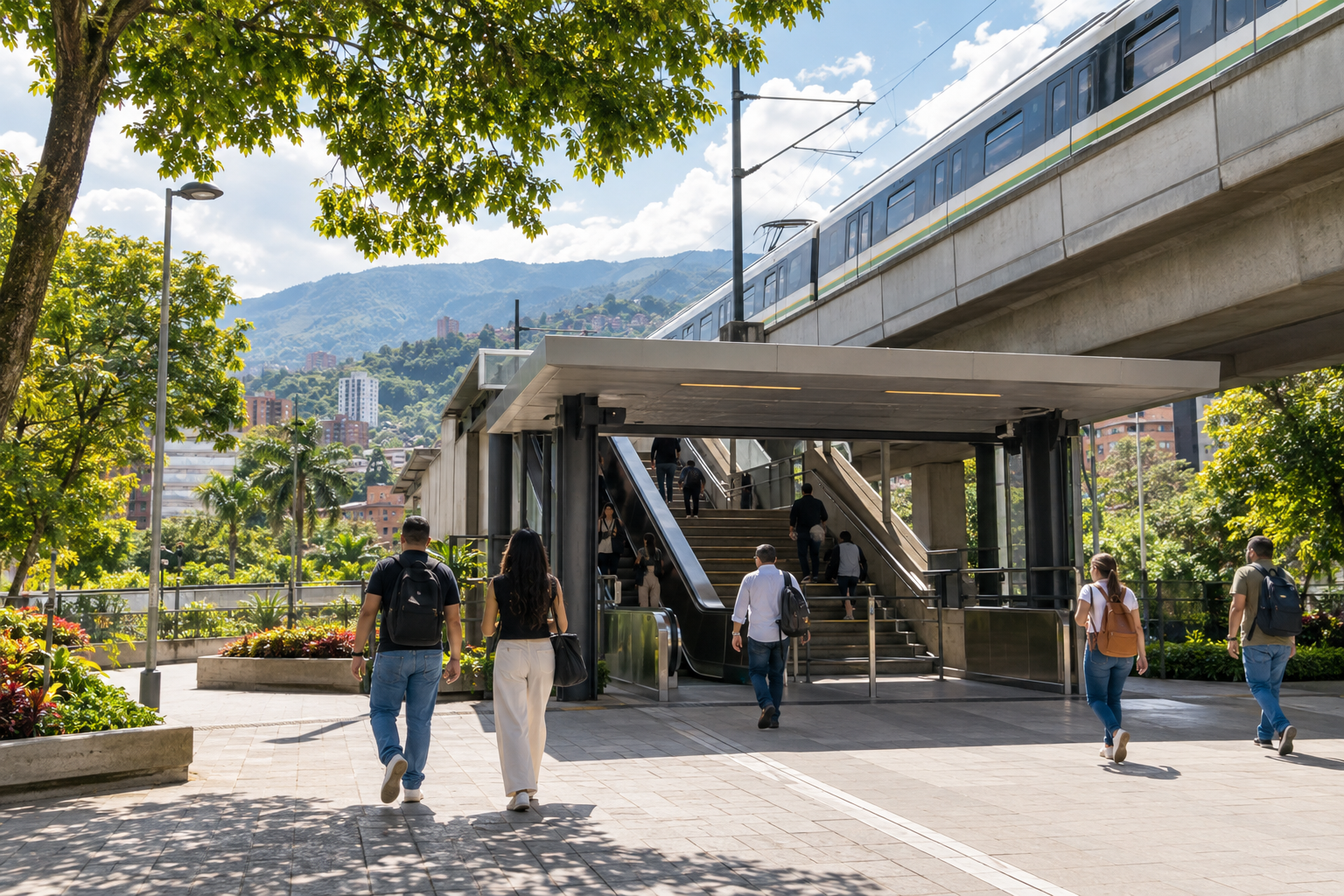
Metro de Medellín is the official starting point for current maps, fares, service notices, and Cívica information. Check its own site before relying on a schedule or pricing detail, especially if you are planning around an appointment or an airport connection.
For daily life, run a few low-stakes practice trips first. Take the route to a grocery area, a cultural stop, or a meeting without a tight deadline. Learn where the transfers feel straightforward and where weather or crowds change the experience. That makes later errands less stressful and gives you a clearer picture of whether a neighbourhood suits your actual mobility needs.
Treat the Metro as part of a flexible system rather than a promise that every trip will be identical. Keep a backup option for a late return, a heavy-rain day, or a trip that involves bags. The point is not to optimize every movement; it is to avoid building a routine that fails when one ordinary variable changes.
Make rain-day planning normal
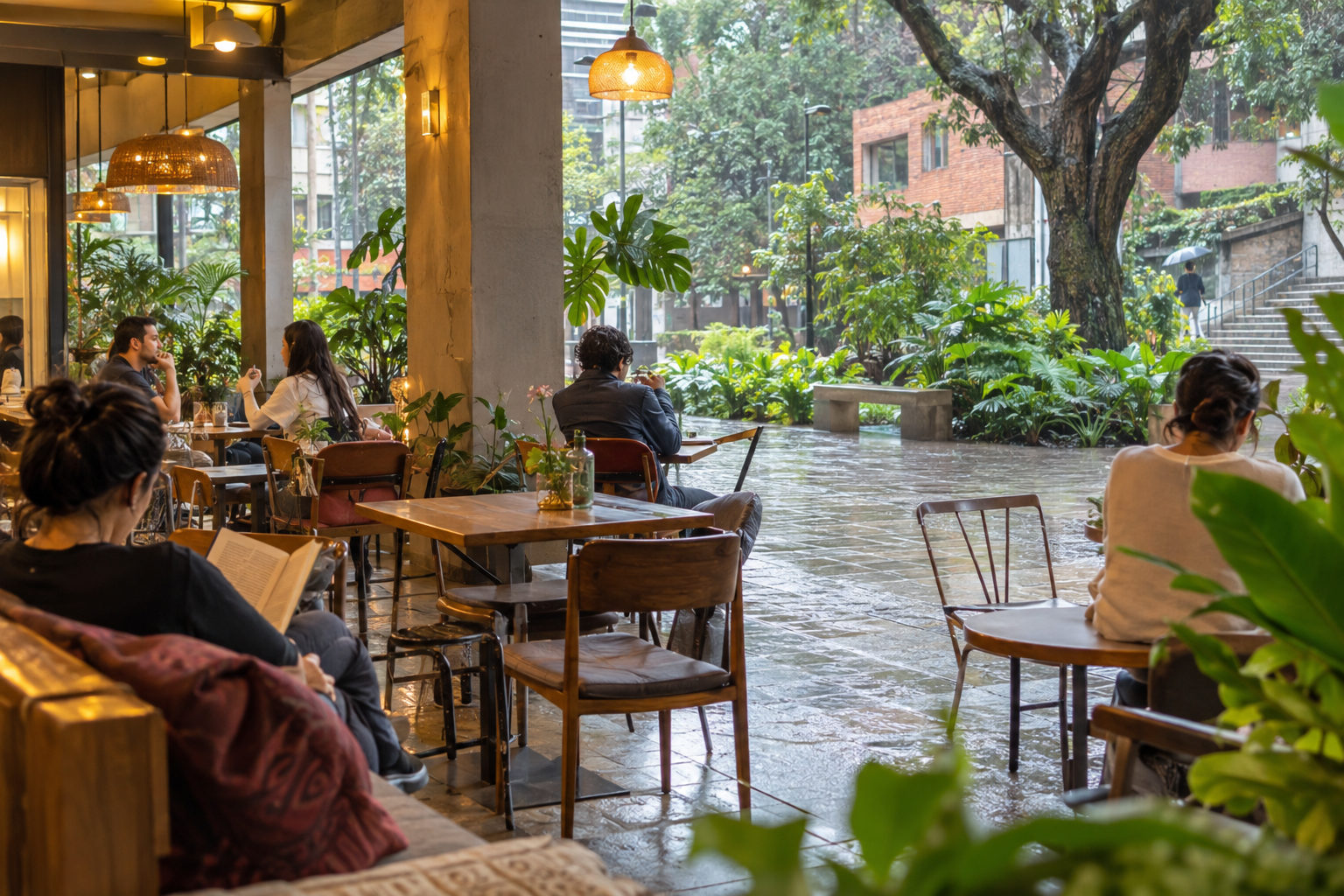
Weather affects a long stay differently than a weekend. A passing shower is not a crisis, but it can change walking time, the usefulness of an outdoor workspace, and the energy required for errands. Build a rain-day version of your routine early: a nearby shop, a covered café or work option, a transit route you understand, and a few indoor plans.
This is also a reason to inspect an apartment beyond the view. Notice light, ventilation, noise, and the short walk from the entrance to the nearest useful stop. Small frictions become important when repeated five days a week.
Use public space as part of the routine
Medellín’s physical-infrastructure secretariat describes municipal responsibilities that include parks, green areas, sidewalks, and public-space maintenance. That does not guarantee the condition of a specific block on a specific day, but it is a useful reminder that public space is a working part of city life, not just a visitor attraction.
Build one or two outdoor habits that are easy to skip when the day is busy but worthwhile when they happen: a morning walk, a late-afternoon loop, or a stop between errands. Keep the goal modest. A routine survives longer when it fits the weather, your schedule, and the places you genuinely return to.
Add culture slowly
Museo de Antioquia can be a useful anchor for an indoor or cultural afternoon, with current visitor information and programming best checked on its official site. The broader principle matters more than any single venue: leave room for places you revisit.
Instead of trying to see everything in the first month, choose one cultural stop, one public-space habit, and one social or language-related activity that can recur. That rhythm creates better information about the city than a packed itinerary. It also leaves room to change course if your first neighbourhood, work pattern, or transit assumptions do not hold up.
Keep immigration and paperwork factual
Colombia’s Foreign Ministry is the correct place to begin checking whether a visa is needed and which categories apply. Eligibility can depend on nationality and purpose, and requirements can change. Do not treat a general travel article as legal or immigration advice.
For a longer stay, keep a simple document system: copies of entry records, accommodation information, insurance details where relevant, and a note of official links you used. If a question becomes time-sensitive or personal, return to Cancillería or the relevant official authority rather than relying on an old forum thread or a social post.
Considering Medellín as a possible base? Start with the foundational Medellín guide, then use the Destination Shortlist Kit to turn these neighborhood, transit, and weather checks into a reusable worksheet.
A useful first-month test
At the end of a few weeks, ask practical questions rather than broad ones:
- Can I complete my regular errands without losing half a day?
- Do I have a transit routine I understand well enough to use when tired or rushed?
- Does my apartment work in daylight, rain, and a quiet evening?
- Have I found places that make the week feel sustainable rather than merely interesting?
- Am I checking official sources for rules and service details instead of making assumptions?
If most answers are yes, the city has earned a more serious evaluation. If not, the result is still useful. A longer stay is partly an experiment, and a clear answer about fit is better than forcing a routine that never becomes easy.
Before you commit
Keep the planning sequence simple: verify entry requirements with the Colombian Foreign Ministry, check current transit information with Metro de Medellín, and test the ordinary parts of the week before making a longer commitment. Medellín may reward a slower approach—one built around repeatable routines, realistic weather plans, and enough room to notice how daily life actually feels.
References
- Cancillería de Colombia, Do I need a visa?
- Metro de Medellín
- Alcaldía de Medellín, Secretaría de Infraestructura Física
- Museo de Antioquia