
A first weekend in Bangkok can disappear into meals, trains and the promise of one more neighborhood. A third Tuesday is less showy. You need groceries, you may be tired, and going out still means getting home. If that ordinary day feels manageable—and you would happily do it again—you have learned more about a longer stay than a crowded sightseeing weekend could tell you.
This is a companion to our practical Bangkok guide, which covers the budget planning band, housing checks, healthcare, transit, and permission-to-stay questions. This piece asks what fills the week after the setup errands. Which parts of the city would you seek out again, and which ones were fun mainly because they were new?
Start with a small radius
Before you collect recommendations across the city, get to know what sits close to your temporary home. Can you reach a meal you like, useful groceries, somewhere to pause out of the heat, and a transport route you would willingly use twice a week? A small circle is not a failure of imagination. It is what lets the larger city stay enjoyable instead of becoming a daily obligation.
Test it at the hour you would really use it. A route that seems short on a screen may involve a hot sidewalk, crossings that require patience, a station entrance farther away than expected, or a wet final stretch on a rainy day. The BTS route and fare planner and BEM MRT system map help you understand the rail portion, but they do not tell you how the full journey feels from your apartment door to the destination door. Walk or ride the exact route before treating it as an effortless habit.
Try the same test after dark. You might want dinner nearby and an easy return, or you might want to stay in and cook. Can you have a good evening without arranging transport or finding the energy for another cross-city trip? That answer will matter several times a week.
Let meals become familiar
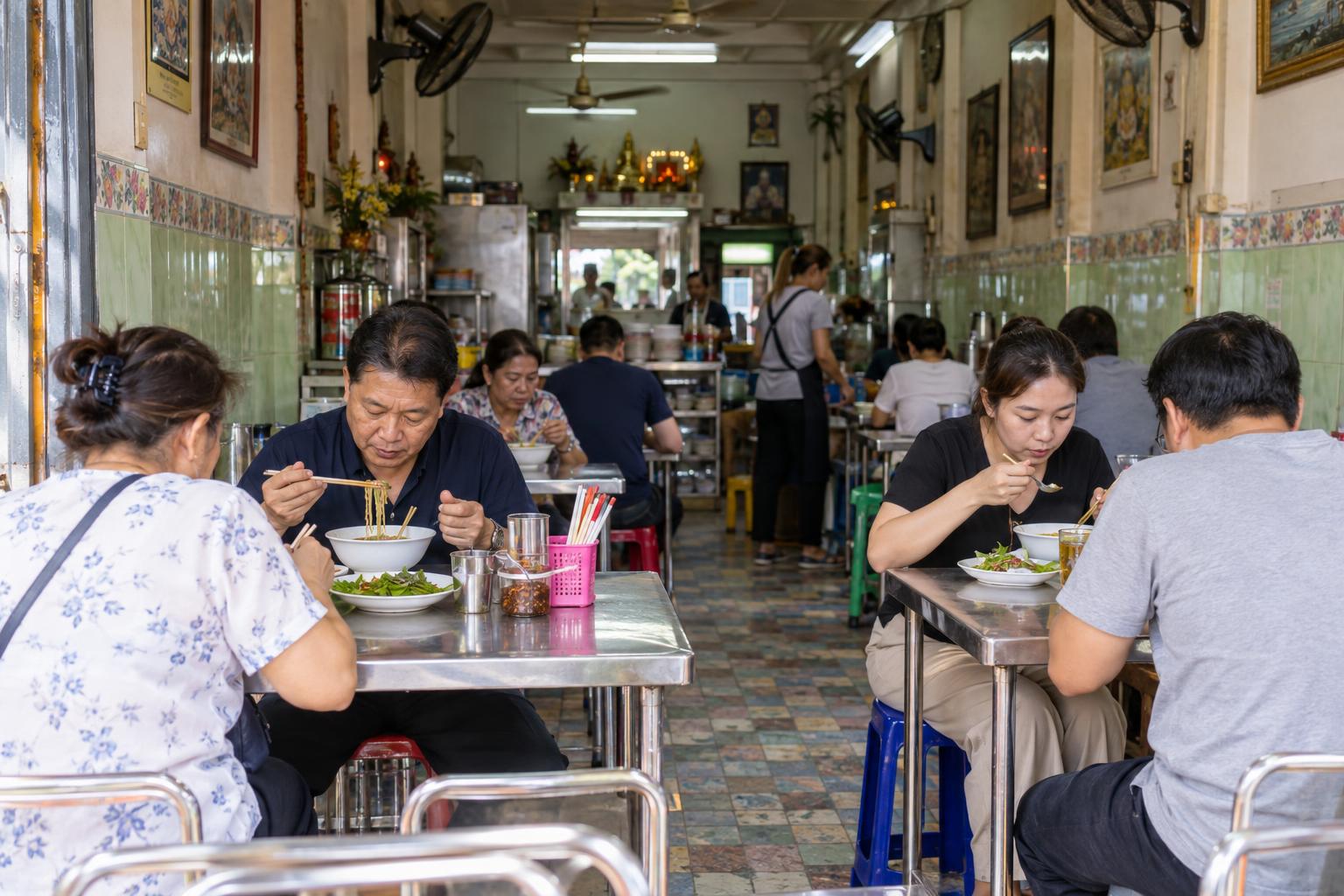
Food is one of the pleasures of being in Bangkok, and it is easy to turn every meal into a new mission. Let some meals be repeats. A month feels different when you know where to eat after a tiring day and can choose a new place because you want to, not because you have no dependable default.
Try a few nearby places more than once. Notice what is open when you are actually hungry, whether you can get home easily, and what the whole meal costs once the ride or delivery is included. If you have dietary restrictions, ask the individual establishment about ingredients and preparation rather than assuming choice equals suitability. Build a grocery basket you could carry or deliver routinely. Cooking some ordinary meals may be less exciting than food exploration, but it makes the budget and the week more honest.
Keep room for a deliberate food outing elsewhere, though. Go slowly enough to enjoy the surrounding area as well as the meal. On the return trip, ask yourself a plain question: would I come back on an ordinary week? A memorable dinner can be worth the journey once. The place near home that you choose again without thinking may do more for your daily life.
Find a green or quiet reset you can actually use
You do not need a grand nature excursion every time the city feels loud. Perhaps there is a park you can reach early, a shaded stretch you enjoy, or a calm indoor stop that fits between errands. Try the one that works from your address. Half an hour you can repeat is often more useful than a beautiful afternoon that consumes the rest of the day getting there and back.
Bring the practical questions with you. Is there a comfortable way in and out? Are the surfaces and crossings workable for your mobility? Is there shade where you need it? How does the trip home feel when you are hot or rain begins? An appealing public place is useful only if the route makes it part of ordinary life.
Lumphini Park is one possible green reset to test, not a reason by itself to choose an apartment across the city. Check the current entrance and route from your own address, then try that trip at the hour you would actually use it. A park at one hour may not feel like the same escape at another. If a green habit matters to your wellbeing, return several times rather than deciding from one good morning.
Keep one bigger city day in the week
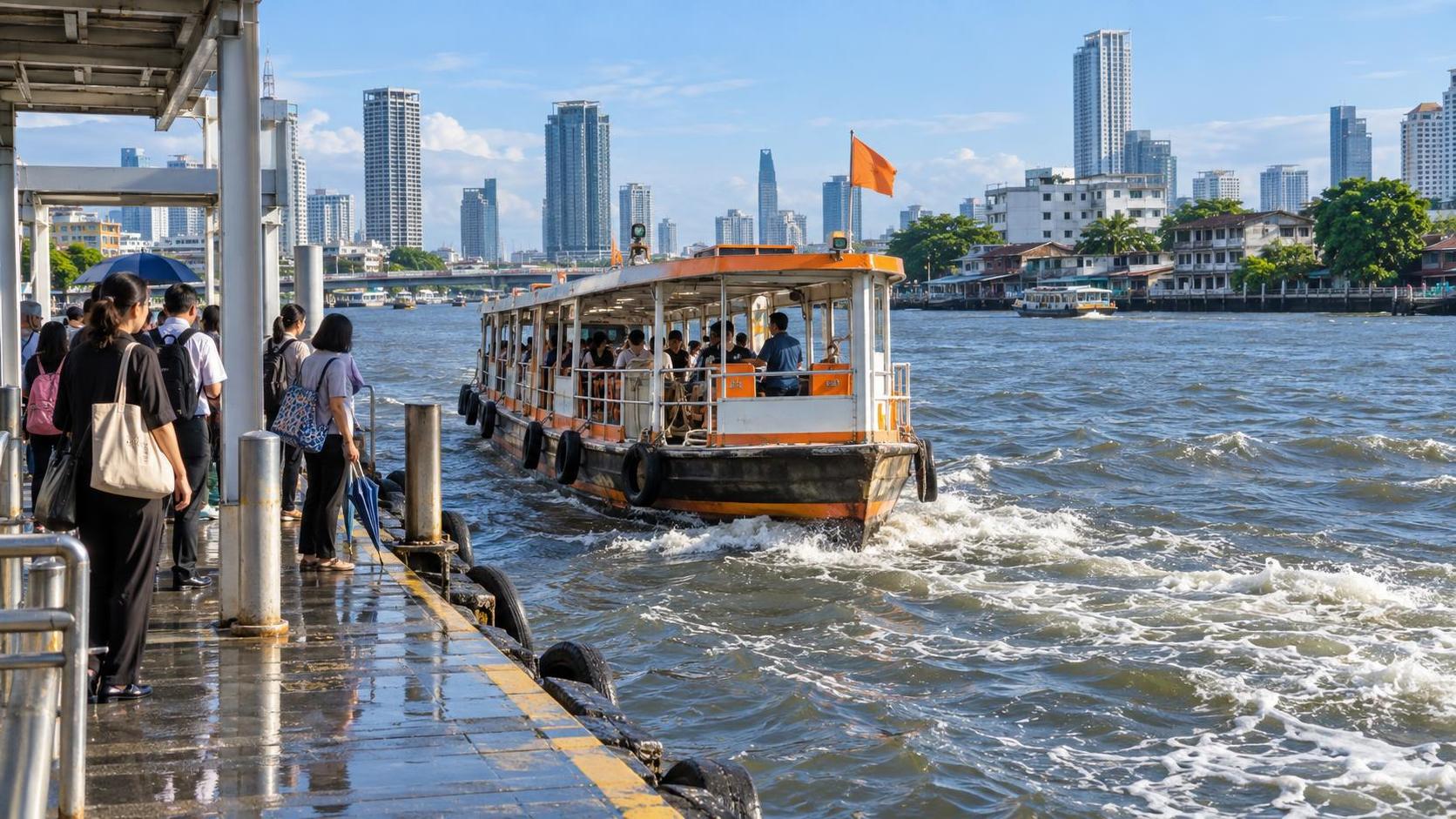
One day a week, widen the map on purpose. A Chao Phraya river outing is one concrete weekend test: check the Chao Phraya Express Boat service map, choose a stop that interests you, and see whether the whole pier-to-home journey is pleasant enough to repeat. Check the current boat, pier and operating details before leaving; this is an option, not a promise that every service runs when you want it. An arts venue, a market, or a performance can be another focus. Check the organizer’s current details before leaving; old recommendations are poor evidence that a show, stall, price, or opening time still applies. This outing should be a pleasure, not a test of how much city you can consume.
Make the outing deliberately narrow. Choose one focus and leave time to sit, eat, or turn back. Older neighborhoods and places of worship are lived-in spaces; follow posted visitor rules, be considerate with photographs, and do not treat a busy residential street as a set. Returning to an area at a different hour may tell you more than racing through several districts in one day.
Count the whole trip. Which station exit did you use? How much walking followed the train? What happened when you wanted to go home? If an Ari-to-Siam BTS trip is on your likely weekly map, try that exact station-to-door journey and the return at your usual hour. The official BTS and MRT sites are useful planning starts, but your own door-to-door trial is the more important evidence for a longer stay. A place can be interesting without becoming part of your weekly circuit.
Leave a day unplanned
An empty calendar can feel odd in a city with so many things to do. Leave one day open anyway. Do laundry, call home, work, rest, collect a prescription if needed, or make a simple meal. These are not days stolen from the Bangkok experience; they are part of living there. If you need a paid attraction to rescue every quiet day, look at what that habit would cost over a month.
A slow day also tells you about the apartment. When you are there for hours, does the noise wear on you? Is there somewhere nearby to sit when you want a change of scene? Can you manage a necessary errand after sleeping badly? The practical guide helps you inspect a unit; an unscheduled Tuesday shows you how it feels to use it.
If social connection is part of your goal, do not equate a busy public place with company. Find a recurring class, group, or other activity that genuinely fits you, verify its current details, and return. The first visit may be awkward. The stronger question is whether a second visit feels worthwhile. Bangkok’s size offers possibilities; it does not automatically provide belonging.
Notice what the city charges in effort
Heat and rain change the day. The real cost of an outing includes the exposed walk, a wait, and the trip back. Build an indoor alternative and test routes in actual conditions. Do not assume the pleasant version of a walk is the version you can do every week.
Air quality is not static. The Thai Pollution Control Department’s dashboard offers station-based monitoring, though this research pass could not confirm current values from its client-loaded data. If air conditions affect your plans or health, check current official readings and personal guidance rather than relying on a seasonal stereotype or a snapshot in an article.
A fast train does not erase the last mile. A station on the map may still leave a difficult crossing or an uncomfortable walk. Try the precise route, including entrances, lifts or stairs if relevant, and your return after dark. Accessibility is route-specific and personal; neither a citywide claim nor a hotel listing can answer it for you.
Traffic and paid rides can quietly reshape the budget. A discretionary ride can be a sensible choice. Several each week may mean your chosen home base is not working as cheaply or easily as expected. Track the rides you actually need, not just the rail journeys you intended to take.
Choice itself can become tiring. It is perfectly reasonable to have a regular lunch, a familiar route, and a favorite quiet stop. Defaults free you to explore on the days you want to; they do not mean you have failed to make the most of Bangkok.
Try a four-week ordinary-life experiment
Week one: find your bearings. Finish the essential arrival tasks and identify two nearby places you would gladly use again. Buy ordinary groceries, then try the rail or walking route you expect to rely on. Keep the schedule light enough to notice the time, energy and awkward turns each errand requires.
Week two: repeat before adding more. Go back for a meal and revisit your quiet or green stop. Try a different hour, and see what changes when the weather is less cooperative. Repeat one journey you expect to make often. Familiarity may make it easier—or uncover an inconvenience you overlooked in week one.
Week three: go farther. Choose one arts, market, neighborhood, or cultural outing beyond your usual circle. Track the door-to-door time, spending, and how you feel coming home. Would you look forward to doing something similar next month? If not, it can remain a good one-time memory rather than a reason to live nearby.
Week four: stop performing the trip. Work or rest as you normally would. Handle chores, eat a few unremarkable meals, return to a group if connection matters, and leave a day unplanned. Resist the urge to fill a flat afternoon with a landmark. A satisfying week without special plans is the strongest evidence that this could be more than a holiday.
At the end, write down five answers while the details are fresh: Which three places did you choose twice without prompting? Which trip looked easy but felt costly? How did a hot, wet, low-energy, or poor-air day change your plan? What did the ordinary week really cost, including rides and convenience spending? Did the city’s scale make you feel supplied with options, or continually stretched?
Bottom line
Bangkok’s appeal over a longer stay may be that the wider city is always there while most days stay close to home. If that combination energizes you, it can be a strong fit. If you are weighing it against other Thai routines, compare Bangkok, Chiang Mai, and Hua Hin by cost and daily fit. If every good day requires a long journey, or you spend the next day recovering from heat, noise or travel effort, reconsider the neighborhood—or the city. The clearest verdict is the week you would willingly live again.
If that week works, use the Destination Shortlist Kit to compare it with your other possible bases. For the less glamorous but essential questions about housing, budget, healthcare, entry and work rules, and transport setup, return to the practical Bangkok guide. An enjoyable month is evidence of lifestyle fit, not a complete relocation plan.