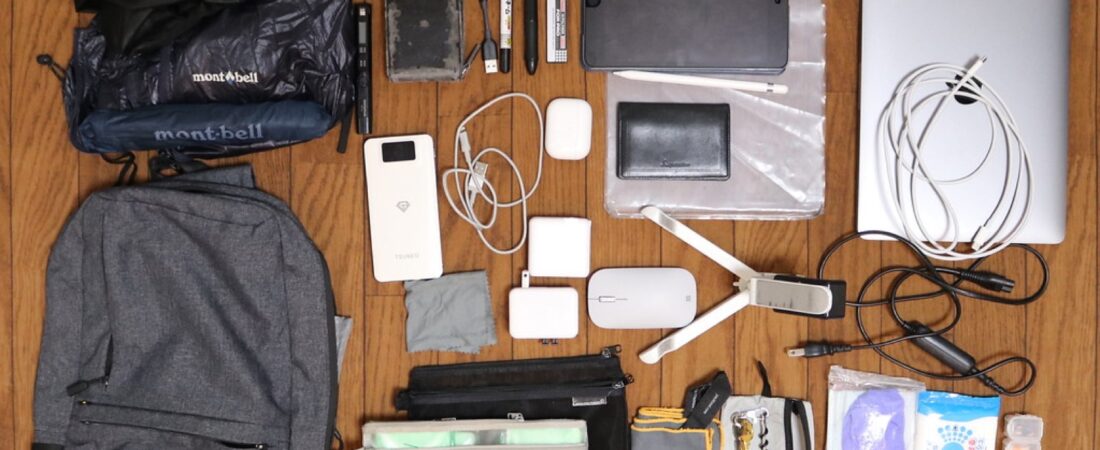
A good power kit is not the one with the most gadgets. It is the one that keeps your phone, laptop, and daily-use gear alive without turning every evening into a cable puzzle.
Power problems usually do not turn into dramatic travel horror stories. They show up as smaller, repeat annoyances. A loose adapter, a charger that runs hot, or one cable that only works if you bend it just right can make every day a little more irritating than it needs to be.
That is why the best long-stay power kit is not about owning a lot of gear. It is about covering the jobs your devices actually have to do. Once you know what needs to work each morning, on transit days, and before bed in the apartment, the kit usually gets simpler.
Start with the jobs, not the gear
Before thinking about brands or wattage, ask what your setup needs to do. Keep a phone alive for maps and messages? Charge a laptop that handles work or bookings? Cover small devices like earbuds, a watch, or an e-reader? Help you get through long train days without hunting for outlets? Most people get into trouble because they buy travel power gear like accessories instead of like infrastructure.
- Nightly charging for the devices you use every day
- Fast enough top-ups for travel days and airport waits
- A sane port count for apartment life
- One simple backup if a cable, adapter, or charger fails
- A setup you can repack quickly when moving cities
If your real life only depends on a phone, lightweight laptop, and earbuds, do not build a kit for some imaginary digital-nomad command center. But if your phone is also your wallet, map, translator, boarding-pass folder, and backup hotspot, then the charger and cable keeping it alive should not be random throw-ins from the junk drawer.
The core kit that covers most people
For many long-stay travelers, the right core kit is surprisingly modest. One dependable wall charger with enough output for your main devices, the correct plug adapter for the country, two or three reliable cables, and one small battery bank will cover a lot of real-world situations. Add more only when it clearly solves a repeating problem.
Simple kits survive better because there is less to forget in an Airbnb outlet, less to troubleshoot at the end of a long day, and less junk creating clutter around the bed or kitchen table. Travel punishes messy systems. Compact, boring setups tend to keep working.
- One main charger that can realistically handle your phone and laptop needs
- One country-appropriate plug adapter, or two if you are moving between regions
- One primary phone cable and one backup
- One cable for your laptop or other high-priority device
- One battery bank sized for a rough day, not a wilderness expedition
Why one good charger usually beats several little ones
In long-stay travel, outlet quality is often worse than the gear you packed. Apartments can have too few sockets, poorly placed wall outlets, or one outlet hidden behind a bedframe and another already occupied by a lamp. In that environment, one strong multi-port charger is usually more useful than carrying three separate charging bricks.
A single charger also makes your nightly setup easier to see and reset. You know where the important power lives. You are less likely to leave one small brick behind. And if you have to move to a new apartment, pack up early for a train, or work for a few hours from a café, one charger is simply easier to manage than a bag full of loose plastic blocks.
This does not mean you need the most expensive charger online. It means the charger should actually handle your laptop if you bring one, stay stable when two or three devices are plugged in, and be something you have already used at home. Travel is a bad time to learn that your charger fast-charges only under mysterious emotional conditions.
Port count matters more than people think
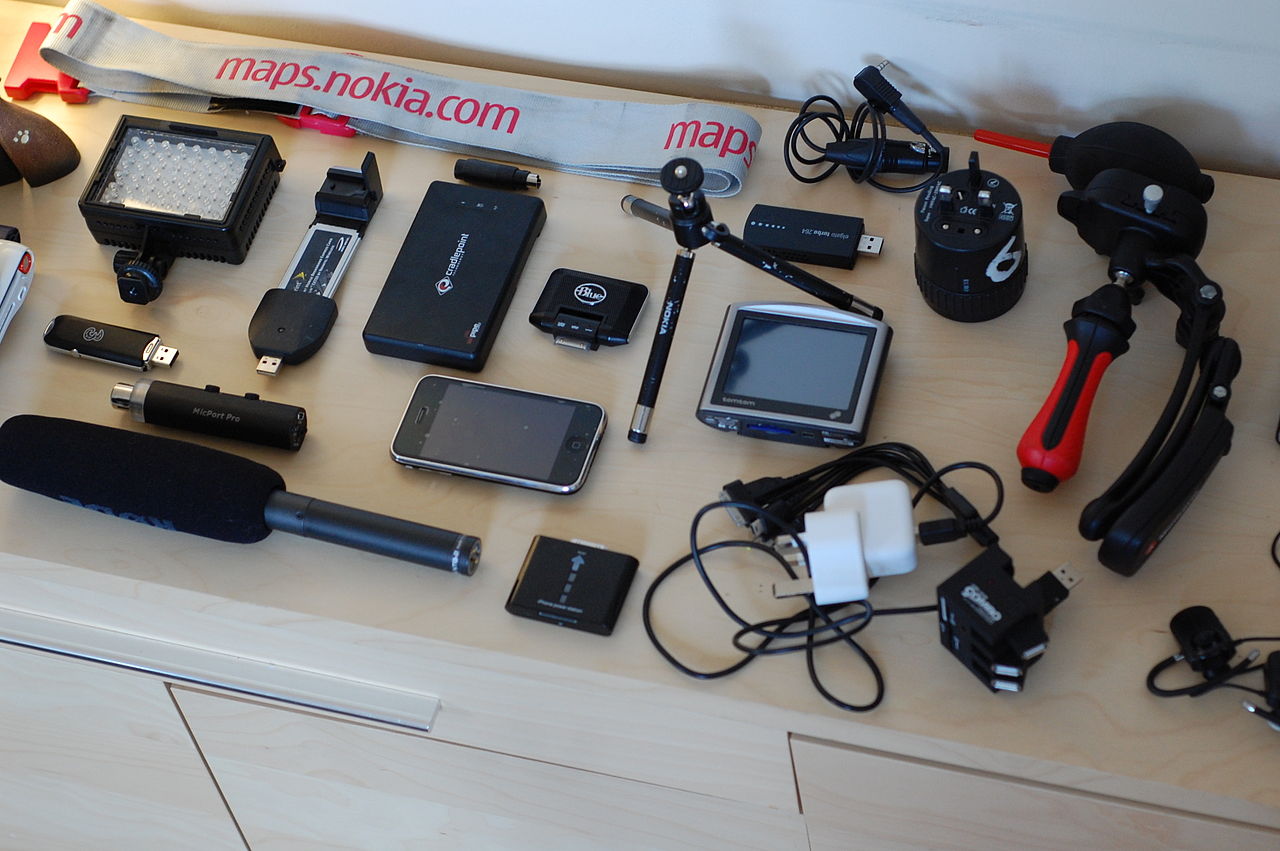
People often focus on speed and ignore the simple question of how many things they realistically charge in one evening. But apartment life is repetitive. If you charge a phone, watch, earbuds, and battery bank most nights, your setup should admit that. Otherwise you start doing little power negotiations every night, and those add up.
Think about your usual bedtime lineup, not your ideal minimalist fantasy. A charger with enough usable ports for the devices that genuinely show up each night is worth more than a theoretically tiny setup that forces you to rotate cables. The point is not elegance for its own sake. The point is ending the day with everything ready for tomorrow.
Adapters, converters, and the avoidable confusion
Most travelers mainly need the correct plug adapter, not a dramatic conversion strategy. Many modern chargers and device bricks already handle a wide voltage range, but that is still worth checking on your actual gear before departure. The useful mindset is verification, not confidence.
If you are staying in one country for a while, bring the right adapter and maybe one backup rather than a giant universal brick full of sliders and folding prongs you never use. If you are crossing regions, keep the correct adapter attached to the main charger or in one small pouch. The whole point is to make charging easy when you are tired, jet-lagged, and trying to get settled in a dim apartment.
Most trouble here is not some exotic electrical issue. It is simpler than that. People assume the old adapter is still in the bag, or they throw three random plugs into a pocket and cannot remember which one actually fits the country they just landed in. Known compatibility beats cleverness. A five-second check before leaving home beats all of it.
Do not cheap out on the failure points
The parts of the kit most likely to fail are often the least glamorous ones. Cables fray. Cheap adapters loosen. A weak charger starts behaving badly when asked to do real work. If something is mission-critical, use a version you already trust. The road is a bad place to test whether a mystery cable from the bottom of a drawer deserves a second life.
This matters especially for the devices that carry your trip. If your phone handles authentication, maps, messaging, banking, and boarding passes, then the cable and charger that keep it alive are not minor accessories. They are part of your travel admin system. Treat them accordingly.
A smart backup is small, specific, and boring
Backup does not mean duplicating your entire setup. That usually just creates more clutter and more opportunities to leave things behind. A smarter form of redundancy is targeted. Bring one spare cable for the device you rely on most, and carry a battery bank that can rescue a long day of transit, navigation, or waiting around in airports and stations.
For most people, that covers the main failure scenarios. Your primary phone cable dies. Your apartment outlet situation is worse than expected. A travel day goes long and your battery drops faster than planned. A small, credible backup handles these moments without turning your bag into an electronics store.
What a good battery bank is actually for
A battery bank is not there to support some cinematic survival scenario. It is there to smooth out ordinary friction. Maybe you spend the day navigating a new city on mobile data, maybe your train seat has a dead outlet, maybe you arrive before check-in and need your phone to stay alive until evening. That is the use case.
So choose one that fits your bag and that you will really carry. An ultra-capable bank that always gets left in the apartment because it is too heavy is less helpful than a smaller one that lives in your day bag and quietly saves the day once or twice a week.
Build around apartment routine, not just transit days
Long-stay travel is mostly not airport life. It is apartment life. That means your power kit should support repeatable evenings, mornings, and work sessions, not just emergency charging in motion. The simplest improvement is to give your gear one obvious home as soon as you arrive.
Pick a charging spot, usually near the bed or at the desk, and keep the main charger, adapter, and key cables there. If you let devices and cables migrate into different rooms, the setup falls apart quickly. The spare cable disappears, the battery bank never quite gets topped up, and suddenly you are crawling under a table at 6 a.m. looking for the one plug you need before a train.
This is especially true in small apartments, where one table tends to become the dumping ground for groceries, keys, receipts, coins, and electronics. The power kit works best when it has a stable footprint instead of competing with every other part of arrival chaos.
Two real-world examples
Example one: a one-month city stay with a phone, lightweight laptop, earbuds, and watch. A practical kit is one multi-port charger, one country plug adapter, a phone cable, a laptop cable, a short watch cable, one backup phone cable, and a small battery bank. That setup covers work, navigation, and apartment life without much dead weight.
Example two: a slower trip where the laptop is rarely used outside the apartment and the phone does most of the work. In that case, the power kit can shrink. A smaller charger may be fine. The battery bank matters more. The spare phone cable matters more. You do not need to overbuild for a device that spends most of its time closed on a desk.
The point of these examples is not the exact item count. It is that the right kit changes with the job. A good setup matches how you actually live on the trip instead of copying someone else’s tech loadout from the internet.
What to skip unless you truly need it
- Extra chargers carried “just in case” when one reliable main charger would do
- Cheap multi-packs of cables you have never tested
- Bulky accessories that only solve rare edge cases
- Complicated adapter systems for countries you are not visiting
- Any gadget you are packing mostly because it feels travel-themed
There is a version of travel gear shopping where every small inconvenience seems solvable by another object. That road gets expensive and messy quickly. For longer stays, fewer dependable items usually outperform a large pile of clever ones.
A practical long-stay power checklist
- One dependable charger with enough power and enough ports for real life
- The correct plug adapter for the destination
- Reliable phone and laptop cables you already trust
- One backup cable for the device you rely on most
- A small battery bank you will actually carry
- One designated charging spot in the apartment
- A quick nightly routine so everything is reset before bed
If your power kit feels boring, compact, and easy to reset, that is a very good sign. The goal is not impressive gear. The goal is fewer stupid power problems on days when you already have enough to think about. When the system fades into the background, it is doing its job.
If you are updating the whole charging kit, use the travel power adapters guide for one-to-six-month stays to choose the wall adapter before adding battery banks, cables, and backups.