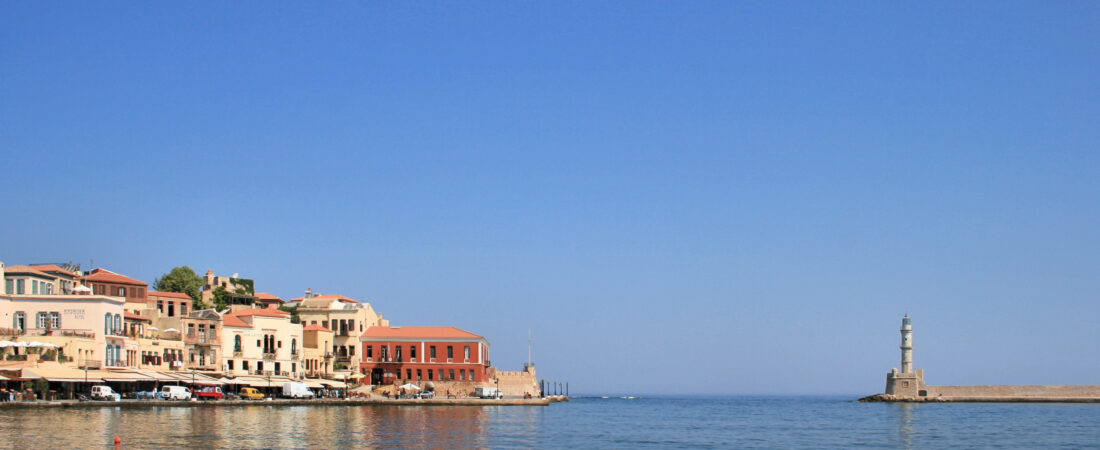
Chania is the Crete city to consider when the dream is not a giant European capital, but a slower Mediterranean stay with a beautiful old harbor, neighborhood cafes, sea air, markets, buses, nearby beaches, and enough city services to make normal life possible for a while.
That does not make Chania easy for every American. It is still a Greek island city. Summer rents can jump, winter can feel quieter than the postcard version, healthcare depth is not the same as Athens, and U.S. travelers have to manage the Schengen 90-days-in-180 rule. Chania works best when you want the slower Mediterranean tradeoff and plan around it instead of pretending it is a year-round bargain with no friction.
Quick answer: Chania can make sense for Americans who want a slower Mediterranean test stay with old-town atmosphere, cafes, markets, sea access, and a gentler pace than Athens or Barcelona. It is a weak fit if you need deep specialist healthcare nearby, year-round big-city energy, easy long-stay visa simplicity, or low rent during peak summer. For a solo test stay, plan roughly $1,800 to $3,400 a month depending on season, furnished housing, neighborhood, transport, healthcare cushion, and how often you eat out.
Who Chania is best for
Chania is best for Americans who want to test a slower European rhythm without giving up every urban service. You want a walkable old center, cafes, groceries, pharmacies, buses, a working airport nearby, beach access, and a daily routine that feels more local than resort-like. You are willing to accept that island life has seasons, gaps, and limits.
It can be especially appealing for retirees and semi-retirees who are not trying to build a full year-round European life on day one. A one- to three-month stay can answer a useful question: does the slower Crete routine still work after the harbor novelty wears off?
Compare it in the dashboard: Chania is now linked in the City Fit Dashboard, where you can compare it against Split, Valletta/Sliema, Lisbon, Porto, Malaga, Palermo, Bari, Tirana, Sarande, and non-European bases by budget, healthcare comfort, airport access, walkability, internet, stay-rule friction, and daily-life ease.
Monthly budget reality
Chania is not the cheapest possible Europe choice, and it is not priced like a large U.S. coastal city either. Numbeo’s Chania page currently estimates single-person monthly costs before rent in the low-$900s in U.S. dollar terms. Numbeo’s Greece country page also shows Greece as lower-cost than the United States on average, especially on rent. Those numbers are useful, but they do not capture the main newcomer problem: furnished housing in a desirable area during the wrong season.
Use these planning bands for a first Chania test:
- Lean solo test: about $1,600 to $2,200 a month if you avoid peak summer pricing, find a modest furnished apartment, cook often, use buses or walking, and keep restaurant spending controlled.
- Comfortable solo stay: about $2,300 to $3,400 a month for better housing, more meals out, taxis or car rentals, private medical cushion, and a realistic buffer.
- Comfortable couple stay: about $3,400 to $5,200 a month if you want a better apartment, fewer compromises, more beach or village trips, and stronger healthcare and transport backup.
The biggest swing factor is not coffee or groceries. It is rent. A shoulder-season apartment outside the most tourist-heavy zone is a different product from a July or August short stay near the old harbor. Ask what is included, how heating or cooling is handled, whether the building is noisy, what the walk is like at night, and whether buses or taxis still work for your normal errands.

Housing and neighborhoods
Most first-timers should compare Old Town, Koum Kapi, Nea Chora, Halepa, and more residential pockets outside the most tourist-focused streets. Old Town gives atmosphere and walking access, but it can also mean noise, stairs, smaller units, and premium pricing. Nea Chora can be practical if you want sea access with a more everyday feel. Koum Kapi and Halepa can work for people who want cafes, walking routes, and a little more local rhythm.
For a first month, choose practical over perfect. The best apartment is the one with reliable internet, realistic grocery access, manageable stairs, heating or cooling that fits the season, clear utility terms, and a location that still feels workable after dark. A beautiful stone-wall unit can be miserable if it is damp, noisy, too cold in winter, too hot in summer, or a hard walk with groceries.
Healthcare and prescriptions
Chania has hospitals, clinics, pharmacies, and private medical options, but it should not be treated like Athens. The U.S. Embassy in Greece points Americans toward medical-assistance resources and makes clear that travelers are responsible for their own medical costs. If you have a complex condition, a narrow prescription need, or a higher emergency-risk profile, compare Chania against Athens, Thessaloniki, or another city with deeper medical depth before choosing Crete as your default base.
For ordinary planning, identify the hospital or clinic you would use, bring generic medication names, carry documentation for prescriptions, and verify what your travel or international health coverage actually covers. Pharmacies are useful, but you should not arrive assuming your exact U.S. brand and dose will be easy to replace on an island.
Healthcare planning shortcut: If Chania is appealing but medical access is one of your deciding factors, the Medical Prep Abroad Kit is the worksheet version of the pre-trip health check: prescriptions, records, insurance questions, emergency contacts, and clinic backup.
Schengen timing and stay rules
For Americans, Chania has the same short-stay constraint as other Schengen destinations. U.S. State Department Europe guidance says tourism or business visitors with a valid U.S. passport can stay up to 90 days during any 180-day period. The European Commission’s short-stay calculator explains the same 90/180-day rule and is the better planning habit than guessing from calendar months.
This matters because Chania is the kind of place where a reader may want to keep extending the stay. Do not book a “summer plus fall” plan without counting every Schengen day. Portugal, Spain, Italy, Greece, Malta, Croatia, and many other popular European bases share the same short-stay clock. If you want six months in Europe, Chania may need to be one piece of a larger plan that includes non-Schengen time or a properly researched long-stay route.
Transport and airport access
Chania is easier than a remote village, but it is not frictionless. The airport gives the area useful access, especially in season, but routes, prices, and convenience change across the year. Buses can be useful for ordinary movement and some regional trips. Taxis, rental cars, and arranged transfers may still be part of the budget if you want beaches, villages, medical appointments, or airport trips without stress.
The daily-life question is whether you can build a normal week without constantly renting a car. If your apartment is in the wrong spot, even a beautiful city can become tiring. Check grocery distance, bus stops, sidewalks, hills, lighting, pharmacy access, and how the route feels in heat, rain, and after dinner.
Safety and everyday comfort
Greece is often a comfortable European country for Americans, but standard city and travel caution still applies. The U.S. State Department and UK travel advice are the right places to check current safety, demonstrations, transport, crime, wildfire, weather, and emergency context before travel. In Chania specifically, the bigger practical risks for many long-stay visitors are routine ones: heat, stairs, slick stones, traffic crossings, tourist-season crowds, apartment noise, and being too casual with documents, cards, or phones.
A good Chania stay should include normal safeguards without turning the place into a fear story. Keep backup cards and document copies, know emergency numbers, choose housing with a sensible route home, and do not let vacation mood replace everyday judgment.
Money and documents backup: Before testing an island base, build a simple money-and-documents backup system so cards, passport copies, phone recovery, medical notes, and emergency contacts are not scattered if a travel day or apartment problem gets awkward.
Who should avoid Chania
Skip Chania as a first base if you need a very low monthly rent in peak summer, deep specialist healthcare nearby, a large English-speaking expat bubble, nonstop big-city energy, or simple long-stay permission beyond Schengen’s normal short-stay limit. Also be cautious if hills, stairs, heat, stone streets, or island transport would make normal life harder.
Chania may also be wrong if you are trying to solve Europe on the tightest possible budget. Albania, parts of Portugal away from Lisbon, and some non-Schengen options may be easier for longer stays or lower monthly targets. Chania should win because the Crete lifestyle is worth the tradeoff, not because it was filed mentally under “cheap Mediterranean.”
Best way to test Chania
Book a month in shoulder season if you can. Spend normal weekdays doing groceries, laundry, pharmacy runs, bus trips, clinic research, and budget tracking. Test your apartment for noise, dampness, internet, stairs, heating or cooling, and night access. Visit the old harbor, but do not make the harbor your whole verdict.
Then compare Chania against at least two alternatives: one larger European city with deeper services and one lower-cost or non-Schengen base. Split may feel more connected to the Adriatic travel circuit. Valletta/Sliema may be more English-friendly but pricier and denser. Tirana or Sarande may be cheaper and non-Schengen, but with different healthcare and infrastructure tradeoffs. Chania should be chosen because the slower Crete routine still works after the practical checks.
Worksheet shortcut: If Chania is one of several Mediterranean bases on your shortlist, the Destination Shortlist Kit is the worksheet version of this decision. Use it to compare Chania against two or three alternatives before you commit Schengen days and housing money.
Bottom line
Chania is a strong test base for Americans who want a slower Mediterranean stay with beauty, cafes, market routines, sea access, and enough city structure to make a one- to three-month stay feel real. It is weaker for people who need deep medical backup, year-round city intensity, rock-bottom rent, or simple long-stay permission.
If you can manage Schengen timing, avoid peak-rent traps, choose housing for normal life, and accept island-season tradeoffs, Chania deserves a serious test. If those tradeoffs feel like compromises instead of the point, treat it as a beautiful visit and keep looking for a first base with lower everyday friction.
References
- U.S. State Department: U.S. travelers in Europe
- U.S. State Department: Greece travel advisory
- European Commission: Schengen short-stay calculator
- U.S. Embassy in Greece: U.S. citizen services
- U.S. Embassy in Greece: medical assistance
- Numbeo: Cost of Living in Chania
- Numbeo: Cost of Living in Greece
- UK FCDO: Greece travel advice
- Visit Greece: Chania
- Chania Airport information
Testing Chania slowly? Use this ordinary-routine companion to test errands, market shopping, and transport before extending your stay.