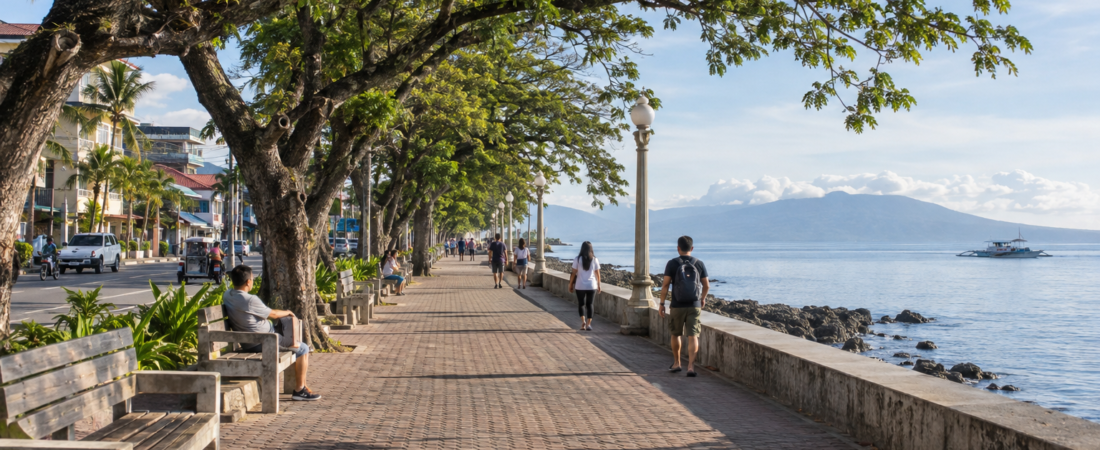
Dumaguete makes an easy postcard: water, a promenade, a sweet to take home. The more interesting question is whether you would enjoy the unscripted afternoons after the first photographs. You needn’t pretend to have lived here to ask it. The answer may be a small repertoire rather than a packed calendar: a familiar piece of waterfront, food you actually want to eat again, and a cultural invitation when one is genuinely open to you.
This is the experience companion to our practical Dumaguete guide. That guide handles the housing, care, connectivity, transport, and stay-rule checks. Here, the question is different: what kind of day would make you want to remain in town when you are not solving a problem or leaving on an excursion?
A boulevard can be a habit, not an attraction
The city’s account of Paseo de Rizal places the boulevard along the shoreline and describes its old sugar-house frontage and Silliman buildings. That is a more particular setting than a generic beach walk: city, university, and seafront share the same stretch. The Department of Tourism presents it as a place for a stroll and street food. Neither page is a current vendor roster or a promise of a quiet seat at a particular hour.
Try it as a place to pause rather than a destination to conquer. Would you enjoy returning simply to look at the water, perhaps with something to eat, or would one visit be enough? Notice whether the promenade feels comfortable to you at the times you would actually go. The distinction matters: the appeal of a small city may rest less on how many attractions it contains than on whether its public spaces bear repetition. You do not have to live on the waterfront to value it, and the view alone cannot settle an apartment choice.
Another city landmark is the cathedral and belfry identified by the tourism office. These belong to a functioning city and religious setting, not an open-access stage set. A walk through the center can give you a second, different impression of Dumaguete from the seafront; be respectful of worship and confirm access before planning an interior visit. If the two walks feel like places you would revisit without buying a tour, that is useful evidence of fit. If not, that is useful too.
Dessert is a beginning, not a food plan
The tourism office names silvanas as a Dumaguete specialty and mentions street food by the boulevard. One sweet stop may be delightful; it does not answer what lunch on an ordinary Wednesday will be. Rather than construct a list of supposedly essential restaurants, find a couple of meals that suit your appetite and budget and see whether you would order them twice. The names of a dish and a shop are less important than whether the routine works for you.
You might try an available street-food option near the promenade, then compare that outing with a simple meal elsewhere and one cooked where you are staying. Ask what you would miss if you stopped eating as a tourist. Is an occasional silvana still a treat? Do you like the food choices you can find without a special journey? Keep receipts if costs matter; this article has no verified current Dumaguete food basket or restaurant-price sample. Nor does a tourism description establish that the same vendors will be present on your dates.

Shopping for ingredients can be part of the experience rather than a scored logistics drill. If you want to try a public market, confirm where and when to go locally instead of treating an old online listing as an operating notice. Compare what is actually for sale with what you normally cook. An unfamiliar ingredient can be a pleasure; having to replace a staple every week may not be. Neither reaction needs to become a grand verdict on Filipino food.
Silliman gives you a door to knock on—not a daily program
Dumaguete’s university presence is more tangible than a vague claim of “arts scene.” Silliman’s Culture and Arts Council describes work in music, theater, dance, film, visual arts, and literature, and names the Claire Isabel McGill Luce Auditorium and Gallery among its spaces. That breadth suggests a way to look for a real event during a longer stay. But its web page also carries dated 2018 show listings and a welcome to the 61st cultural season; it cannot tell you what is on this week. Check a current university announcement, ask about public admission and tickets, and make a plan only after the organizer confirms it. An empty calendar on your dates is possible.
The university’s museums listing names an Anthropology Museum, a natural-history museum, and an Ariniego Art Gallery; the gallery entry there is not a working visitor-information link. These are leads for inquiry, not three guaranteed drop-in afternoons. The Anthropology Museum is the clearest concrete option to investigate: Silliman says it holds archaeological material from Negros and parts of Mindanao and ethnological items from indigenous groups across the Philippines. The museum is housed on Hibbard Hall’s second floor. That collection offers a more grounded question than “is there culture here?”: would you enjoy learning about this region and its connections to the rest of the country, rather than simply consuming another show?
Arrange before you go. Silliman describes the museum as a private educational facility, requires prior arrangements, and lists restrictions for exam periods, university activities, maintenance, holidays or weekends, and too few confirmed visitors. Its page gives contact routes, but published hours and fees are not a live booking confirmation. Contact the museum through its official page for current availability and terms; don’t assume a solo visitor can walk in. For the other museum or gallery, seek current access information directly. A confirmed visit could fill an afternoon. An unconfirmed one should not anchor a week’s itinerary.
The modest advantage here is the possibility of paying attention over time. You might read an announcement, find that a performance is open to the public, and go. Or you might discover that your week offers no suitable event and still enjoy the city. A university is an institution with its own calendar and access rules, not a subscription to entertainment.
Keep a trip outside town in its own column
The tourism page points to Valencia, the Twin Lakes, and Apo Island. These can broaden a stay, but they are not interchangeable with a walk, a meal, or a museum inquiry in town. Going inland and going to sea involve different transport, conditions, costs, and levels of effort. We have not verified a current route, boat schedule, reserve rule, admission fee, or accessibility arrangement for any of them. Check with the relevant operator or authority close to departure, particularly for a marine trip, and keep an alternative day in mind.
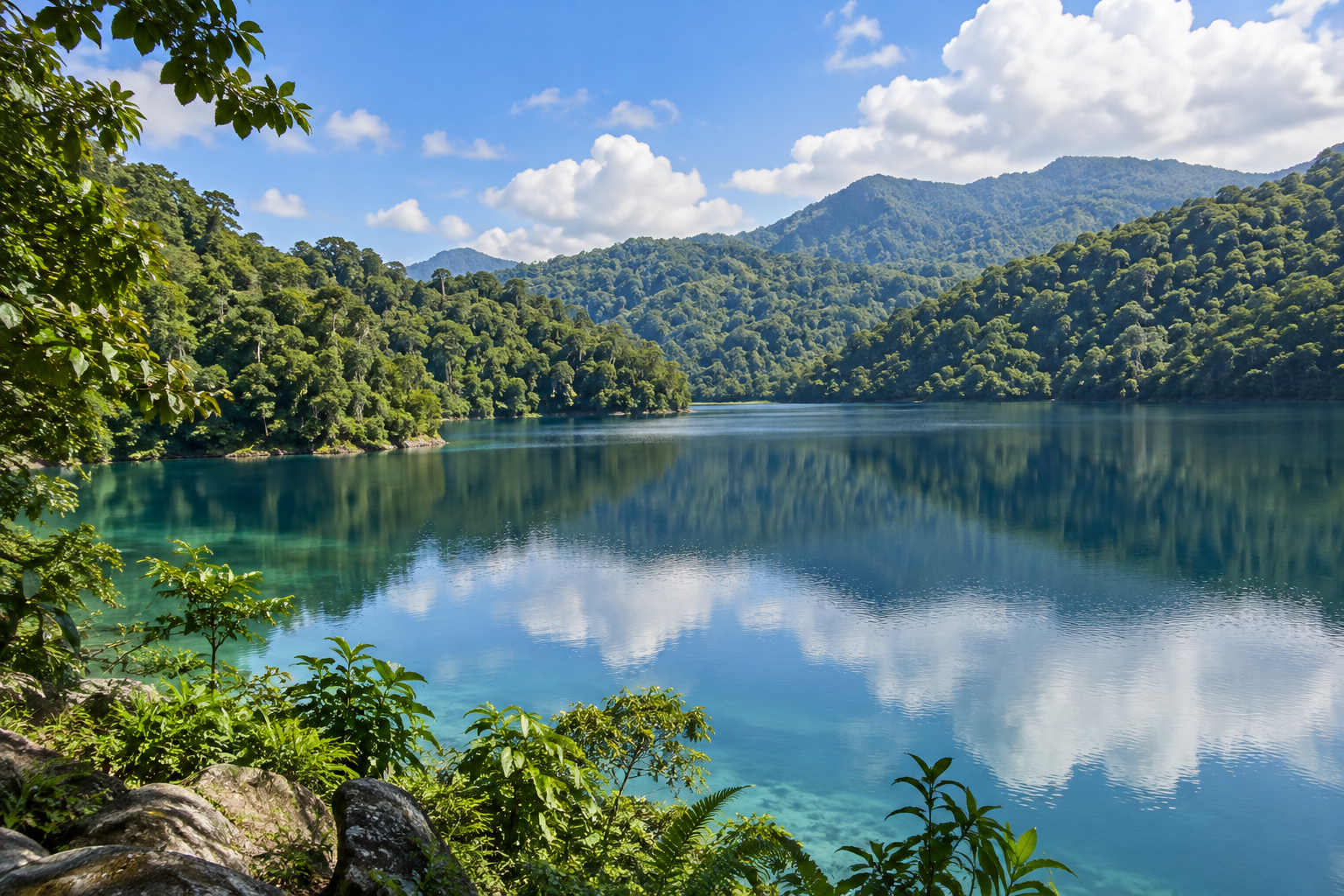
Someone who loves an occasional excursion may be very happy using Dumaguete as a base. Someone who needs one every weekend to feel engaged should ask whether they like the base itself. Do not let a memorable day outside the city answer a question about the days within it.
An unfilled afternoon is the revealing one
Imagine that there is no event you can attend, your excursion is off, and you would rather not spend much. Would you happily return to the waterfront, explore another ordinary meal, read, or take a slower look at the center? Or would the week suddenly feel empty? Heat and rain can change the appeal of an outdoor plan; use a current forecast for your dates, and have an indoor alternative you would actually enjoy. A good day here need not depend on perfect weather.
That question does not replace the serious checks. For a plausible address, medical needs, work connection, and arrival plans, use the Dumaguete practical guide and verify details with providers. If you are choosing among Philippine bases, the Cebu–Dumaguete–Iloilo comparison handles the same-city-versus-bigger-city tradeoffs without turning this piece into another errand-loop test. The Destination Shortlist Kit offers a worksheet if you want to put your observations side by side; no worksheet can tell you which afternoons you liked.
A person who likes familiar public spaces, a repeatable food routine, and occasional culture that must be sought out may find enough here for a longer trial. If you want a dependable performance calendar, abundant big-city amenities, or specialist services close at hand, a university and a view will not make those needs disappear. The honest question is not whether Dumaguete has something to do. It is whether its actual, sometimes uneventful days suit you.
References
- Dumaguete City government: Paseo de Rizal — historical waterfront description (2018), not current vendor or access information.
- Philippines Department of Tourism: Dumaguete City — boulevard, silvanas, landmarks and nearby outing leads; promotional travel copy, not current operations or prices.
- Silliman University: Culture and Arts Council — council disciplines and venues; page includes old show listings, not a current schedule.
- Silliman University: Museums & Gallery — institutional listing; gallery entry lacks a visitor-information destination.
- Silliman University: Anthropology Museum — collection, Hibbard Hall location, advance-arrangement and restriction details; reconfirm availability and terms directly.