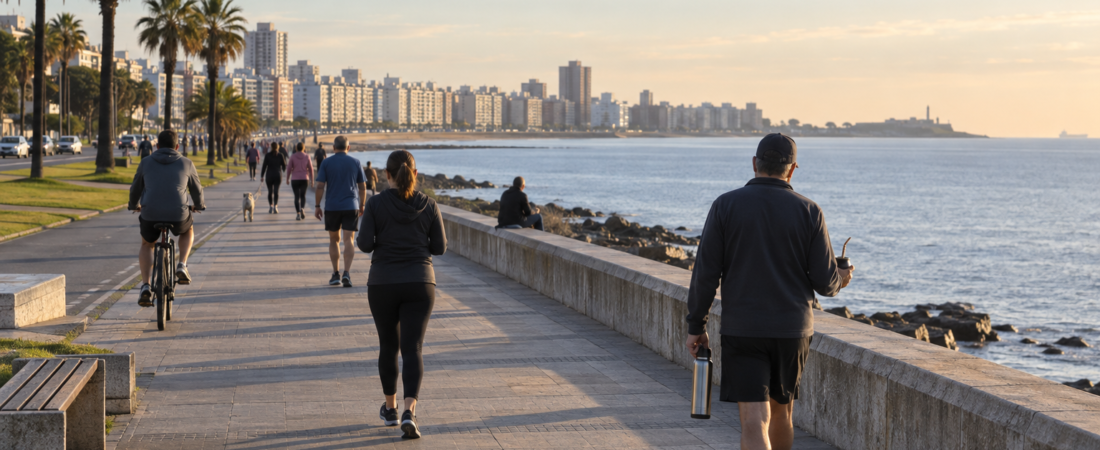
Montevideo can look deceptively simple from a short visit. The waterfront, the older central streets, and the cafés make an easy first impression. A longer stay asks a different question: can you build a week that works when you are not sightseeing?
The useful test is not whether every day is exciting. It is whether your ordinary tasks can sit alongside walks, transit, a cultural stop, and some unplanned time. This is a practical way to trial that rhythm without pretending that a visitor’s week answers residency, tax, healthcare, or long-term housing questions.
Start with the rhythm, not a perfect neighborhood
For the first week, avoid making a neighborhood decision based only on one good lunch or a scenic walk. Give yourself a compact routine instead. Pick a place where you can repeat a few useful journeys: getting supplies, reaching the waterfront, visiting a museum, and returning home after dark without turning every errand into a project.
That approach makes the city easier to evaluate. You learn which distances feel comfortable to you, whether you prefer a quieter residential street or more activity nearby, and how much your day depends on a particular route. It is also a better way to spot the difference between a neighborhood you enjoy visiting and one that supports your actual routine.
Let public transport become part of the experiment
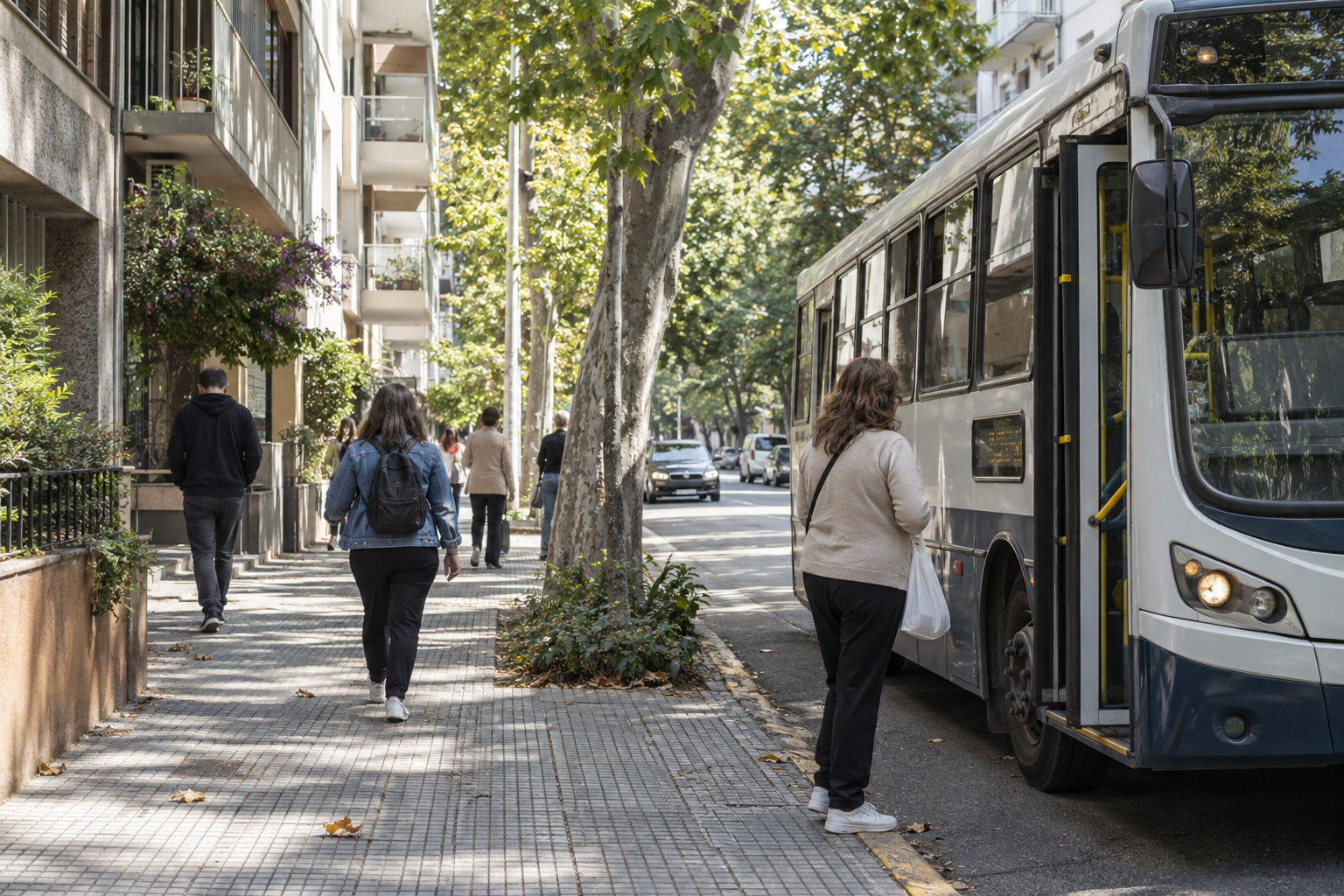
Montevideo’s municipal information for the Sistema de Transporte Metropolitano (STM) is a practical starting point for understanding how bus travel, cards, routes, schedules, and the “Cómo ir” journey-planning tools fit together. Before you commit to a longer rental, use that official information to rehearse the trips you expect to make.
Try one useful route at different times of day. Take transit to a grocery run, a park, or a cultural destination. Then take the return trip when you are tired rather than when you are in sightseeing mode. A transit system is not only a way to get to the center; it is part of deciding whether a neighborhood gives you enough flexibility for an ordinary Tuesday.
Keep the test modest. You do not need to master the entire network in a few days. The goal is simply to identify the routes you would rely on and whether they make your desired pace realistic.
Use the waterfront and parks as anchors, not checkboxes
Public space is one of the easiest parts of a city to over-romanticize. A long stay gives you time to use it more honestly. Visit the waterfront at the hour you would actually be free. Go when the weather is less than ideal. Notice whether you would return for a walk, a pause between errands, or a low-key weekend afternoon.
Parque Rodó is one useful official reference point for this kind of trial. Its municipal page identifies it as a city park with cultural and recreational activity. That does not mean every visitor needs to live nearby. It does make the park a sensible destination for testing how public space fits into the week you want: a place for an unstructured walk, a book, or a change of pace after working indoors.
The key is repetition. One impressive sunset tells you very little. Two or three ordinary visits tell you whether the city gives you accessible ways to reset without planning a whole outing.
Give culture a regular slot

A longer stay becomes more livable when culture is not saved for a single ambitious day. The Museo Nacional de Artes Visuales is an official public institution worth using as a practical example. Rather than treating it as an item to complete, consider visiting at the pace you would keep if you lived nearby: a shorter visit, a return trip, or a stop combined with another ordinary errand.
This matters because it changes the question from “What should I see?” to “What can I return to?” Museums, parks, and neighborhood streets are most useful in a long-stay trial when they become part of your personal map. You begin to see which areas offer a pleasant detour and which ones only work when you are deliberately sightseeing.
Keep immigration questions separate from lifestyle questions
It is tempting to let a good week in a city answer every practical question. It cannot. Uruguay’s embassy guidance is the right place to begin for current visa and migration information, and the relevant official authority should remain the source for any entry or visa decision. Requirements can change, and a travel article cannot substitute for personal legal or immigration advice.
For a lifestyle trial, keep the scope narrower. Confirm the current entry information yourself, then concentrate on the questions a visit can answer: how the days feel, how you move through the city, which routines you repeat willingly, and what kind of downtime is available.
That separation keeps the experiment useful. You can leave with clearer preferences without making claims your short stay cannot support.
Comparing Montevideo with another possible base? Start with the practical Montevideo city guide, then use the Destination Shortlist Kit to turn the transit, errand, and routine checks here into a reusable worksheet.
A low-friction first-week plan
Try this simple sequence:
- Day one: Walk a small radius around your accommodation. Find a practical errand route and one place you would return to without a special reason.
- Day two: Use STM information to plan and take a real transit trip, including the return.
- Day three: Spend an unhurried hour in a public space such as Parque Rodó or along the waterfront.
- Day four: Make a cultural visit, ideally without packing the day with other attractions.
- Day five: Repeat the route or area that felt most natural and note what still creates friction.
- Weekend: Choose one low-effort day and one more exploratory day. Compare how each version of the city feels.
By the end of the week, you should have a more grounded answer than “I liked Montevideo.” You will know whether your preferred routine has places to walk, a transit pattern you can learn, public space you might genuinely use, and culture you can return to.
The takeaway
Montevideo is best tested as a city of repeatable days. Let your first week include useful transport trips, unplanned public-space time, and culture at an ordinary pace. Keep entry and immigration decisions anchored to official guidance, and let the rest of the experiment focus on the daily rhythm you are trying to build.
References
- Uruguay Embassy in the United States — Visas and Migration: https://embassyofuruguay.us/visas-and-migration/
- Intendencia de Montevideo — Sistema de Transporte Metropolitano: https://montevideo.gub.uy/tipo/area-tematica/sistema-de-transporte-metropolitano
- Intendencia de Montevideo — Parque Rodó: https://montevideo.gub.uy/parques-de-montevideo/parque-rodo
- Museo Nacional de Artes Visuales: https://mnav.gub.uy/