_Date: 2026-09-19_ _Status: Source draft — not for publication_
Porto is often introduced through the riverfront, tiled façades, and a short list of viewpoints. That is useful for a first weekend. A longer stay asks a quieter question: where will the ordinary parts of a week happen when the novelty wears off?
The practical answer is to build a small routine that respects Porto’s compact scale, hills, and visitor-heavy core. Rather than trying to see every neighborhood quickly, choose a repeatable loop for groceries, a coffee stop, a walk, transit, and one cultural outing. It makes the city feel less like an itinerary and more like a place you can return to after a workday.
Start with a small neighborhood loop
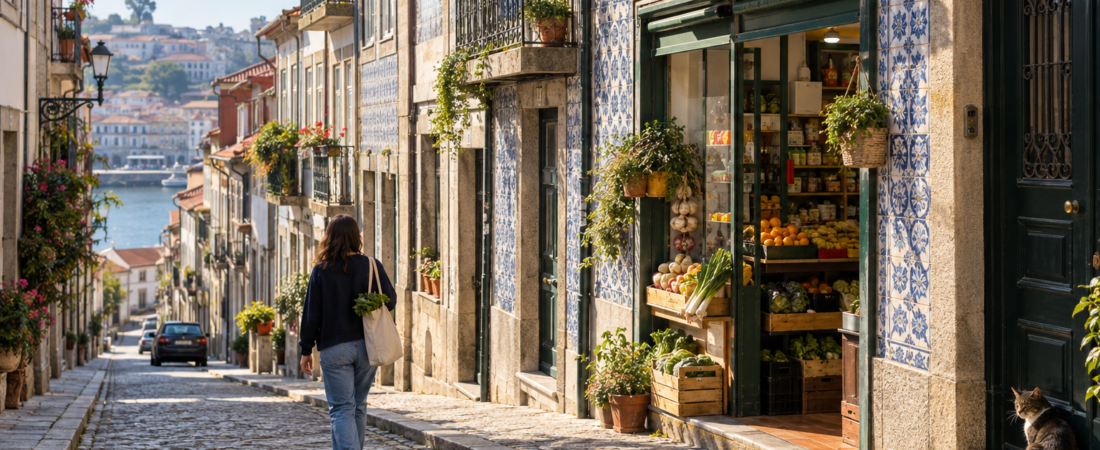
Porto rewards keeping your first routine geographically modest. The center is walkable in pieces, but hills and uneven pavement change the feel of a route when you are carrying groceries, arriving in rain, or simply tired. Pick a base area and test the same few blocks at different times of day.
A useful first-week loop includes:
- one dependable food shop;
- a pharmacy or other practical errand stop;
- a café where a short visit feels easy;
- a park bench, river walk, or low-effort outdoor reset;
- the transit stop you are most likely to use.
This is not about finding the “best” version of each place. It is about reducing decisions. Once you know how long your regular errands take, you can save longer walks and crossings of the city for days when you actually want them.
Treat hills as part of the schedule
Maps can make central Porto look simpler than it feels on foot. Before committing to an apartment area or a daily route, walk it in the direction you will use most often: back home with a bag, toward a station, or after dinner. A scenic steep route may be perfect occasionally and annoying twice a day.
Build a second, flatter fallback route where possible. That gives you options on wet days and keeps a missed bus or a delayed errand from turning into a long slog. The goal is not to avoid the city’s terrain; it is to plan around it without pretending every day needs to be a workout.
Learn transit through repeat trips
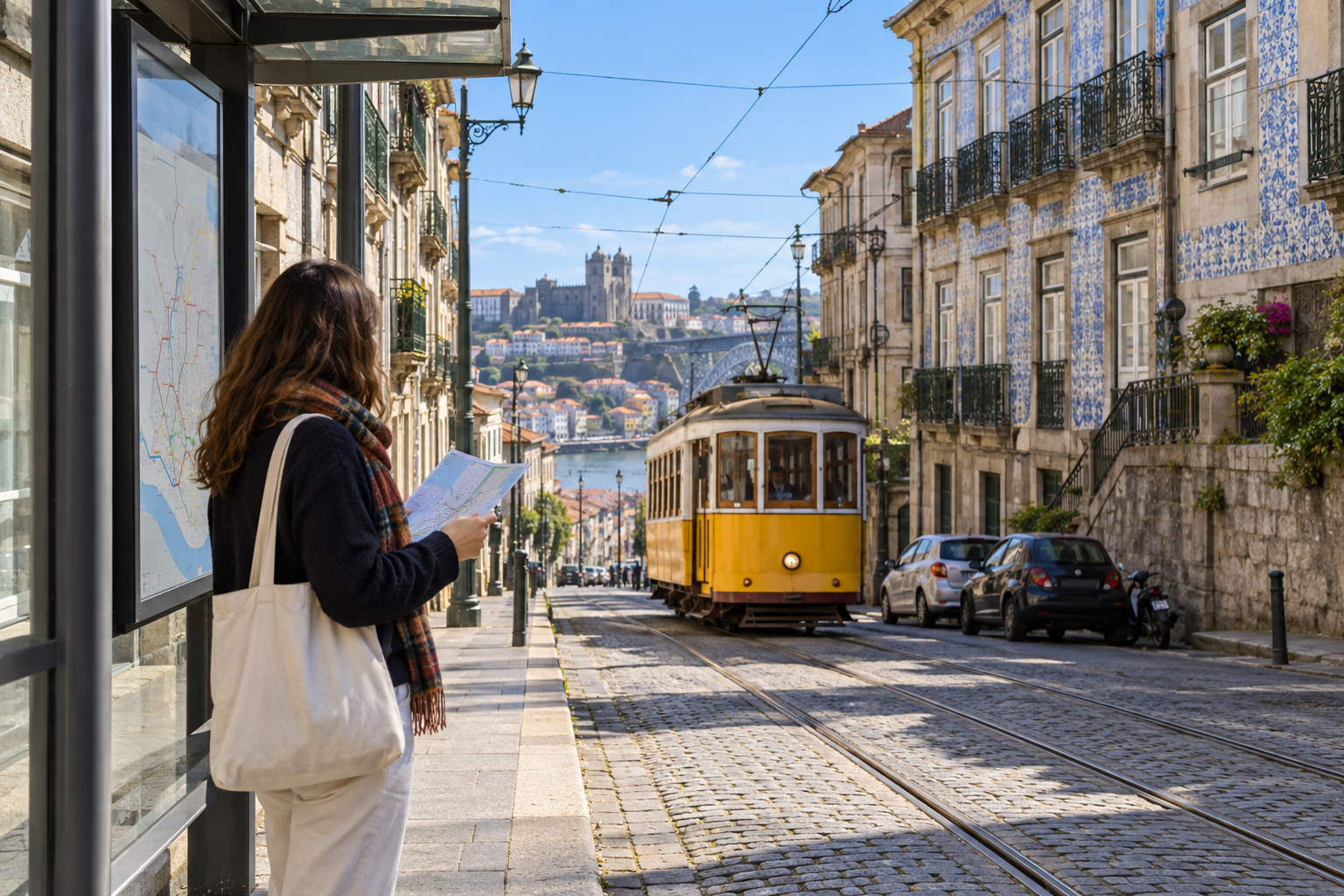
STCP is Porto’s official public-transport operator and publishes route, service, and change information. For a longer stay, use the official operator rather than relying only on map-app timing or old travel posts. Temporary changes, works, and schedules can affect a routine more than a visitor’s one-off trip.
Start by using transit for one predictable journey—perhaps a museum visit, a grocery run beyond walking range, or a connection to another part of the city. Repeating a route teaches you where to wait, how much buffer you prefer, and which legs are easier on foot. Keep the first few transit days light so a wrong turn is an inconvenience, not a ruined plan.
Before travel, check current services directly with STCP: https://stcp.pt/en
Keep visitor-heavy areas in the rotation, not at the center
Ribeira and the central viewpoints belong in a longer stay, but they do not need to carry every outing. When an area feels busy, use it as a destination with a clear purpose: meet a friend, take a river walk, or cross through at a quieter time. Then return to the smaller errands and neighborhood walks that make the week sustainable.
This also helps preserve energy. A city can feel more livable when you alternate between a planned landmark day and an ordinary afternoon with no objective beyond getting outside.
Use culture as a recurring habit
Museu do Porto’s official portal is a useful starting point for current exhibitions, programs, and visit information across municipal museum spaces. Instead of treating cultural stops as a checklist, pick one venue or program that fits into a normal week. A one-hour museum visit can be more restorative than trying to combine three sights in an afternoon.
Check current details before going: https://museudoporto.pt/en/
The same principle applies to city events and public information. The Câmara Municipal do Porto portal is the official place to confirm municipal services and cultural updates: https://www.cm-porto.pt/
Keep entry planning separate from daily-life planning
Entry, visa, and residency requirements can change and depend on nationality and circumstances. This article does not provide immigration advice. If you are considering a longer stay, start early, use the Portuguese Ministry of Foreign Affairs visa portal, and confirm the route that applies to you before making commitments.
Official visa information: https://vistos.mne.gov.pt/en/
Keeping paperwork research separate from the question of where to buy groceries or which museum to visit makes both tasks easier. The first is a compliance decision; the second is a routine-building experiment.
Considering Porto as a possible base? Start with the practical Porto city guide, then use the Destination Shortlist Kit to turn the transit, errand, and routine checks here into a reusable worksheet.
A low-friction weekly rhythm
A simple week might look like this:
- Monday: Restock essentials and walk the home loop.
- Tuesday: Test one transit route without a time-sensitive appointment.
- Wednesday: Work from a familiar café or take a short outdoor break.
- Thursday: Make one cultural outing or reserve it for a rainy-day option.
- Friday: Choose one social or scenic plan, not three.
- Weekend: Leave room for a longer neighborhood walk, a market, or a day trip only if the week has not already been full.
The point is flexibility. Porto will offer more than you can do in a week. A longer stay becomes enjoyable when the ordinary anchors are in place first.
Build in a weather and energy fallback
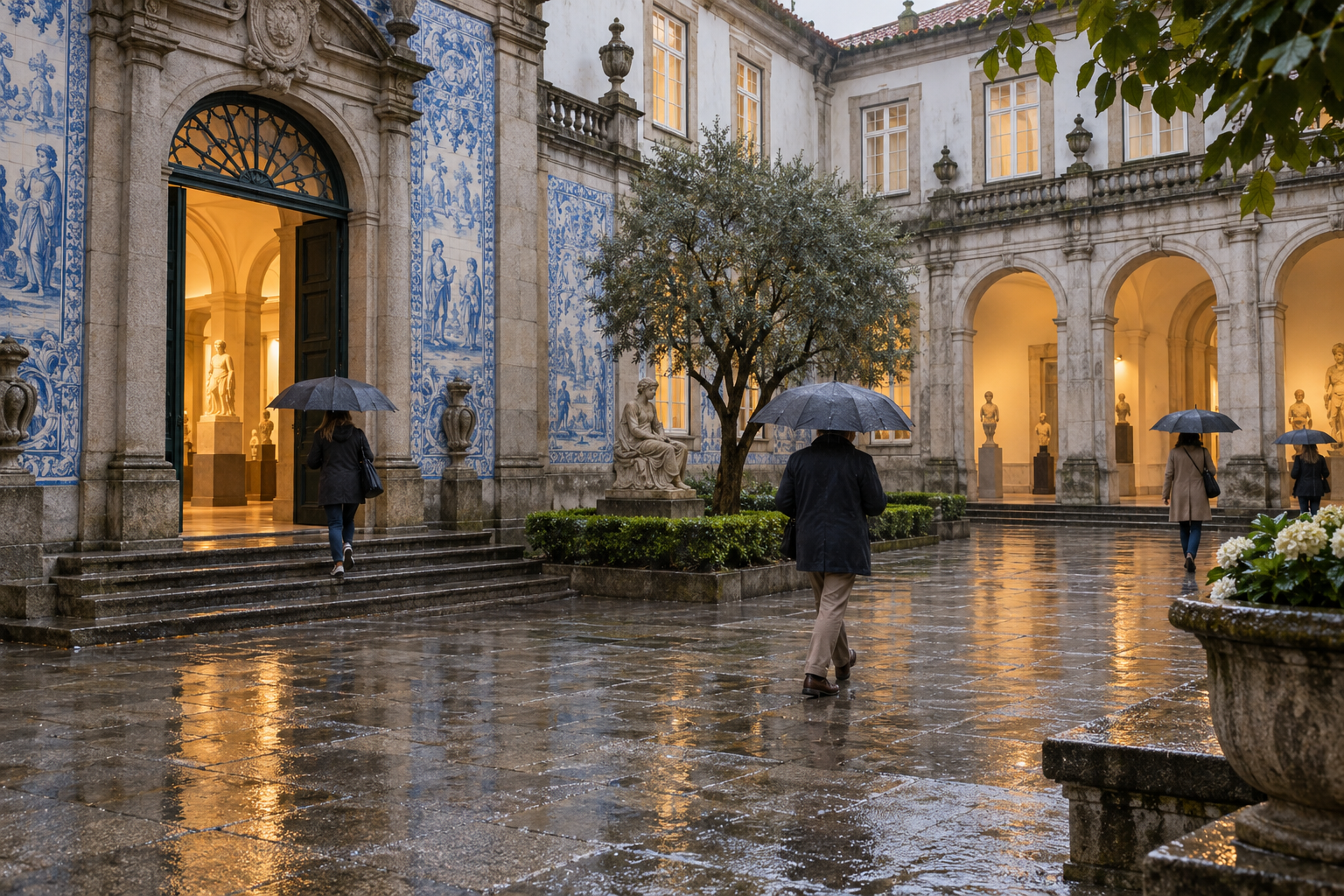
Keep one indoor option and one short outdoor option ready without making either a major plan. On a wet or low-energy afternoon, a museum visit, a familiar café, or a short errand near home can keep the day from feeling cancelled. On brighter days, use the same routine as a starting point rather than a constraint: extend the walk, cross the river, or choose a different neighborhood only when it fits your energy. This small amount of slack matters more over several weeks than an ambitious list of attractions.
References
- Portuguese Ministry of Foreign Affairs, Visa Portal: https://vistos.mne.gov.pt/en/
- Câmara Municipal do Porto: https://www.cm-porto.pt/
- STCP, Porto public transport: https://stcp.pt/en
- Museu do Porto: https://museudoporto.pt/en/