Stage: Source draft — not publish-ready Date: 2026-09-24 Companion guide: Split: An American’s Adriatic Base
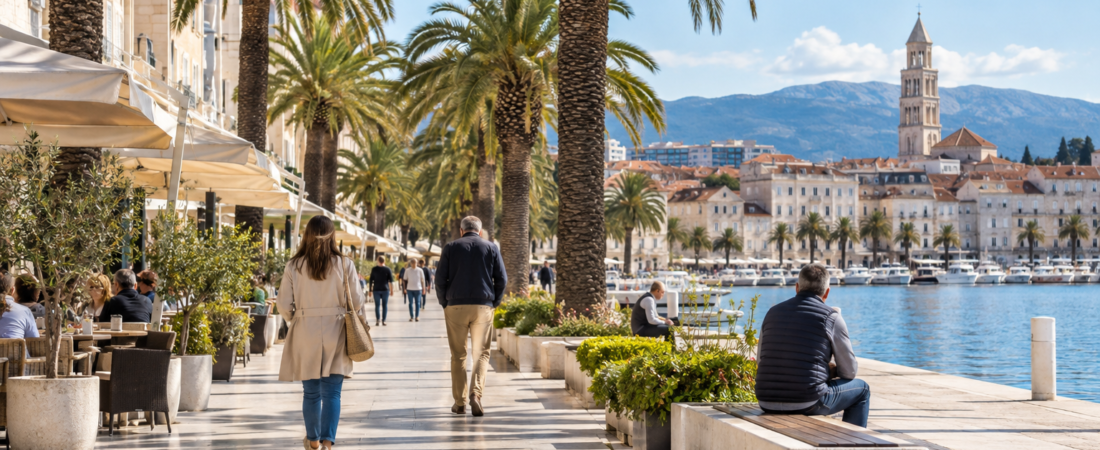
Split becomes more useful when it stops being a backdrop for a packed itinerary. A longer stay works best when the city is treated as a compact working base: a place to buy food, walk a familiar route, decide which errands should happen before the waterfront gets busy, and use ferry information deliberately instead of trying to “do the islands” every day.
The first practical decision is to separate a visitor’s calendar from a resident’s rhythm. In a short trip, the old town, Riva, and a few day trips can fill every open hour. In a longer stay, leave room for ordinary days. Pick one grocery route, one coffee stop that is convenient rather than famous, and one quieter walking route outside the busiest core. This keeps the historic center enjoyable without making it the only place you use.
Treat seasonality as a planning input
Split’s waterfront setting and ferry connections are real advantages, but they also mean the city changes with the season. A longer stay is easier when plans can flex: schedule outdoor walks and island outings around weather and ferry information, and keep indoor or neighborhood errands available as a fallback. High-demand periods can add crowd pressure and make central streets less efficient for practical tasks.
Before committing to travel dates, check current Croatian entry guidance through the Ministry of Foreign and European Affairs. Do not assume a prior trip, a travel-blog summary, or a general Schengen explanation covers your passport and planned length of stay. Keep accommodation, onward-travel, insurance, and date-counting records organized, then use official guidance as the decision point.
Build an errand map before building a wish list
A stable week in Split needs a small errand map. Mark the places you expect to use repeatedly: a food shop, pharmacy, cash point, laundry option, transit or ferry information point, and a convenient route back to your accommodation. The city’s compact scale makes walking attractive, but surfaces, heat, luggage, and crowd density can change what is actually comfortable on a given day.
Start with the City of Split’s official information for municipal notices and local context. For transport that crosses the water, use Jadrolinija’s official service information rather than cached schedules or social posts. Ferry times and operations are practical details, not minor travel trivia, when a longer stay includes appointments, return travel, or an island overnight.
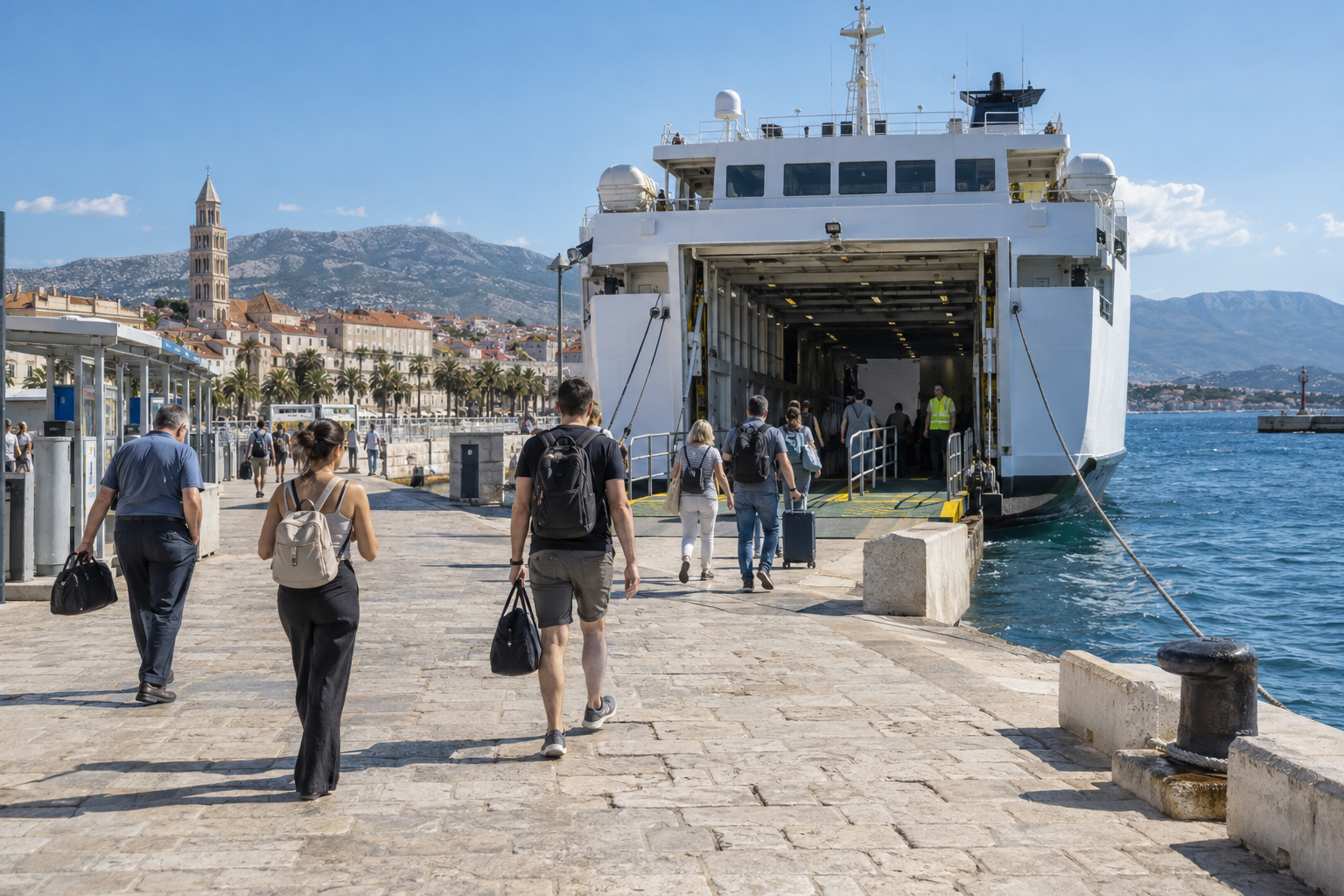
Make ferry days single-purpose days. Leave enough margin to reach the terminal, read the current timetable, and return without turning every delay into a problem. If an island trip is optional, it should remain optional when weather, capacity, or a changed schedule says otherwise.
Make housing decisions by routine, not views
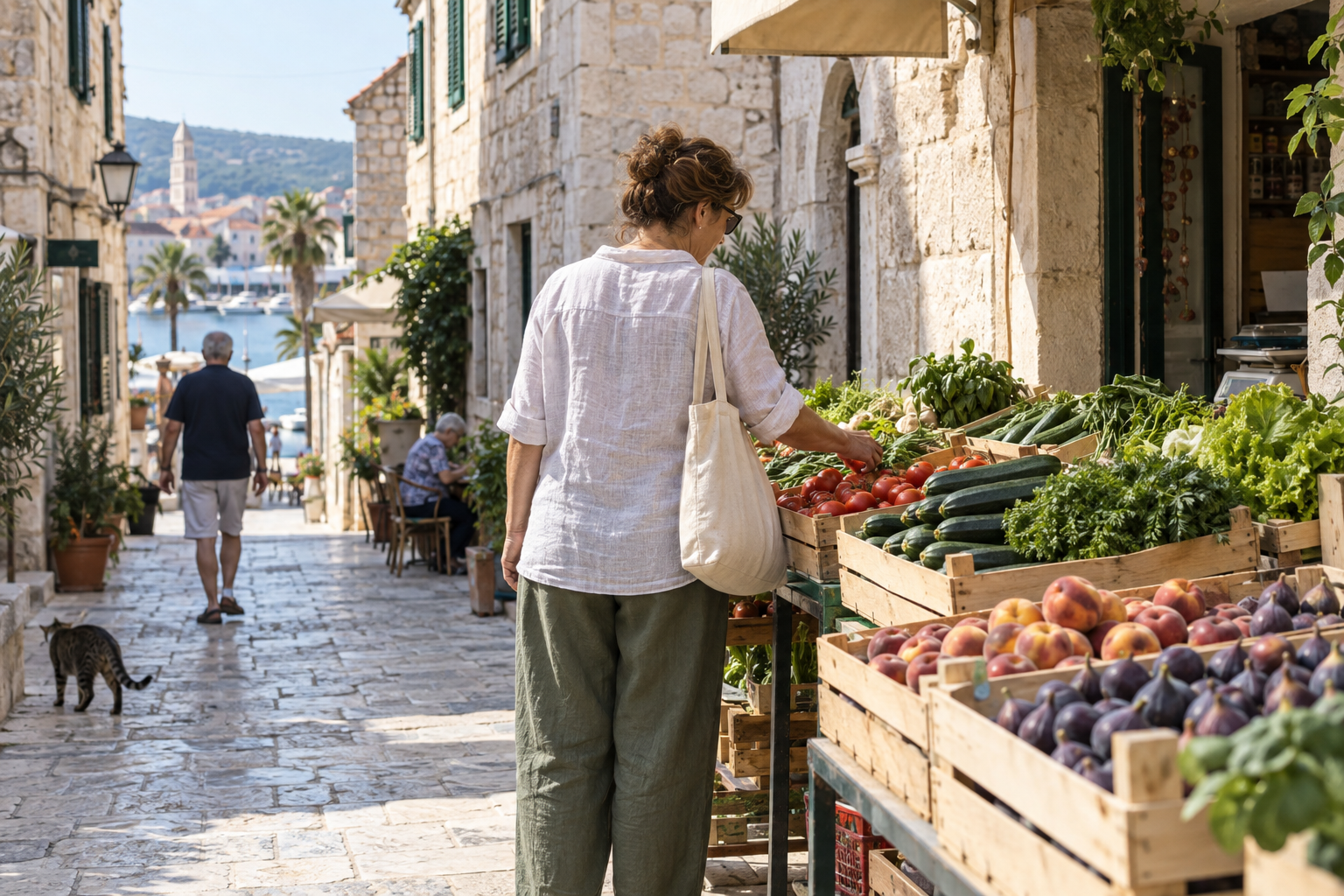
When comparing neighborhoods or short-term rentals, test the boring parts of the location. Can you get breakfast without crossing the busiest route? Is there an easy walk back after dark? Does the accommodation let you cook, work, rest, and store beach or rain gear without rearranging the whole room? A waterfront view can be valuable, but an inconvenient everyday route becomes more noticeable in week two than it does on check-in day.
For a longer stay, record a few observations during the first three days: the quietest time to shop, the fastest practical route to the waterfront, the places where you can wait out weather, and the route you would use if you were tired or carrying bags. Those notes make later decisions calmer and reduce the urge to solve every question with another expensive excursion.
Plan for weather and energy, not perfection
A useful longer-stay routine accounts for the days when the coast is windy, the pavement is hot, or you simply need a quieter afternoon. Keep a short list of low-effort choices: a museum visit, a café close to your accommodation, a shaded walk, a meal you can prepare at home, or time to catch up on bookings and travel records. This is not wasted time. It is what makes a city feel manageable after the first rush of arrival.
Avoid making every good-weather window a major excursion. A morning waterfront walk, a practical market run, and a short cultural stop can be enough. Leaving some appealing options for later reduces pressure and gives you a reason to revisit familiar areas with better timing.
Use culture as a recurring activity
The best cultural routine is usually smaller than an all-day museum circuit. The Museum of Croatian Archaeological Monuments offers an official starting point for understanding the regional story behind the city’s visible layers. Choose a visit when you want an indoor, focused activity, then pair it with a familiar walk or meal rather than forcing several major stops into one afternoon.
This approach makes Split more legible over time. You begin to notice which streets work for a morning errand, which waterfront sections are pleasant at quieter hours, and when a museum, café, or neighborhood walk fits your energy. The point is not to see less; it is to make room for repetition and context.
Considering Split as a possible base? Start with the practical Split city guide, then use the Destination Shortlist Kit to turn the market, ferry, and neighborhood checks here into a reusable worksheet.
Create a low-friction week
A simple long-stay week can include one administration day, one ferry or coastal day, one cultural visit, several short walks, and unplanned space for recovery. Put time-sensitive tasks first: immigration questions, bookings, ticket checks, and services with limited hours. Keep nonessential sightseeing flexible.
Try a weekly reset: check the official ferry information, restock basics, review your upcoming travel dates, and choose one local activity that is not tied to a headline attraction. This prevents the middle of a stay from becoming a series of last-minute decisions. It also gives you a more realistic answer to the question of whether Split is functioning as a base rather than simply entertaining you as a holiday destination.
If Split is being considered as a longer-term Adriatic base, use the companion city guide for broader seasonal-cost context, then confirm time-sensitive facts directly with official sources before acting. A good Split routine is not defined by how much you can fit in. It is defined by whether the city still works after the novelty wears off.
Official references
- Croatian Ministry of Foreign and European Affairs: https://mvep.gov.hr/consular-information-22822/22822
- City of Split: https://split.hr/
- Jadrolinija ferry services: https://www.jadrolinija.hr/en
- Museum of Croatian Archaeological Monuments: https://mgst.net/