Vietnam and Thailand both look appealing when you are comparing Southeast Asia from a distance. They can both be cheaper than many U.S. cities, both have warm weather, both have real expat scenes, and both can support a one- to three-month test stay. But they do not feel easy in the same way.
For most Americans, Thailand is the easier first landing. It has a deeper tourism and long-stay infrastructure, more familiar expat routines, better-known medical and transport pathways, and cities where you can solve common problems without feeling like you are inventing the process. Vietnam can be the stronger value play, especially in Da Nang or parts of Hanoi, but it asks more of you in traffic, language, payments, housing judgment, and day-to-day adaptation.
Quick answer: Choose Thailand if this is your first serious Southeast Asia test and you want the smoother landing: easier travel logistics, more obvious expat services, and more full-service city options. Choose Vietnam if your priority is better monthly value, a more energetic local rhythm, and you are comfortable with a steeper adjustment curve. For many Americans, Thailand is the safer first test; Vietnam is the better second test once you know what kind of daily life you can handle.
Start with the kind of trial stay you are actually testing
The wrong question is, “Which country is cheaper?” That answer changes by city, season, housing standard, and how American your routine stays. A better question is, “What would make my first month abroad work well enough that I can judge daily life honestly?” If you spend the whole stay solving basics, you are not testing the country. You are testing your tolerance for friction.
Use four filters. First, housing: can you find a furnished place in a livable neighborhood without getting pushed into overpriced tourist inventory? Second, mobility: can you run errands, reach medical care, and move around without constant stress? Third, health and backup systems: are you close enough to clinics, hospitals, pharmacies, and English-speaking help if you need it? Fourth, social and emotional fit: does the place feel interesting after the first week, or only impressive because it is new?
Thailand usually wins on lower-friction testing. Vietnam often wins on value and momentum. That does not make one better for every reader. It means the best choice depends on whether you need a gentle first landing or a more demanding value test.
Vietnam: better monthly math, less hand-holding
Vietnam’s strongest case is value. LivingCost’s country and city estimates consistently show Vietnam as one of the lower-cost options in the region, and Da Nang in particular gives Americans a rare mix of coastal setting, city services, cafes, furnished rentals, and lower monthly pressure. If the goal is to see whether a moderate budget can buy a good everyday rhythm, Vietnam deserves serious attention.
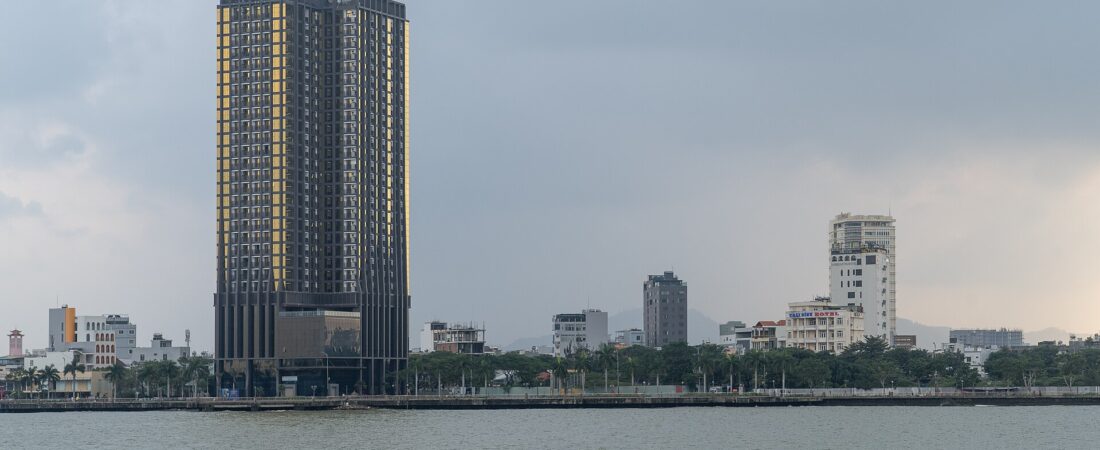
The best starting point for many Americans is not necessarily Ho Chi Minh City or Hanoi. Those cities have the deepest job, food, airport, and city-energy options, but they can also be noisy, traffic-heavy, and tiring for a first test. Da Nang is often easier to understand: river, beach, cafes, apartments, airport, and enough services to make a month feel workable. It will not be as deep as Bangkok, but it can be much easier on the budget.
For a practical test month, many solo Americans should think in rough ranges rather than promises. A lean but workable Vietnam stay may fit around $1,200 to $1,800 a month if housing is chosen carefully and expectations are modest. A more comfortable test, with better apartment standards, private medical backup, cafe work, domestic travel, and more breathing room, may sit closer to $1,800 to $2,600. In Ho Chi Minh City or Hanoi, the upper end can arrive quickly if you want a polished neighborhood and Western-style conveniences.
The adjustment cost is real. Traffic can feel chaotic to Americans who are not used to dense motorbike cities. Sidewalks can be inconsistent. English depth varies widely outside obvious tourist and expat pockets. Card payments are not universal in normal daily life. Short-term apartment quality can be uneven. None of this makes Vietnam a bad choice, but it means the country rewards readers who are patient, observant, and willing to learn local patterns instead of expecting everything to work like a cheaper version of home.
Vietnam is strongest for people who want value, energy, food, cafes, coastal options, and a sense of growth. It is weaker for readers who need a soft landing, highly predictable pedestrian life, or broad English-language support. If the first month abroad already feels emotionally intimidating, Vietnam may be better after one easier trial elsewhere.
Thailand: easier first landing, higher ceiling on convenience
Thailand’s biggest advantage is not that it is always cheaper. It is that the long-stay path is more familiar to many foreigners. Bangkok, Chiang Mai, Hua Hin, and other bases have established apartment markets, private hospitals, pharmacies, coworking scenes, international food, onward flights, and practical services built around people who stay longer than a vacation. That matters when you are trying to reduce first-month mistakes.
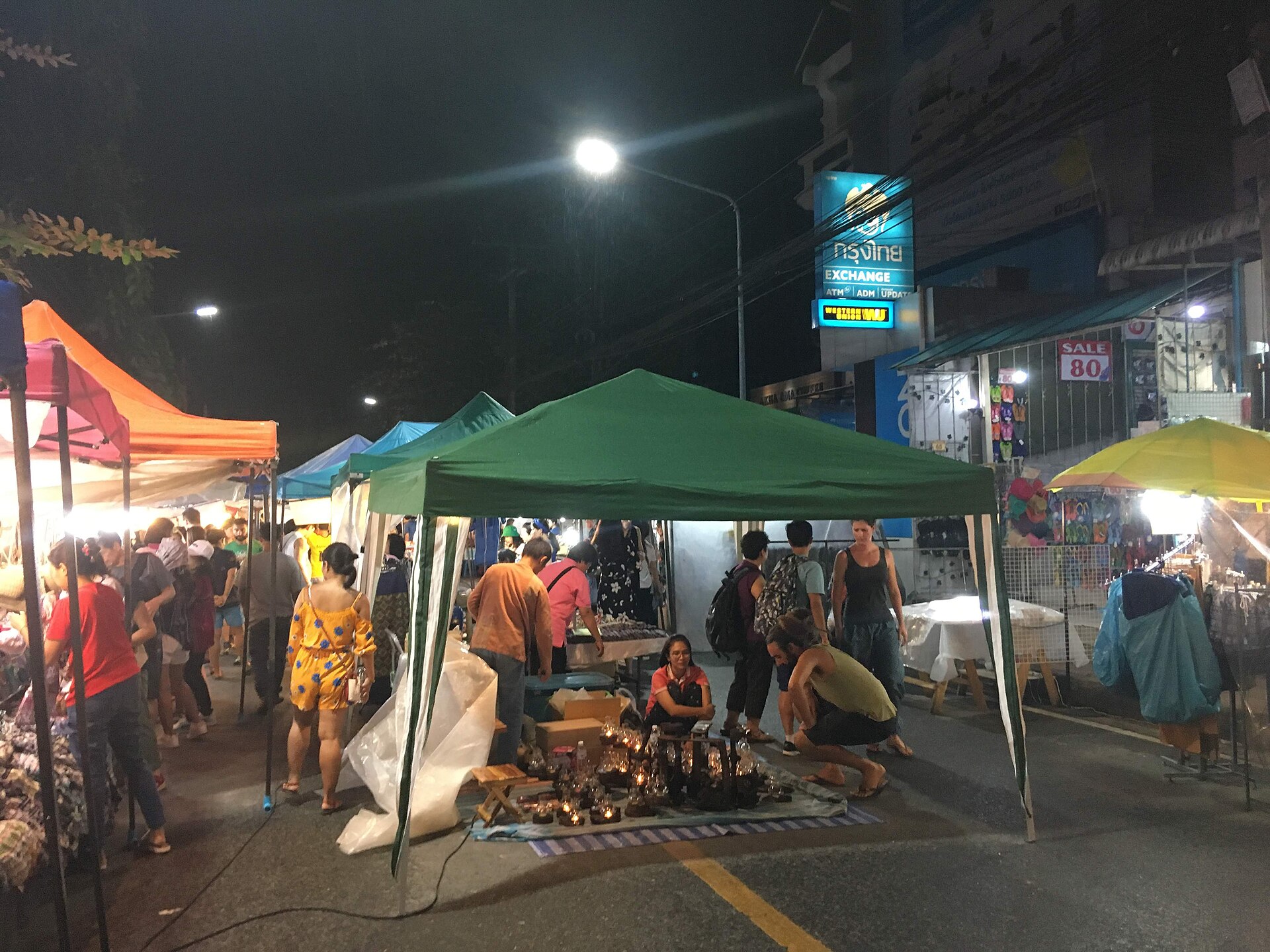
Chiang Mai Sunday Night Market 2 by Christophe95, Wikimedia Commons, CC BY-SA 4.0. Source: https://commons.wikimedia.org/wiki/File:Chiang_Mai_Sunday_Night_Market_2.jpg. License: https://creativecommons.org/licenses/by-sa/4.0.
Bangkok is the full-service answer. It has the deepest medical, transit, flight, shopping, and apartment infrastructure in this comparison, and the BTS route map shows why parts of the city can be much easier without a car than many Americans expect. But Bangkok can stop being cheap fast. If you choose an upscale serviced apartment, imported groceries, taxis everywhere, and U.S.-style routines, the budget can rise toward Southern Europe territory.
Chiang Mai is the value-and-comfort answer. It is calmer than Bangkok, more manageable for many first-timers, and still deep enough to support everyday life. It is also not perfect. Smoke season can be a serious quality-of-life issue, and the city is not a beach base. Hua Hin is the quieter coastal-retirement answer, but it is not automatically cheaper than Chiang Mai once housing and comfort standards are included.
For a solo American, a realistic Thailand test might run from roughly $1,500 to $2,300 in Chiang Mai, $1,800 to $2,600 in Hua Hin, or $2,200 to $3,400 in Bangkok depending on housing, neighborhood, medical comfort, and travel habits. A couple should add more, especially if they want a central apartment, strong air conditioning, private healthcare access, and a cushion for domestic flights or visa logistics.
Thailand is strongest for readers who want fewer surprises, better-known expat pathways, and a wider range of city personalities. It is weaker for readers whose top priority is the lowest possible monthly cost or who dislike tourist infrastructure around them. Thailand is easier to start in, but that ease can tempt people into spending more than they intended.
Visas and stay basics should not be guessed
Do not build a one- to three-month plan from forum comments. Vietnam and Thailand both change practical entry details over time, and the official pages are the only place to verify what applies to your passport and stay length. Vietnam’s official e-visa portal is the place to check current electronic visa rules and application steps. Thailand’s official e-visa site and Thai consular guidance should be checked before assuming your desired stay length is simple.
The U.S. State Department country information pages are also useful for basic safety, entry, passport, medical, and emergency context. Use them as a baseline, then check the destination country’s own rules before booking. For trial stays, the point is not to become a visa expert. It is to avoid accidentally planning a stay that requires paperwork you have not allowed time for.
Healthcare and safety: Thailand is easier to trust at first, Vietnam can still work
If healthcare access is a major concern, Thailand is usually the easier first answer. Bangkok has internationally known private hospitals, and Chiang Mai has enough medical infrastructure to reassure many longer-stay visitors. This does not mean every Thai city is equal, or that insurance is optional. It means the path to private care, English-speaking help, and medical backup is often clearer for first-time planners.
Vietnam can work, especially in major cities and Da Nang, but readers should be more careful about exactly where they stay and what kind of care they might need. If you depend on specific prescriptions, specialists, mobility support, or fast emergency access, do not treat the country average as enough. Check clinics, hospitals, insurance coverage, and pharmacy options around the actual neighborhood you are considering.
For safety, both countries require normal urban caution. The practical risks for most trial-stay Americans are not dramatic movie risks. They are traffic accidents, scooter decisions, petty theft, scams, heat, food or water adjustment, medical surprises, and getting too casual with paperwork. A good Southeast Asia test is built around boring backup systems: insurance, medication planning, copies of documents, money redundancy, and a neighborhood that does not make every errand hard.
Daily life: Vietnam has more edge, Thailand has more cushion
Vietnam can feel exciting quickly. The cafe culture is strong, food is excellent, cities are active, and the cost-to-energy ratio can be hard to beat. But the same things that make Vietnam lively can also make it tiring: traffic noise, construction, sidewalk gaps, different payment habits, and a faster local rhythm than some Americans expect.

BTS Skytrain, Bangkok, Thailand by Vyacheslav Argenberg, Wikimedia Commons, CC BY 4.0. Source: https://commons.wikimedia.org/wiki/File:BTS_Skytrain,_Bangkok,_Thailand.jpg. License: https://creativecommons.org/licenses/by/4.0.
Thailand has more cushion. In Bangkok, transit, malls, hospitals, hotels, flights, and international services are obvious. In Chiang Mai, the day-to-day rhythm is easier for many newcomers to read. In Hua Hin, the pace can feel more retirement-friendly. That cushion can be exactly what a first test needs. It can also dull the comparison if you accidentally stay in an expat bubble and never test normal local life.
The best approach is to test the lifestyle you would actually live. If you plan to cook sometimes, check grocery access. If you need quiet sleep, do not book above nightlife. If you need video calls, verify internet and backup mobile data. If you hate riding scooters, choose neighborhoods where walking, taxis, transit, or ride-hailing are realistic. Cheap rent in the wrong daily-life pattern is not a win.
Who should choose Vietnam first
Choose Vietnam first if you are comfortable learning by doing, want strong value, and are not easily rattled by a less polished first week. It is a good fit for readers who care about cafes, food, coastal cities, energy, and stretching a moderate budget. Da Nang is the most obvious starting point if you want a softer Vietnam landing. Ho Chi Minh City is better if you want intensity, flights, and bigger-city options. Hanoi is better if you want culture and seasons, but it can feel less simple for a first tester.
Do not choose Vietnam first if you need a very predictable daily environment, broad English support, easy pedestrian comfort, or a medical setup that feels obvious from day one. It can still be a strong destination, but it rewards preparation.
Who should choose Thailand first
Choose Thailand first if you want Southeast Asia with fewer practical unknowns. Bangkok is best if you want maximum infrastructure and can control spending. Chiang Mai is best if you want a calmer value test with enough services around you. Hua Hin is best if coastal quiet matters more than big-city depth. Thailand is also the better first choice if healthcare reassurance, easy domestic travel, or a more developed foreigner support ecosystem matters.
Do not choose Thailand first if your whole plan depends on proving you can live extremely cheaply. Thailand can be affordable, but it is very easy to buy convenience. The country gives you more ways to make life easy, and every one of those ways can push the budget upward.
A practical decision rule
If this is your first month in Southeast Asia and you are nervous, start with Thailand. It gives you more backup, more obvious services, and a softer way to learn what the region feels like. If you already know you handle Southeast Asian traffic, heat, language gaps, and apartment quirks well, Vietnam may give you the better value test.
If your budget is around $1,500 to $2,000 a month, Vietnam deserves a close look, especially Da Nang, but leave room for a better apartment and health backup. If your budget is around $2,000 to $3,000, Thailand becomes easier to test without constant compromise, especially Chiang Mai or a carefully chosen Bangkok neighborhood. If your budget is above $3,000, the question becomes less about survival and more about which country gives you the rhythm you actually want.
Before booking, compare the city-level Vietnam guide for Da Nang, Hanoi, and Ho Chi Minh City, then sanity-check the numbers against the deeper cost guides for Da Nang and Ho Chi Minh City. For Thailand, read the country guide for comfortable long-stay living on a moderate budget and the older city comparison for Chiang Mai, Hua Hin, and Bangkok. Then use the 30-day city test and the three-city shortlist process before paying for a longer stay.
If you want the worksheet version of this decision, the Destination Shortlist Kit is built for narrowing countries and cities by budget, healthcare, logistics, climate, and daily-life fit before you book.
Final verdict
Thailand is usually the better first Southeast Asia trial stay for Americans who want the easiest landing. Vietnam is often the better value test for Americans who are ready for more friction and want to see how far a moderate budget can go. If you are unsure, start with Thailand, learn your real daily-life needs, and then test Vietnam with sharper questions. If you already know you can handle a more energetic environment, Vietnam may be the more interesting and budget-efficient move.
Compare places with the City Fit Dashboard: If you want to sort destinations by budget, healthcare comfort, internet, airport access, and everyday-life friction, use the City Fit Dashboard alongside this guide.
Readers comparing Southeast Asia beyond Vietnam and Thailand should add Cebu City as an English-friendly Philippines alternative. Cebu has easier English and a useful regional airport, but it asks for more traffic patience, island-weather planning, and healthcare due diligence.
Readers comparing Southeast Asia beyond Vietnam and Thailand should add Sanur, Bali as a slower coastal Southeast Asia alternative. Sanur can feel calmer and more beach-oriented, but Indonesia visa timing, Bali traffic, healthcare planning, and housing standards change the fit.
References
- U.S. Department of State, Vietnam country information: https://travel.state.gov/content/travel/en/international-travel/International-Travel-Country-Information-Pages/Vietnam.html
- U.S. Department of State, Thailand country information: https://travel.state.gov/content/travel/en/international-travel/International-Travel-Country-Information-Pages/Thailand.html
- Vietnam official e-visa portal: https://evisa.gov.vn/
- Thailand official e-visa portal: https://www.thaievisa.go.th/
- LivingCost, Vietnam: https://livingcost.org/cost/vietnam
- LivingCost, Thailand: https://livingcost.org/cost/thailand
- LivingCost, Da Nang: https://livingcost.org/cost/vietnam/da-nang
- LivingCost, Chiang Mai: https://livingcost.org/cost/thailand/chiang-mai
- BTS Skytrain route map: https://www.bts.co.th/eng/routemap.html