
Quick answer: Da Nang is usually the easiest first Vietnam base for Americans who want a calmer longer trial stay, beach access, enough services, and less megacity pressure. Ho Chi Minh City is the strongest choice if you need the deepest healthcare, flight, coworking, restaurant, and expat-service network. Hanoi is the most culturally compelling of the three, but it is also the easiest to underestimate because traffic, weather, air quality, and neighborhood friction can wear on you during an ordinary month.
Vietnam belongs near the front of the destination conversation right now, but it should not be sold as a magic cheap-country answer. For Americans thinking about a one- to three-month stay, the real question is more specific: which Vietnam city gives you enough comfort, healthcare access, housing, internet, food, transport, and room to breathe while you find out whether the country actually fits you?
That is why Da Nang, Hanoi, and Ho Chi Minh City should be compared as different first-base tools, not as interchangeable dots on a map. The same person who loves a month in Da Nang might feel worn down in Ho Chi Minh City. The person who gets bored in Da Nang might feel alive in Hanoi. The person who needs strong medical, airport, and business infrastructure may find Ho Chi Minh City easier to defend than either of the other two.
Start with Vietnam’s 90-day e-visa reality
For Americans, Vietnam is more practical to test than it used to be because the official Vietnam e-visa system allows e-visas for up to 90 days, with single-entry and multiple-entry options. The U.S. Embassy in Vietnam also describes e-visas as valid up to 90 days and lists the fee as 25 USD for single entry or 50 USD for multiple entry. The U.S. State Department still says U.S. travelers need a tourist visa, six months of passport validity, and one blank visa page for an entry stamp.
That makes Vietnam a good scouting destination, but not a place to treat casually. A 90-day window is enough to test apartment life, food routine, traffic tolerance, clinic access, weather, banking workarounds, and whether you like the country after the first week. It is not the same thing as a permanent move, and it is not a reason to ignore visa dates, onward travel, insurance, medication planning, or what happens if you need to leave and come back.
If you are still building a broader shortlist, pair this Vietnam comparison with how to build a shortlist of 3 cities before booking a month abroad. Vietnam can be a strong candidate, but it should win on your real daily-life tests, not just on low rent stories.
What kind of longer trial stay Vietnam fits
Vietnam can work especially well for Americans who want a lower-cost Asian base, excellent food, a lively street culture, decent apartment options, and enough city infrastructure to avoid feeling stranded. It can also be a good comparison point for readers looking at Thailand. If you are weighing Southeast Asia more broadly, read the existing Chiang Mai vs Hua Hin vs Bangkok comparison and then ask whether Vietnam gives you the same comfort, better value, or simply a different kind of energy.
The wrong Vietnam fit is just as important. Vietnam can be hard if you need quiet streets, easy driving, predictable sidewalks, very low pollution exposure, fluent English in every practical setting, or a fully familiar Western medical environment. It can also be frustrating if you expect low cost to erase every other tradeoff. A cheaper apartment is not a win if you hate the neighborhood, cannot sleep, cannot cross the road comfortably, or have no clear healthcare plan.
Da Nang: the easiest first landing for many Americans
Da Nang is usually the cleanest first answer for Americans who want to try Vietnam without jumping straight into the country’s largest or densest city environments. It gives you beach access, a real city, an airport, cafes, apartments, international clinics, supermarkets, nearby Hoi An, and a slower daily rhythm than Ho Chi Minh City or Hanoi. It is not a sleepy village. It is a city that lets many newcomers breathe.
That matters for a longer trial stay. During week one, excitement can hide friction. By week three, the ordinary stuff becomes the real test: grocery shopping, laundry, pharmacy runs, Grab rides, street noise, apartment maintenance, finding a quiet place to work, and whether you still want to leave the apartment after a hot or rainy day. Da Nang often wins because it gives you enough Vietnam while lowering the daily stress level.
Da Nang is strongest for remote workers, early retirees, beach-oriented readers, and people who want Vietnam to feel livable quickly. It can also be easier for a first 30-day city test because the map is less overwhelming. You can compare beach-side living, river-side living, and more local neighborhoods without needing to decode an enormous metropolis.
The caution is depth. Da Nang has medical facilities and expat-facing services, but it does not have the same specialist depth, flight network, business density, or big-city redundancy as Ho Chi Minh City. If your healthcare needs are complicated, if you need frequent international flights, or if you thrive on constant city energy, Da Nang may feel too soft after the novelty wears off.
Hanoi: the most compelling, not always the easiest
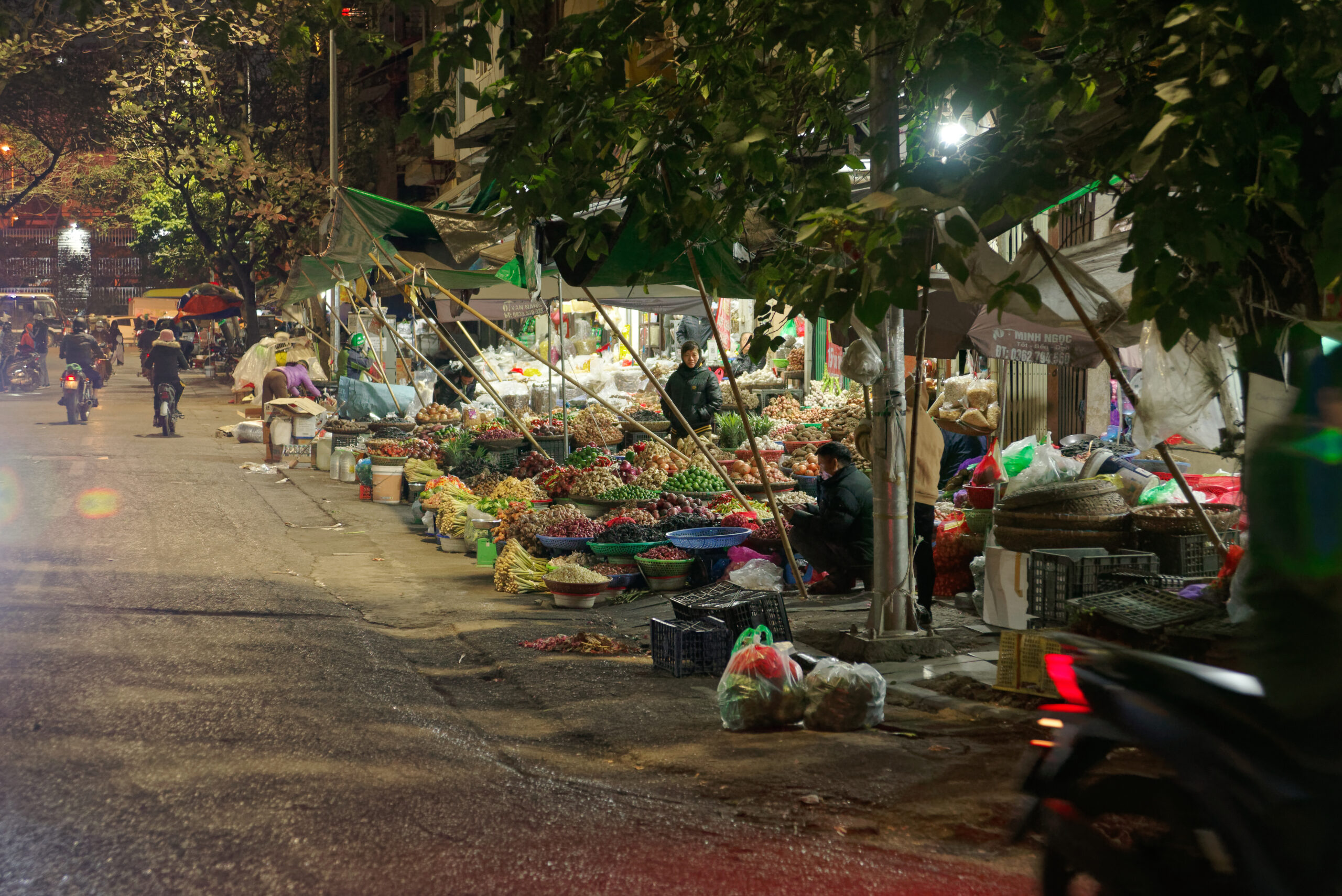
Hanoi Old Quarter Market by Jakub Halun, Wikimedia Commons, CC BY 4.0. Source: https://commons.wikimedia.org/wiki/File:Old_Quarter_market,_Hanoi,_20240123_1811_3411.jpg. License: https://creativecommons.org/licenses/by/4.0/.
Hanoi is the city many people fall for intellectually and emotionally. It has history, food, lakes, cafes, older neighborhoods, northern Vietnam access, and a stronger sense of place than many newer-feeling cities. If your idea of a good base includes culture, texture, and a city that does not feel generic, Hanoi deserves a serious look.
But Hanoi is also the easiest of these three cities to romanticize from a distance. The density can be tiring. Traffic is not a minor detail. Sidewalks can be inconsistent. The weather is more seasonal than many Americans expect, with hot humid summers and cooler damp-feeling periods. Air quality can become a real quality-of-life issue for sensitive readers. A charming street can be wonderful for dinner and still be difficult as an everyday apartment location.
Hanoi is strongest for people who want depth more than ease. It fits readers who enjoy dense urban life, do not need everything to be smooth, and want northern Vietnam at their doorstep. It is weaker for a first Vietnam base if you are noise-sensitive, traffic-stressed, respiratory-sensitive, or trying to keep the first trial stay as simple as possible.
If Hanoi is calling you, do not judge it by a weekend in the Old Quarter. Test where you would actually live. Walk the grocery route. Check whether you can sleep. Try the same pharmacy errand twice. Take a Grab at rush hour. Spend time near West Lake, local residential areas, and the places you would use on a normal Tuesday. The guide to testing a city abroad for 30 days is especially relevant here.
Ho Chi Minh City: deepest infrastructure, highest intensity
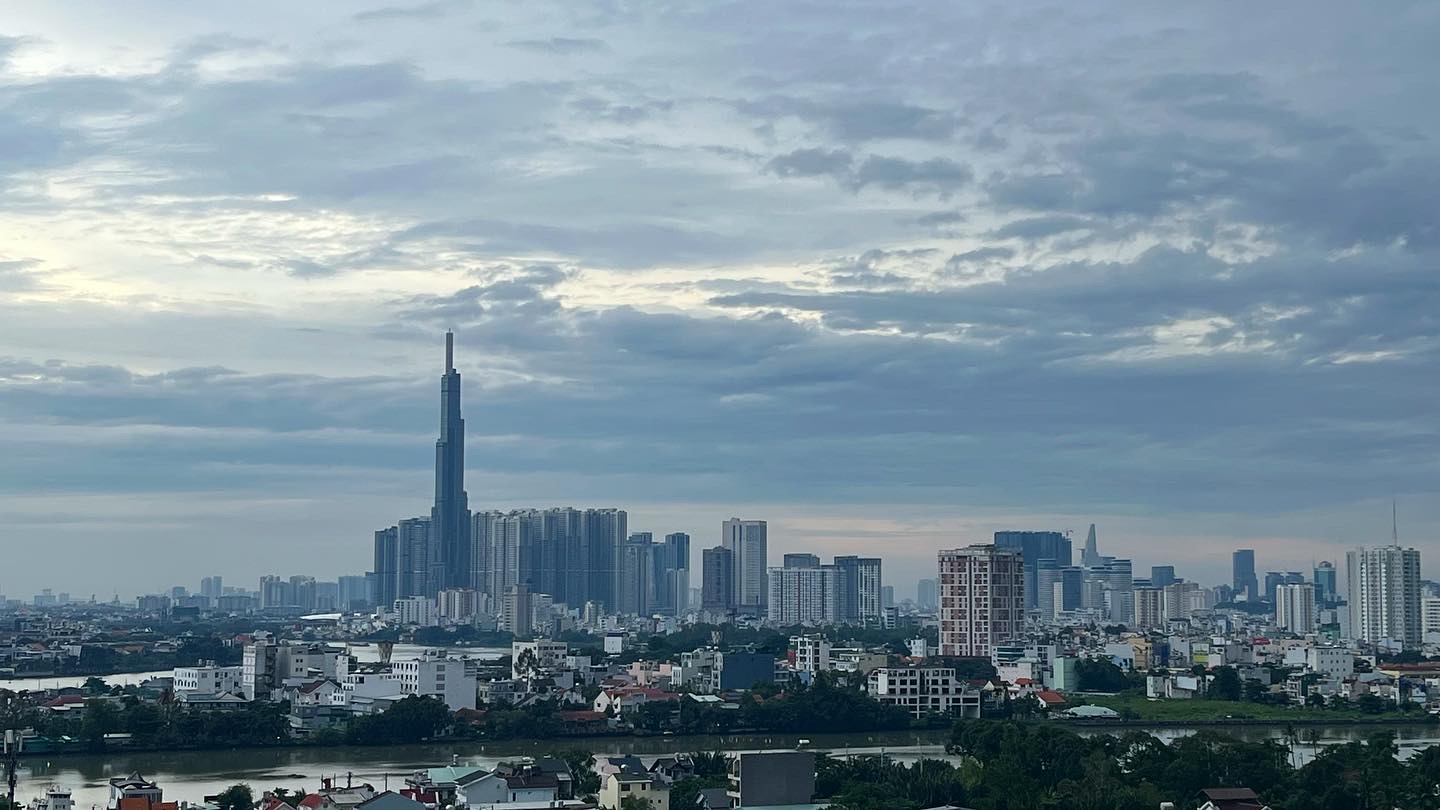
Ho Chi Minh City Skyline 2022 by Xuanphuocle, Wikimedia Commons, CC BY-SA 4.0. Source: https://commons.wikimedia.org/wiki/File:Ho_Chi_Minh_City_Skyline_2022_(1).jpg. License: https://creativecommons.org/licenses/by-sa/4.0/.
Ho Chi Minh City is the strongest choice when practical depth matters most. It has the biggest-city service ecosystem, stronger international flight usefulness, more coworking and business density, more restaurant variety, more private healthcare options, more English-facing services, and more ways to solve a problem without leaving the city. If Vietnam is going to be a serious base rather than just a soft landing, Ho Chi Minh City is hard to ignore.
The tradeoff is intensity. Heat, traffic, noise, construction, humidity, and the sheer pace of the city can become tiring. Some people feel energized by that. Others feel like they never fully relax. For a short trip, the energy can be exciting. For a longer trial stay, it can become the main reason the city fails.
Ho Chi Minh City is strongest for readers who need healthcare depth, flights, business connections, coworking, nightlife, restaurants, and a bigger English-facing service layer. It is weaker for people who want quiet, cooler weather, beach access, low-stress walking, or a gentle first landing. If you choose it, choose the neighborhood with care. District choice can change the whole experience.
Healthcare and prescriptions should influence the city choice
The U.S. Embassy’s medical assistance page lists medical facilities across Hanoi, Da Nang, and Ho Chi Minh City, which is useful because the practical healthcare question is local. Vietnam has care options in all three cities, but the depth is not equal everywhere. Ho Chi Minh City usually gives the most fallback options. Hanoi also has serious medical infrastructure. Da Nang can be workable for routine and moderate needs, but readers with complicated care profiles should be more cautious.
The CDC’s Vietnam traveler guidance also points to routine vaccines, measles vaccination, rabies risk, and other destination-specific preparation. That does not mean Vietnam is unusually scary. It means a longer stay should include normal pre-trip healthcare planning, especially if you take regular prescriptions, have chronic conditions, or may need English-speaking care under stress.
Before choosing a Vietnam base, run the same healthcare test in each city: nearest clinic, nearest hospital you would actually use, pharmacy access, medication availability, payment method, insurance handling, English support, emergency route, and when you would leave for a bigger facility. Use the healthcare-access framework before you book the apartment, not after.
Housing, internet, transport, and daily errands
Cost-of-living pages can be useful as a starting point, but they should not decide your Vietnam city. Numbeo’s June 2026 Vietnam page shows broad Vietnam costs well below U.S. averages, but your real cost depends on furnished housing, neighborhood, building quality, electricity, air conditioning, lease length, season, and whether you are paying foreigner-friendly short-stay prices.
Da Nang can often offer the best comfort-to-cost relationship for a first trial stay, especially if you want beach access and do not need the biggest-city service layer. Hanoi may give interesting neighborhoods and strong food value, but apartment comfort, damp/cool-season issues, traffic, and air quality deserve attention. Ho Chi Minh City can be more expensive in the neighborhoods many foreigners want, but it gives you more options, more services, and more backup when something goes wrong.
For internet and work routine, all three cities can be viable, but do not trust listing claims blindly. Ask for a speed test from inside the apartment. Check mobile data coverage. Test backup cafes or coworking spaces. For transport, assume you will use Grab often unless you are already comfortable with local traffic patterns. Walking can be useful in pockets, but Vietnam is not a simple sidewalk country in the way many Americans imagine walkability.
Before you book, use the first apartment questions for a longer stay abroad. Ask about noise, elevator access, air conditioning, hot water, kitchen setup, desk/chair comfort, washer, building security, flood risk, construction nearby, and what happens if the internet fails. A cheap Vietnam apartment is not a bargain if it makes ordinary life harder every day.
Climate and air quality can change the answer
Vietnam’s official tourism climate guidance makes clear that weather varies sharply by region. Hanoi has hot, humid rainy-season months and cooler winter periods. Central Vietnam, including Da Nang, has a different rainy-season pattern and can face heavy rain or storms in parts of the year. Ho Chi Minh City has a southern rhythm, with heat and wet-season realities that feel different from the north.
That means the best Vietnam city may depend on the month you are testing it. Da Nang can feel like the obvious winner in a good coastal-weather window and less charming during stormy periods. Hanoi can be wonderful in a comfortable season and rough if heat, damp cold, or air quality hits you hard. Ho Chi Minh City can feel convenient and alive, but the heat and humidity are not background details for everyone.
If you have respiratory sensitivity, treat air quality as a real selection factor. If you hate heat, do not assume “cheap and exciting” will compensate. If you need easy outdoor walking for health, test the city in the actual season you might return. The right Vietnam base is not the city that looks best in photos. It is the city where your body and routine still work.
Who should choose which city?
- Choose Da Nang first if you want a softer landing, beach access, a calmer pace, easier apartment logic, and enough city services without starting in a megacity.
- Choose Hanoi first if culture, food, history, northern Vietnam access, and dense city texture matter more than smoothness.
- Choose Ho Chi Minh City first if you need the deepest infrastructure, healthcare options, flights, coworking, restaurants, and service redundancy.
- Be careful with Da Nang if you need major specialist healthcare depth, constant big-city energy, or the broadest international flight options.
- Be careful with Hanoi if traffic, air quality, seasonal weather, noise, or old-city density could wear you down.
- Be careful with Ho Chi Minh City if heat, traffic, noise, and pace make it hard for you to relax.
The cheapest city is not automatically the best city. The better test is whether the place gives you a livable month. That is the same idea behind choosing between a cheap place and a livable place abroad. Vietnam can be affordable, but affordability only matters if the base still supports your health, sleep, work, food, errands, and exit options.
A simple 30-day Vietnam test plan
If Vietnam is high on your list, do not try to solve the whole country from home. Pick one city for a proper 30-day test, then use a second city as a shorter comparison if your schedule allows. For most first-timers, Da Nang is the cleanest first month. Add several days in Ho Chi Minh City if healthcare, flights, or services may be decisive. Add Hanoi if culture and northern Vietnam are part of the draw.
During the first week, do normal life on purpose. Buy groceries. Use a local pharmacy. Take a Grab during busy hours. Work from the apartment and from a backup cafe. Walk the neighborhood at night and in rain. Visit the area around the hospital or clinic you would use. Check whether you are still comfortable after the novelty drops.
During weeks two through four, stop asking whether Vietnam is exciting and start asking whether it is repeatable. Could you live this ordinary week three more times? Could you sleep well? Could you get medical help if needed? Could you handle a bad apartment, a lost debit card, a visa-date problem, or a medication issue without panic? If the answer is yes, Vietnam may deserve a serious place on your shortlist.
Final verdict
For many Americans testing Vietnam, Da Nang is the best first base because it balances cost, comfort, beach access, services, and lower daily intensity. It is the city most likely to let you evaluate Vietnam without being overwhelmed by Vietnam’s biggest-city friction.
Ho Chi Minh City is the best infrastructure base. If you care most about healthcare depth, flights, restaurants, coworking, English-facing services, and backup options, it may be the more serious long-stay candidate. You just have to be honest about the heat, traffic, noise, and pace.
Hanoi is the strongest cultural base, and for the right person it may be the most rewarding. But it is not automatically the easiest first Vietnam base. Choose it because you want Hanoi itself, not because someone online said Vietnam is cheap.
The practical answer is simple: start with the city that matches your nervous system and your daily needs. For a calm first test, start with Da Nang. For depth and services, test Ho Chi Minh City. For culture and northern Vietnam, test Hanoi carefully. Then let the month decide.
If you are comparing Vietnam against several other places, the Destination Shortlist Kit is the worksheet version of this process: city fit, budget pressure, healthcare comfort, housing checks, and the first 30-day test before you commit to a longer stay.
If Da Nang is the city that looks most realistic after this comparison, use the Da Nang cost-of-living breakdown to pressure-test rent, AC, food, coworking, healthcare, and first-month setup costs.
If Hanoi is the city that looks most realistic after this comparison, use the Hanoi cost-of-living breakdown to pressure-test rent, transport, food, workspace, healthcare, air-quality buffer, and first-month setup costs.
If Ho Chi Minh City is the city that looks most realistic after this comparison, use the Ho Chi Minh City cost-of-living breakdown to pressure-test rent, transport, food, workspace, healthcare depth, convenience spending, and first-month setup costs.
If you are still deciding whether Vietnam is the right country before choosing a city, compare Vietnam against Thailand for a longer trial stay first.
Before you book a Vietnam test stay: How to Plan a 30-Day Test Stay in Vietnam Before You Treat It Like a Move
Choosing between Hoi An and Da Nang? Hoi An or Da Nang for a Longer Stay: Culture, Beach Time, and Everyday Reality
References
- Vietnam National Electronic Visa system, https://evisa.gov.vn/
- U.S. Embassy and Consulate in Vietnam, Vietnamese visas and entry/exit, https://vn.usembassy.gov/vietnamese-visas-and-entry-exit/
- U.S. Department of State, Vietnam country information, https://travel.state.gov/content/travel/en/international-travel/International-Travel-Country-Information-Pages/Vietnam.html
- U.S. Department of State, Vietnam travel advisory, https://travel.state.gov/content/travel/en/traveladvisories/traveladvisories/vietnam-travel-advisory.html
- CDC Travelers’ Health, Vietnam, https://wwwnc.cdc.gov/travel/destinations/traveler/none/vietnam
- U.S. Embassy and Consulate in Vietnam, Medical Assistance, https://vn.usembassy.gov/medical-assistance-2/
- Vietnam Travel, Weather and climate in Vietnam, https://vietnam.travel/things-to-do/weather-and-climate-vietnam
- Numbeo, Cost of Living in Vietnam, https://www.numbeo.com/cost-of-living/country_result.jsp?country=Vietnam