Quick answer: Before you book a longer-stay apartment abroad, ask questions that show whether the place can support normal life, not just a few vacation nights. Confirm the exact unit, payment path, internet speed, router location, phone signal, noise, stairs or elevator access, kitchen setup, laundry, workspace, utilities, deposits, cancellation rules, neighborhood errands, and who helps when something breaks. Clear answers are useful. Vague answers are a reason to slow down before you pay.
A longer-stay apartment is not just a bed between sightseeing days. If you are staying one to six months, it becomes your kitchen, office, laundry base, charging station, quiet room, admin desk, and recovery space. That changes the booking questions.
Most bad apartment surprises are not dramatic. They are ordinary details that nobody pinned down early: weak Wi-Fi, a noisy delivery door, four flights of stairs, a missing freezer, laundry that requires a taxi, or an electricity cap that turns air conditioning into a budget problem. The point of asking better questions is not to be difficult. It is to find out what daily life will actually feel like before your money and travel dates are committed.
Start With The Exact Unit
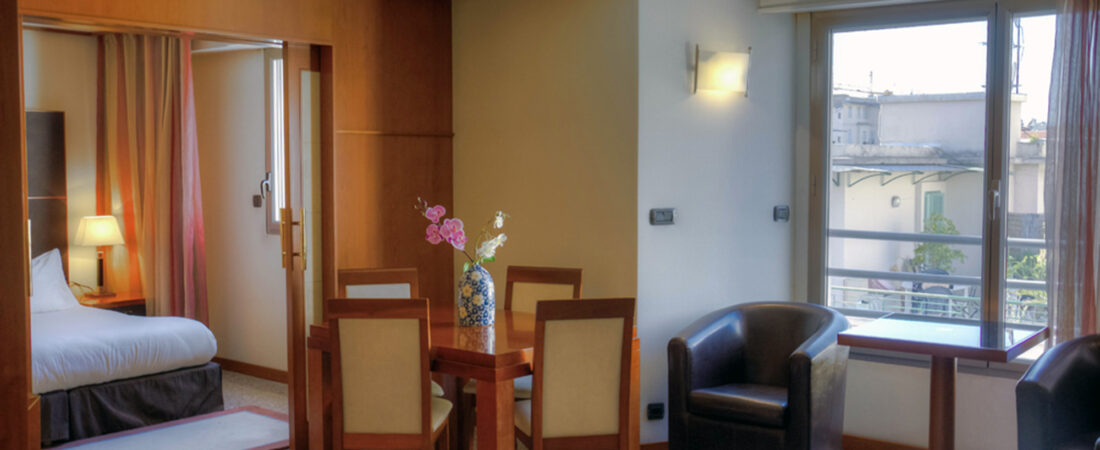
The first question is simple: “Are the photos from this exact apartment?” If you are booking a serviced apartment, apartment hotel, or multi-unit building, ask whether your actual unit has the same layout, windows, bed, desk, kitchen, bathroom, floor level, and view shown in the listing.
Representative photos can hide a lot. One unit may be bright and renovated while another is darker, older, smaller, or louder. For a weekend, that might only be annoying. For a month or longer, a different mattress, desk, kitchen, window, or floor can change the whole stay.
The Federal Trade Commission warns that rental listing scams can copy real photos and descriptions, advertise prices that look too good to be true, pressure fast payment, or push hard-to-recover payment methods like wire transfer, gift cards, or cryptocurrency. Use the same cautious habit with longer stays: verify the unit, manager, approximate address area, booking platform, and payment path before sending money.
If you have not already read it, pair this step with how to read apartment listings abroad without missing the red flags. The better you get at spotting vague listings, the fewer surprises you carry into arrival day.
Ask How Payment, Deposits, And Cancellation Work
Before you book, ask for the total amount due before arrival, what is due later, how deposits are handled, which fees are included, what can be withheld from the deposit, and what happens if you cancel or leave early. Do not rely on a casual phrase like “deposit required” or “utilities included.” Ask for the mechanics.
A useful answer gives you amounts, currency, timing, payment method, cancellation deadline, refund rule, cleaning fee, tax, service fee, and deposit-return timeline. A weak answer sounds like “no problem,” “we can discuss later,” or “pay directly and save fees.” Saving a little money is not worth losing a traceable booking path.
For longer stays, ask whether utilities are truly included or capped. Electricity, heating, air conditioning, water, internet, building fees, cleaning, linens, and final cleaning can all be handled differently. If you are building your first-month budget, compare the answer with how to budget your first 90 days abroad.
Ask For A Current Internet Speed Test Inside The Apartment
“Wi-Fi included” is not enough. Ask for a current speed test from inside the apartment near the desk or main sitting area. Ask whether the router is inside the unit or shared with another apartment, floor, or building. If you need video calls, telehealth, remote work, streaming, banking, or cloud backups, ask about reliability at the time of day you will actually use it.
Also ask about mobile signal inside the apartment. A place can have workable Wi-Fi and terrible cell reception, which becomes a problem when you need two-factor authentication, banking access, account recovery, rideshare pickup, or a backup connection during an outage. The FCC notes that U.S. phone plans may work differently abroad, with roaming rates, device compatibility, unlocking, eSIM or local SIM choices, and data limits to check before travel.
If connectivity is one of your stress points, use how to build a reliable internet plan for long-stay travel and how to set up phone service for a one-to-three-month stay abroad before you commit. Apartment internet is easier to evaluate before arrival than to fix after your first failed call.
Ask About Noise Like Someone Who Has To Sleep There
Noise questions should be concrete. Ask what to expect at night and early morning: traffic, bars, restaurants, scooters, construction, dogs, neighbors, elevator noise, church bells, school pickup, trash collection, or building work. Ask whether weekend nights are different from weekdays.
Many hosts will honestly say there is some street noise, or that a nearby bar is active on weekends. That answer can still be useful. What you want to avoid is a vague dismissal: “quiet area,” “normal city noise,” or “no problem.”
This matters even more if the stay is a test for a longer base. A city can feel wonderful during the day and wear you down at 2 a.m. If you are still comparing places, how to test a city abroad for 30 days without mistaking vacation mood for real life gives you a broader way to separate atmosphere from livability.
Ask About Stairs, Elevators, Hills, And Entry Access
Ask what floor the apartment is on, whether there is an elevator, how reliable the elevator is, and whether there are stairs before the elevator or inside the unit. Ask about hills between the building and groceries, transit, or taxi pickup. Ask where a car or rideshare can actually stop if the street is pedestrian-only or difficult to access.
These details are easy to minimize while booking and hard to ignore after arrival. A third-floor walk-up may be fine for a weekend. It may feel very different when you are carrying groceries, dealing with heat, or coming in after a long travel day.
Entry access deserves its own question. If you arrive late, how do you get in? Is there a lockbox, keypad, doorman, meet-and-greet, or app-based entry? If the lockbox fails or your phone dies, who answers? For your first day on the ground, use what to verify in an apartment during the first 24 hours abroad as a second checklist.
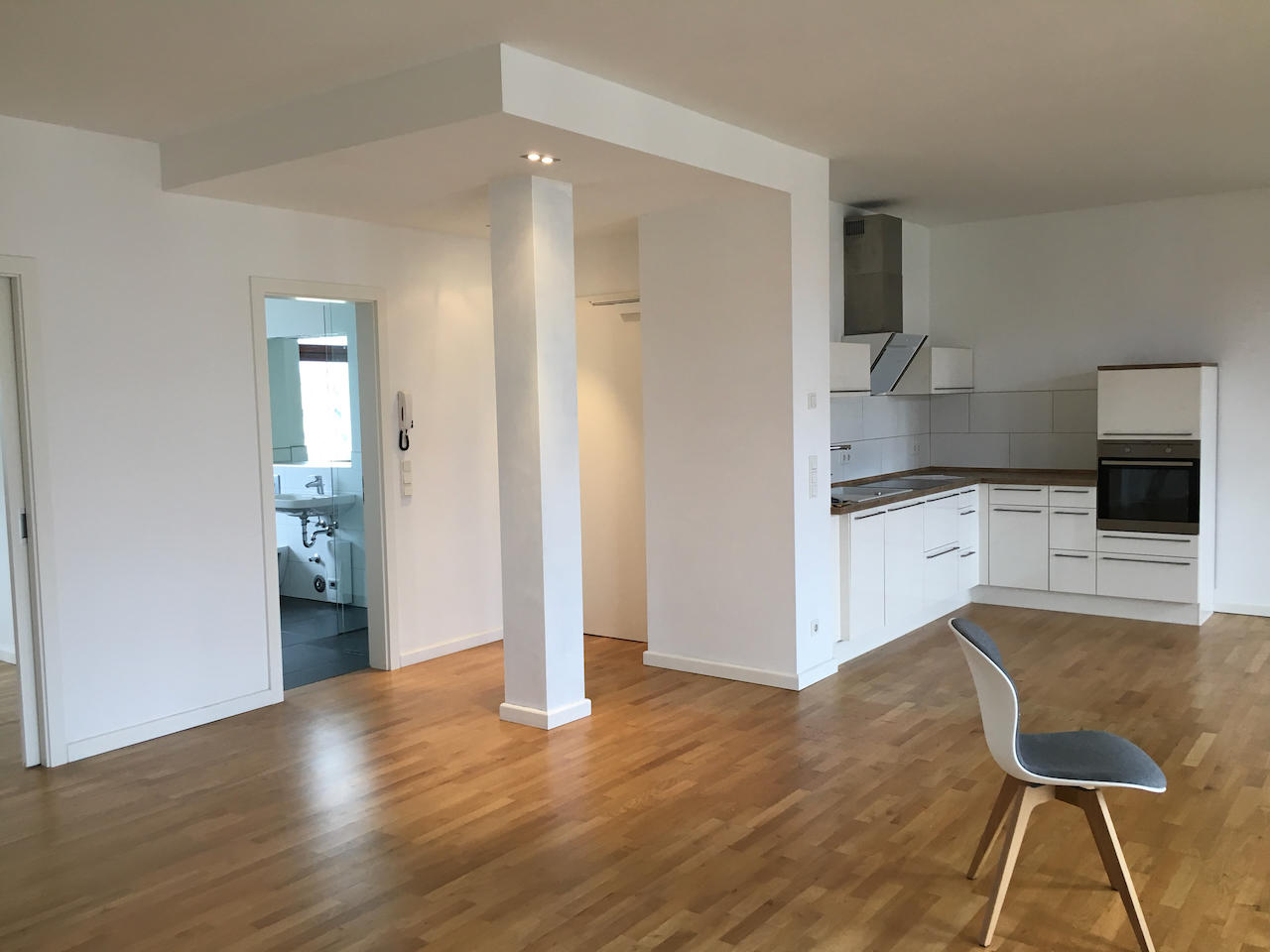
Empty apartment in Berlin with fitted kitchen and chair by SmashingIt99, Wikimedia Commons, Creative Commons Zero 1.0 Universal (CC0 1.0). Source: https://commons.wikimedia.org/wiki/File:Empty_apartment_in_Berlin_with_fitted_kitchen_and_chair.jpg. License: http://creativecommons.org/publicdomain/zero/1.0/deed.en.
Ask What Is Actually In The Kitchen, Laundry, Workspace, And Bathroom
For a longer stay, “kitchen” should mean more than a pretty counter. Ask what cooking equipment is actually included: stove, oven or microwave, fridge, freezer, kettle, pans, knives, cutting board, utensils, dishes, food storage, and basic cleaning supplies.
Laundry language can be slippery too. Ask whether laundry is in-unit, in-building, nearby, send-out only, or handled by the host. Ask whether drying is by machine, rack, balcony, or service. A washer in a photo does not always mean you can use it freely, and a laundromat “nearby” may be less convenient than it sounds in heat, rain, or hilly streets.
Workspace questions matter even if you are retired or not working remotely. You may still need to manage bills, insurance, telehealth, email, travel plans, banking, and family calls. Ask whether there is a real table and chair, enough outlets, and usable lighting.
Do the same with the bathroom. Ask about hot water, water pressure, towel changes, storage, ventilation, and whether the shower is enclosed or wet-room style. These are small details until you live with them every day.
Ask Whether The Neighborhood Works For Ordinary Errands
“Close to everything” is not a real answer. Ask for the nearest grocery store, pharmacy, ATM, transit stop, taxi or rideshare pickup area, clinic, and simple restaurant or cafe. Then check the walking time yourself on a map and ask whether the route has hills, stairs, poor sidewalks, heavy traffic, or areas that are impractical after dark.
This is where travel planning and apartment planning overlap. The U.S. Department of State recommends checking travel advisories, entry and exit requirements, visa needs, local laws, and U.S. embassy information before travel. For a longer stay, add apartment-level practicality to that same habit.
If walkability is part of your decision, compare the host’s answer with how to tell if a destination is actually walkable enough for daily life. A map can make a neighborhood look easy while heat, traffic, sidewalks, hills, or grocery weight make it harder in practice.
Ask Who Handles Problems And How Fast They Respond
Every apartment can have a problem. The question is whether the response process is real. Ask who you contact if the internet, air conditioning, heat, lock, plumbing, power, appliance, or elevator fails. Ask typical response times and what happens after hours.
A small problem with a clear contact can be manageable. A small problem with no reachable person can dominate your week. If the answer is vague before payment, it probably will not become clearer during a stressful arrival night.
Healthcare and medication routines also belong in the background of this question. If you need predictable access to prescriptions, clinics, or insurance documents, build that plan separately with how to build a healthcare backup plan before you spend months abroad. The apartment does not need to solve healthcare, but it should not make every routine harder.
Red-Flag Answers That Should Slow You Down
Red flags are often about vagueness and pressure. Slow down if the price is far below similar listings without a clear reason, the host pushes payment outside a platform, the photos seem copied or inconsistent, the unit cannot be verified, or the host cannot explain fees, deposits, cancellation rules, utilities, internet, or maintenance.
- “Internet is good” without a speed test or router details.
- “Everything is nearby” without naming groceries, pharmacy, transit, or pickup points.
- “No noise” in an urban location with no explanation of weekends, roads, bars, or construction.
- “Laundry available” without saying whether it is in-unit, in-building, nearby, or send-out.
- “Pay directly and we can save fees” before you have a verified, traceable path.
- “We can discuss later” for deposits, utilities, early exit, or cancellation.
A red flag does not always mean the listing is fake. Sometimes it means the host is casual, the apartment is poorly managed, or the listing was written for short vacation stays. That still matters.
Green-Flag Answers That Build Confidence
Green flags are boring in the best way. The host answers specific questions with specific details. The payment and cancellation path is clear. Photos match the exact unit. Internet speed, router location, and mobile signal are discussed plainly. Fees, utility caps, and deposits are disclosed before payment. The setup supports sleep, cooking, laundry, admin work, errands, and rest days.
The best hosts do not have to promise perfection. They simply explain the tradeoffs. “The apartment is on the third floor with no elevator, but the grocery store is two blocks away” is more useful than “great location.” Specificity lets you decide whether the tradeoff fits your body, budget, sleep, and routine.
Copy And Paste This Message Before Booking
Use this as a starting point and trim it for the platform or host:
Hi, I am considering booking this apartment for a longer stay, so I want to confirm a few practical details before paying. Is this the exact unit shown in the photos? Can you confirm the internet speed from inside the apartment, whether the router is inside the unit, the floor/elevator situation, expected nighttime noise, laundry setup, kitchen equipment, included utilities and fees, deposit and cancellation terms, and who I contact if there is an internet, lock, power, plumbing, or appliance problem? Also, could you confirm the nearest grocery store, pharmacy, and transit or taxi pickup area? Thank you.
If the stay is expensive, long, or difficult to change, ask more. If the host responds clearly, you have better information. If the host resists reasonable questions before booking, that is information too.
Bottom Line
The first apartment you book abroad should be screened like a temporary home. Ask about the exact unit, safe payment, internet, mobile signal, sleep, stairs, kitchen, laundry, workspace, utilities, neighborhood errands, maintenance, and exit rules. These questions will not remove every risk, but they will catch many of the problems that make a longer stay harder than it needed to be.
A good apartment does not need to be perfect. It needs to be honest. The more specific the answers are before you pay, the less likely you are to spend your first month abroad solving problems that could have been visible from the start.
This article is for general planning and education only. It is not legal, immigration, financial, real estate, housing, medical, or safety advice. Always verify rental terms, payment protections, entry rules, travel advisories, phone access, insurance coverage, and local conditions for your specific destination before making commitments.
Apartment questions matter even more in a second-tier city, where one bad neighborhood, weak internet connection, or awkward transit location can erase the savings that made the city attractive.
Apartment questions should connect to the surrounding routine, not just the unit itself. After the listing looks acceptable, check whether rent, healthcare, and errands line up from that exact neighborhood.
Apartment questions are stronger when they are tied to the city decision itself. Use this checklist together with the city-shortlist filter so a cheap or pretty unit does not hide weak healthcare, errand, internet, or exit-plan logistics.
Planning tool
Use the apartment checklist before booking
The First 90 Days Abroad System includes an apartment inspection checklist and arrival-week worksheets for the first stay.
For a practical city example of how rent, electricity, AC, location, and workspace change the monthly number, compare the Da Nang rent and utility tradeoffs before booking a longer stay.
For a practical city example of how rent, electricity, neighborhood density, noise, location, and workspace change the monthly number, compare the Hanoi rent and utility tradeoffs before booking a longer stay.
For a practical city example of how rent, electricity, neighborhood density, noise, location, and workspace change the monthly number, compare the Ho Chi Minh City rent and utility tradeoffs before booking a longer stay.
For a practical Spain example of how rent, utilities, neighborhood, transport, insurance, and setup costs change the monthly number, compare the Valencia rent and utility tradeoffs before booking a longer stay.
For a practical Spain example of how rent, utilities, neighborhood, transport, insurance, and setup costs change the monthly number, compare the Alicante rent and utility tradeoffs before booking a longer stay.
References
- Federal Trade Commission, Rental Listing Scams
- U.S. Department of State, Planning Your Travel
- Federal Communications Commission, International Roaming: Mobile Phone Use Abroad
Before trusting a low advertised city budget: What to Check Before You Trust a Low-Cost City Abroad
Before committing to a longer-stay neighborhood: How to Test a City’s Everyday Services Before a Longer Stay Abroad