Quick answer
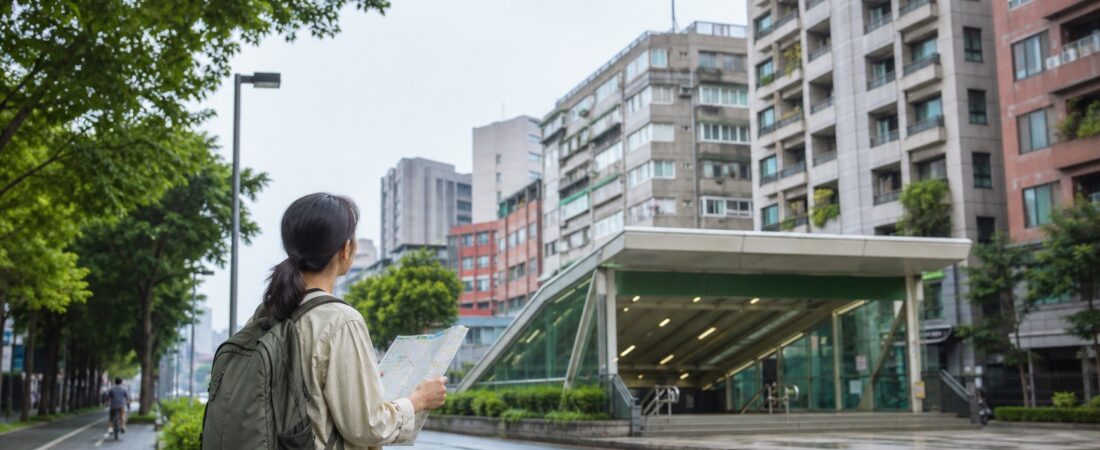
Quick answer: Taipei can be a strong first Asia test if you want a dense, transit-led city and are willing to judge it by ordinary routines rather than a few good meals or sightseeing days. Start with a reversible stay, recheck the official entry rules immediately before travel, and test a real neighborhood-to-groceries-to-transit-to-care route before treating the city as a longer-term base. It is a poor first choice if heavy humidity, stairs, compact housing, or a fast urban pace will quietly wear you down.
Treat the first stay as an experiment, not a verdict
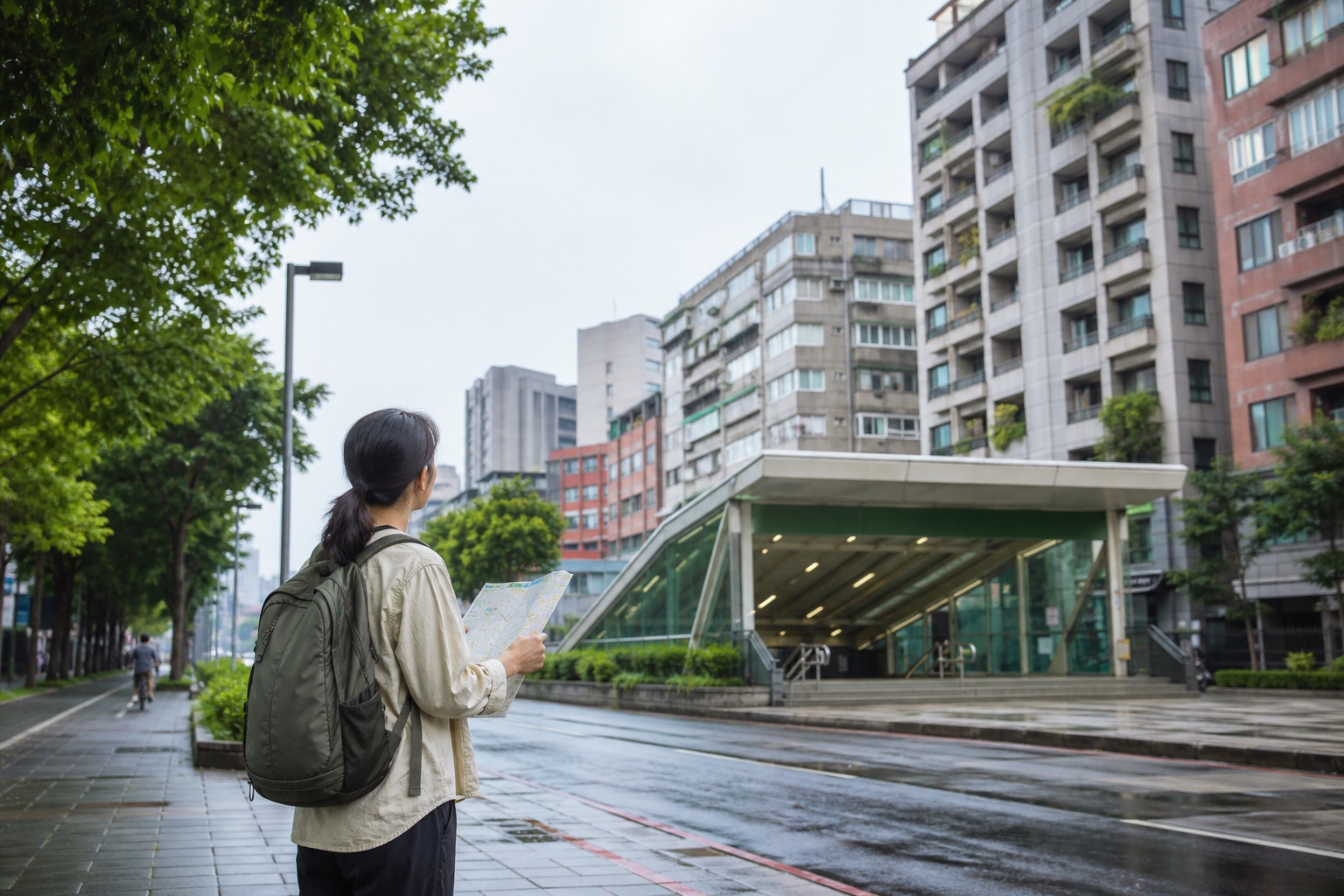
A city can be easy to visit and still be tiring to live in. Taipei is a useful place to test that difference because so much of daily life happens in a compact network: walking to an MRT station, changing trains, carrying groceries through rain, using elevators or stairs, and choosing between a lively street and a quieter side street. A hotel near an attraction will not answer those questions for you.
The sensible goal is not to decide whether Taipei is “the best” city in Asia. It is to learn whether your own ordinary week works there. That means arriving with a small set of checks you can repeat, not a long list of attractions. If the test goes well, you can return with better questions. If it does not, you have learned that before a lease, a major shipment, or a story about starting over has made it harder to change course.
This is also a useful contrast to the Philippines first-base comparison, where city-to-city care depth, airport access, and island logistics can differ sharply. Taipei asks a different question: does a highly connected city actually make your personal routes easier?
Recheck entry rules before you book anything that is hard to unwind
Entry rules are not a planning promise. The Taiwan Bureau of Consular Affairs (BOCA) is the source to check close to departure, not a blog post or an old forum thread. As checked on August 18, 2026, BOCA lists U.S. passport holders among visa-exempt visitors for stays of up to 90 days, subject to its stated conditions. Those conditions include passport, onward or return travel, and admission requirements; an officer makes the admission decision.
Use that information to choose a reversible first stay, not to assume that every traveler has the same outcome. Check your passport validity, the current BOCA wording, the Taiwan Arrival Card, airline requirements, and your own onward-travel plan shortly before departure. The arrival-card site is an official recheck point, but submitting it is not a guarantee of entry.
Avoid building a plan around an extension, a visa category, or a work arrangement that you have not independently confirmed with the appropriate official authority. Immigration, tax, employment, and insurance facts are personal and changeable. This article is a city-testing framework, not immigration, medical, legal, or tax advice.
Pick a neighborhood for the routine you want to test
For a first visit, choose a place where you can realistically walk to a grocery option, a transit stop, and at least one place you would be comfortable using for a basic errand. Do not select solely for a famous night market, a rooftop view, or the cheapest nightly rate. The point is to expose the friction you would have on a Wednesday when it is wet and you have a bag in each hand.
Before booking, look at the route in more than one way. Map the nearest MRT entrance, then note whether the route has stairs, a long crossing, covered sidewalks, an elevator you would rely on, or a transfer that looks simple on a map but takes longer in person. Taiwan Tourism Administration guidance on the Taipei Metro is useful for understanding the network, but it does not replace a live check of your exact station, schedule, or accessibility needs.
Housing is part of this test. A compact unit can be completely workable for a month and irritating for a year. Ask what floor the unit is on, whether the building has a functioning elevator, what the street sounds like in the evening, whether windows open, and how laundry works. You do not need to turn the first stay into a perfect apartment search. You need enough information to know whether the kind of housing your budget can buy or rent would support your actual habits.
Use the first three days to test four routes
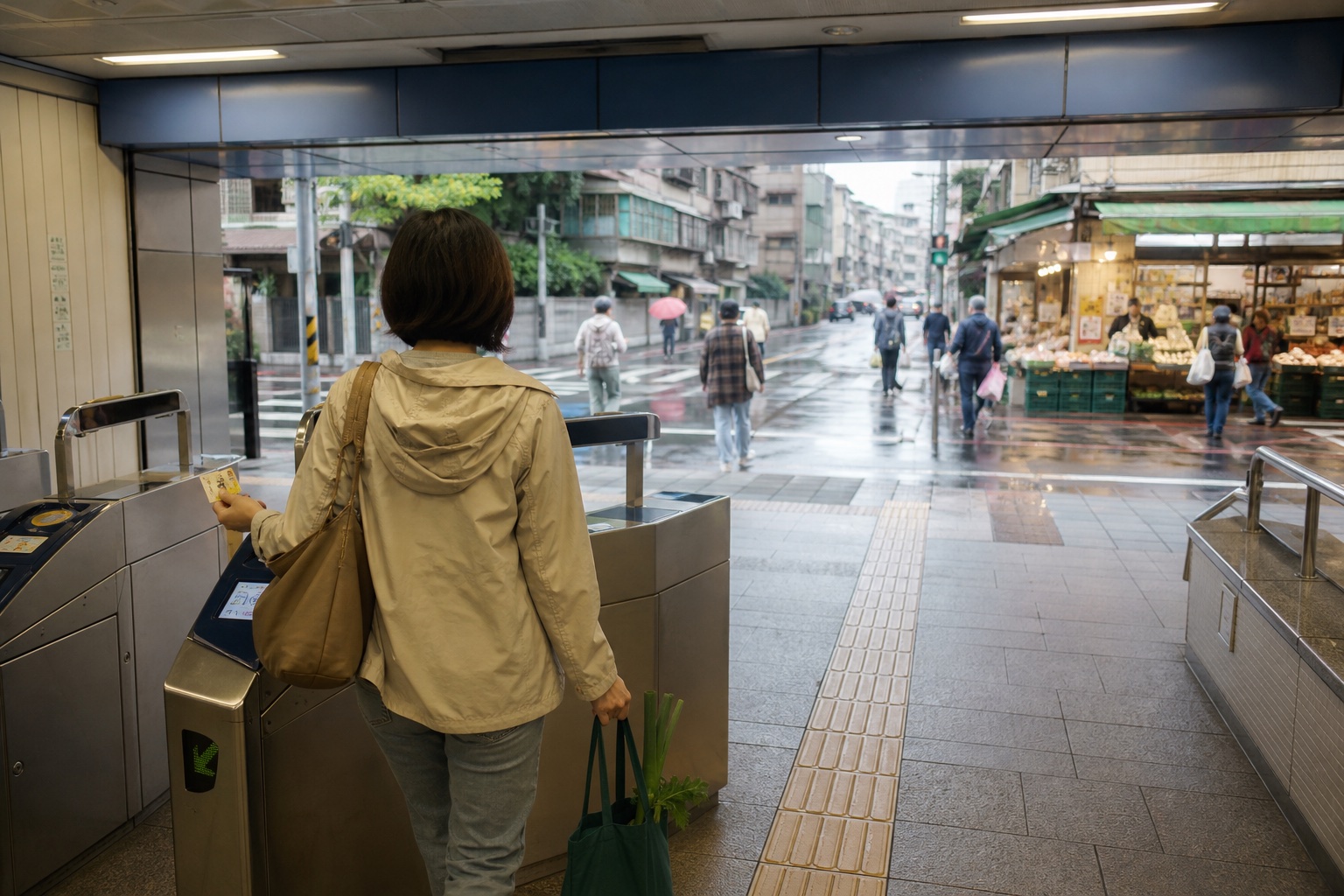
The highest-value part of a short stay is repetitive. Pick four routes and do them at the time you would normally need them:
- Lodging to a grocery store, then back with a realistic bag.
- Lodging to an MRT station and one transfer, including the return after dark.
- Lodging to a place you could use for a routine health question or a pharmacy-related question, without assuming a particular provider will meet your needs.
- Lodging to a quiet place where you can sit, work, read, or simply spend an ordinary hour.
Write down the time, the walking surface, the crowd level, the stairs, the heat, and the small points of confusion. The log may sound unromantic, but it prevents a pleasant first impression from covering up a daily problem. It is particularly useful for people testing whether a city fits a retirement-minded or fixed-income routine, where an inconvenient errand can cost energy as well as money.
If you are comparing places, use the same test. The Philippines city-versus-island-base guide offers a related way to think about services versus a smaller-place rhythm. The goal is not to make Taipei, Cebu, or any other city win on every category. It is to identify which compromises you can actually live with.
Test weather tolerance during an ordinary day
Taiwan’s official tourism climate guidance describes a subtropical climate and highlights seasonal rain, heat, humidity, and typhoon awareness. Those national-level facts are useful context, but your experience depends on the time of year, neighborhood, building, and the route you have to take.
Do not only judge the weather from an air-conditioned café. Walk your grocery route in the warmest part of the day if it is safe to do so. Take one transit trip when it is raining. Notice how long damp clothing takes to dry in your room, whether your shoes stay comfortable, and whether you still want to leave the apartment for a basic errand. These are not reasons to reject the city; they are the conditions you will be accepting if you choose it.
Typhoon and weather-disruption planning also belongs in a first-stay test. Keep a little food, charged power, local data access, and a way to receive official notices. Do not make broad claims about how often services will be disrupted. Instead, use the stay to see how your building and neighborhood behave in ordinary rain and to learn where you would get current local information.
Check care access without making a medical decision from a web article
Taipei may offer more options than a smaller base, but that broad observation should not become a personal healthcare promise. Care quality, language comfort, appointment availability, insurance coverage, prescription rules, and medical suitability depend on the person and provider. Before travel, make a plan with your current clinician and insurer that matches your needs.
On the ground, your task is narrower: identify an appropriate nearby option for a basic question, understand the transportation route to a larger facility you might use, and keep your medication list, coverage contacts, and emergency information accessible. If you take prescriptions or have a condition that could change your destination choice, use the same cautious preparation described in healthcare and prescription planning for a Philippines stay. The country changes; the need for a written backup plan does not.
If you cannot create a care route you feel comfortable with, take that result seriously. It may mean a different Taipei neighborhood, a shorter stay, or a different city is more sensible. It does not mean you need to force a decision because the rest of the trip was enjoyable.
Budget for the test, then separate travel spending from ordinary spending
A test stay should be financially easy to exit. Set a ceiling before booking that includes lodging, food, transit, connectivity, insurance, contingency money, and a return or onward change if needed. Keep a separate note for tourist spending so a few expensive meals or day trips do not become your estimate of monthly life.
Do not publish a universal Taipei monthly budget from a short visit. Housing choice, exchange rates, season, neighborhood, health needs, and imported preferences can move the number quickly. What you can learn is whether your own daily spending rhythm feels calm or constantly negotiated. Record the groceries you actually buy, the transportation you actually use, and the paid conveniences you repeatedly reach for.
For broader comparison work, the Philippines versus Malaysia guide is a reminder that an English-friendly surface can coexist with very different infrastructure, climate, and long-stay rules. Taipei should be judged on its own routine, not on a generic “Asia is affordable” assumption.
Decide after the stay, not during the first exciting week
At the end of the stay, answer a few plain questions. Did the routes become easier, or did you just tolerate them? Did your lodging support sleep, laundry, cooking, and recovery from a rainy day? Did transit reduce friction for you personally? Could you explain your care and money backup to someone else without hand-waving? And was your budget stable enough that a longer stay would feel deliberate rather than hopeful?
If the answers are mostly yes, the next step can be another reversible stay in the same neighborhood or a different one. If the answers are mixed, keep the information and test the specific weakness: a flatter route, a quieter building, a different season, or a smaller city. A first stay has done its job when it gives you a more honest next question.
The Destination Shortlist Kit can help turn those observations into a comparable worksheet, especially if you are choosing among several city types. The point is not to make a quick commitment. It is to choose the place whose ordinary constraints you understand well enough to manage.
Want a calmer way to compare options? The Destination Shortlist Kit turns your route, care, weather, and budget observations into a usable first-base worksheet.
References
- Taiwan Bureau of Consular Affairs: visa-exempt entry — rechecked August 18, 2026.
- National Immigration Agency: Taiwan Arrival Card — rechecked August 18, 2026.
- Taiwan Tourism Administration: climate information — rechecked August 18, 2026.
- Taiwan Tourism Administration: Taipei Metro information — rechecked August 18, 2026.