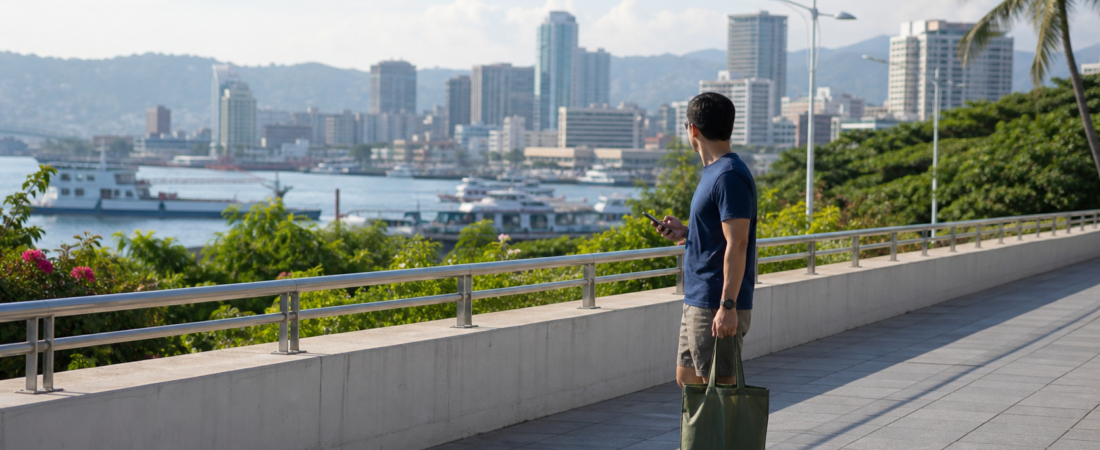
City or Island? How to Choose a Philippines Base for a Longer Stay
Quick answer
Quick answer: Choose a Philippines city base if you need deeper hospital choice, easier airport access, predictable errands, or a backup plan when weather disrupts travel. Consider a smaller city or island-adjacent base only after you have tested the practical routes: pharmacy, groceries, cash, internet, transport, and a care option. The prettier view should be the tie-breaker, not the whole decision.
Start with the kind of problem you need the base to solve
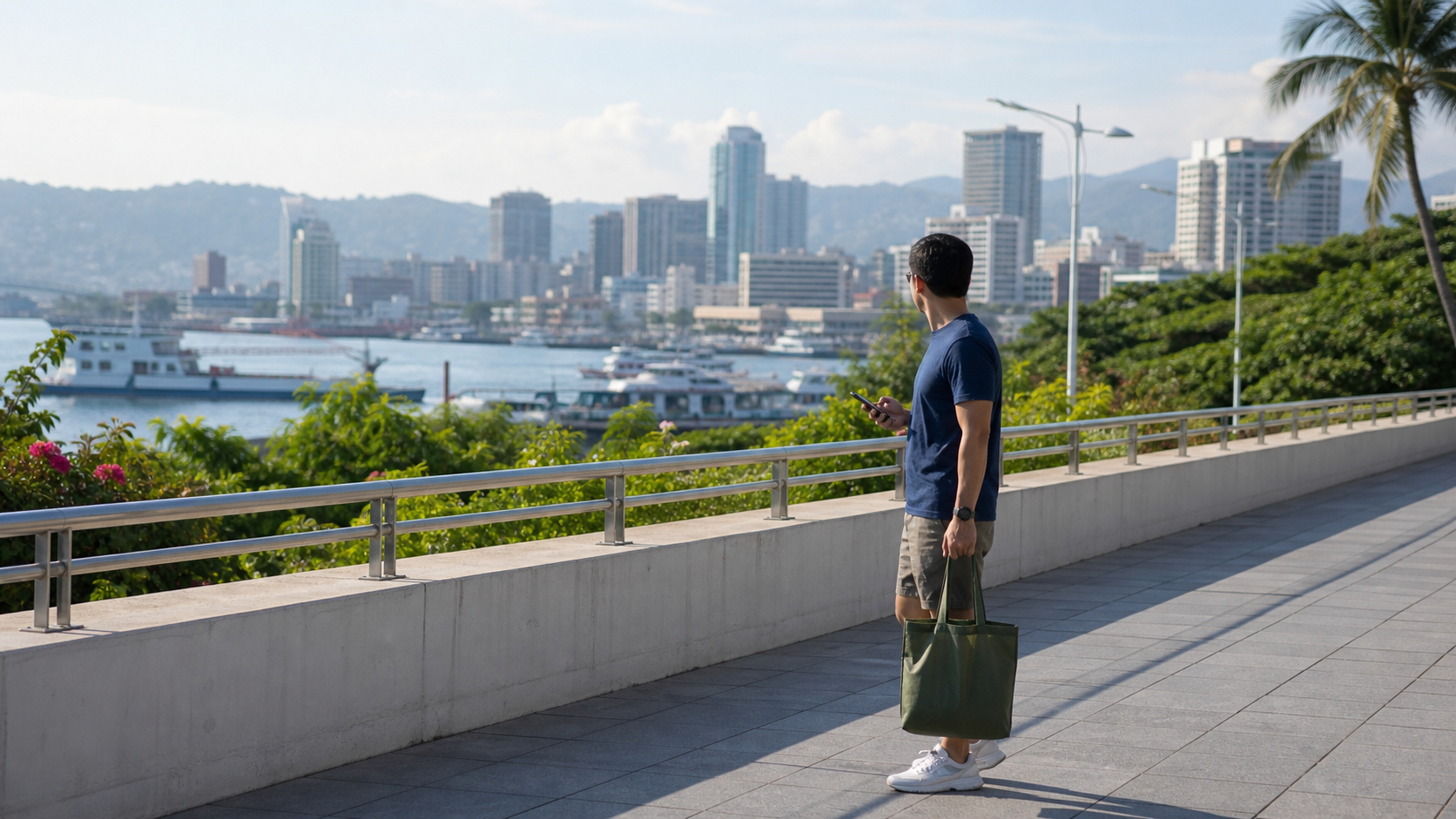
“Island living” can mean very different things. It might mean a condo in a well-served part of Cebu with quick access to the coast. It might mean a smaller city with a ferry connection. Or it might mean a place where a missed boat, a weather delay, or a prescription refill becomes the day’s main project. Those are not interchangeable lifestyles.
The best first question is not which place is cheapest or most beautiful. It is what you need to be easy. If you want regular specialist care, a broad choice of banks and apartments, international connections, or an uncomplicated workday, start by looking at a city. If you care most about quieter evenings, slower routines, and proximity to water, a smaller base may fit—but only if you can accept its thinner backups.
For readers who are still deciding whether the Philippines belongs in the plan at all, our Philippines country guide gives the wider picture. This piece is about the next decision: what sort of base supports your normal life.
Use healthcare and prescriptions as an honest sorting tool
Healthcare is often the clearest dividing line. Larger urban areas usually give you more hospitals, specialists, diagnostic options, and backup routes. That does not mean every city hospital is right for every need, nor that a smaller place has no useful care. It means the cost of a surprise can be different when the next option is across town rather than a flight or ferry away.
Ask yourself how much care you realistically use. A person who wants a routine checkup and can carry a sensible medication buffer may be comfortable testing a smaller base. A person with a condition that needs regular specialist follow-up, a particular medicine, or rapid access to diagnostics should not make a remote-feeling setting their first experiment. Read the Philippines healthcare and prescriptions guide before you choose a lease, then map an actual clinic and pharmacy route from the building you are considering.
Test that route in the heat and rain. Look at the travel time, not just the map pin. Ask what you would do if the preferred provider is unavailable. A backup plan can be quiet and unglamorous; it is still one of the best ways to make a longer stay feel calmer.
Let airport and ferry dependence change the length of your first commitment
Transport is the second sorting tool. Manila offers the broadest concentration of national and international connections, although the scale, traffic, and housing cost are not for everyone. Manila, Makati, and BGC may make sense when access matters more than a relaxed pace.
Cebu City is often a useful middle ground: a large urban base with regional air access, hospitals, condos, and services, plus a different daily rhythm from Metro Manila. The Cebu City guide explains the traffic and neighborhood tradeoffs. A smaller base such as Dumaguete can feel easier for a reader who values a more compact routine, but flight and ferry buffers matter more; see the Dumaguete guide.
If your chosen place depends on a ferry or domestic connection for major errands, do not book the longest possible lease first. Use a reversible stay and see how the routing feels when a plan changes. PAGASA notes that Philippine climate conditions vary across regions, so a weather assumption borrowed from another island is not a planning tool. Build time and money buffers around the route you would actually use.
Compare the ordinary errand loop, not just the rent
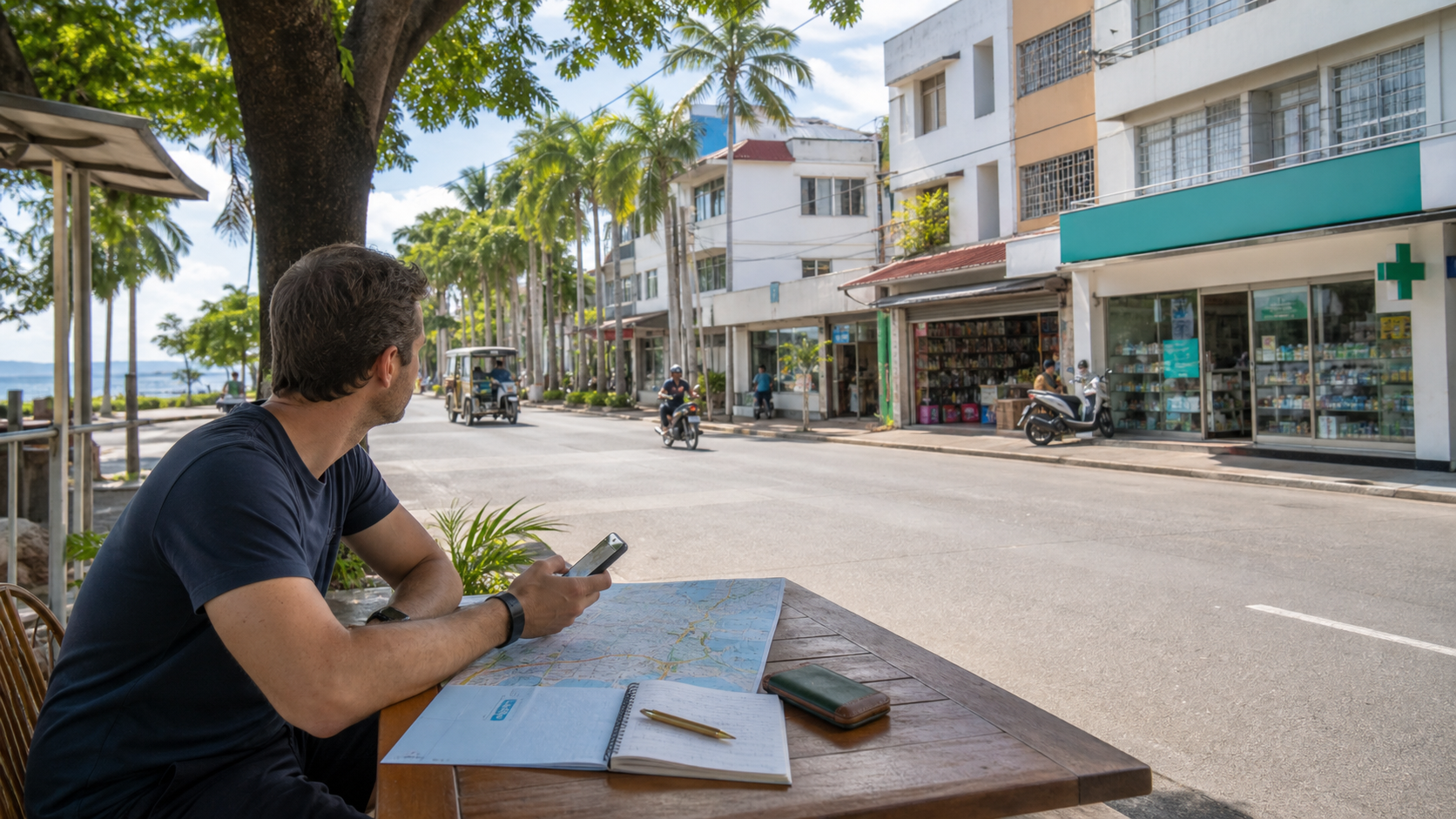
Rent can look favorable until an ordinary Tuesday requires three rides, a delivery surcharge, and a long search for something basic. Before you commit, walk or ride the loop for groceries, a pharmacy, cash access, laundry, mobile service, and a place to work or wait if your building internet fails. Do it at the time you would normally do it, including after rain if possible.
An urban neighborhood may have a higher monthly rent but lower friction: more choices, shorter backup routes, and easier delivery. A smaller city or island-adjacent neighborhood may give you quieter streets and a lower-cost home, but it may require more planning when a supply, repair, or appointment is not nearby. Neither is automatically better. The better choice is the one whose compromises you can repeat without resenting them.
Iloilo is a useful example of a middle-sized-city question: it may suit readers who want a practical city routine without choosing Cebu or Metro Manila. Compare it with the Cebu, Dumaguete, and Iloilo first-base comparison rather than treating every non-Manila option as “island life.”
Treat internet, money, and phone access as a three-part system
Remote work, banking, and two-factor authentication become fragile when they rely on one connection or one device. A city can offer more coworking options, repair shops, mobile networks, banks, and alternate internet routes. A smaller base can still work well, but you need to prove it rather than infer it from a listing’s Wi-Fi label.
Bring more than one way to reach money, preserve access to your U.S. phone number where it matters for account recovery, and keep documents securely available if a device is lost. The site’s money-lockout guide and phone-service guide cover the redundancy mindset. In a smaller base, that preparation buys you more freedom because the nearest easy replacement may not be nearby.
Decide how much weather disruption you can absorb
The question is not whether the Philippines has rain—it does—but what rain does to your neighborhood. Does water pool at the building entrance? Does the ride cost jump? Can deliveries reach you? Is the route to the pharmacy still comfortable? How would a delayed ferry or flight affect a medical appointment or a return connection?
The official climate information is a reason to check local and seasonal conditions, not a promise that a particular month will behave a particular way. Make a rainy-day test part of your first week. If you hate the inconvenience during a short stay, do not assume it becomes charming after a long lease.
A simple fit guide
- Choose a large city base first if you need broad healthcare backup, regular appointments, maximum flight options, or many housing and banking alternatives.
- Consider Cebu City if you want substantial urban services in the Philippines without making Metro Manila your default, and are willing to choose the neighborhood carefully.
- Consider a mid-sized or smaller city if you value a calmer routine and have confirmed the care, airport, money, and internet routes you need.
- Treat a more island-dependent base as a second-step choice if missed connections, thin specialist access, or supply delays would create real stress.
- Use a 7- to 14-night landing plan before a longer lease. That is not being indecisive; it is collecting the evidence that listing photos cannot provide.
Keep stay rules separate from location preference
An appealing base does not change immigration requirements. Verify current entry, visa-waiver, and extension procedures directly with the Philippines Bureau of Immigration and check the official eTravel portal close to departure if it applies to your trip. Rules, documents, fees, locations, and airline expectations can change, so do not use this article as a substitute for the authority or your carrier.
Our Philippines 1- to 6-month stay logistics guide has the verification-first checklist. Choose your city or island strategy after that part of the plan is clear, not before.
Budget for a test, not just a monthly lifestyle
The first month often includes temporary lodging, deposits, rides, supplies, data, and the cost of changing a poor choice. A city may cost more in rent while reducing transport and setup friction. A smaller base may look cheaper until you add occasional transfers, stocking up, or trips for services. Use the Philippines city cost comparison for broad planning bands, then make a personal first-month budget with a real contingency line.
If you are down to a few viable places, the Destination Shortlist Kit is the useful next step: it turns “I like both” into a written comparison of healthcare, housing, climate, transport, and daily-life tradeoffs. It is especially valuable before a discounted long lease turns a preference into a commitment.
The right base is the one that makes the boring parts manageable
The Philippines can offer a warm, social, English-friendly long-stay experience, but a good first base is rarely chosen by scenery alone. Choose the option that supports the care, money, transport, weather tolerance, and errands you actually have. Then give yourself a short, reversible window to test it.
A city is not a failure to live the island dream, and a smaller base is not automatically a better value. Both can work. The practical win is knowing which inconveniences are acceptable before you have paid for several months of them.
References and current-rule re-checks
- Philippines Bureau of Immigration: Visa Waiver
- PAGASA: Climate of the Philippines
- Philippines eTravel official portal
- U.S. Department of State: Philippines country information
Rainy-season base planning: Planning a Philippines Base During Rainy Season: What to Check Before You Book
Backup planning for a longer stay: How to Set Up Power, Internet, and Money Backups for a Long Stay in the Philippines
Apartment setup for a longer stay: How to Rent an Apartment in the Philippines for a 1- to 6-Month Stay
Testing Taipei as a first Asia base: How to Test Whether Taipei Is a Realistic First Asia Base Before You Commit