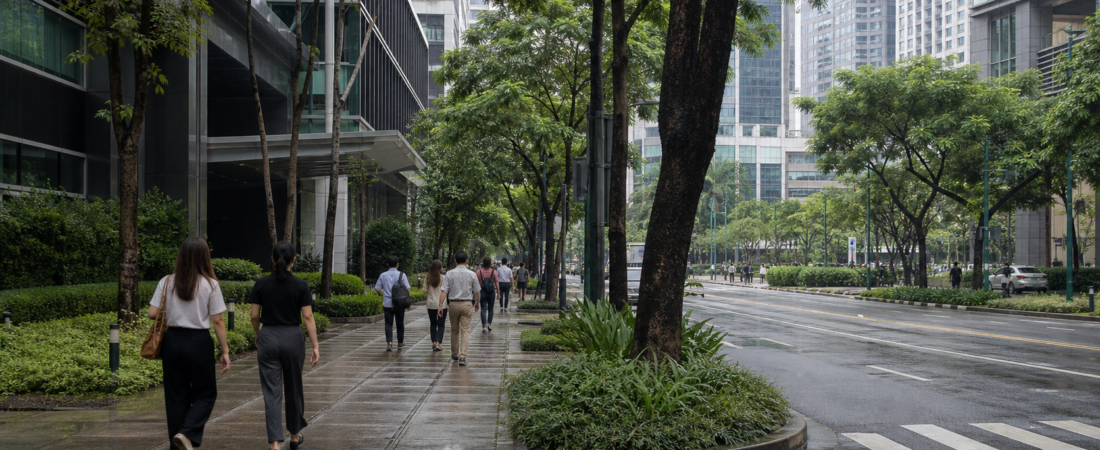
Manila is not one everyday experience. Makati, BGC, and the wider metro can each make sense for an American who wants service depth, apartment choices, healthcare options to investigate, and frequent English use. They can also produce very different days once traffic, rain, building quality, errands, and the route to care are part of the picture. The most useful question is not whether Manila is “easy”; it is whether a particular district and building support the routine you actually need.
Quick answer: Makati, BGC, and the broader Manila area can suit Americans who prioritize access to services over a simple, uniform, low-cost city routine. Makati can be a practical starting point for established business-district errands; BGC may appeal if a newer planned district and a more contained walking loop matter. Neither label guarantees an easy apartment, commute, clinic route, internet setup, or rain-day routine. Test the exact address before making a long commitment, and verify entry and extension rules directly with Philippine authorities.
Choose the district by the ordinary day you want
Makati is often the more established central-business-district choice: it can be worth testing if your routine depends on offices, shopping, appointments, and a mix of older and newer buildings. BGC can feel more planned and contained on the right blocks, with newer towers and a more deliberate street grid. The tradeoff is that a polished district name can conceal high housing expectations, a long ride to another part of the metro, or a building-specific problem that changes the whole day.
Wider Manila offers maximum variety in services, neighborhoods, and housing styles, but it also asks for more address-level diligence. Traffic, drainage, crossings, noise, pickup access, and the distance between a building and the places you use can vary sharply. Do not borrow a conclusion from a business district, mall visit, or restaurant weekend and apply it to the metro as a whole.
For a regional-city comparison, see the Cebu City Fit Dashboard. It is a shortlist tool rather than a promise of a particular rent, hospital, commute, or daily experience. For country-level planning, start with the Philippines long-stay guide, then return to the exact Manila-area address with a more demanding checklist.
Housing and budget: build the band from an address
There is no responsible citywide monthly number for this cluster. Furnished rent, deposits, utilities and air conditioning, building maintenance, location, transport, groceries, insurance, imported preferences, mobile backup, and the number of regular rides can change the total quickly. Start with available units for your dates, then keep a contingency for the parts of the routine a listing does not price.
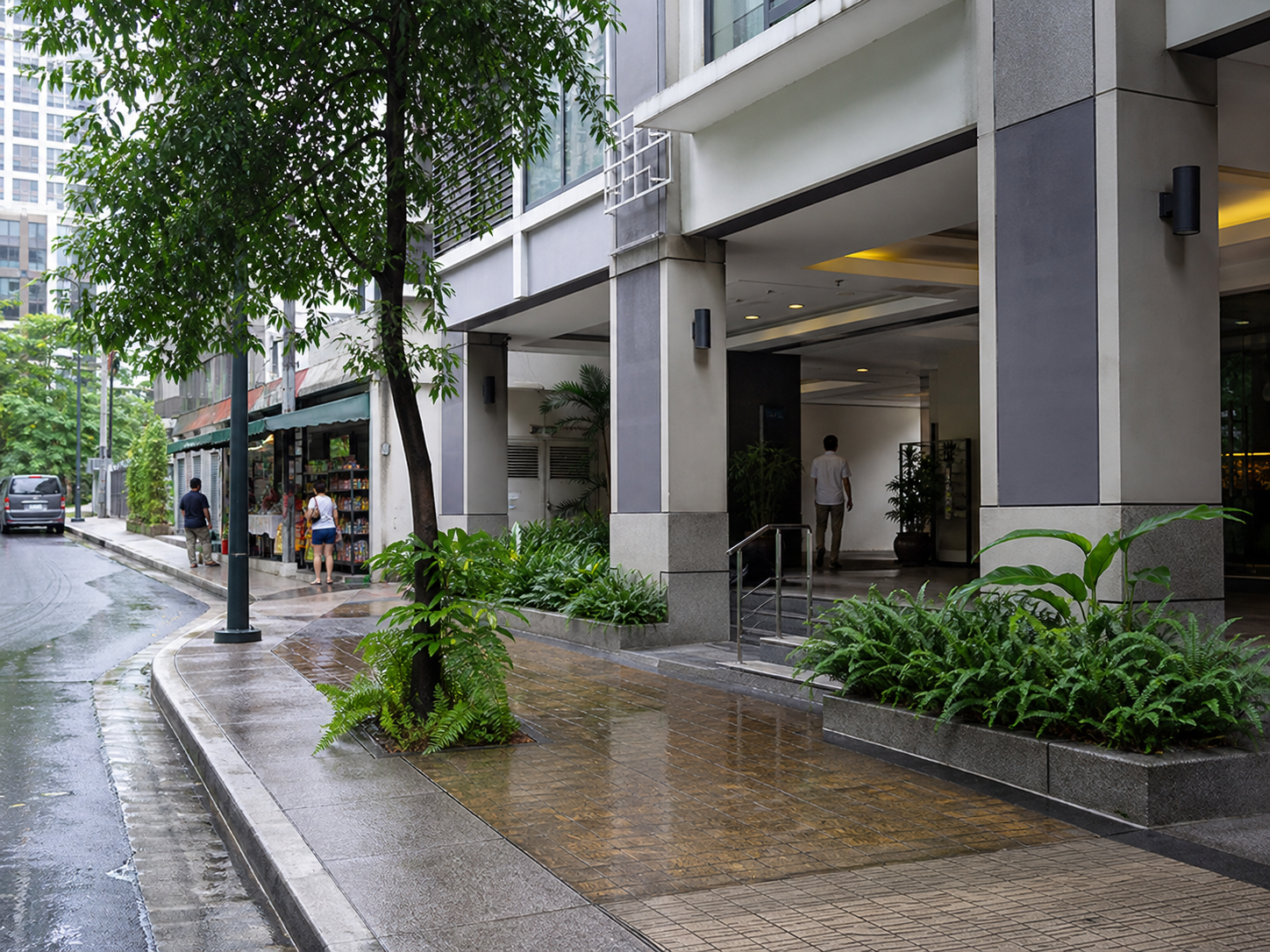
Ask for a current video walk-through of the exact unit—not a similar unit in the building. Confirm water pressure, air conditioning, desk space, noise, elevator access, building entry, deliveries, laundry, utility responsibility, mobile reception, internet installation, and the repair process. Look at the entrance and the route to ordinary errands as carefully as the view from the window.
A good first stay tests the real loop: a grocery run, pharmacy stop, rideshare pickup, cash or card backup, and the route home with bags. Make the trip in daytime and after dark. If possible, repeat it during rain. An apartment that looks central can still be awkward if the crossing, sidewalk, drainage, lobby process, or last-mile pickup is consistently difficult.
Traffic, rain, and work backups are part of the decision
Do not treat a map distance as a commute answer. Travel time can change with time of day, weather, road conditions, pickup location, and which side of a district boundary you are on. Before signing a longer lease, make the trips you would actually make: airport, clinic, groceries, a place to work, and the person or service you expect to visit regularly.
For remote work, test a real video call, upload, and mobile-data fallback from the exact building. A listing’s “fast Wi-Fi” claim is not enough to establish an uninterrupted workday. Check cooling, noise, building power arrangements, the provider support path, and a second nearby place where you could work if the first option fails.
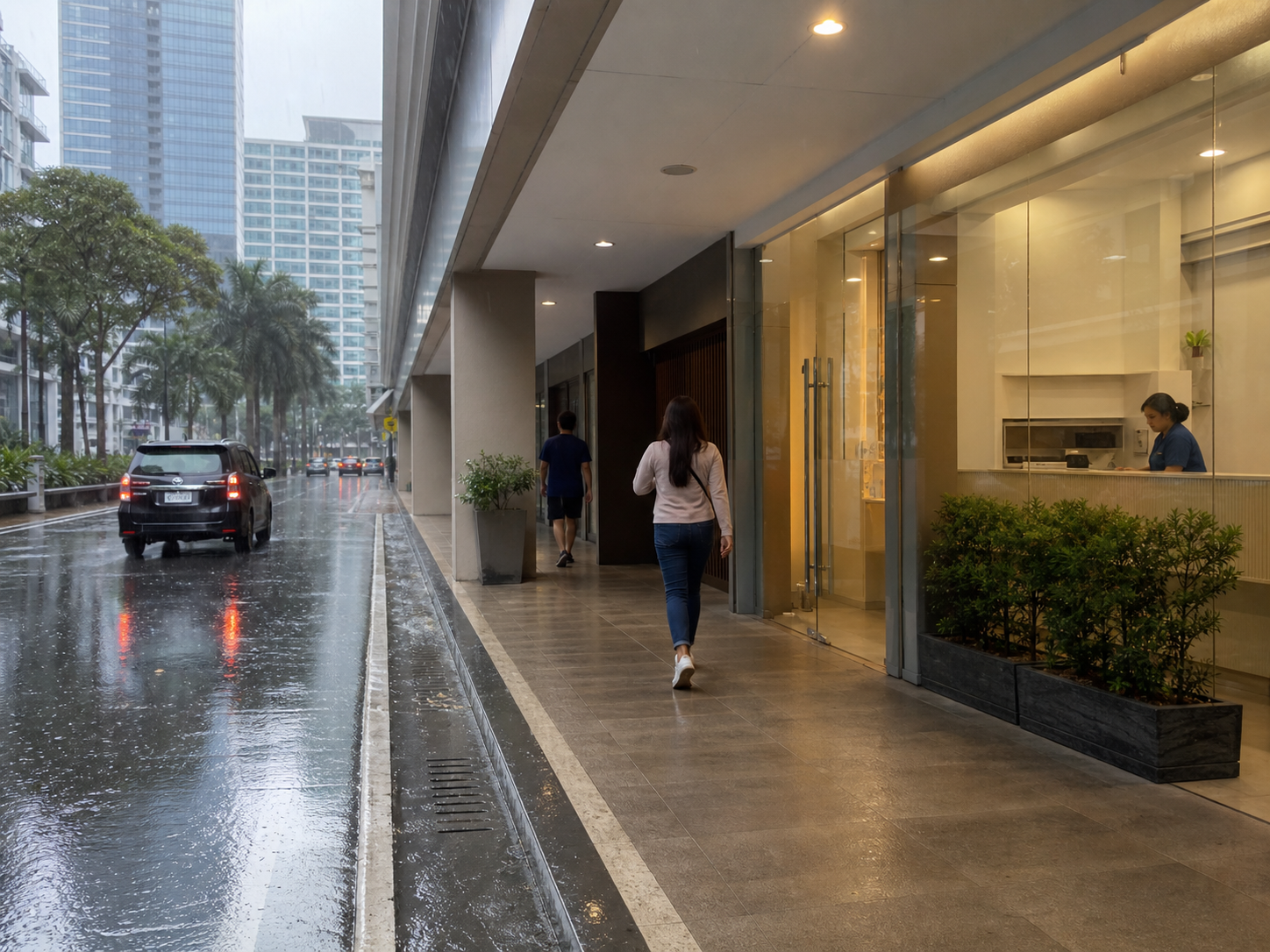
Rain is not a minor aesthetic detail. It can change sidewalks, crossings, drainage, traffic, deliveries, and how easy it is to reach care. Keep your address and key contacts offline, have a charged-phone or battery plan, and make sure your payment method does not depend on one card or one app. These are planning precautions, not claims that every building or district will behave the same way.
Healthcare, prescriptions, and an emergency route
This is general planning, not medical advice. Metro Manila offers healthcare providers to investigate, but the relevant question is whether a particular provider, specialist, prescription, insurance arrangement, and transport route work for you. Identify the actual facility you would use before extending a stay. Confirm how you would get there, how payment or insurance is handled, and what you would do if the preferred option is unavailable.
Executive Order No. 56 establishes 911 as the nationwide emergency hotline. A hotline is not a complete personal plan: save the facility address, a transport backup, essential medical information, and a way to communicate your location. If medication, ongoing treatment, specialist access, or evacuation coverage shapes the decision, verify it directly with the provider and insurer before relying on the neighborhood.
The Medical Prep Abroad Kit is a practical worksheet for prescriptions, insurance, payment, and backup-care questions. Use it before travel, then update it with the address-specific answers you learn during the first weeks.
Arrival and longer stays: use the current official source
Entry and extension rules depend on the passport, purpose, dates, past travel, and planned activity. Use the official, free eTravel portal for arrival registration and avoid fee-charging lookalikes. Do not rely on a blog’s old timing rule or screenshot when travel is near; check the current portal and official guidance.
The Bureau of Immigration visa-waiver page and its online-services route are the starting point for current official information. They are not a guarantee of eligibility, approval, duration, fee, document list, work permission, tax treatment, or maximum stay. Visitor travel, remote work, business activity, residency, and tax residence are separate questions that may require qualified advice.
A first 30-day Manila-area test
Stay in the type of district and building you would seriously choose. Do a normal grocery basket, a pharmacy visit, a realistic clinic route, an airport or appointment trip, and a work call. Test the building in the morning, after dark, and in inconvenient weather. Ask management how deliveries, maintenance, outages, visitors, and building access are handled.
At the end of the test, ask whether this exact address would still work if the weather were bad, a ride were delayed, internet failed, or you needed care quickly. If the answer is uncertain, shorten the commitment or test a different district. Moving from Makati to BGC—or from either to a wider-Manila address—changes the evidence you need; it is not a substitute for gathering it.
Bottom line
Makati, BGC, and the wider Manila area can be strong candidates for Americans who want the service depth of a major Philippine metro. They are not automatically affordable, easy to cross on foot, traffic-proof, work-ready, or medically simple. Choose the district for the normal day you want, test the exact building and rain-day route, build practical work and care backups, and verify live immigration requirements before converting a visit into a long stay.
If this cluster stays on your shortlist, use the Destination Shortlist Kit to compare the address, healthcare plan, traffic exposure, housing tradeoffs, and daily-friction questions against Cebu or another realistic alternative.
References
- Philippines eTravel portal
- Bureau of Immigration: visa waiver
- Bureau of Immigration: online services
- Supreme Court E-Library: Executive Order No. 56
For the deliberate smaller-city alternative to Metro Manila service depth, see the Dumaguete guide.
Philippines cost planning: What It Costs Americans to Live in the Philippines: Cebu, Manila, Dumaguete, and Iloilo Compared
Philippines long-stay logistics: What Americans Should Know Before Planning a 1- to 6-Month Stay in the Philippines