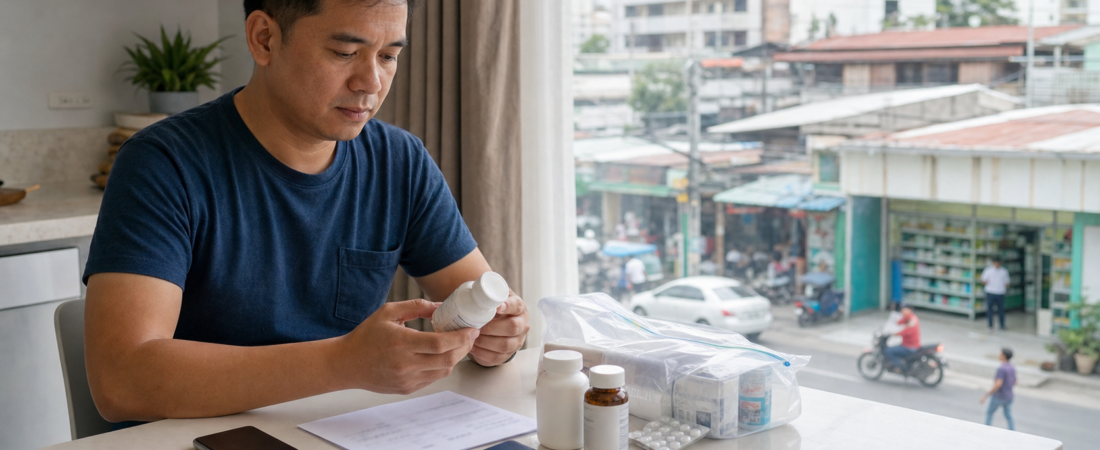
How Americans Should Think About Healthcare and Prescriptions Before a Long Stay in the Philippines
Quick answer
Quick answer: Do the healthcare and medicine planning before you pay a long-stay housing deposit. For the Philippines, that means checking the care route for the exact area you are considering, confirming what your insurer requires, and treating every prescription as its own entry, storage, documentation, and refill-continuity question. A U.S. prescription, a travel-insurance card, and a nearby pharmacy are not interchangeable assurances.
This is planning information, not medical, legal, insurance, or medication advice. Rules and provider practices change, so confirm your own situation with the relevant clinician, insurer, carrier, Philippine authority, and any transit country before travel.
Start with a care map, not a claim that care is “cheap”
The useful pre-departure question is not whether a country has hospitals. It is whether your actual first base has a care plan you can use on an ordinary weekday and when something goes wrong after hours. That distinction matters more than a vague promise about affordable care.
Before you choose a neighborhood, identify a realistic routine-care option, an urgent-care or hospital option, how you would get there in rain or traffic, and who you would call if you could not make decisions clearly. Check those answers against the address you are considering, not against a city name on a map. A downtown condo and a remote-island rental can create very different transfer times and payment choices even in the same province.
Ask the provider directly how appointments are arranged, what identification or records it asks for, what payment methods it accepts, and what it does after hours. Do not infer a universal answer from one online review, a Facebook group, or a hotel concierge. If a shorter exploratory stay is your goal, book housing that lets you test the route before committing to a longer lease.
The Philippines country guide and Cebu vs. Dumaguete vs. Iloilo comparison can help with the broader first-base decision. This article is the planning layer that should sit underneath either choice.
Treat each prescription as four separate checks
It is easy to collapse medicine planning into “bring a prescription.” In practice, use four separate questions:
- Can I bring this medicine into the Philippines and through every transit point? Do not assume a U.S. prescription resolves a controlled-medicine or import restriction. Start with the Philippine Bureau of Customs restricted-imports guidance and confirm the exact medicine and quantity with the competent authority or embassy before booking.
- What paperwork makes the supply identifiable? CDC advises travelers to keep medicine in original labeled containers and carry written prescriptions that include generic names. Ask your prescriber whether your specific medicine needs further documentation, especially if it is controlled or injectable.
- Can it be stored safely for the whole travel chain? Check heat, refrigeration, packaging, security screening, and delay exposure with the pharmacist or manufacturer. Do not improvise storage from general travel advice.
- What is the continuity plan if the trip extends or a bag is delayed? Local dispensing, equivalence, legality, and availability are separate questions. Confirm them for the exact medicine through an appropriate official or licensed channel before you depend on them.
CDC’s Traveling Abroad with Medicine is the useful starting point, not the final answer. It says destination and transit rules can differ; travelers should carry enough supply for the trip plus delays, retain original labeled containers, and carry a prescription that includes generic names. It also directs travelers with controlled or injectable medicines to speak with their clinician about documentation.
Build a small record packet that can travel with you
Keep the practical information together in a form you can access without relying on a single phone. A printed copy plus a secure offline copy is often more useful than a beautifully organized app that is unavailable when a battery dies.
Your packet can include the medicine’s generic and brand names, the labeled prescription information, your prescriber and pharmacy contact details, a concise medication and allergy list, insurance contacts and policy instructions, and the address and contact details for your first stay. Ask your clinician what information is appropriate for your records. Do not put a diagnosis or more personal information into a document merely because a generic travel checklist says to do so.
Keep this packet separate from medication itself. A trusted travel companion should know where to find the emergency version, but personal health information still deserves careful handling. If you use a digital folder, protect it and ensure it is available offline.
Test the payment and insurance path before the flight
An insurance plan is a contract, not a promise that every provider will bill it in the same way. Before you travel, ask the insurer what it wants you to do for routine care, urgent treatment, admission, reimbursement, assistance, and evacuation decisions. Ask how to contact it from abroad and what documents it expects you to keep.
Then ask the intended provider what it accepts and how payment works for the service you might actually need. Those two answers may not line up. Carry a payment backup that is appropriate to your own financial plan, but do not rely on any article to tell you that cash, a card, or a particular insurer will work everywhere. Your money-access backup plan should be part of the same pre-departure check.
This is also a reason not to settle on an address from photos alone. A lower rent is not automatically a better first-month deal if it makes ordinary errands, a care route, or a rain-day transfer harder than you expected.
Put the care route into the housing test
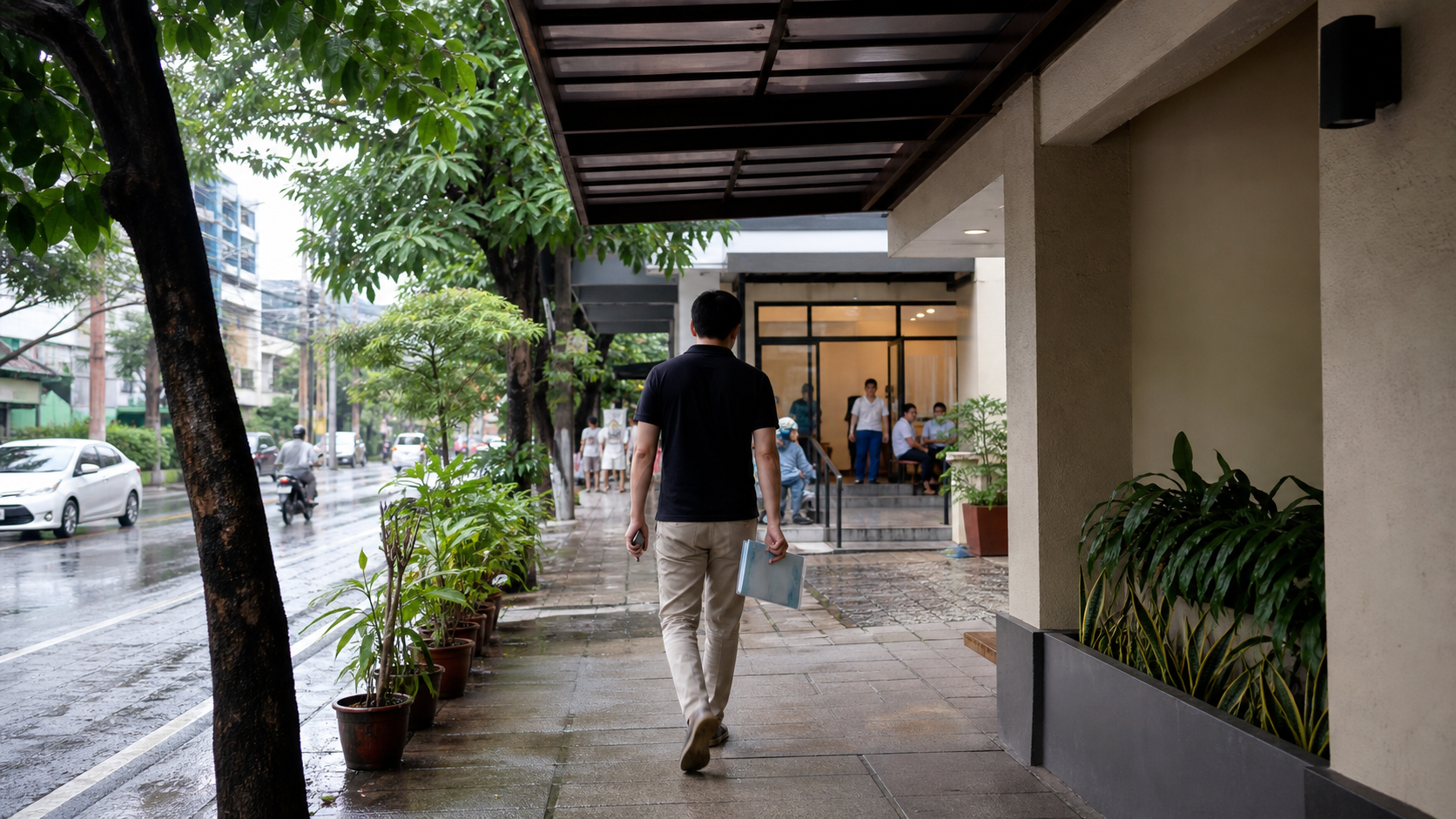
When you arrive, do an ordinary-day test before you decide that the neighborhood works. Walk or ride the route to the care option you researched. Notice rain cover, stairs, road crossings, traffic, pickup points, and whether the route is manageable at the times you are likely to use it. If mobility is a concern, bring it into the housing decision at the beginning rather than treating it as a later adjustment.
For an island, rural, or smaller-city stay, the question is not whether it is pleasant on a good day. It is how you would handle a higher-level care need, a weather disruption, or a transport delay. Make a conservative contingency plan before the deposit is nonrefundable. That may lead you to start with an urban base and add slower destinations later; it is not a verdict on any individual place.
A practical 10-question departure checklist
- Have I confirmed the entry and transit rules for each medicine, including the amount I plan to carry?
- Are medicines in original labeled containers, with the prescription record using generic names?
- Have I asked my clinician about documentation and storage for my own medicine?
- Do I have enough supply for the trip and a reasonable delay, consistent with the rules that apply to it?
- Do I know what I will do if a bag is delayed, a stay is extended, or a prescription is lost?
- Have I checked the intended housing address against a care route and a rainy-day transport option?
- Have I asked my insurer what it requires before and during treatment abroad?
- Have I asked the intended provider about appointment and payment processes instead of relying on hearsay?
- Is my record packet available securely offline as well as in paper form?
- Does a trusted person know how to find my insurance and emergency-contact information?
Use this as a first-stay planning filter
The safest claim about a long stay is not that every city will solve every healthcare problem. It is that a first stay becomes less fragile when care, prescriptions, money access, and housing are planned as one system. If your answers are vague, shorten the first commitment, choose a better-served base, or finish the verification before you book.
For a worksheet-style next step, the Medical Prep Abroad Kit is relevant only if it helps you organize the questions above; it is not a substitute for personal medical, legal, or insurance advice. Pair this guide with how Americans should handle prescriptions and routine care while abroad and how to refill prescriptions overseas without turning it into a crisis for the broader planning framework.
References
- CDC — Traveling Abroad with Medicine, rechecked August 4, 2026.
- CDC — Philippines Traveler View, rechecked August 4, 2026.
- Philippine Bureau of Customs — Prohibited/Restricted Importations, rechecked August 4, 2026.
- U.S. Department of State — Philippines International Travel Information, linked for reader recheck; its automated access is currently blocked by Cloudflare in this production environment.
Philippines long-stay logistics: What Americans Should Know Before Planning a 1- to 6-Month Stay in the Philippines
Backup planning for a longer stay: How to Set Up Power, Internet, and Money Backups for a Long Stay in the Philippines
First-week Philippines setup: How to Set Up Your First Week in the Philippines Without Turning It Into a Scramble
Mail and document continuity: How to Keep Mail, Documents, and Your Home Address From Becoming a Problem During a Longer Philippines Stay
Emergency-care planning: How to Build an Emergency Care Plan for a Longer Philippines Stay
Choosing a Philippines base: How to Choose a Philippines Base When Healthcare, Weather, and Travel Are Not Equal