Quick answer
Quick answer: Use your first week to make the next month safer and easier, not to solve every long-stay decision on day one. Keep your passport, medicines, arrival records, phone access, and two payment options under your control; test the apartment and neighborhood in ordinary conditions; and wait until those basics work before paying for a longer commitment or hopping to another island.
Day one: make the landing boring
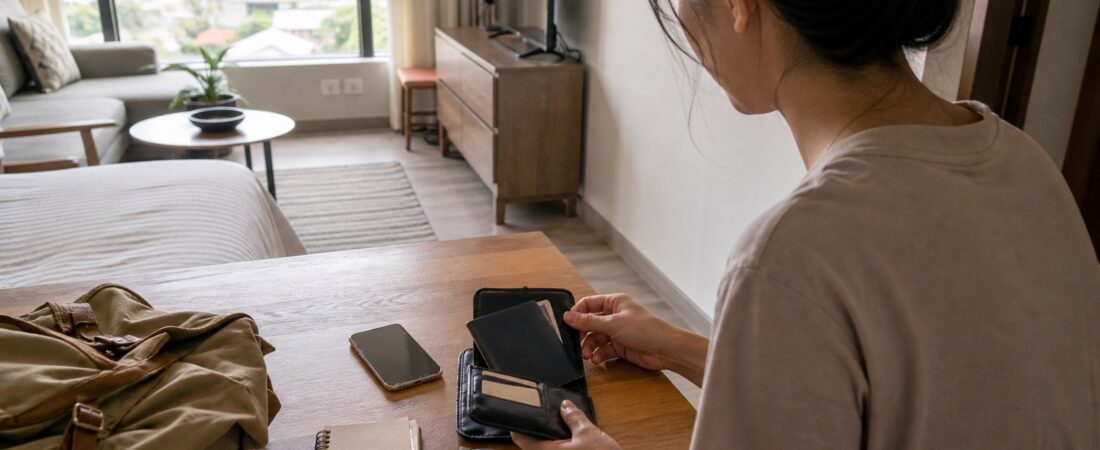
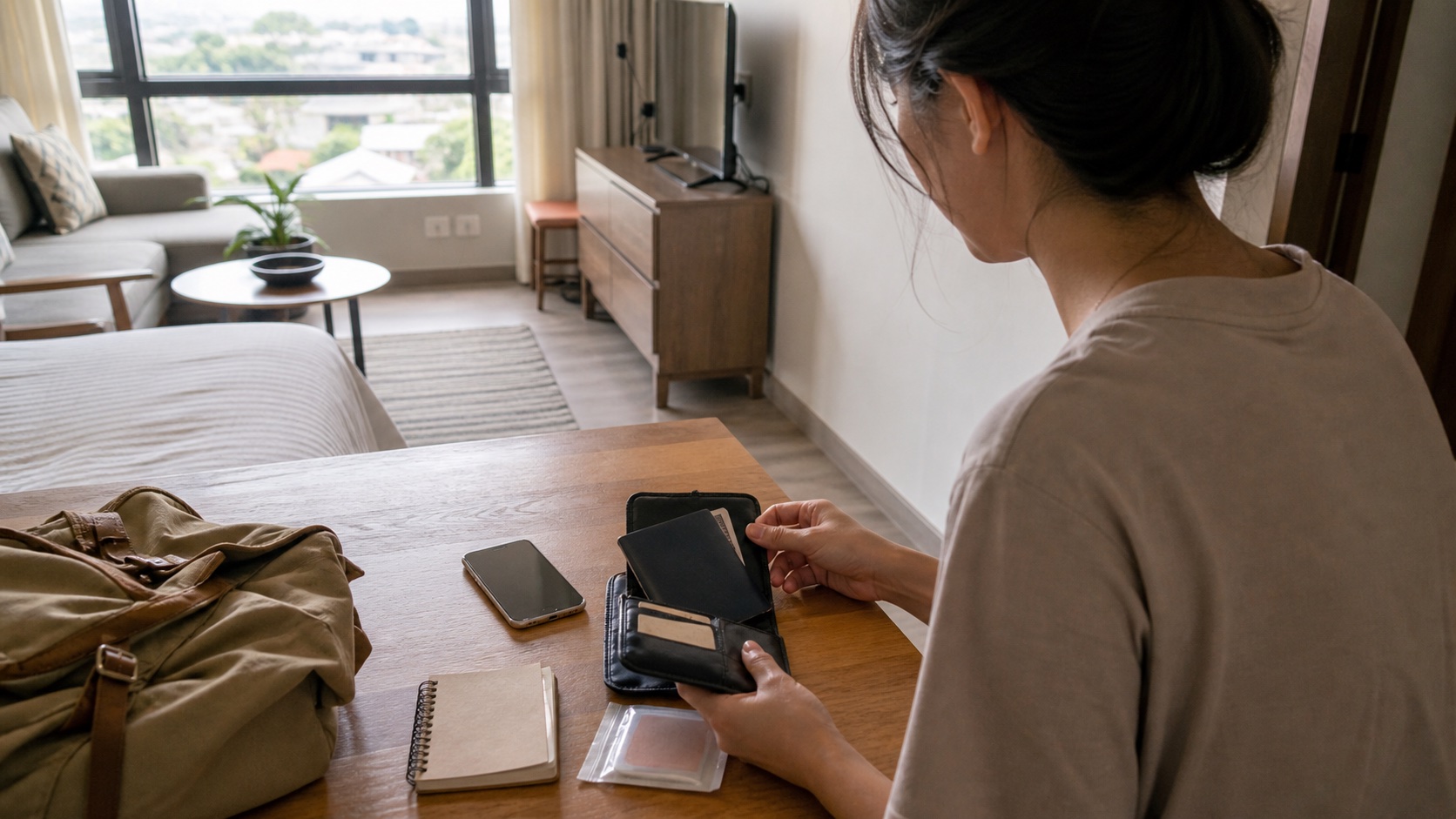
The useful goal for the first day is not sightseeing. It is getting from the airport to a known address, eating, sleeping, charging the phone, and putting the things that cannot be replaced quickly in one dependable place. Keep your passport, medications, one payment card, some cash, phone, and booking details in the bag that stays with you. A checked suitcase, a host’s desk, or a car trunk is not where the only copy of any of those belongs.
Before you relax, take a photo of the outside of the building and save the address in more than one place. Ask the host how the entry works after dark, where rubbish goes, and whom to contact if the air conditioning, water, or lock fails. These are small questions, but they expose whether a short-stay apartment has a real response path.
Days two and three: get one reliable phone and money routine
Do not assume that a phone which worked at the airport will work well in the apartment, elevator, grocery store, clinic, or ferry terminal. Test calls, data, maps, and a simple backup connection where you will actually spend time. If you use a local SIM or eSIM, keep the account and recovery details somewhere you can reach without the phone. The Department of Information and Communications Technology is useful context here, but the only coverage test that matters is the one at your address.
Set up payment redundancy early. Use a small amount of local currency for routine purchases, but do not make one ATM, one card, or one app your entire plan. Keep a second card separately, know how to contact each issuer, and save booking confirmations offline. The Bangko Sentral ng Pilipinas provides the regulated-finance context; it does not guarantee that every card, terminal, or cash machine will behave the same way. A failed transaction is inconvenient on day two and much worse after you have committed a rent deposit.
Test the apartment before it becomes your problem
A bright listing photo cannot show water pressure at evening peak, street noise after midnight, or whether a workspace remains usable during a downpour. Run a plain checklist before the cancellation or complaint window closes: locks, air conditioning, hot water if promised, cooking equipment, refrigerator, Wi-Fi, mobile signal, outlets, laundry, building access, and any recurring noise.
Walk the route to a grocery store, pharmacy, ATM, and transport option in both daylight and evening. Notice pavement condition, crossings, heat, flooding points, and the actual time it takes when you are carrying groceries. If a stay is long enough for a lease or major deposit, use the dedicated Philippines apartment-rental guide before treating a friendly viewing as sufficient due diligence.
Find the practical anchors: food, health, and a way home
Your first neighborhood task is to identify three ordinary places: where you can buy food you will actually eat, where you can fill a basic prescription or ask a pharmacist a question, and how you will get home if rain or a late appointment changes the plan. Do not wait for a medical issue to discover that the clinic you assumed was nearby is difficult to reach or unsuitable for your needs.
This is not medical advice and no general article can tell you whether a particular medicine is available or appropriate. For a longer stay, read the Philippines healthcare and prescriptions guide, retain prescriptions and essential information in your carry-on records, and contact an appropriate clinician or provider for a condition that needs continuity. The Department of Health is a public-health reference point, not a substitute for personal medical planning.
Do not rush the stay-rule and document layer
Entry and extension rules can change, and the Bureau of Immigration’s current pages are the place to re-check requirements, fees, document lists, and procedures. Do not build a flight or apartment plan around a blog’s old promise. Save copies of the documents you need, but do not scatter full passport images through chat threads or unneeded forms. The National Privacy Commission’s work is a good reminder that convenience is not the same thing as sensible document handling.
The practical move is simple: make one encrypted or otherwise secure record set, keep one offline copy where appropriate, and write down which original document is physically with you. For the detailed timing and extension context, use what to know before a 1- to 6-month Philippines stay. That guide can be updated as official process details shift; this first-week guide should not pretend the clock is frozen.
Build a small weather and power fallback
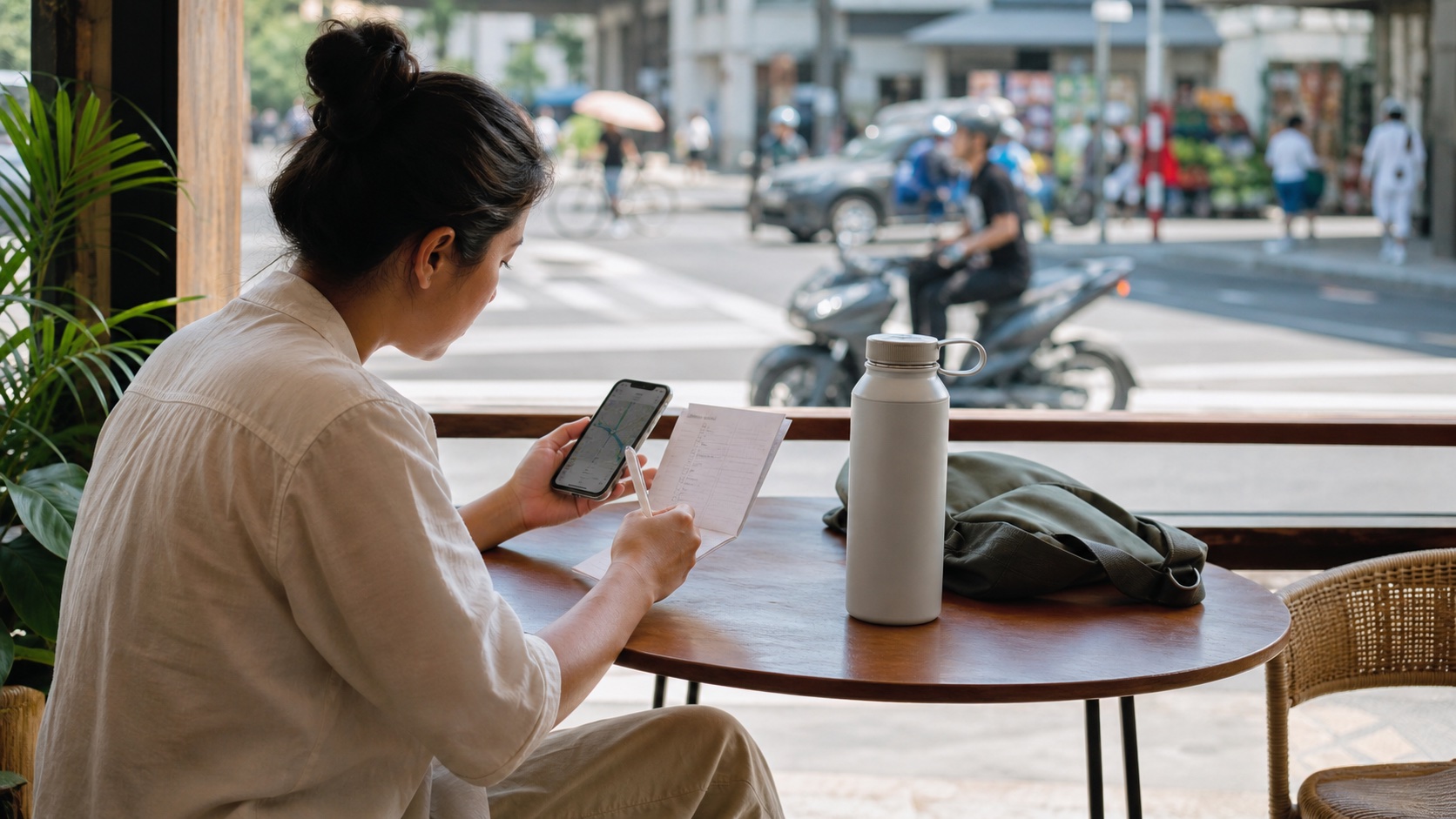
Rain, a building outage, or a patchy connection does not automatically make a city unlivable. It does mean you need a fallback before your first important call or payment deadline. Charge a power bank, keep a little cash, download maps and booking confirmations, and identify one nearby place with dependable seating and connectivity. Test the apartment’s actual signal after rain if you can.
The power, internet, and money backups guide goes deeper on what to test and how to avoid putting every essential task behind one fragile connection. If you are choosing between a dense urban neighborhood and an island base, the city-versus-island guide helps make the tradeoff explicit rather than romanticizing either option.
Let days five through seven tell you whether to extend
By the end of the week, you do not need a perfect Philippines plan. You need evidence. Can you sleep comfortably? Does the route to food and healthcare work? Is your phone reliable at home? Do your costs feel sustainable after transport, delivery, imported comforts, and a few normal mistakes? Is the neighborhood still comfortable after dark and in rain?
If the answers are mixed, that is useful information, not failure. Extend a short stay if the basics are working and you want more time. Change neighborhoods or cities if the friction is structural. Cebu, Manila, Dumaguete, and Iloilo make different compromises; the Philippines country guide and Cebu guide can help route the next question. If an island move is part of the plan, treat it as a travel day with a buffer using the inter-island travel guide.
A first-week checklist worth keeping
- Passport, medicines, phone, payment backups, and booking records are under your control.
- Phone, maps, and data work at the apartment and along your usual route.
- You tested water, locks, cooling, noise, Wi-Fi, and mobile signal before making a longer commitment.
- You know a grocery store, pharmacy or appropriate care route, ATM, and safe way home.
- You have a modest weather, power, and payment fallback.
- You re-checked official stay rules rather than relying on an old summary.
- You waited for ordinary-week evidence before paying a large nonrefundable amount.
Want a calmer arrival checklist? The First 90 Days Abroad System turns documents, money, phone, and first-week setup into a practical worksheet.
References
- Philippine Bureau of Immigration — Visa Waiver
- Bureau of Customs — Travelers
- National Privacy Commission
- Bangko Sentral ng Pilipinas
- Department of Information and Communications Technology
- Department of Health
Mail and document continuity: How to Keep Mail, Documents, and Your Home Address From Becoming a Problem During a Longer Philippines Stay
Emergency-care planning: How to Build an Emergency Care Plan for a Longer Philippines Stay