Quick answer
Quick answer: Start with a short landing stay, inspect the exact unit and the route around it, and put the cost, utilities, deposit, repair, and move-out terms in writing before paying. The lowest advertised monthly rate is useful only after it still works with the neighborhood, internet, water, weather, and stay timing you actually need.
Begin with a landing stay, not a long promise
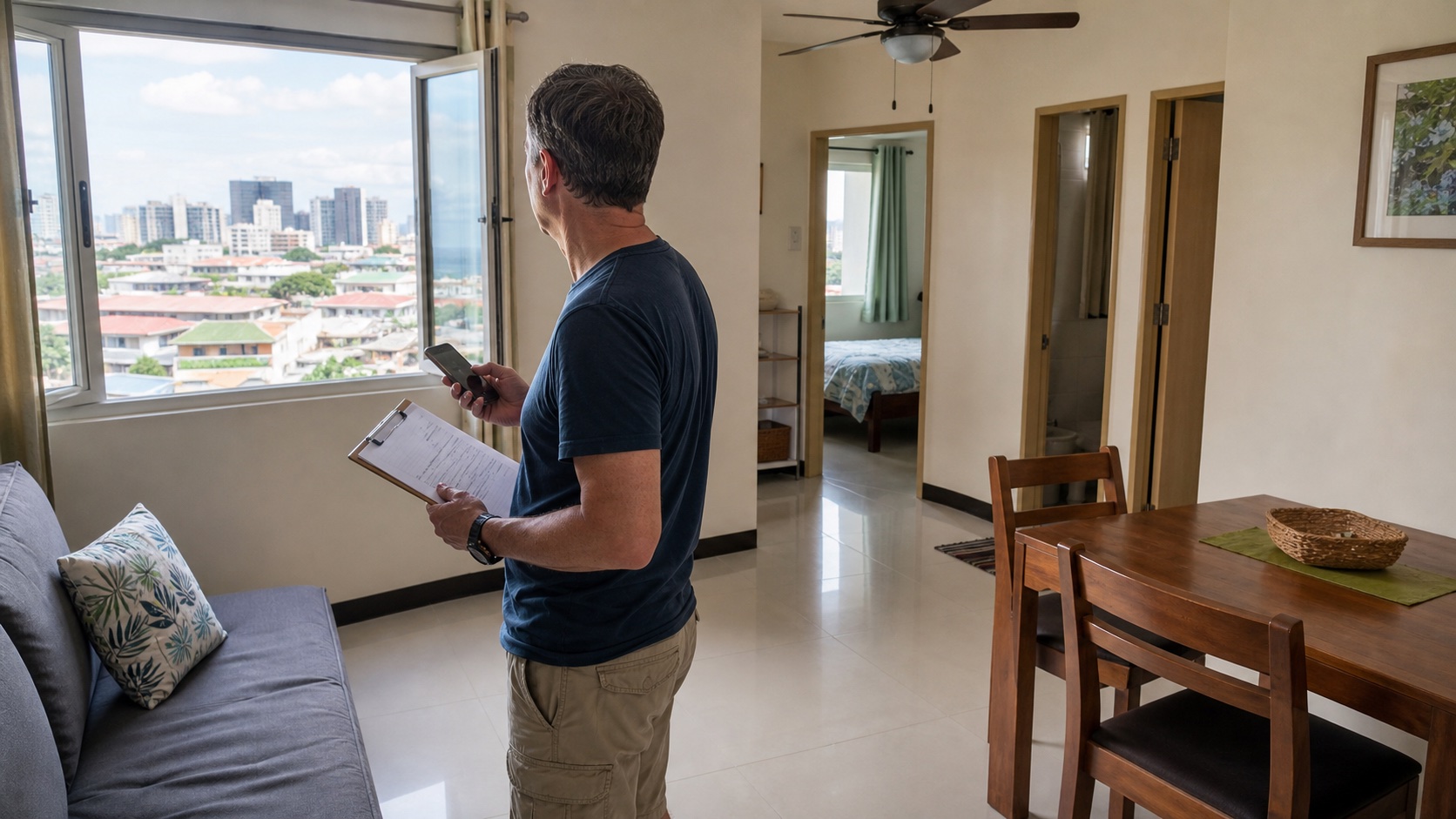
An apartment search is easier when it does not have to solve every question from overseas. A seven- to fourteen-night hotel, serviced unit, or flexible booking gives you time to walk the area, see several units, and learn what a ride, a grocery trip, or a pharmacy run feels like in the heat and rain. It also lets you notice a detail photographs cannot settle: whether the building feels comfortable at the time of day you will actually use it.
This is especially valuable in a place described loosely as “near Cebu” or “close to BGC.” A map pin can be technically close while the route is loud, flooded after rain, awkward for groceries, or much slower than it appears. Ask yourself where you will get coffee, cash, food, medicine, and a ride when you are tired. Those answers matter more than a polished lobby.
If the Philippines is still only one option among several, start with the Philippines country guide and the city-or-island base guide. They help separate a pleasant visit from a usable longer-stay base.
Set a real all-in monthly ceiling
Do not compare listings using rent alone. Build a ceiling that includes rent, electricity, water, internet if separate, cleaning or building fees if applicable, mobile data, transport, groceries, and the first month’s non-recurring costs. A furnished unit with a higher rent can be the lower-friction choice if it eliminates furniture purchases, a long commute, or several separate setup problems. The opposite can also be true: a low figure can conceal a location that makes every errand expensive in time and rides.
Keep a first-month contingency line. Deposits, connection charges, kitchen basics, temporary lodging, extra rides, and a change of plan are not failures; they are ordinary startup costs. The Philippines city cost comparison is a useful broad planning reference, but the exact building should decide the final number.
Inspect the unit like you plan to live a normal Tuesday there
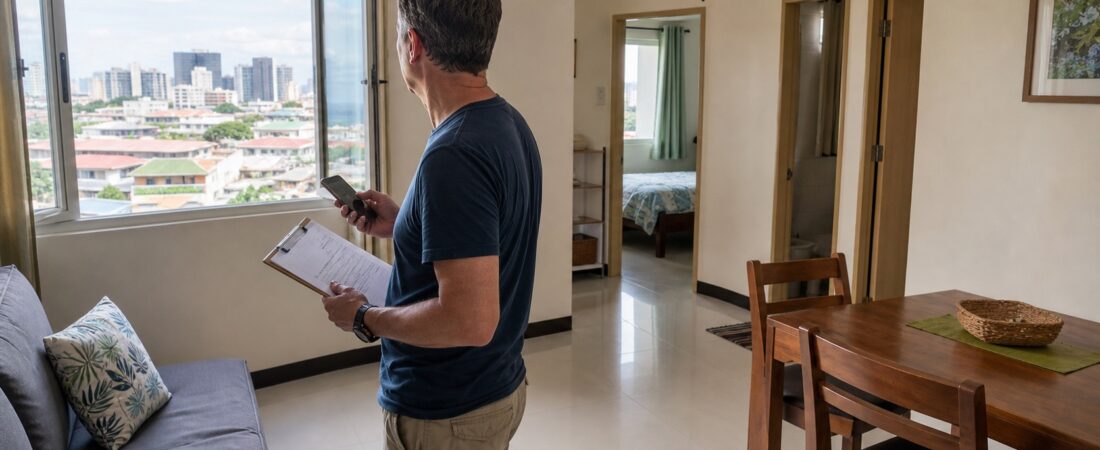
See the exact unit if possible, not merely a model unit, an older video, or a similar floor plan. Open taps, check water pressure, stand in each room with the air conditioning on, look at storage, and test the windows and locks. Ask what stays in the unit, what has recently been repaired, and who handles a problem after move-in. Take dated photos of any existing marks or damaged items and keep the conversation and payment record.
Pay attention to the non-glamorous details: cooking space, laundry arrangements, noise at night, elevator reliability for your floor, building access, package rules, and whether a taxi or delivery driver can find the entrance without an elaborate phone call. If mobility or routine care matters, make the pharmacy, clinic, grocery, and transport routes part of the viewing rather than a research tab you intend to open later.
For longer stays, make a small first-visit checklist. The First 90 Days Abroad System is useful here as a worksheet-based version of that setup plan, especially for documents, money, and arrival tasks.
Ask the questions that turn a listing into a workable agreement
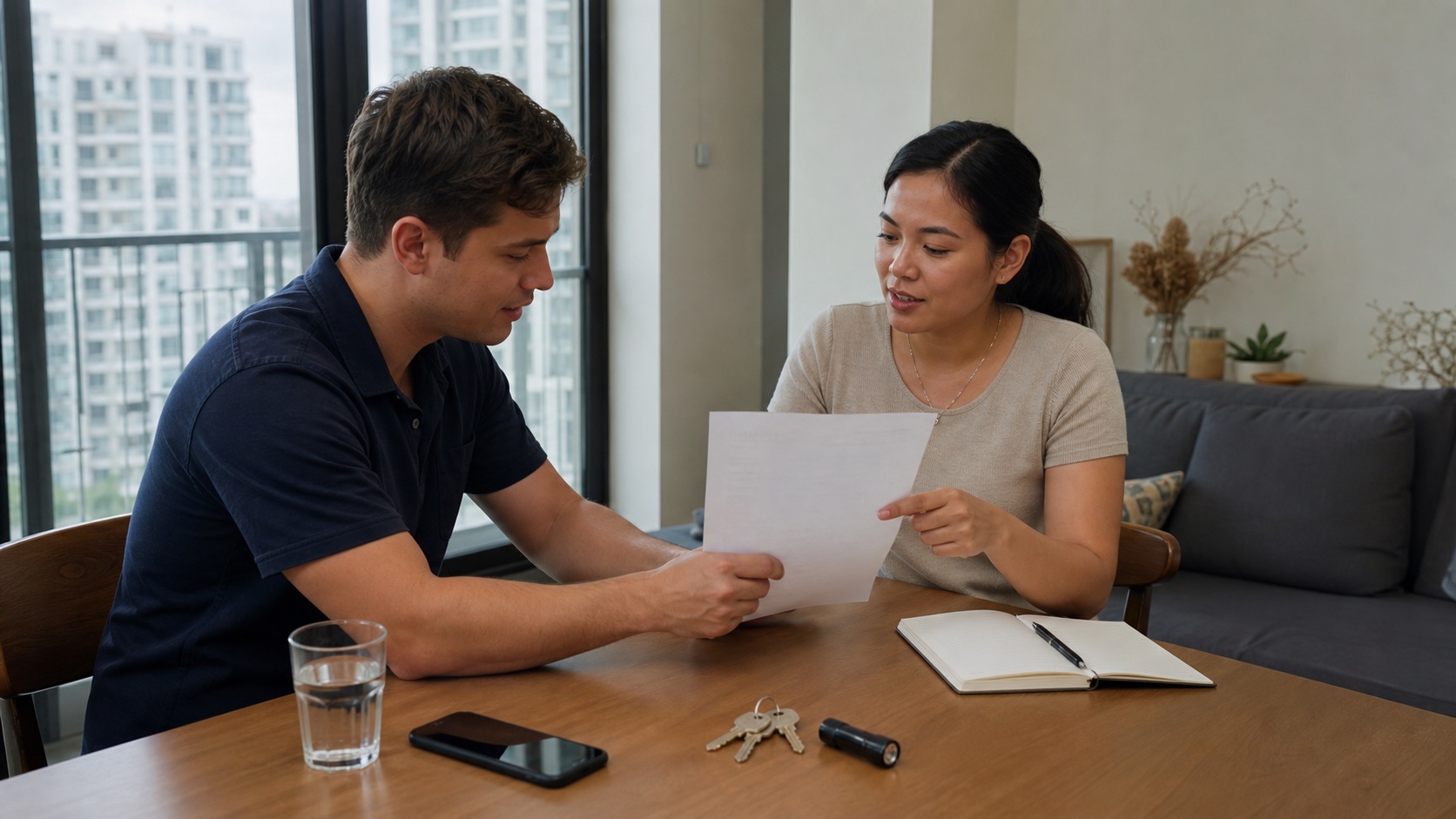
Before a deposit, ask for the total due at signing and the timing and conditions for its return. Clarify the rental period, notice requirement, what utilities are included, likely payment method, who pays for repairs, guest and building rules, and what happens if a key, appliance, or internet connection fails. Ask whether there are planned building works or recurring access restrictions. Get the important answers in writing, even when the conversation is friendly.
This is not about assuming bad faith. It is how two people avoid remembering a verbal agreement differently. If the contract, language, or payment arrangement is not clear enough for you to explain it back in plain English, pause. A local qualified adviser can be appropriate for a contract with material money or a longer commitment; this guide is practical planning, not legal advice.
Test the building's practical systems
“Fast internet” is a building-level claim until you test it in the unit at the hours you work or call family. Ask the landlord or manager for the provider, the latest bill or speed result if they are willing to share it, and whether mobile signal works inside. Bring a phone, test a video call, and have a mobile-data fallback before depending on the connection.
The same principle applies to power, water, and access. Ask what happens during a disruption, whether the building has any backup arrangements, and how you would enter or leave if systems are affected. Do not expect a universal answer across a city. The power, internet, and money backup guide offers a sensible first-week test routine, while the rainy-season base guide explains why the route around the building deserves attention too.
Choose the neighborhood by your needs, not its reputation
A neighborhood can be excellent for restaurants and still be wrong for your sleep, mobility, hospital access, or daily budget. Walk it in daylight and again when you expect to return home. Time the route to a grocery store, pharmacy, cash point, and transport connection. Notice sidewalks, crossing comfort, lighting, traffic, noise, and how the building entrance behaves in rain.
In Metro Manila, neighborhood choice can be the difference between a workable routine and a draining one; see Manila, Makati, and BGC. In Cebu City, a central-looking condo can still come with traffic and route tradeoffs; use the Cebu City guide before narrowing buildings. A more relaxed city can change the calculation, but never removes the need to test the exact local routes.
Keep immigration timing separate from rental optimism
Do not sign a six-month lease because a listing is attractive and assume immigration timing will naturally catch up. Verify entry, visa-waiver, extension, document, fee, and exit requirements directly with the Philippines Bureau of Immigration and your carrier close to travel. Procedures can change, and an apartment owner is not the authority on your stay permission.
The Philippines 1- to 6-month stay logistics guide is designed to help you organize the questions, but it deliberately points back to official confirmation. Choose a rental term that leaves room for a changed plan rather than making an uncertain extension feel mandatory.
Pay in a way you can document and recover from
Use a payment path that leaves a clear record. Confirm the payee, amount, date, purpose, and receipt before moving money. Keep a second payment method and do not arrive with only one card or only a large cash amount. The Bangko Sentral ng Pilipinas provides official information for consumers using regulated financial institutions; see the Bangko Sentral ng Pilipinas.
That does not make every private rental dispute easy to resolve. It does make a traceable record, a verified recipient, and a calm backup plan much better than a rushed transfer prompted by “someone else is about to take it.” A genuine unit will still need clear terms.
A simple decision rule
The good apartment is not necessarily the prettiest or cheapest one. It is the one that keeps the important routine boring: you can get home, get online, buy groceries, reach care, pay safely, sleep, and change your mind without turning one snag into a crisis. Give yourself a short landing window, inspect carefully, write down the deal, and let the place earn a longer commitment.
References
- Philippines Bureau of Immigration: Visa Waiver
- PAGASA: Climate of the Philippines
- Department of Human Settlements and Urban Development
- Bangko Sentral ng Pilipinas
Inter-island transfer planning: How to Plan Inter-Island Travel During a Longer Stay in the Philippines
First-week Philippines setup: How to Set Up Your First Week in the Philippines Without Turning It Into a Scramble
Mail and document continuity: How to Keep Mail, Documents, and Your Home Address From Becoming a Problem During a Longer Philippines Stay