Quick answer
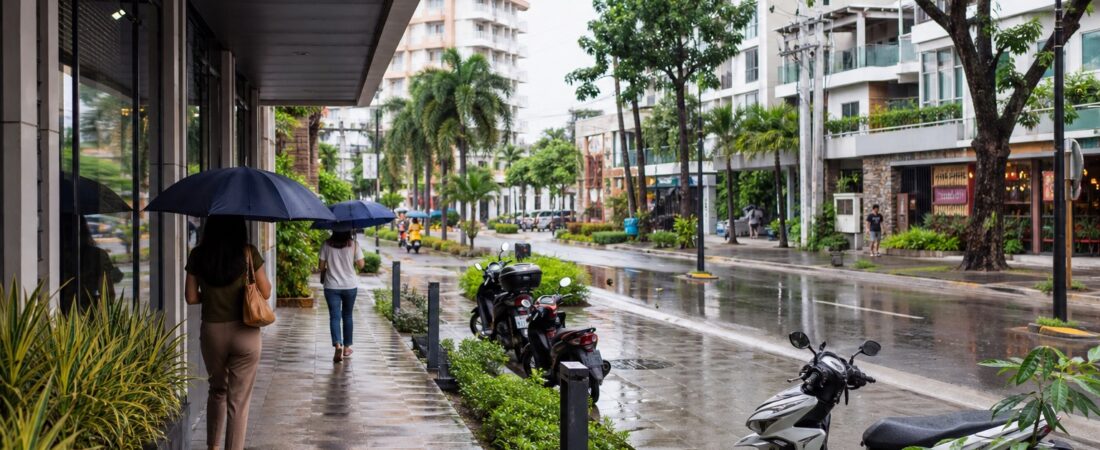
Quick answer: Rainy-season planning should change *how* you choose a Philippines base, not automatically stop a longer stay. Pick a neighborhood where a wet Tuesday is still workable: a short protected walk to groceries and a pharmacy, a realistic route to care, a building with clear backup arrangements, and transport that does not depend on one vulnerable road, ferry, or flight connection. Check the local forecast and official warnings close to travel; the Philippines does not have one identical wet-season experience across every island and city.
Start with the ordinary-day test
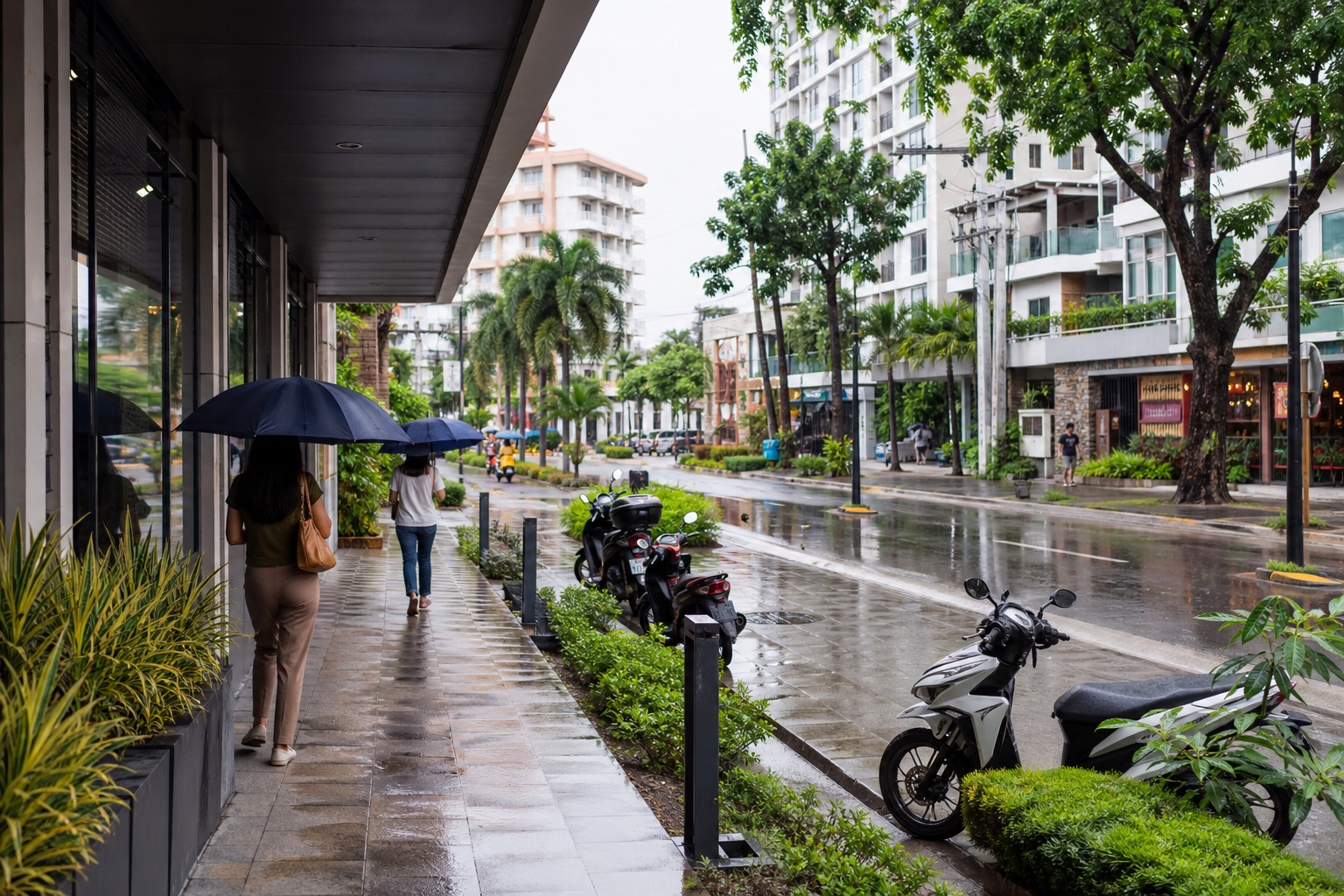
Rain turns a flattering apartment listing into a much more useful test. A neighborhood can be lively and cheap on a sunny afternoon, then become awkward when sidewalks are slick, a road pools, the nearest shop is a motorcycle ride away, or a ride-share takes much longer. For a first one- to six-month stay, do not make the decision from a country-level climate chart alone.
Ask the host or agent concrete questions: Where does water collect at the building entrance? Is the apartment reached by stairs, a steep lane, or an elevator that could be inconvenient during an outage? How far are a grocery, pharmacy, cash machine, and clinic on foot? What is the building’s arrangement for water, power, and internet interruptions? A clear answer is not a guarantee, but vague reassurance is a warning sign.
The practical goal is redundancy. You want two ways to get food, two ways to pay, a backup phone/data plan, and a route to care that still makes sense if a normal errand takes longer. The checklist in What Americans Should Know Before Planning a 1- to 6-Month Stay in the Philippines is a useful companion because entry and extension requirements should always be verified directly with the Bureau of Immigration.
Treat rain, warnings, and travel disruption as separate questions
Rainy months, a tropical depression, and a serious disruption are not interchangeable. PAGASA publishes national climate information and operational forecasts and warnings. Use the official sources near departure, then check the specific city and route you will actually use. A forecast should help you decide whether to move a flight, carry a flexible booking, or choose a more self-contained first neighborhood; it should not be used to promise that a particular island will be trouble-free.
For a first stay, avoid stacking dependencies. An evening arrival followed by a late ferry, a remote rental reached by an unlit road, and a medication supply that is already running low is a fragile plan in any season. Arrive with a few calm days in a hotel or serviced apartment, buy local basics, and test the walk to the pharmacy and grocery before extending a rental.
Choose the city type before the view
Cebu City: more services, but test the exact commute
Cebu City can make a wet-season first stay easier for someone who values airport access, hospitals, condo supply, and dense daily services. The tradeoff is traffic, neighborhood variation, and the fact that a short distance on a map can become a long errand. Choose an apartment based on its actual access to groceries, a pharmacy, and the hospital or clinic you would use—not just a building amenity list. The fuller fit guide is Cebu City for English-Friendly Southeast Asia With Urban Services.
Manila, Makati, and BGC: the strongest depth of services, at a price
Metro Manila offers deep healthcare and transport choices, but it also makes neighborhood selection decisive. A building that is close to work-style amenities may not be close to the exact clinic, grocery, or transit option you need in heavy rain. Makati and BGC can work well for readers willing to pay for central convenience; they are not automatically the relaxed or low-cost option. See Manila, Makati, and BGC for the broader tradeoffs.
Iloilo and Dumaguete: slower routines, less margin for error
Iloilo and Dumaguete can feel easier for readers who want a smaller-city rhythm. That is a good reason to visit, not a reason to assume every practical backup is nearby. Before booking, map the care route, grocery options, airport or ferry transfer, and the walk home during rain. Dumaguete’s pace and community can be appealing, while Iloilo offers a different mid-sized-city balance; neither should be treated as a copy of Cebu. Compare them directly in Cebu vs. Dumaguete vs. Iloilo.
Island-dependent bases: build more slack into the plan
An island or beach-adjacent base can be a wonderful fit, but it asks more of your logistics. Give yourself extra arrival time, keep enough medicine and cash-access backups, and do not schedule a same-day connection around one ferry or one small airport flight. This is not pessimism; it is the practical difference between enjoying the setting and having your plan held together by one timetable. City or Island? How to Choose a Philippines Base for a Longer Stay explains the broader tradeoff.
Inspect the rental for wet-day usability
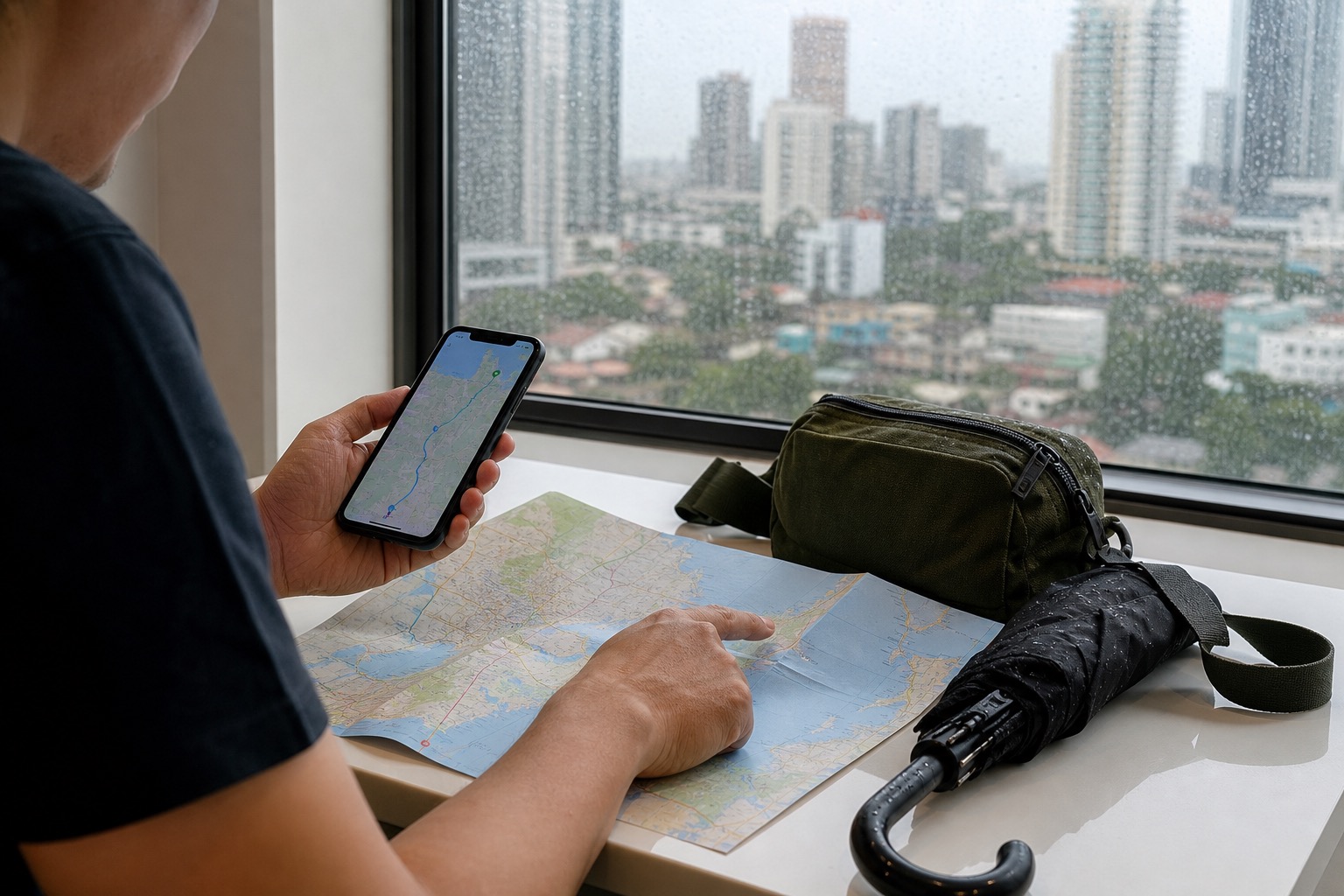
During a viewing—or in a video tour if you cannot visit yet—look past the furniture. Ask to see windows, bathroom ventilation, balcony drainage, entryways, and the route from the building to the street. Notice whether the floor, walls, or storage areas show signs of dampness or musty odor. Confirm what internet provider serves the building and what you would do if it goes down. Do not assume a portable hotspot solves every problem; test local coverage after arrival.
For an extended stay, an unglamorous location a few blocks from a dependable grocery, pharmacy, and transport option can be better than a beautiful unit that turns every rain shower into a logistics project. The first-48-hours apartment check is still useful: What to Verify in an Apartment During the First 24 Hours Abroad.
Healthcare and prescriptions need a weather-proof margin
Do not arrive with medicine timed so tightly that a delayed pharmacy run becomes a crisis. Carry the documentation and lawful supply you need, know the generic names, and identify a reputable care option close to your base. Bigger cities may offer more depth, while a smaller or island-dependent base may require a more deliberate backup plan. This is a planning issue, not a claim that routine care will be unavailable on a specific day.
Use How to Think About Healthcare and Prescriptions Before a Long Stay in the Philippines to make the list before departure: regular medications, a care summary, insurance and payment information, emergency contacts, and an answer to “where would I go if I needed help after hours?”
A sensible booking sequence
- Book the first few nights in a central, easy-to-leave location rather than committing to a remote long rental.
- Check PAGASA forecasts and warnings and the airline or ferry’s current notices immediately before travel.
- On arrival, walk the grocery-pharmacy-cash route in ordinary weather, then take a ride to the clinic or hospital you would realistically use.
- Keep a second payment method, local data option, and a buffer of essential supplies.
- Extend only after the apartment, route, noise, drainage, and daily errands feel workable.
The bottom line
Rainy season is a useful honesty test. It reveals whether a base is built around the life you intend to have or just the view you liked online. Choose a place with services you can reach, a rental you can live in during a wet week, and enough slack that a changed forecast or delayed connection is an inconvenience rather than a crisis.
References
- Philippine Atmospheric, Geophysical and Astronomical Services Administration (PAGASA), Climate of the Philippines and current forecasts/warnings.
- Philippines Bureau of Immigration, Visa Waiver. Verify current entry and extension rules before travel.
- U.S. Department of State, Philippines International Travel Information. Check current advisories directly before travel.
Choosing a first neighborhood: How to Choose a Philippines Neighborhood for a Longer Stay
Backup planning for a longer stay: How to Set Up Power, Internet, and Money Backups for a Long Stay in the Philippines
Apartment setup for a longer stay: How to Rent an Apartment in the Philippines for a 1- to 6-Month Stay
Inter-island transfer planning: How to Plan Inter-Island Travel During a Longer Stay in the Philippines