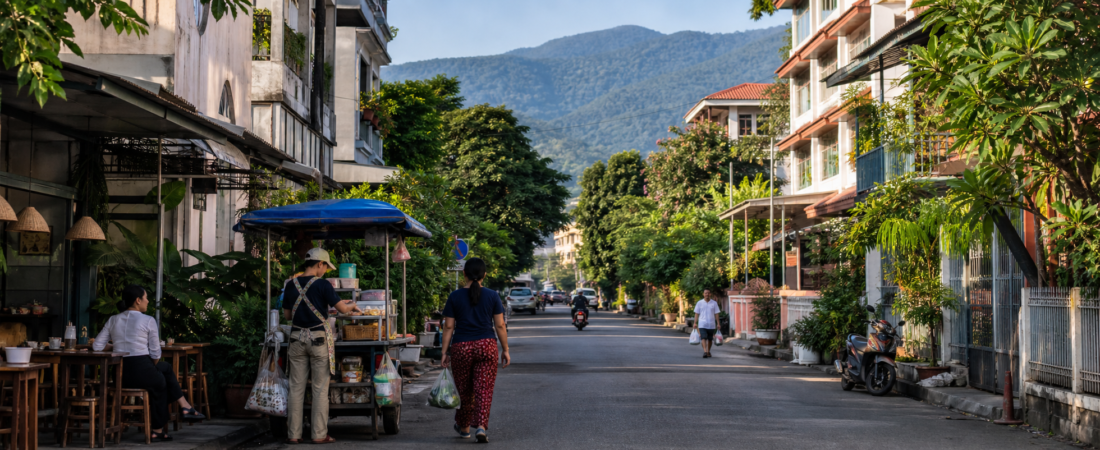
Chiang Mai is easier to enjoy for months when you stop trying to “see Chiang Mai” and start building a week you would willingly repeat. A morning market, one class you return to, an unhurried temple or museum visit, a reliable coffee-and-errands loop, and an occasional day in the hills can give the city more staying power than a long checklist of attractions. The real test is whether those pleasures still fit your budget, energy, weather tolerance, and transport habits after the novelty wears off.
Quick answer
Quick answer: Chiang Mai can make a longer stay feel rich without requiring a tourist itinerary every day. It works best when you choose a few repeatable pleasures—markets, classes, cafés, temple time, and a simple nature day—and test whether the heat, air quality, transport, and apartment location still leave room to enjoy them. It is a weaker fit if your ideal week depends on capital-city scale, effortless car-free access from any neighborhood, or ignoring the season.
Start with a week you could actually repeat
The useful question is not whether Chiang Mai has enough sights for seven days. It is whether a Tuesday still feels good after you have answered email, bought groceries, dealt with the heat, and decided you still want to leave the apartment for an hour.
Pick two or three activities with little commitment. Walk a market for ingredients rather than making every meal a food tour. Try one cooking, language, craft, or movement class after checking the route at the time you would really go. Give yourself a slow temple or museum afternoon instead of trying to cover an entire district. The Tourism Authority of Thailand’s Chiang Mai destination page is a sensible starting point for broad context; confirm current hours, access, and conditions directly before planning a particular outing.
The point is repetition. A place can be pleasant on a guided day and still leave you isolated or tired if every interesting thing requires a long ride, a motorbike you do not want to use, or more heat tolerance than you have.
Let markets and food become part of the household routine
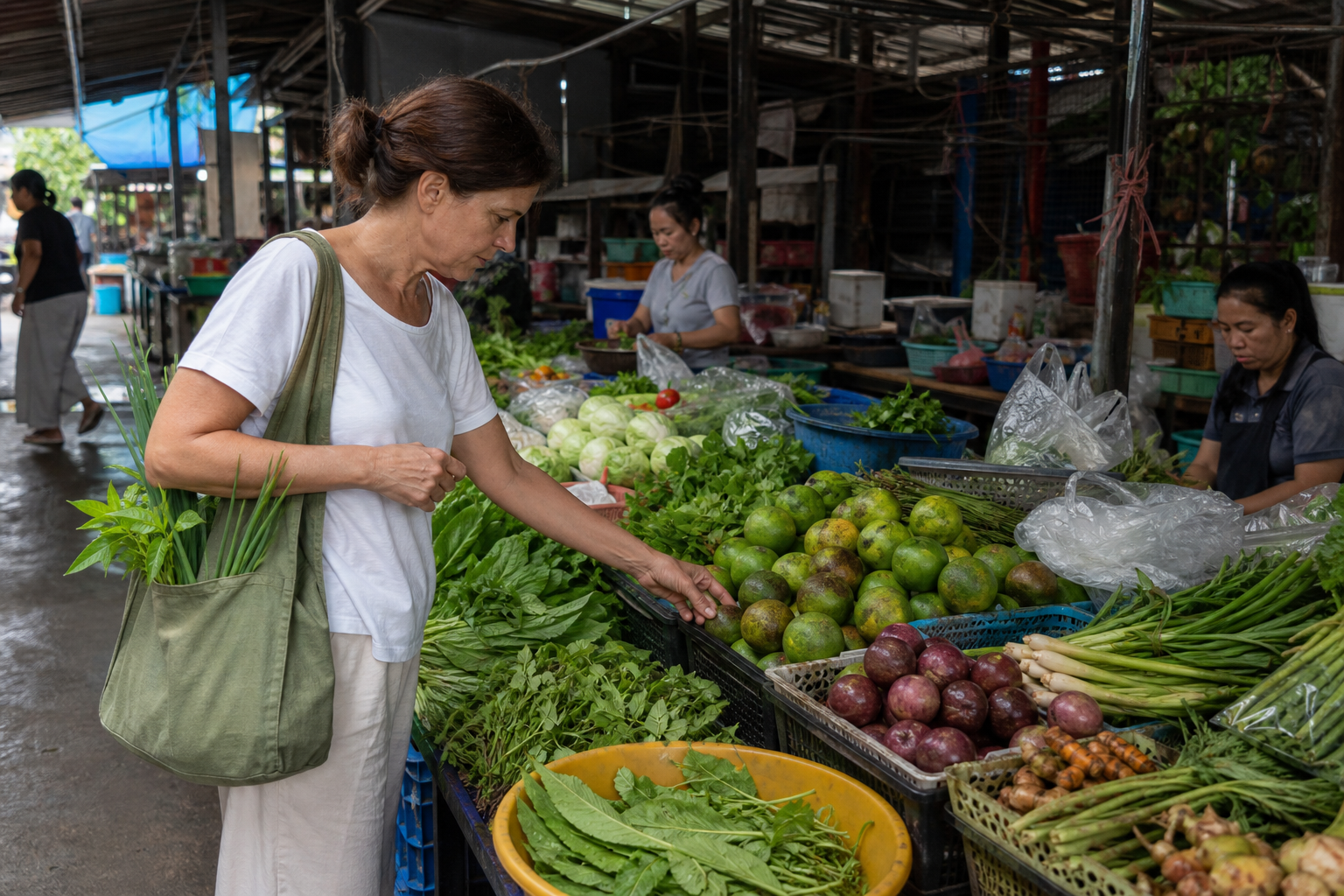
Chiang Mai’s food appeal is most useful when it reduces the effort of daily life. Find a market or dependable food area near the neighborhood you are testing, then go at an ordinary time with an ordinary list: fruit, breakfast, something for dinner, and perhaps one ingredient you do not recognize. Notice the shade, seating, crowds, pickup points, and the trip home with bags.
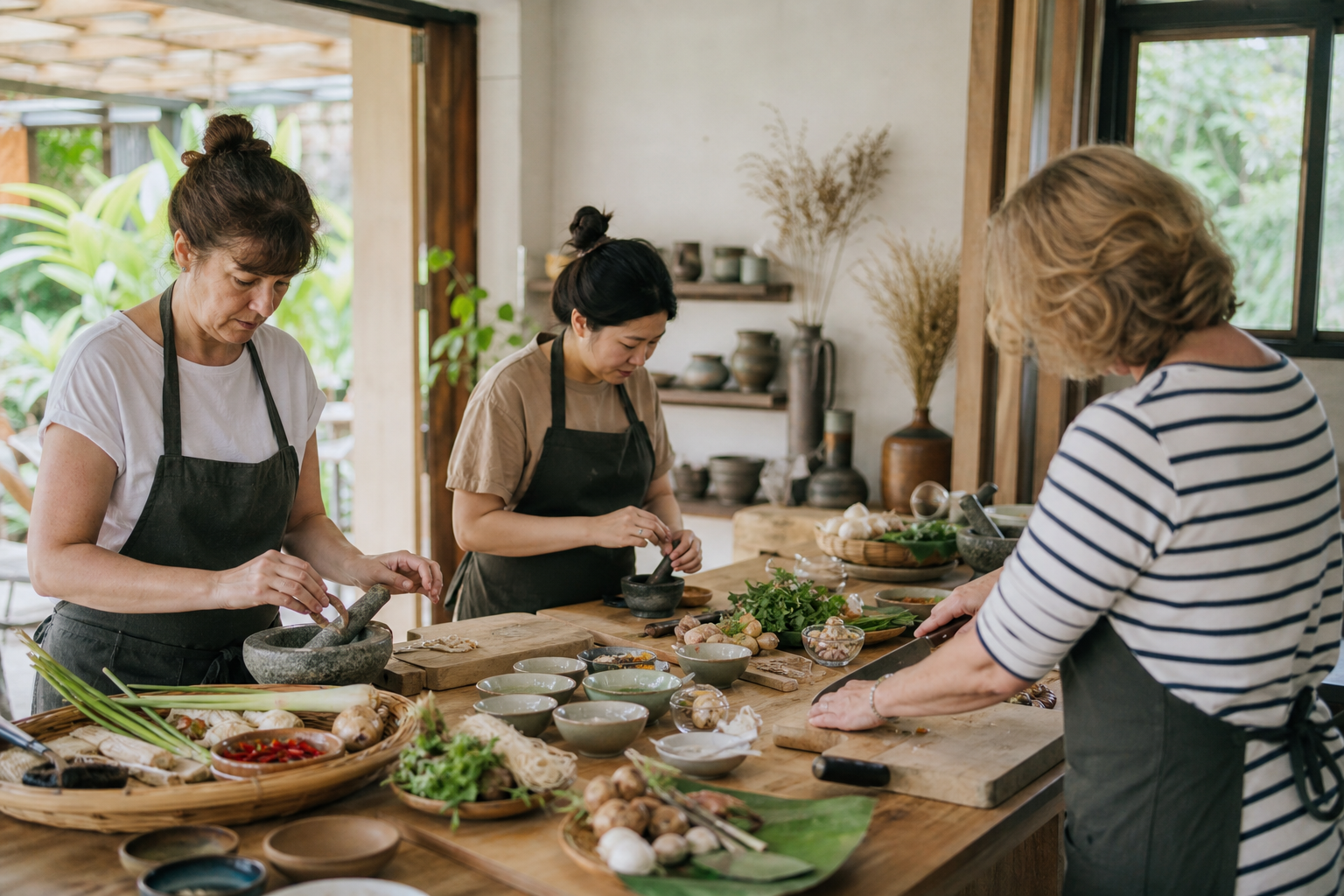
A cooking class can be a genuinely good way to learn ingredients and flavors you might return to. Treat it as a social and practical experiment, not a substitute for knowing whether you can feed yourself comfortably on a workday. Ask what you could repeat afterwards: can you find the ingredients nearby, is the route manageable, and would you still enjoy it once the novelty fades?
Choose one recurring class, not five one-off activities
Long stays are often improved by a regular commitment that gives the week some shape. That might be a cooking, language, craft, fitness, or music class. Start with a single session or a short trial. Verify the current provider, schedule, cancellation terms, language expectations, and route for yourself; do not rely on an old list or a social-media recommendation.
A recurring activity is also a useful test of social fit. You do not need to arrive with a friend group. It is worth noticing whether you enjoy the pace of the class, whether the conversation feels welcoming, and whether the journey home is still easy after dark or in rain. A great Saturday activity that is too inconvenient to repeat on Wednesday is not really part of your longer-stay life.
Take in temples, old-city walks, and culture at a sustainable pace
The old city and temple landscape can be part of Chiang Mai’s appeal without becoming an obligation to sightsee. Choose one place at a time, go early or at a quieter pace if that suits you, and leave room for an ordinary lunch, a bookstore, a park bench, or a walk home. It is less glamorous than a packed itinerary, but it tells you whether the city offers a rhythm you want to inhabit.
Be respectful in religious sites: follow posted clothing and behavior guidance, do not assume a visitor space is a photo set, and check current rules before entering. Heat, crowds, uneven surfaces, and the time needed to get there matter more over a longer stay than on a quick vacation.

Keep mountain and nature days easy enough to enjoy
Nearby mountain and nature outings are a real advantage of northern Thailand, but they work better as optional reset days than as proof that every weekend will be effortless. Check the current weather, air conditions, road conditions, transport arrangements, and your own comfort with the route. A long outing can be excellent; it can also make Monday difficult if it requires a very early pickup, a long ride, or more exposure than you expected.
Build the smaller version first: a local green space, a café in a different neighborhood, or a short daytime trip. If that feels easy, add a bigger excursion later. This tells you more about your sustainable range than copying someone else’s perfect weekend.

An ordinary Chiang Mai week might look like this
- One market or food stop that genuinely simplifies meals.
- One recurring class or hobby session.
- One cultural afternoon at an unhurried pace.
- One easy social option—a café, language exchange, or group activity—without treating it as mandatory.
- One low-friction outing beyond the apartment neighborhood, plus one day with no plan at all.
That blank day is useful. It shows whether the apartment, nearby errands, and neighborhood walk are enough when you are not actively entertaining yourself.
What changes after the first week
The first week can make Chiang Mai feel unusually easy because meals are new, cafés are inviting, and every lane rewards curiosity. Later, the practical variables become louder: air quality at the time of year you are considering, heavy rain and heat, ride availability, noise, distance from your actual routine, and the cost of saying yes to frequent meals or activities.
Air quality deserves an especially direct check. Do not use a generic seasonal claim as a decision tool. Look at current official and local conditions close to your dates, and speak with a clinician if respiratory or related health concerns are part of your decision. Likewise, do not assume that a tourist-friendly neighborhood makes every practical task simple. Walk your grocery, pharmacy, cash, and evening-return routes more than once.
For the deeper apartment, medical, budget, entry-rule, and work-routine questions, use the existing Chiang Mai longer-stay guide. Pair it with the Thailand city comparison if you are considering Chiang Mai, Hua Hin, and Bangkok, and the Thailand country guide for the wider country picture.
Make enjoyment part of the shortlist
It is reasonable to want a destination that is pleasant, not merely workable. Make that preference concrete. List the two or three activities you would want in a normal week, then check them against the apartment, season, transport, and budget you are actually considering. Compare Chiang Mai in the City Fit Dashboard, and use the Destination Shortlist Kit to keep the enjoyable parts and practical tradeoffs in the same decision.
References
- Tourism Authority of Thailand, Chiang Mai.
- Thailand official public-information portal, Thailand.go.th. Check current local and national information directly.
- Thai e-Visa, official visa information. Verify passport-specific requirements before booking.
- CDC, Thailand Traveler View.
- U.S. Embassy & Consulate in Thailand, U.S. citizen services.
This guide is for trip-planning and fit-testing only, not legal, medical, housing, safety, or immigration advice. Verify current conditions and requirements directly before committing to a stay.
Building an ordinary week: Use this low-friction routine guide to test whether a new city works beyond the first few days.