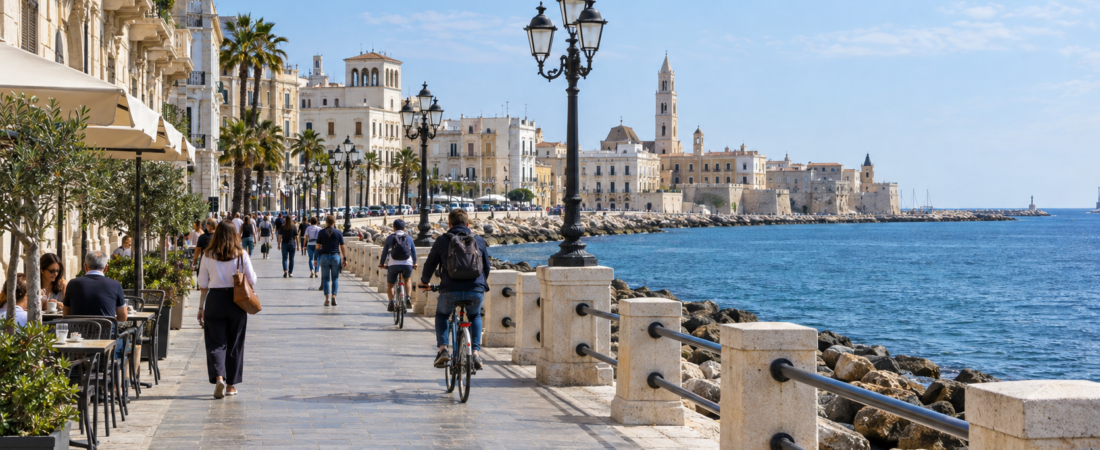
Bari is easy to flatten into a postcard: pale stone, a harbor, an evening walk along the water. That is part of the appeal, but it is not enough to decide whether the city works after the first week.
For a longer stay, the useful question is smaller: can you build an ordinary day here without turning every errand into a visitor itinerary? Bari can make sense for people who value a walkable coastal rhythm and want Southern Italy without the scale of Rome or Milan. It also asks for patience with seasonal changes, administrative tasks, and the difference between an attractive central area and a neighborhood that fits your routines.
For the broader decision framework—budget, health care, residency, and city-fit tradeoffs—start with Bari for Americans Who Want Southern Italy With Practical Coastal-City Routines. This companion is about shaping a workable week once you are there.
Start with a “small-radius” week
A good first-week test is to keep your world intentionally small. Choose one grocery option, one morning walk, one place to sit with a laptop or a book, and one transit route you can use without treating it as a project. The goal is not to prove that Bari is endlessly busy; it is to see whether the city feels comfortable when the plan is ordinary.
That approach also helps separate the historic center and waterfront experience from practical daily life. A beautiful evening route can be part of a routine, but it should not be the only routine you have. Notice where you would buy basics, how long it takes to reach a useful connection, and whether the streets still work for you when the weather is less cooperative or you are carrying bags.
Build around transport planning, not assumptions
Before you commit to a neighborhood, test the routes you expect to repeat at the time you would actually use them. Check current local information close to travel, then walk the key connections yourself once you arrive. Service patterns, temporary disruptions, and the effort of a transfer can change how a short map distance feels.
A longer stay is often easier when your essentials do not depend on a single connection. If you expect to work remotely, schedule appointments, or make frequent day trips, test the route at the time you would actually use it. Heat, rain, luggage, or an evening return can make a promising map distance feel very different.
Treat the seafront as a routine, not a guarantee
Bari’s waterfront can make an ordinary week feel more spacious. The municipal record for the free beaches at Pane e Pomodoro and San Girolamo Waterfront shows that the city arranged sea-rescue service for the 2025–2026 bathing seasons. That is useful evidence that these public spaces are part of the city’s lived environment, but it is not a promise of current conditions, opening arrangements, or lifeguard coverage on any particular day.
Before relying on a beach or waterfront stop, check current municipal notices and local conditions. For a longer stay, the practical value is often the walk itself: a repeatable outdoor break that does not require spending money or organizing a full outing.
Keep culture in the weekly mix
The official regional tourism resource, Viaggiare in Puglia, is a sensible starting point for learning what is nearby and for planning cultural days without overloading the first few weeks. The most sustainable routine is usually one cultural outing at a time—a museum, a neighborhood walk, a market day, or a regional train trip—rather than trying to “complete” the city quickly.
Leave room for the days when you do not go anywhere notable. If Bari works for you, those days will still feel livable.
Plan paperwork separately from lifestyle
Italy’s official Visa for Italy portal is the right starting point for entry and stay guidance. It distinguishes among stay lengths and provides nationality-specific information. It cannot replace professional advice or the current instructions for your circumstances, so verify requirements before travel and again before any deadline.
Keep residency, tax, insurance, and document questions in a separate checklist. Mixing them into your daily-life decision can create false confidence: enjoying a city does not make the administrative path simpler, and a feasible administrative path does not guarantee the city will suit your routines.
Choose a base for errands, not scenery alone
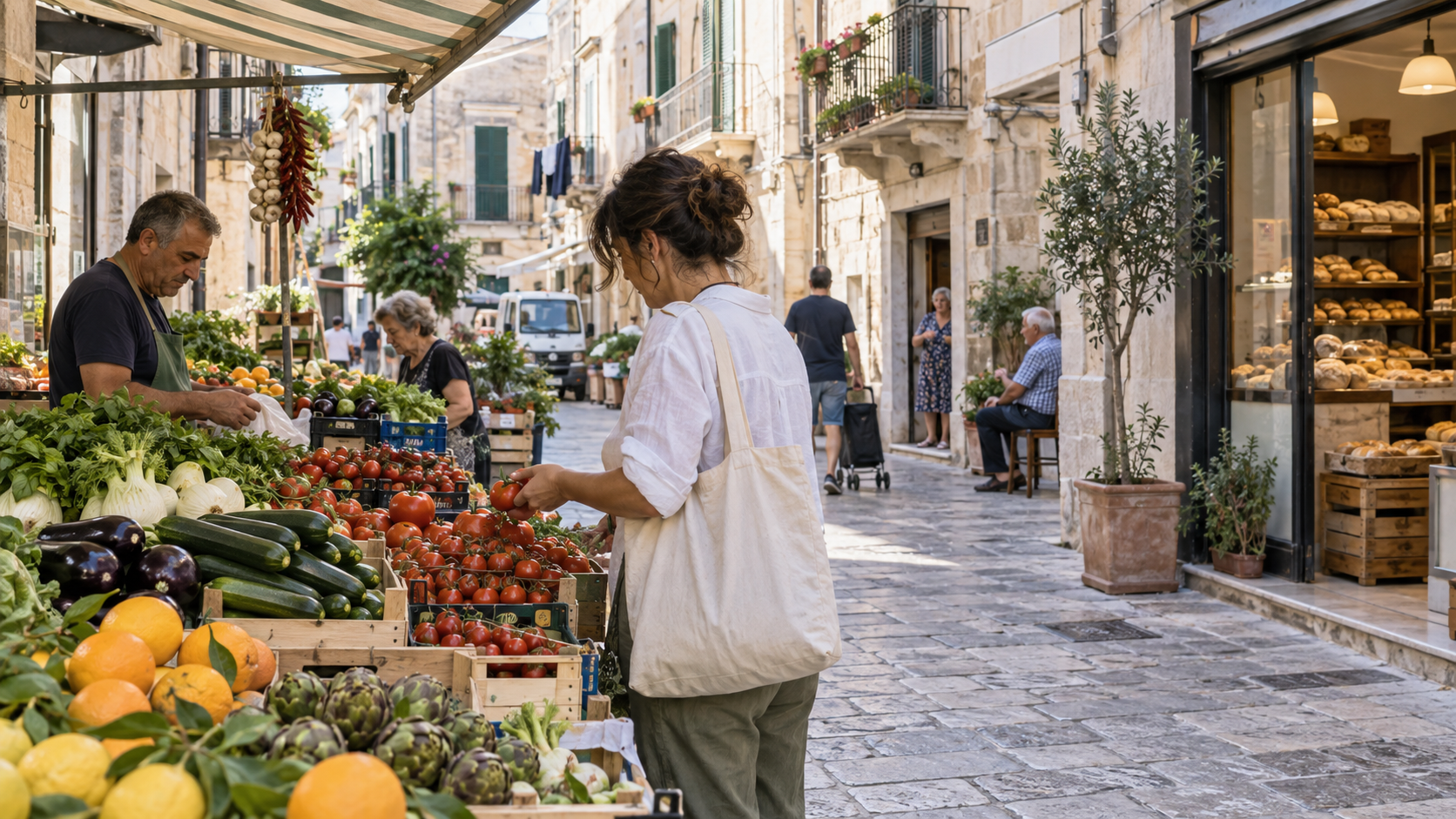
For a first longer stay, the most photogenic address is not automatically the most useful one. Before booking beyond a short visit, map the errands you expect to repeat: groceries, a pharmacy, a cash point, a place to work quietly, and the transit stop you would use when you are tired or carrying bags. Then walk that loop at least twice, at different times of day.
This is especially useful in a coastal city because a waterfront walk can make a neighborhood feel complete on a pleasant evening. The practical test is whether the same area still works on a hot afternoon, during rain, or on a day when you need to solve an ordinary problem quickly. A small-radius routine lowers the cost of adapting to a new city; it also gives you better information than a dense schedule of attractions.
If you are comparing central Bari with a quieter residential base, do not reduce the decision to “lively” versus “calm.” Ask what each option asks of your daily logistics. A central location may reduce the effort of meeting people or reaching a familiar walk. A quieter location may better fit sleep, work, or a longer lease. Neither answer is universal, which is why a short test stay should include normal errands rather than only meals and sightseeing.
Make mobility a fallback system
A longer-stay plan should not depend on one perfect route. Pick at least one walkable alternative for necessities and one backup way to reach a rail connection, appointment, or meeting. Route maps are a starting point; the more important question is whether the route is still manageable at the time you will actually use it.
Build the test into your first week. Use the planned route once in the morning and once later in the day, and note how you feel about the transfer, wait, crossing, and return walk. This is not about judging a city by a single delayed bus. It is about learning which parts of your routine need margin.
For regional exploration, leave the details flexible until you have checked current timetables. Bari can be a base for nearby outings, but a sustainable weekly rhythm usually has fewer ambitious day trips than a visitor itinerary. Reserve one day for a wider outing and protect the rest for work, recovery, household tasks, and the small discoveries that make a place feel familiar.
Budget for a normal week, not a highlight reel
A realistic longer-stay budget has categories that a weekend visit hides: laundry, occasional taxis, replacement household items, mobile data, coffee while working away from home, and the cost of changing plans when weather or timing is inconvenient. Keep a simple note for the first seven days. Record not only what you spend, but what you avoid because it takes too much effort.
That distinction can reveal whether a neighborhood is a good fit. If you repeatedly skip a grocery trip, a waterfront walk, or an activity you expected to use because the route feels cumbersome, the issue may be location or pacing rather than the city itself. Conversely, a modest routine can feel generous when the things you use most are close enough to repeat without planning.
Avoid treating a seasonal municipal beach-service record as a cost or amenity guarantee. The Comune di Bari record in the references below documents a dated sea-rescue arrangement for specified free beaches; it does not establish current coverage, access, or conditions. Check municipal notices and local conditions close to the date you plan to go.
Let the second week answer the harder questions
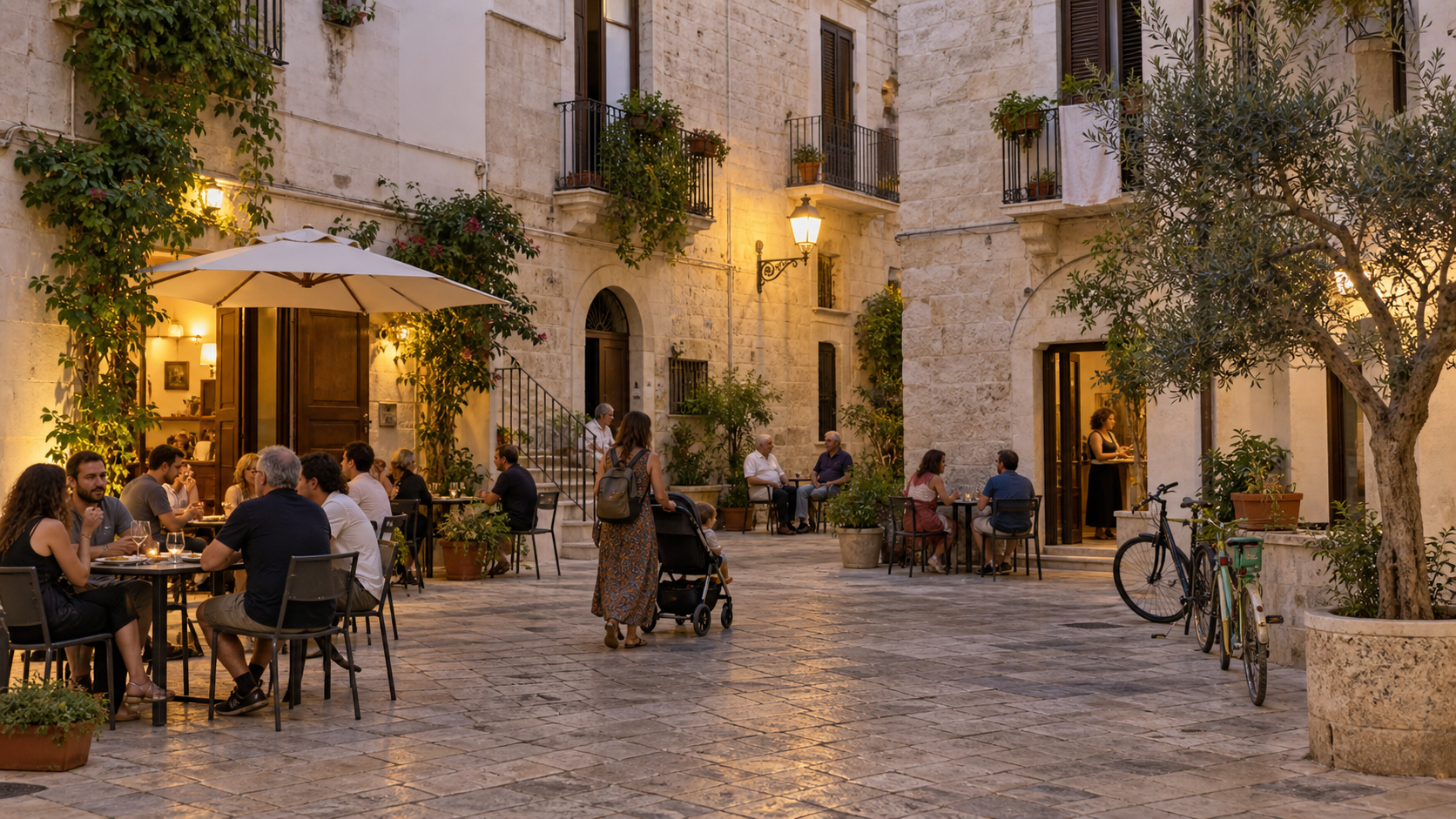
The first week is for orientation. The second week, if you have it, is more useful for testing the parts of life that are less glamorous: an appointment, a long workday, a rainy afternoon, a grocery run at an inconvenient time, or a day when you simply do not want to navigate somewhere new.
Use that time to decide whether your routines are becoming easier. You do not need every answer before committing to a longer stay, but you should know where uncertainty remains. Keep a list with three headings: “works without thought,” “works with planning,” and “needs another source or local confirmation.” The list gives you a practical basis for a lease, a return visit, or a decision to keep looking.
Comparing Bari with another possible base? The Destination Shortlist Kit turns the apartment, routine, access, and tradeoff checks in this article into a reusable worksheet.
A low-friction seven-day test
Try a week with modest goals:
- Day 1: Walk your immediate area and identify groceries, pharmacy options, and a quiet café.
- Day 2: Test one ordinary errand route at the time you would normally use it.
- Day 3: Take a waterfront walk at the time you would normally need a break.
- Day 4: Do one cultural or neighborhood outing using the regional tourism resources as a starting point.
- Day 5: Stay close to home and notice whether the day still feels easy.
- Day 6: Revisit the transit and grocery routes with a practical constraint—weather, bags, or an evening return.
- Day 7: Write down what felt naturally repeatable and what required too much coordination.
That note is more useful than a list of attractions. It turns a pleasant visit into evidence about daily fit.
The bottom line
Bari may suit a longer stay if you want a compact coastal city where a walk, a simple errand, and a neighborhood meal can make up a satisfying day. It may be a weaker fit if you need frictionless administrative systems, constant variety, or a schedule that depends on highly predictable connections.
Give the city enough time to show you the ordinary version of itself. That is the version you would actually be choosing.
References and planning sources
- Visa for Italy — Italian Ministry of Foreign Affairs portal for nationality- and duration-specific entry and stay guidance; verify current requirements for your circumstances.
- Viaggiare in Puglia — official regional tourism resource for cultural and destination context.
- Comune di Bari transparency record 2025/09551 — dated municipal record concerning sea-rescue service for named free-beach areas during the 2025–2026 bathing seasons; confirm present conditions separately.