
Bari can work for an American who wants a southern Italian coastal city with ordinary errands, regional rail connections, and airport access close at hand. It is not a promise of effortless Italy. Your housing address, summer heat tolerance, Italian comfort, and ability to handle a few administrative surprises will matter more than a scenic waterfront walk.
Quick answer: Bari is worth a practical test for someone who values a coastal southern-Italy routine, a real city rather than a resort, and regional transport. The City Fit Dashboard’s current $1,800–$3,400 monthly range is a low-confidence planning band, not a quote. Price a furnished address for your exact dates, then test groceries, transit, sleep, and language friction before treating Bari as a longer base.
Why Bari deserves a grounded look
Bari has enough daily infrastructure to make a test stay informative. You can try the route to a supermarket, pharmacy, rail station, bus stop, and airport—not just the old town and seafront. Its appeal is that it can feel lived-in and connected. Its tradeoff is that a city routine still involves traffic, building variation, heat, paperwork, and Italian-language moments that a short holiday can hide.
Use the City Fit Dashboard to compare Bari with other Mediterranean city options. It can organize the questions around cost, transport, healthcare preparation, climate, and stay rules. It cannot inspect an apartment, confirm a landlord’s terms, or decide whether an address works for your body and ordinary schedule.
Budget and housing: plan broadly, verify precisely
The dashboard’s $1,800–$3,400 monthly planning range, with a $2,500 midpoint, is intentionally broad and low confidence. It helps decide whether Bari belongs on a shortlist. It does not mean that a furnished apartment, your travel month, or a particular neighborhood will fall inside that range. Short stays can carry a flexibility premium; a longer local lease may bring deposits, utilities, paperwork, furnishing needs, and a commitment you are not ready to make.
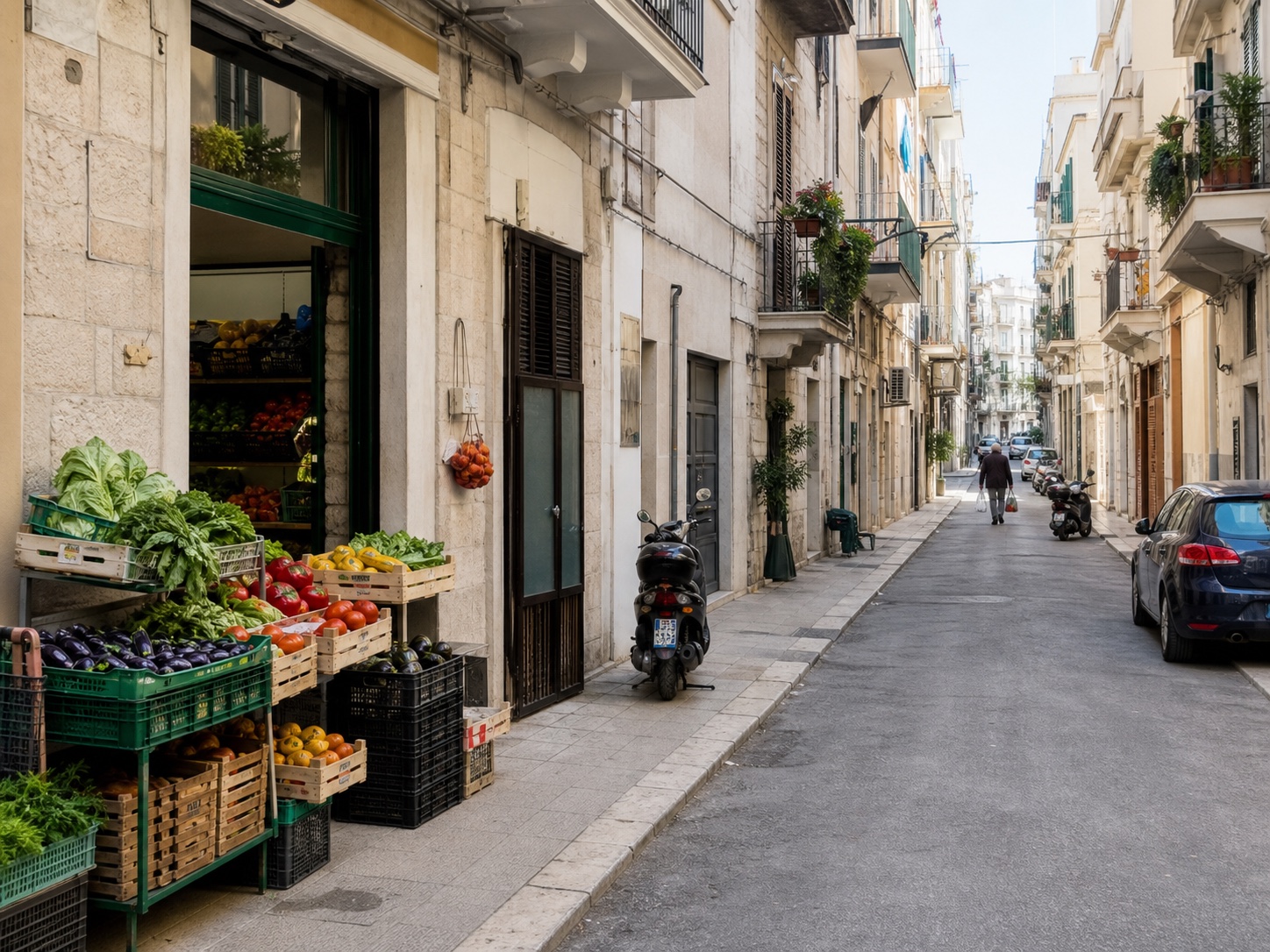
Before booking, compare several date ranges and ask for the all-in total. Confirm utilities, internet, cooling and heating, laundry, elevator access, floor, water pressure, building condition, and street noise. Map the exact walk to groceries, a pharmacy, transit, and the places you would use on an ordinary weekday. A bright apartment photograph is not a neighborhood assessment.
- For a first test: choose a flexible furnished stay with a clear total and an address you can evaluate on foot.
- For a possible longer base: learn the actual deposit, utility, and tenancy requirements before treating an online listing as available to you.
- For every plan: keep a housing and hotel buffer in case the first property does not work or dates change.
Transport and neighborhood fit: airport reach is not daily mobility
Bari Karol Wojtyła Airport and Apulia’s rail links can make arrivals and regional trips simpler. They do not guarantee that your apartment is easy for daily errands. The walk to a stop, traffic crossings, pavement, stairs, shade, and the route home at the time you actually return are the details that determine whether a nominally car-free routine feels good.
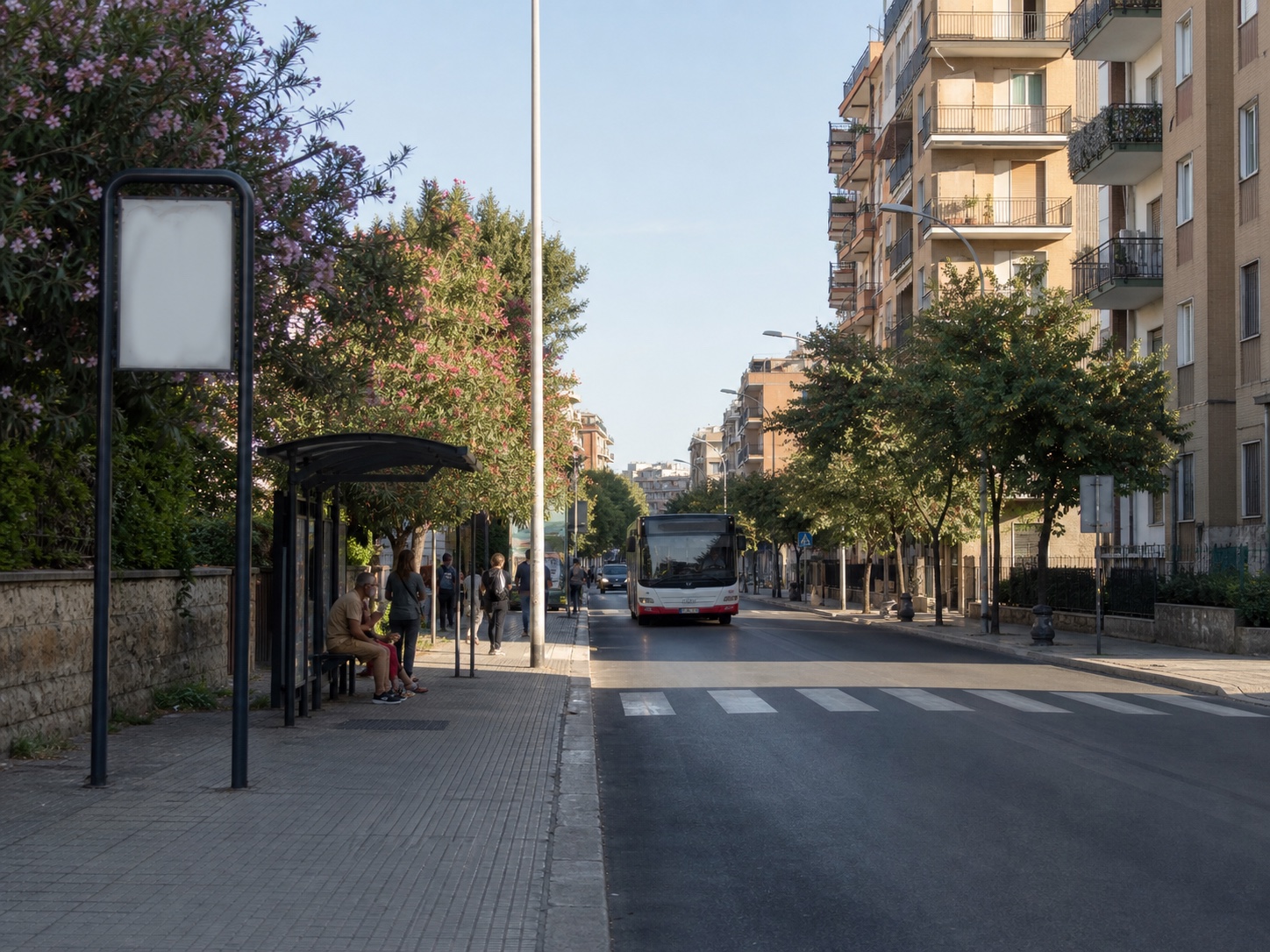
AMTAB is the official place to check current Bari bus routes, fares, and service notices. Check the current product rather than publishing or relying on a stale fare. During a seven- to 14-day test, walk the grocery route carrying a bag, try the rail or bus connection, and repeat a key route during the heat and after dark. Readers with limited balance, joint pain, or heavy-bag needs should make this a core housing criterion.
Coastal charm still has heat, noise, and building questions
Sea air and southern Italian street life are real strengths for the right reader. Summer warmth, tourist-season pressure, traffic, and noise can also change sleep, work, and walking. Ask how the apartment handles the season you plan to experience. Air conditioning, shutters, insulation, insects, street noise, and elevator access are not minor details to discover at check-in.
Older buildings can be appealing while also having narrow stairs, limited light, dampness, or uneven maintenance. Visit when possible or request a live video walkthrough. A less romantic block that makes groceries, appointments, and sleep easy can be a much better longer-stay choice.
Language and local administration: leave room for friction
English may be available in tourist-facing settings, but Italian becomes more important when a question involves utilities, delivery, housing, public offices, healthcare details, or a dispute. Learn useful task phrases, keep translated key information, and allow extra time for official errands. Expecting every meaningful exchange to work smoothly in English is a poor foundation for a longer stay.
The Comune di Bari is the authoritative local-government source for municipal services and notices. Use official sources for current procedures and confirm what applies to your situation. A visitor article cannot resolve individual residency, tax, tenancy-law, or registration questions.
Healthcare and prescriptions: prepare before you need help
Bari offers city-scale services, but visitors should not assume that insurance acceptance, clinic communication, public-system access, or a prescription refill works as it does at home. Confirm insurer requirements, identify realistic emergency options near the address you are considering, carry a concise medical summary, and travel with an appropriate lawful medication supply. Use generic medicine names as well as brands.
If healthcare organization is central to your decision, the Medical Prep Abroad Kit can help organize records, medication details, insurance questions, and an emergency backup plan. It is a worksheet, not medical advice. Your clinician, insurer, and an appropriate local provider should answer questions about your circumstances.
A trial stay and a longer Italian stay are different decisions
Italy is in the Schengen area. Before booking, U.S. readers should verify current passport, entry, and prior-Schengen-travel conditions with the European Commission’s visa-policy guidance and other official sources. Count your own 90/180-day position; do not assume a successful short visit creates a right to remain longer.
If Bari may become more than a test, research the appropriate Italian visa or residence route through the official Italian authorities and the relevant consulate before committing money. Requirements change and depend on personal facts. A useful exploratory month can clarify city fit; it is not immigration, tax, or legal planning.
Who should consider Bari, and who should look elsewhere
Bari is worth a careful test for someone who wants a practical southern Italian coastal city, values regional connections, and will inspect housing and run ordinary errands before making a bigger commitment. It can fit a reader who accepts language learning and some administrative patience as part of the tradeoff.
Look elsewhere if your non-negotiables are cool summers, consistently quiet streets, English-only critical errands, easy bureaucracy, or a guaranteed car-free routine from any address. The better question is not whether Bari is the best Italy base, but whether its tradeoffs are ones you can live with after the first week’s novelty is gone.
Use the Destination Shortlist Kit to put your actual housing questions, climate needs, mobility limits, and healthcare preparation on one page. A grounded test stay with ordinary errands will tell you more than idealized browsing.
References
- Comune di Bari: municipal services and notices
- AMTAB: Bari local transit information
- European Commission: Schengen visa policy
- Expatistan: Bari cost-of-living context
- Wise: Bari cost-of-living context
- Settling Abroad: Italy smaller-cities comparison
Considering Bari specifically? Use this ordinary-week Bari companion to test the exact neighborhood, errand, and mobility rhythm.