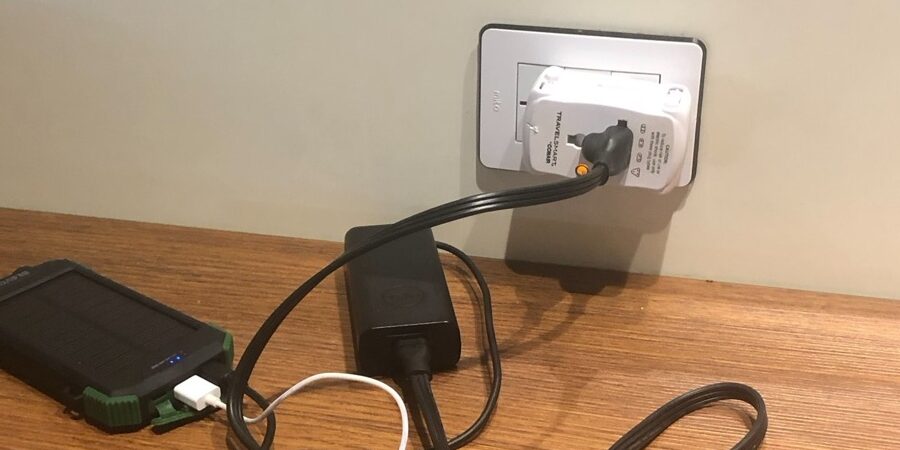
A tech pouch is not supposed to impress anybody. It is supposed to stop you from hunting for the right cable at the exact moment your battery is low, the outlet is awkward, and your patience is already gone.
For long-stay travel, small tech clutter spreads fast. Chargers migrate to nightstands, adapters disappear into coat pockets, and one mystery cable starts traveling with you for no clear reason. A pouch gives that chaos a boundary.
The best version is smaller than a lot of travel gear marketing suggests. You do not need a portable electronics showroom. You need the handful of pieces that keep your daily life running and make failures easier to absorb.
The pouch is there to reduce decisions
People often think of a tech pouch as storage. I think of it more as decision control. If the right cable, plug adapter, spare SIM tool, earbuds, and little odds-and-ends always return to one place, you make fewer tiny choices. That matters when you are moving between airports, apartments, cafés, and train days where attention is already stretched thin.
A pouch also keeps tech from poisoning the rest of your bag. Cables stop wrapping around pens. A loose charger brick stops denting your sunglasses case. A tiny card reader or USB adapter stops vanishing into the lining.
Start with roles, not items
- Power: what charges your main devices every night?
- Connection: what helps you stay online or move data when the easy plan fails?
- Audio: what do you reach for on transit days, calls, or loud apartments?
- Transfer and weird little fixes: SIM ejector, tiny adapter, thumb drive, or whatever your setup genuinely uses.
Once the roles are clear, the contents usually shrink. Most people do not need three spare cables in three standards, two battery packs, and a drawer’s worth of dongles “just in case.” They need one dependable version of the small things they use constantly, plus one modest backup where failure would really hurt.
Keep the core kit very ordinary
For many travelers, the core tech pouch is something like: one wall charger or compact power block, one country-appropriate plug solution, one short cable for everyday use, one spare cable, earbuds, one small USB adapter if your laptop requires it, and one or two specialty bits you know you actually use. That is plenty.
The more niche your setup gets, the more important it is to be honest about frequency. If an item only becomes useful once every three trips, it may not deserve permanent residency in the pouch.
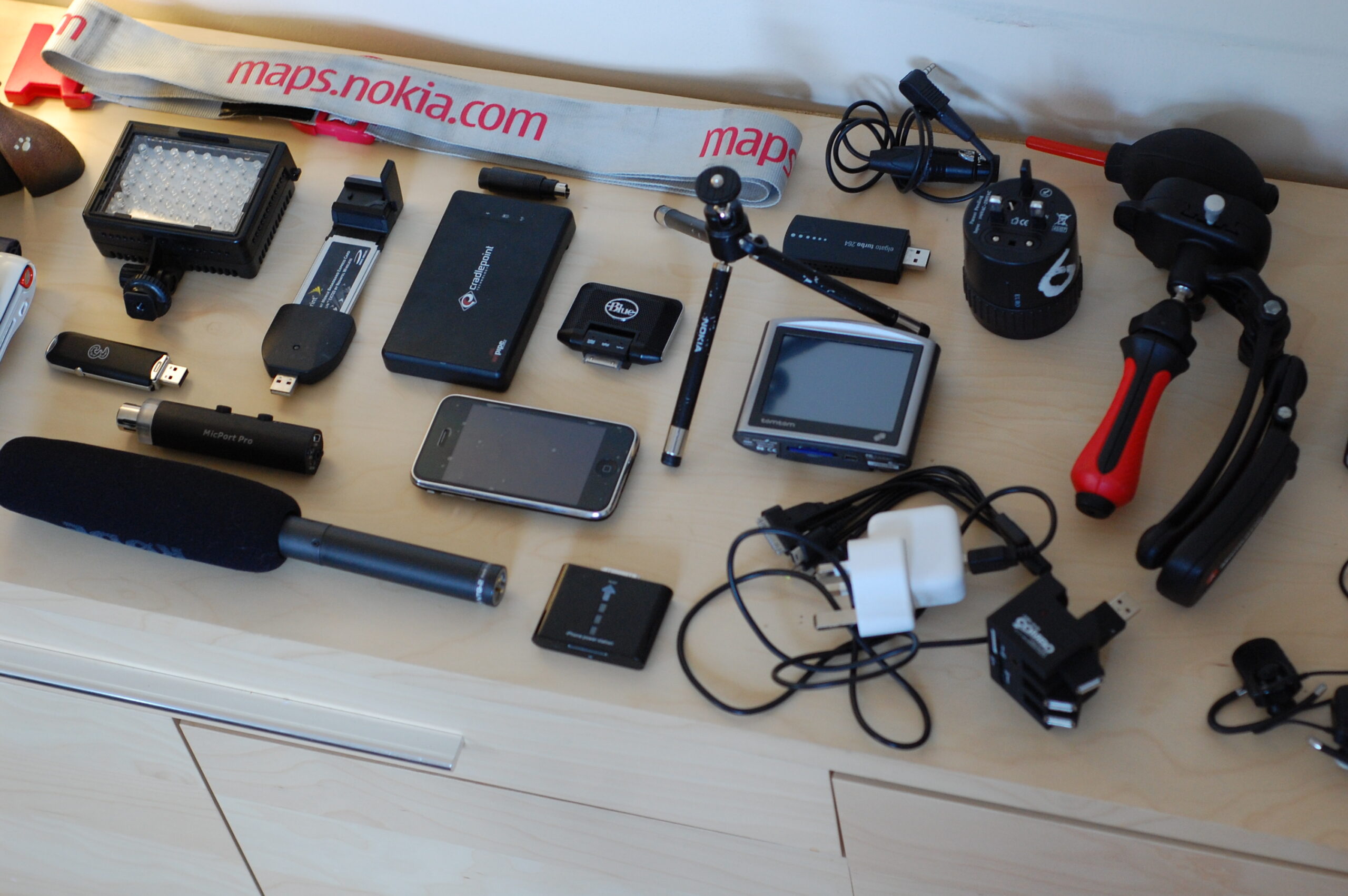
Choose a pouch that opens clearly
The pouch itself matters less than the opening style. You want something that lets you see the contents without dumping them onto a hotel bed or café table. A pouch with modest internal structure is helpful. A pouch with fifteen tiny compartments can become just another version of clutter. The right one lets you answer the question “where is the cable?” in about one second.
Label the failure points in your mind
The pieces most likely to hurt you are usually not the expensive ones. It is the one cable that charges your phone, the small adapter that makes the charger usable in-country, or the earbud set you rely on for calls in loud places. Those are the parts worth keeping dependable and replacing before they become flaky.
If you want the bigger charging system, go read Best Power Kit for Long-Stay Travel. The pouch article is the smaller sibling. It is about carrying the grab-and-go layer, not rebuilding your whole power philosophy inside one zip case.
Separate apartment mode from transit mode
One useful habit is letting the pouch hold the portable essentials while the apartment setup handles the larger, more stable layer. If a charger permanently lives by the bed and a second one stays on the desk, great. Your pouch does not need to duplicate the whole apartment. It just needs to carry the moveable layer cleanly when you head out or repack.
Do a pouch reset before travel days
The night before a transit day, open the pouch and make sure it still matches reality. Dead cable? Replace it. Random receipt in the mesh pocket? Remove it. SIM ejector buried under wrappers? Put it back where it belongs. The point is not tidiness for its own sake. It is making sure travel day starts with a working kit instead of a small puzzle.
What to leave out
Skip the fantasy gear, the gadgets you bought because they looked clever, and the adapters you have never tested. The road is a bad place to discover that your tiny all-in-one cable solution is slow, fragile, or incompatible with the device you actually care about. Boring proven pieces beat novelty here every time.
If your internet layer is still fuzzy, pair this with How to Build a Reliable Internet Plan for Long-Stay Travel and What Apartment Wi-Fi Gets Wrong for Longer Stays. A good tech pouch helps most when the rest of the system makes sense too.