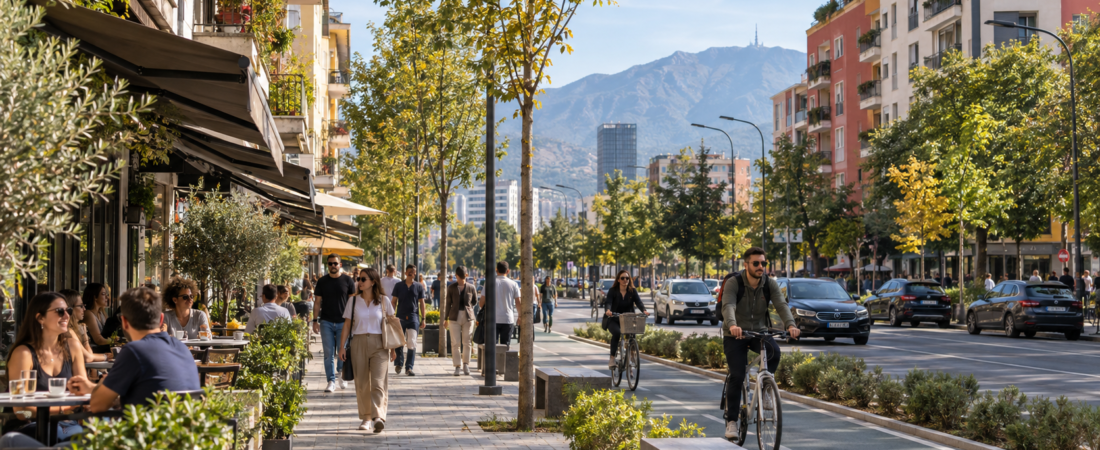
Quick answer: Tirana may suit a longer stay if you want a compact capital where cafés, green space, museums, and a walkable daily radius can become ordinary habits. It is less natural if you need quiet streets, reliable apartment standards without careful screening, fully predictable traffic, or a large-city service stack with no language or administrative friction. Choose a specific building and routine—not just a lively neighborhood name.
Tirana is easy to underestimate on a short visit. Spend a few days there and you may come away with an impression of colorful buildings, busy cafés, a lively central square, and a city you can cross on foot. Those can all be real pleasures. But a longer stay raises a different question: does the city still work when the museum has closed, the weather has turned, you need groceries, and you are simply trying to get home after an ordinary afternoon?
That is the lens that matters here. This is not a claim that Tirana is universally cheap, easy, or quiet. Housing quality, street noise, traffic, entry rules, medical needs, and personal comfort vary too much for that. Instead, think of this as a practical companion to the site’s broader Albania guide, with an emphasis on the routines worth testing before you make a longer commitment.
Build your week around a small radius
For an initial stay, choose for the routine you need rather than the most photogenic address. Walk from the actual building to a grocery store, pharmacy, coffee shop, cash machine, park, and the place where you would wait for transport. Do it more than once, including at the time you would normally be returning home.
Central Tirana and the Blloku area can be appealing when walking to cafés, restaurants, and evening activity is the whole point. That same convenience can affect the sound level, traffic, and the difference between a pleasant afternoon and a quiet night. Ask which way the unit faces, what the windows are like, whether construction is underway nearby, how heating and cooling work, what the water pressure is like, whether there is an elevator, and what actually happens on the street late in the evening.
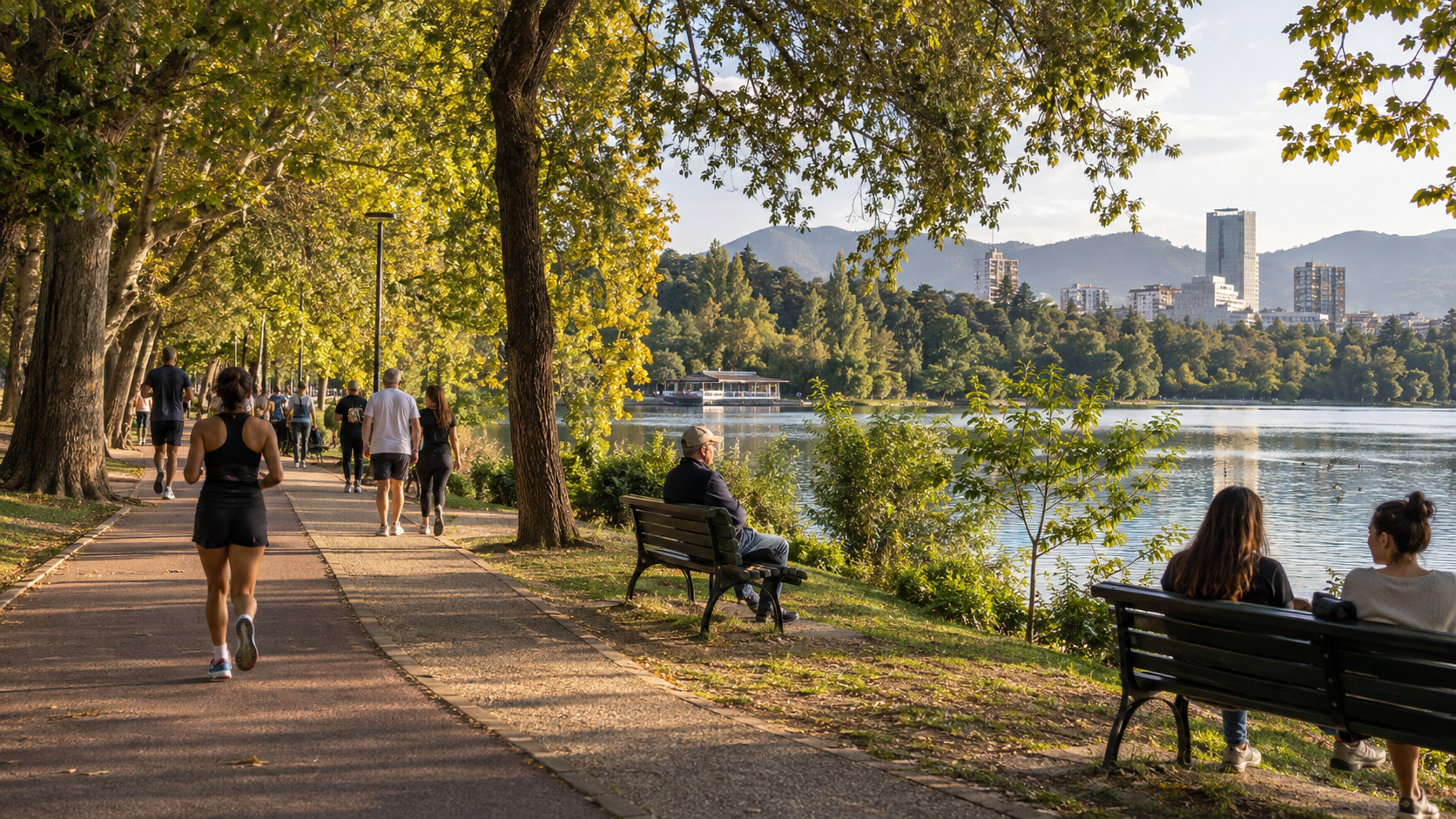
Around the Grand Park and the artificial lake may work well for someone who wants a repeatable outdoor reset instead of another trip into the center. Tirana Municipality’s official visitor guide identifies the park and lake as a major public-space landmark, but you still need to make the practical judgment yourself: can you comfortably reach the green space from the exact apartment, and does the surrounding block work for food, errands, and the walk home after dark?
Areas outside the central core can make sense when the rental offers better light, more quiet, extra space, or simply a more practical daily setup. But the walking and transport equation can change quickly. A listing that looks close on a map may feel much less convenient in heat, rain, or traffic—or when you are carrying groceries. A short trial in the specific building will tell you more than a broad promise about the neighborhood.
Let cafés and errands become a routine, not an expense story
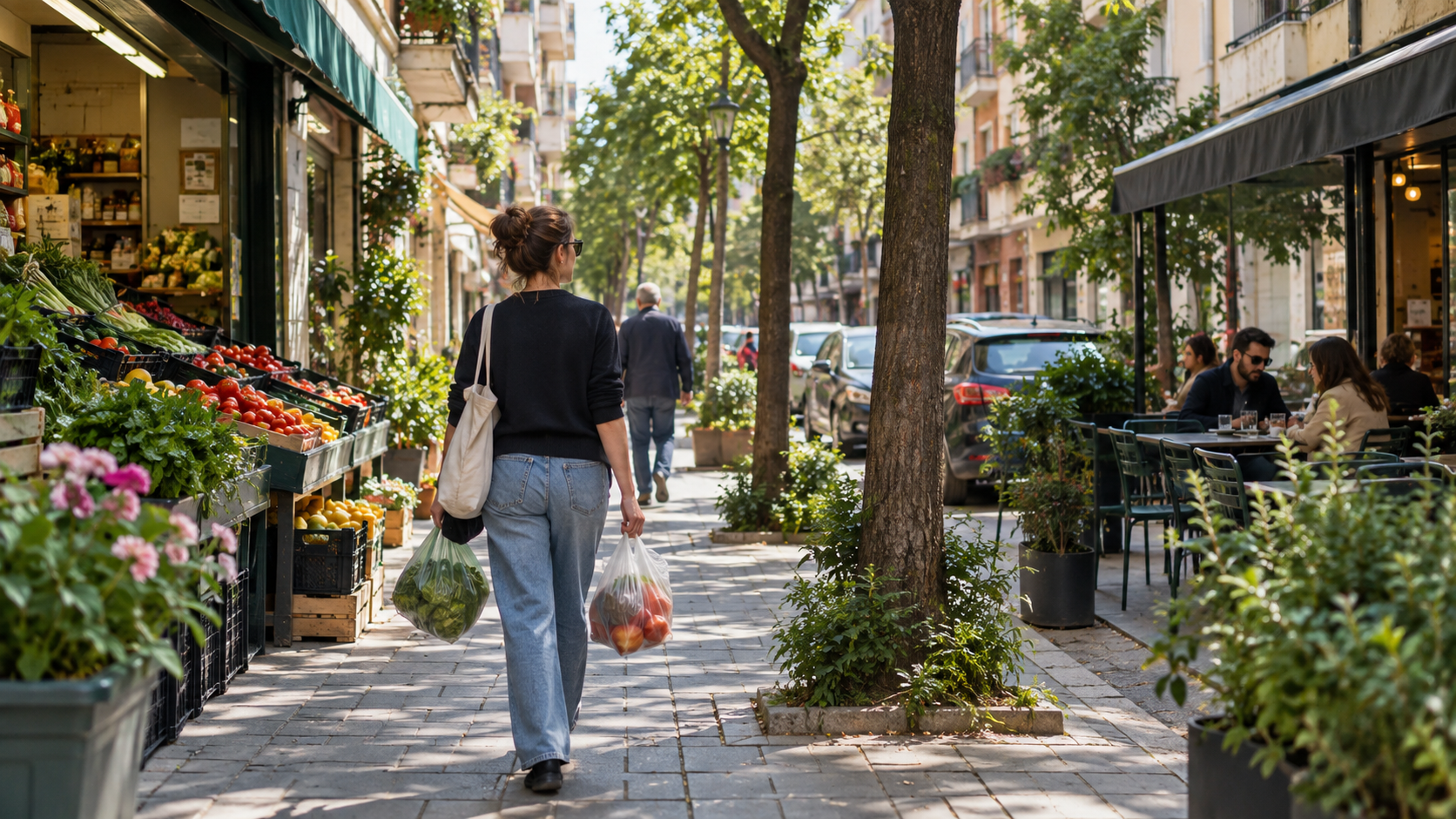
Café culture can genuinely become part of daily life in Tirana. The useful question is not whether attractive places exist. It is whether you can put together a week in which every meal, coffee, or work break does not have to happen in the most visitor-facing part of town.
Start small. Find one nearby coffee stop, one grocery option, one simple meal you can repeat, and one place where you can work or read when the apartment starts to feel cramped. Then notice what changes when you are tired, when it rains, or when two errands need to happen in the same trip. That is the point at which a city stops feeling like an itinerary and starts to feel like a possible base.
Do not mistake an online cost estimate for your personal budget. Housing terms, neighborhood, cooking habits, work needs, healthcare, transport choices, and travel season will matter more than a generic monthly figure. Keep a simple log during your first week: note what you actually buy and which conveniences you keep choosing. It will tell you more than a ranking will.
Use the city’s cultural life at a repeatable pace
Tirana Municipality’s official visitor guide is a useful starting point for cultural landmarks and public-space anchors without relying entirely on listicles. Confirm opening hours, entry rules, programming, and accessibility directly with each venue before you go.
On a longer stay, there is no need to race through every museum in one weekend. Try setting aside one cultural afternoon or evening each week and pairing it with a practical errand or a familiar café. If a museum visit, exhibition, film, or neighborhood walk still sounds inviting after a week of ordinary life, it may become one of your anchors. If it repeatedly takes more transport, energy, or planning than expected, it can remain an enjoyable occasional outing rather than a central reason to choose the city.
The same test applies to parks and public space. It is not enough for a park to look appealing in a guide. Would you actually use it on a weekday—for a walk between calls, a quiet hour, or a low-cost reset when you do not want to make another restaurant plan?
Treat walking and transport as conditions to verify
Tirana Municipality’s Strolling Tirana: A Sustainable Mobility Guide provides useful background on the city’s mobility and walking context. It is not a substitute for current routes, fares, timetables, or accessibility information. Verify those details with current official providers before you base a decision on them.
What matters most is how the trip feels in the situations you will actually face. Walk your likely routes in daylight and after dusk. Pay attention to crossings, pavement, traffic, shopping bags, weather, and whether the route still seems workable when you are no longer in sightseeing mode. If you expect to rely on buses, taxis, or a rental car, test the real pickup, parking, and return pattern. A central location does not automatically remove traffic or noise friction.
A compact daily radius can remove a lot of that friction. It may even make a smaller apartment easier to live with because the rest of the city is close at hand. Still, only a trial stay can show whether the tradeoff suits your sleep, mobility, work schedule, and tolerance for street activity.
The frictions to test early
Put the unglamorous checks in the first two weeks.
- Apartment basics: Before committing, ask how heating, cooling, hot water, internet, appliances, building entry, repairs, and utilities work. Get significant terms in writing, and clarify who responds when something stops working.
- Noise and traffic: Visit the exact street during the day and again later in the evening. A café district, construction site, busy road, or popular venue can change both sleep and remote-work comfort.
- Weather: Try the route you care about in whatever conditions are available. Heat, winter rain, and damp can make a pleasant first walk feel quite different in ordinary life.
- Payments and paperwork: Keep more than one way to pay. Clarify rental and service arrangements in writing, and do not treat a casual verbal assurance as a substitute for a clear agreement.
- Health and entry: Identify a pharmacy and think through insurance and care needs before they become urgent. Do not use this article as visa, residency, medical, or legal advice. Recheck the Albanian Ministry for Europe and Foreign Affairs visa regime and official consular guidance for your nationality and dates.
Who may prefer another Albania base
Tirana may be the wrong choice if your priorities are beach access, a quieter small-town rhythm, easy driving and parking, or a home that feels removed from urban traffic and nightlife. It may also be less appealing if you need a highly standardized rental market, comprehensive English-language support for every task, or a predictable routine without administrative ambiguity.
That does not make Tirana a poor choice. It means fit matters more than first impressions. The right base is not necessarily the city with the most cafés or the lowest quoted monthly cost. It is the place where errands, sleep, work, movement, and social energy still feel manageable after the novelty wears off.
Comparing Tirana with another possible base? The Destination Shortlist Kit turns the apartment, routine, access, and tradeoff checks in this article into a reusable worksheet.
A useful two-week Tirana test
Before making a longer commitment, give yourself two weeks to do ordinary things on purpose. Shop for groceries more than once. Walk the route home at different times. Spend time in a park on a weekday, visit one museum or cultural stop, handle a practical errand, and spend one day doing almost nothing. Keep notes on what turned out to be easier than expected and what you had to work around.
If Tirana gives you a comfortable daily radius, a café or park rhythm you can repeat, and enough cultural life without turning every outing into a project, it may deserve a longer trial. If the parts you enjoy depend on a level of energy, spending, or tolerance for noise and traffic that you will not have every week, that is useful information too.
References
- Albania Ministry for Europe and Foreign Affairs, Visa regime for foreign citizens
- Tirana Municipality, A Journey Through Tirana visitor guide
- Tirana Municipality, Strolling Tirana: A Sustainable Mobility Guide
- Albanian National Tourism Agency, Tirana