Status: Source draft — not published Date: 2026-09-22 Word count: ~1,080
A practical first-base rhythm
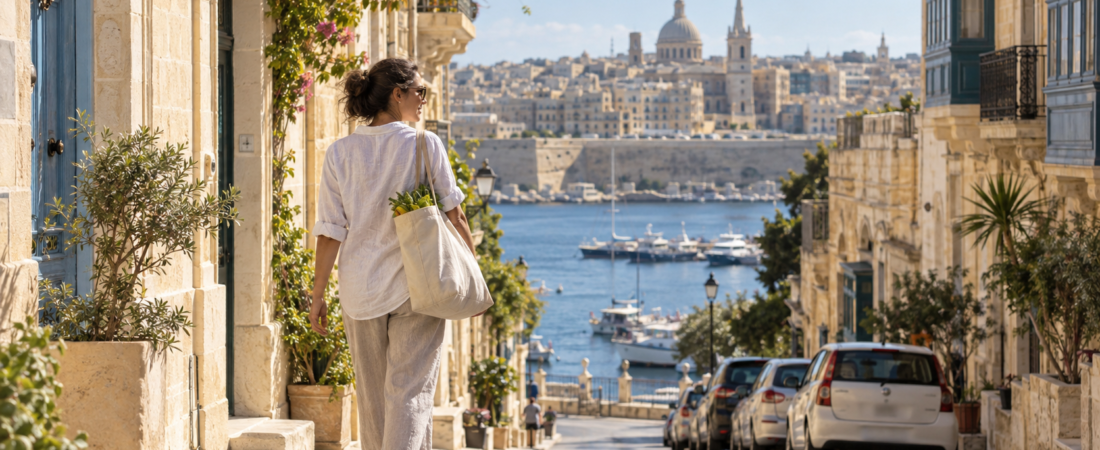
Valletta and Sliema work best as a paired base rather than as two separate destinations to “complete.” Valletta concentrates museums, civic life, compact streets, and ferry connections. Sliema gives the routine a different texture: waterfront walking, everyday shopping, and a residential counterweight to Valletta’s visitor-heavy core. The useful question after the first week is not how many landmarks remain. It is which side of the harbour makes ordinary errands, a walk, and a cultural stop easier on a normal Tuesday.
That paired approach also keeps decisions smaller. Pick one side for the morning, one useful crossing or bus ride when needed, and one low-pressure cultural or waterfront stop. Leave room for the wind, ferry conditions, and the fact that a compact historic centre can still feel steep and busy.
Start with the entry and stay rules
Before treating Malta as a longer base, verify the permission that applies to your passport and planned length of stay. Identità Malta’s Central Visa Unit is the official starting point for visa information and application guidance. Do not rely on a travel forum or a previous visitor’s timeline for an entry rule, a work-right assumption, or a renewal plan.
For longer residence questions, Residency Malta is an official public-service resource. Its availability does not replace a personalised immigration decision, but it is a reliable place to begin before making housing, tax, or onward-travel commitments. Keep documents, dates, and travel insurance details in one accessible folder; the administrative task is easier when it does not compete with a move day.
Build the week around reliable movement
Malta Public Transport is the operational source to check before committing to a routine that depends on buses or ferries. Its official site publishes current network and service information. Check it shortly before a new route, an airport transfer, or a ferry-dependent appointment rather than treating a saved map as current.
For Valletta–Sliema specifically, the harbour crossing can turn a potentially slow road journey into a useful reset between neighbourhoods. That does not mean every day needs a ferry. A durable routine usually has a backup: a walkable errand list on the side where you woke up, a bus option, and the freedom to postpone a cross-harbour plan if the weather is unpleasant.
A simple first-week experiment is to make three different movement days:
- A Valletta-only day for groceries, a café, and one museum or civic stop.
- A Sliema-only day for a waterfront walk and practical errands.
- A crossing day that uses the ferry or a bus only when it actually improves the plan.
By the end of those days, you will know whether your accommodation choice is creating friction or saving time.
Use culture as a repeatable anchor
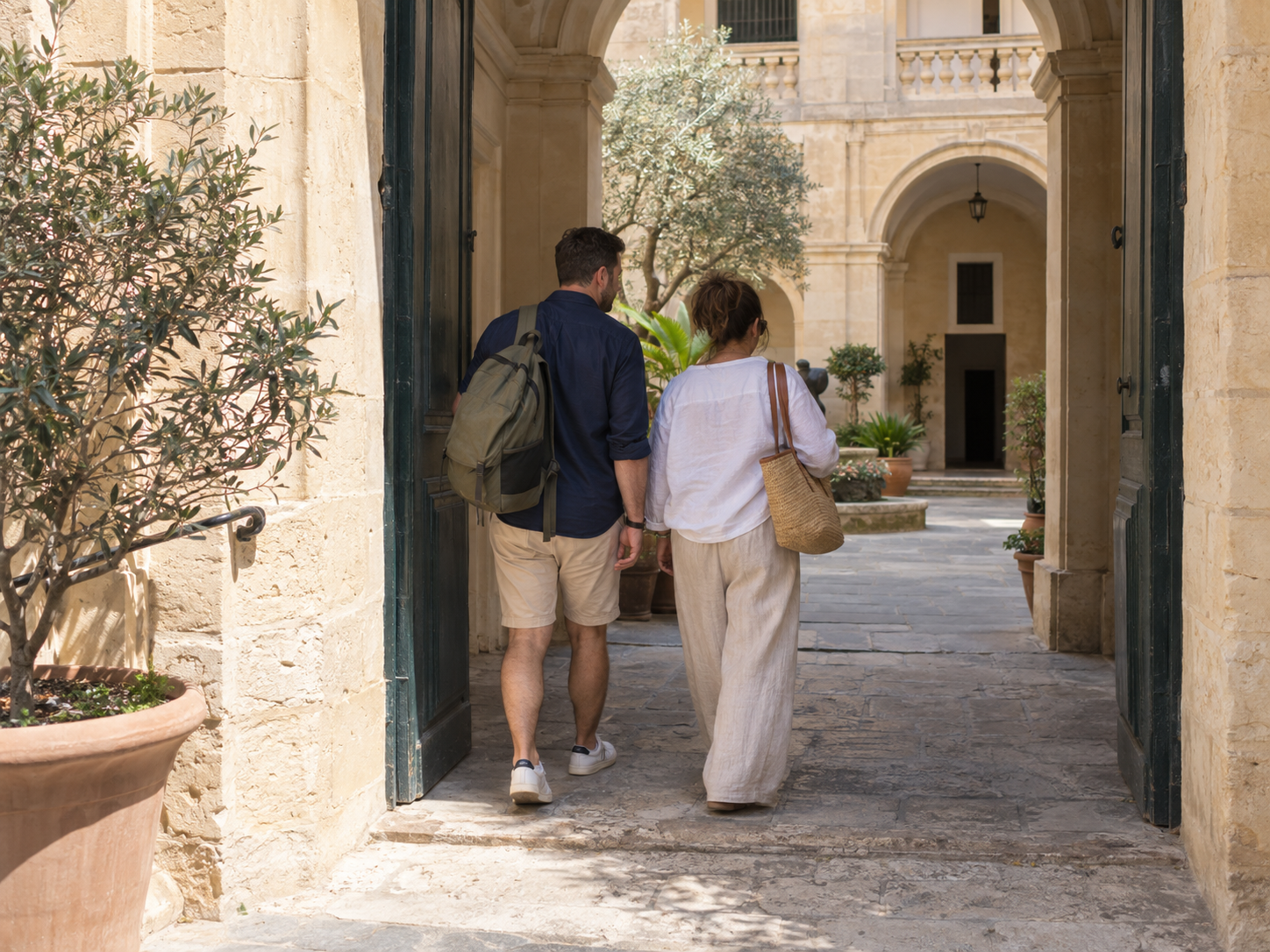
Heritage Malta is the official source for the country’s public heritage sites and museums. Rather than scheduling every major site in a rush, choose one that can anchor an ordinary afternoon. A museum visit works well after an errand or before a harbour walk because it gives the day a centre without demanding an all-day itinerary.
The goal is not to turn a longer stay into a slower version of a weekend break. It is to learn which cultural places you would revisit, recommend to a visiting friend, or use when a workday ends early. That is a more useful test of whether a city is becoming liveable.
Keep the accommodation test practical
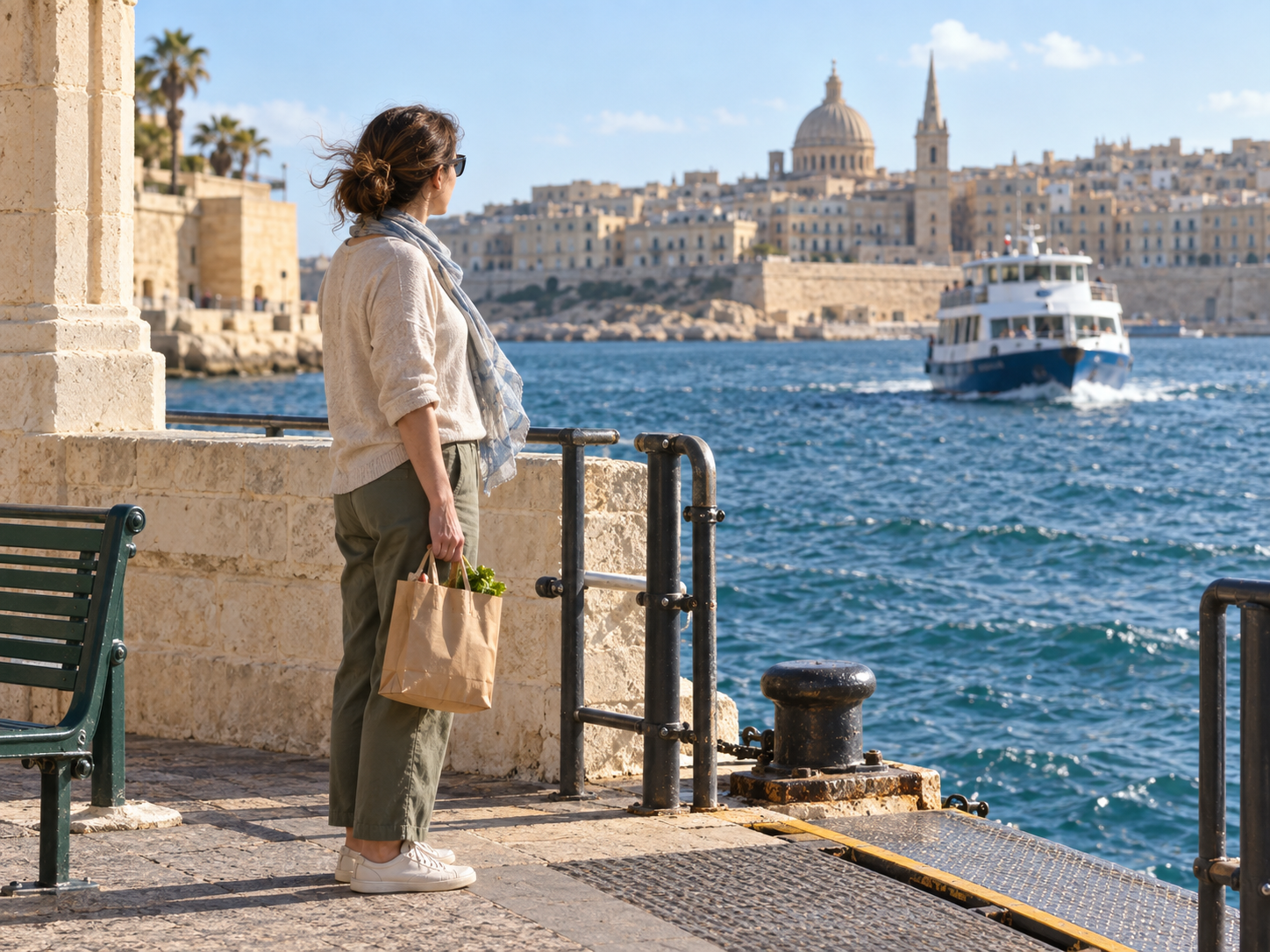
When comparing Valletta and Sliema, treat the room itself as only one part of the decision. Test the route to a grocery shop, the shade and noise on the street, the distance to a transit stop, and the return trip after dark. In Valletta, a dramatic address can come with stairs, visitor traffic, or more active streets. In Sliema, a waterfront location can be pleasant but may not be the same thing as a quiet sleeping location.
Use a short checklist after each viewing or arrival:
- Can I buy basics without planning a trip?
- Is the walk home comfortable in the heat and after dark?
- What happens if the ferry or preferred route is not practical today?
- Is there a nearby place to sit, work, or take a break without spending the whole day indoors?
These questions are more valuable than trying to predict an entire month from listing photos.
Make the first week a decision log
The point of a trial routine is not to prove that either side of the harbour is perfect. It is to collect enough ordinary evidence to make the next housing or travel decision less emotional. At the end of each day, note what took longer than expected, what felt easy without a taxi or a complicated route, and whether the plan still worked after a change in weather or energy.
Keep the notes specific. “Sliema felt convenient” is less useful than “I could buy groceries, get a coffee, and walk home comfortably without needing a ferry.” “Valletta felt crowded” is less useful than recording the time of day, the street, and whether the noise changed after evening. A short record prevents one especially pleasant harbour crossing—or one frustrating bus wait—from deciding the whole stay.
Before extending accommodation, repeat the practical routes that matter most: the walk to basics, the route to a work or appointment stop, and the trip you would make after dark. If the routine remains manageable without treating every crossing as an outing, the paired-base idea is earning its place.
Considering Malta as a possible base? Start with the practical Valletta–Sliema city guide, then use the Destination Shortlist Kit to turn the ferry, errand, and routine checks here into a reusable worksheet.
A low-friction weekly cadence
A sustainable week can be deliberately unglamorous:
- Monday: local groceries, laundry, and a short waterfront walk.
- Tuesday: a Valletta errand cluster and one Heritage Malta stop.
- Wednesday: work or admin day close to home; check current transport information for later plans.
- Thursday: cross the harbour only if it improves the plan, not because the ferry is an attraction.
- Friday: revisit the neighbourhood that felt easiest rather than chasing a new district.
- Weekend: choose one longer outing, then leave one day unscheduled.
This pace leaves space for practical problems and makes it easier to notice whether Valletta–Sliema supports the kind of routine you actually want.
References
- Identità Malta, Central Visa Unit: https://identita.gov.mt/central-visa-unit-main-page/
- Residency Malta: https://residencymalta.gov.mt/
- Malta Public Transport: https://www.publictransport.com.mt/
- Heritage Malta: https://heritagemalta.mt/