
Quick answer: Europe can be realistic for some Americans living on Social Security or another modest fixed income, but the workable list is much smaller than the internet makes it sound. Look first at practical secondary cities such as Coimbra or Braga in Portugal, Alicante or Granada in Spain if the visa math works, Thessaloniki or larger-service bases in Greece, and Tirana or Shkoder in Albania for non-Schengen flexibility. Keep Italy as an honorable mention for people with more financial cushion, not as the easiest answer for the tightest budgets.
If your retirement income is built mostly around Social Security, Europe is not automatically out of reach. But it is also not the glossy version that gets passed around online: a stone cottage, perfect weather, excellent healthcare, painless residency, English everywhere, and rent so low that the numbers take care of themselves.
The useful version is quieter and more practical. You need a place where ordinary life works: groceries, pharmacies, buses, clinics, banking, internet, safe walks, and enough year-round housing to test the city before you commit. You also need a legal stay path that fits your actual income, not somebody else’s YouTube budget.
This guide is for low- and middle-income Americans, especially retirement-minded readers, who want a realistic European shortlist without pretending Paris, Amsterdam, Zurich, central Lisbon, or the hottest coastal neighborhoods are modest-budget choices. It is informational only, not legal, tax, immigration, medical, or financial advice. Before you spend money or make plans, verify the current rules with official sources and qualified professionals where appropriate.
The real question is not “Where is cheapest?”
The cheapest place on a cost-of-living chart is not always the safest first base for an older American. Cheap can mean limited healthcare, weak transit, winter isolation, rough sidewalks, little English support, or rental prices that only exist outside tourist season.
A better question is: which European base is least fragile for your income, health, mobility, paperwork, and patience? For many people, that means skipping famous capitals and choosing a real working city with pharmacies, buses, trains, clinics, grocery stores, year-round residents, and enough rental supply to try the place for 30 to 90 days before deciding anything permanent.
If you are still comparing countries, use this alongside the broader cost, healthcare, safety, and internet comparison framework. And if this would be your first longer stay abroad, read the first-90-days budget guide. Setup months are rarely as cheap as settled life.
How these European bases were chosen
This is not a ranking of the prettiest towns in Europe. The bases below were chosen for a practical mix: possible modest-budget living for a careful renter, walkability or public transport, access to routine care and larger medical services, year-round livability, enough rental supply for a trial stay, and a visa or stay pathway that is at least worth researching for Americans.
That last part matters. A city can look affordable on paper and still fail if the visa threshold, private insurance requirement, rental proof, or Schengen day limit does not work for you.
Coimbra, Portugal: the strongest Portugal “serious base” candidate
Coimbra is a sensible place to start if Portugal is the dream but Lisbon and Porto feel too expensive or too intense. It is a university city with trains, shops, pharmacies, cafés, medical access, and a real year-round population. That makes it much more practical than a beautiful village where every errand depends on a car or strong Portuguese from day one.
For a Social Security or modest-budget reader, Coimbra’s strength is not that it is “cheap Portugal.” Portugal has become more expensive, and housing has tightened in many places. Coimbra’s strength is balance: slower than Lisbon, more service-rich than a small town, and still plausible for a careful renter who is willing to avoid the most polished neighborhoods and furnished-short-stay pricing.
The tradeoffs are not minor. Coimbra has hills, older buildings, and apartments that may not match American expectations for elevators, heating, insulation, accessibility, or easy parking. Portugal’s residence process also needs real homework. The official Portuguese visa documentation includes proof of financial resources and categories related to retirement or passive income, but exact thresholds and document expectations should be checked through the current consulate or VFS process before you rely on them.
For broader country context, start with Portugal for Americans seeking a slower, more livable overseas base and the guide to Portugal bases beyond Lisbon prices.
Braga, Portugal: northern services without Porto intensity
Braga is another strong Portugal candidate for someone who wants city services without a resort feel. It has shops, buses, clinics, restaurants, and access to Porto when you need bigger-city options. The pace can feel more settled than Lisbon or Porto, and the northern climate may suit people who do not want southern Europe at its hottest.
The warning is expectation management. Braga is not a secret $1,000-a-month retirement hack. Rents can be competitive, English is not universal, and northern Portugal is cooler and wetter than many Americans expect. If your mental picture of Portugal is blue sky every day and cheap rent near cafés, Braga may still be practical, but it may not match the fantasy.
Alicante, Spain: Mediterranean services if the visa math works
Spain can be excellent for Americans who want Mediterranean weather, walkable neighborhoods, transit, food culture, private healthcare options, and an established foreigner path. Alicante is often easier to justify for modest-budget readers than Valencia, Málaga, Barcelona, or Madrid because it offers real coastal services without being the largest or most expensive name in the conversation.
That does not make Alicante automatically cheap. Coastal demand, seasonal rentals, private insurance, and desirable neighborhoods can still push the budget. For a fixed-income American, Spain is often a good choice only if you qualify on paper and choose your neighborhood carefully.
The major gate is Spain’s non-lucrative residence visa. The Spanish consulate guidance reviewed for this brief says applicants must show sufficient financial means for the initial year, with a minimum equivalent to 400% of Spain’s IPREM for the main applicant, plus an additional amount for family members. It also requires qualifying health insurance and does not permit work or telework. That can make Spain realistic for some moderate-budget retirees and unrealistic for someone whose only income is a small Social Security check.
If Spain is on your list, compare Alicante with the broader Spain guide for retirement-minded Americans and the Valencia vs. Alicante vs. Málaga comparison.
Granada, Spain: culture and value, with heat and residency caveats
Granada is the Spain candidate for people who want culture, university energy, public transit, and a real city fabric without needing daily beach life. It may be less punishing than the most famous coastal zones, and it has enough normal year-round life to support a serious trial stay rather than just a vacation.
The biggest quality-of-life caution is summer. Granada can be very hot, and some neighborhoods involve hills, stairs, or older buildings. It also shares the same national visa reality as Alicante: the city might suit you beautifully, but the non-lucrative visa, income proof, and private-insurance requirements still have to work.
Thessaloniki, Greece: a larger-city Greece base with services
Thessaloniki deserves attention because it offers a Greece option that is not Athens intensity and not seasonal island life. It has universities, hospitals, buses, airport access, waterfront neighborhoods, food culture, and enough year-round population to function when vacation season is over.
The tradeoff is bureaucracy and language. Greece’s long-stay route needs careful verification. The Greek foreign ministry guidance reviewed for this brief describes a national Type D visa for stays over 90 days and up to 365 days, issued by the competent Greek diplomatic mission or consular post. Before treating Greece as a long-stay solution, verify the current financially independent or sufficient-means route, insurance requirements, document requirements, and local residence steps.
Kalamata, Heraklion, or Chania: warmer Greece trial bases, not automatic bargains
If you want warmer weather and a slower Greek rhythm, Kalamata and larger-service parts of Crete are worth researching. Kalamata can offer a small-city feel with sea access and more year-round life than a tiny island. Heraklion is often more practical than postcard-pretty, while Chania is beautiful but can be more tourist-priced.
The risk is confusing vacation Greece with livable Greece. Seasonal rentals can distort the budget, summer prices can make a winter bargain irrelevant, and healthcare access can thin out quickly outside larger cities. If you have chronic conditions, start near services rather than chasing the prettiest coastal setting.
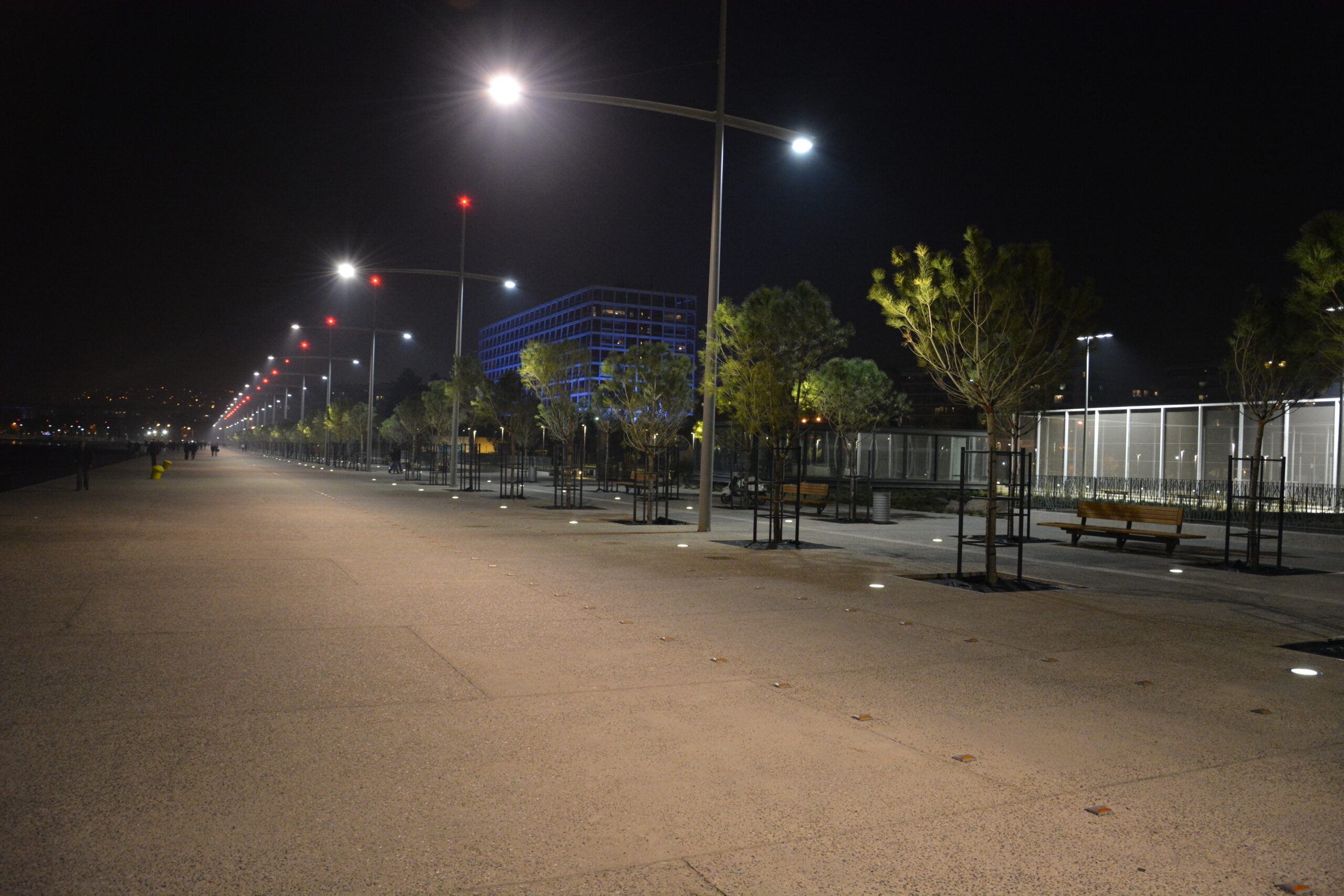
Thessaloniki Promenade by Zisis Tsampalis, Wikimedia Commons, CC BY-SA 3.0. Source: https://commons.wikimedia.org/wiki/File:Thessaloniki%20Promenade.JPG
Tirana, Albania: the strongest non-Schengen pressure valve
Albania belongs in this article because it solves a problem Portugal, Spain, Greece, and Italy do not solve as easily: Schengen day pressure. U.S. State Department Albania guidance says U.S. citizens may stay in Albania for up to one year without a residence permit. That makes Albania unusually useful for Americans who want a longer European-adjacent trial base without the normal Schengen 90-days-in-180-days limit.
Tirana is the most practical Albania starting point for many Americans. It has the country’s deepest everyday infrastructure: more apartments, cafés, offices, hospitals, clinics, pharmacies, buses, taxis, language support, and social options than smaller towns. It is not polished Western Europe, but it is easier to navigate than a smaller Albanian base if this is your first serious stay.
The caveats are real. Tirana traffic, sidewalks, air quality, noise, and infrastructure quirks can wear on people used to smoother systems. Albania is not in the Schengen Area, which is useful for day counting, but it also means different systems and expectations. Treat Tirana as a practical pressure valve, not as a magical replacement for Portugal or Spain.
For country context, pair this with Albania for Americans who want a lower-cost European base and best places in Albania for coast, city, or simpler everyday living.
Shkoder or Saranda, Albania: useful but more conditional
Shkoder can be appealing if Tirana feels too busy. It has a calmer rhythm, access to lake and mountain scenery, and a more local everyday pace. For a careful renter who wants simpler life and can accept fewer services, it may be worth testing.
Saranda is the more obvious coastal temptation, but it needs stronger caveats. It can be attractive off-season, yet summer tourism can raise prices and change the feel of daily life. Rental supply, noise, restaurants, and services may not behave the same in January as they do in July. If you are on a tight fixed income, do not use winter rent alone as proof of year-round affordability.
Both Shkoder and Saranda are better second-step Albania candidates than first default answers for a healthcare-dependent retiree. Test them after you understand Tirana or after you have confirmed exactly how you would handle doctors, prescriptions, transportation, and summer housing.
Italy honorable mention: Lecce, Puglia, Abruzzo, and “more cushion required”
Italy belongs as an honorable mention because smaller cities in Puglia or Abruzzo can be more manageable than Rome, Florence, Milan, Venice, or the most famous tourist centers. Lecce and other southern or central smaller-city options may appeal to people who love Italy specifically and have enough income or savings to tolerate bureaucracy, older housing, and uneven rental options.
But Italy should not be framed as the easiest solution for a tight Social Security-only budget. The Italian elective residency guidance reviewed for this brief emphasizes high self-sustaining income and financial assets, documented private income such as pensions, annuities, property, or business activities, accommodation in Italy, and no work permission. That wording is not friendly to someone trying to scrape by on a very small monthly check.
The budget is only half the question — the visa has to work too
The U.S. State Department’s Europe guidance says U.S. citizens can generally stay in the Schengen Area for up to 90 days in any 180-day period for tourism or business with a valid passport. Stays longer than three months usually require applying for a visa through the relevant embassy or consulate.
That gives every destination two tests. First, can you afford daily life in the city? Second, can you legally stay there long enough for the plan you have in mind? Portugal may require a residence visa process and proof of resources. Spain’s non-lucrative visa has a formal financial-means threshold and private insurance requirement. Greece requires careful long-stay route verification. Italy’s elective residency route appears tougher for tight budgets. Albania is unusually flexible for U.S. citizens, but it is not EU residency and should not be treated as the same thing.
Do not assume you can work remotely on a retirement, passive-income, or non-lucrative visa. Some visas prohibit work or telework. If your budget depends on earning income while abroad, verify that the specific visa allows it before choosing a country.
Healthcare matters more than cheap rent
For an older American, a good European base is not simply the place with the lowest apartment listing. It needs pharmacies, routine care, lab access, emergency options, and a plan for specialty care. If you have chronic conditions, mobility issues, medication needs, or a low tolerance for medical uncertainty, start with a city or near-city base before considering smaller towns.
Medicare usually has limited coverage outside the United States, and long-stay visas may require private health insurance before approval. Before making a base decision, connect your city shortlist with the site’s travel insurance vs. paying cash abroad guide, prescription and routine-care planning guide, and overseas prescription refill guide.
Best choices by reader type
- Tightest budget: Start by researching Tirana and Shkoder, then compare Coimbra or Braga only if the Portugal residency math and housing proof work.
- Best healthcare/services balance: Compare Alicante, Valencia-area Spain, Coimbra, and Thessaloniki, with visa and insurance requirements treated as gates.
- Best non-Schengen flexibility: Albania is the clear standout because of the longer stay available to U.S. citizens, but healthcare and infrastructure tradeoffs matter.
- Best warm-weather trial: Alicante, Kalamata, Heraklion, Chania, and off-season Saranda are worth testing, but do not judge them by winter prices alone.
- Best first-time Europe base: Portugal or Spain may feel easier culturally and logistically if the visa requirements and rent market fit your income.
- Best “I love Italy” option: Smaller Puglia or Abruzzo cities may be worth researching if you have more financial cushion and patience for paperwork.
How to test a European base before committing
Do a 30-day trial in shoulder season if possible. Stay near ordinary errands, not just sightseeing. Walk to the grocery store, pharmacy, bus stop, clinic, and ATM. Notice hills, broken sidewalks, lighting, stairs, elevators, noise, heat, dampness, and how the neighborhood feels on a normal weekday.
Price long-term rentals in person, not only through furnished vacation platforms. Ask what utilities usually cost. Check whether summer or winter changes the rent market. Test internet inside the apartment. Visit a pharmacy and see how prescription questions are handled. If you would need routine care, identify clinics before you need one.
Use the walkability guide and the first-week admin checklist during your trial. The goal is not to prove that the prettiest city can work. The goal is to discover which base is least likely to break your budget, health plan, paperwork, or patience.
Bottom line
If you are living on Social Security or a modest fixed income, the best European base is usually not the cheapest town or the famous city. It is the place where your housing, visa, healthcare, mobility, climate, and ordinary errands line up without too much fragility.
For many readers, the first shortlist should be Coimbra or Braga in Portugal, Alicante or Granada in Spain if the visa math works, Thessaloniki or selected larger-service bases in Greece, and Tirana or Shkoder in Albania for non-Schengen flexibility. Italy can stay on the dream list if you have more cushion, but it should not be the first recommendation for the tightest budgets.
Choose the least fragile base, not the prettiest one. Then test it before you build your life around it.
For readers leaning toward Spain from this wider European shortlist, use this Spain city-by-city budget reality check before treating Valencia, Alicante, or Málaga as interchangeable.
If your Europe shortlist has narrowed to the realistic low-to-moderate cost options, use this Albania, Portugal, and Spain lower-cost Europe comparison before treating them as interchangeable.
For readers choosing between the two most familiar Iberian options, Portugal vs Spain for Americans on a moderate budget gives a closer country-to-country comparison before expanding the shortlist to Albania, Greece, Italy, or other European bases.
References and source notes
- Social Security Administration, 2025 COLA Fact Sheet: https://www.ssa.gov/news/en/cola/factsheets/2025.html. Use only for general context; the average retired-worker benefit is not a personal budget promise.
- U.S. Department of State, U.S. Travelers in Europe: https://travel.state.gov/en/international-travel/planning/guidance/europe.html. Use for Schengen 90/180 context and longer-stay visa guidance.
- Portugal Ministry of Foreign Affairs, National Visas / Residency documentation: https://vistos.mne.gov.pt/en/national-visas/necessary-documentation/residency. Use for general residence visa documentation and consulate-discretion caveats; verify current consulate/VFS requirements before a reader applies.
- Spain Consulate in Los Angeles, Non-working / Non-lucrative residence visa: https://www.exteriores.gob.es/Consulados/losangeles/en/ServiciosConsulares/Paginas/Consular/Visado-de-residencia-no-lucrativa.aspx. Use for 400% IPREM, insurance, and no-work/no-telework caveats; jurisdiction varies.
- Greece Ministry of Foreign Affairs / Greece in the USA, National visas and third-country nationals: https://www.mfa.gr/usa/en/services/visas/national-visas/entry-and-residence-of-third-country-nationals-in-greece-national-legislation/. Use for Type D long-stay framing; verify the exact sufficient-means route before recommending a long stay.
- U.S. Department of State, Albania International Travel Information: https://travel.state.gov/content/travel/en/international-travel/International-Travel-Country-Information-Pages/Albania.html. Use for U.S. citizens may stay up to one year without a residence permit.
- Italian Consulate General in New York, Elective residency: https://consnewyork.esteri.it/en/servizi-consolari-e-visti/servizi-per-il-cittadino-straniero/visti/visas-to-enter-italy/elective-residency/. Use for high self-sustaining income/assets, passive-income, accommodation, and no-work caveats.
- Medicare.gov, Travel outside the U.S.: https://www.medicare.gov/coverage/travel-outside-the-u.s.. Use for Medicare’s limited foreign-coverage caveat and travel-insurance warning.
- Numbeo city cost pages: https://www.numbeo.com/cost-of-living/. Directional context only; not sole support for hard budget claims.
Readers who want a slower Mediterranean island option should also compare those mainland European picks with the standalone Chania guide. Chania can be a beautiful Crete test stay, but Schengen timing, summer rents, healthcare depth, and off-season practicality need a closer look.
Readers considering an Adriatic base should compare these broader Europe picks with the standalone Split guide. Split can be practical and beautiful, but summer rents, Schengen timing, healthcare depth, and old-center mobility change the fit.
Readers who want English-friendly Mediterranean living should compare the broader Europe list with the standalone Valletta and Sliema guide. Malta can be easier linguistically than many European bases, but rent pressure, summer crowding, island density, healthcare planning, and Schengen timing change the budget fit.
Readers who want a Europe-adjacent base without spending Schengen days should compare this broader list with the standalone Tbilisi guide. Georgia can be useful for timing flexibility, but healthcare planning, language friction, winter, hills, and fast-changing rents need their own check.
Readers adding southern Italy to a Europe shortlist can use this Bari practical coastal-city routine to test housing, language, transit, and Schengen tradeoffs.