
Quick answer: For one American testing Da Nang for one to three months, a lean but workable month often needs about $900 to $1,300 if rent is controlled. A more comfortable trial stay is closer to $1,400 to $1,900. A flexible, low-stress version can run $2,100 to $2,700. The biggest swing factors are furnished rent, beach-area pricing, electricity and air conditioning, coworking, eating habits, and whether this is your first month or your settled month.
Da Nang is one of the easier Vietnam cities to understand from a budget point of view, but it is also easy to oversimplify. The city can be affordable. It can also become more expensive than expected if you rent through the wrong channel, choose the most foreigner-facing beach area by default, run air conditioning heavily, eat like you are still on vacation, or treat the first month as if it were a settled local month.
This article uses approximate U.S. dollar ranges with Vietnamese dong in the background. In mid-June 2026, one U.S. dollar was roughly 26,300 VND, so $1,200 is about 31.6 million VND, $1,800 is about 47.3 million VND, and $2,500 is about 65.8 million VND. Exchange rates move, so use those as orientation numbers, not promises.
If you are still deciding whether Da Nang should beat Hanoi or Ho Chi Minh City, start with the broader Da Nang vs Hanoi vs Ho Chi Minh City comparison. This article assumes Da Nang is already on your shortlist and asks the next question: what does a realistic month actually cost?
Why Da Nang cost estimates vary so much
Cost-of-living sites are useful, but they cannot see your exact apartment, lease length, neighborhood, air-conditioning habits, food routine, medical needs, or first-month mistakes. Numbeo’s Da Nang page estimates one person’s monthly costs excluding rent at about $434, or roughly 11.4 million VND. Nomad List puts a broader expat or nomad month in Da Nang around the high-$800s, with a central studio estimate in the low-$400s. Those numbers are helpful as a baseline. They are not a finished budget.
The real Da Nang number usually depends on five things: how you rent, whether you insist on beach-side foreigner zones, how much air conditioning you use, whether you work from home or pay for coworking, and how many first-month costs you accidentally ignore. A person who rents carefully, eats local food, uses cafes lightly, and controls AC may have a very different month from someone in a newer beach apartment with daily restaurants, coworking, weekend trips, and heavy summer cooling.
The $1,200 month: lean, possible, but not careless
A $1,200 month is roughly 31.6 million VND. In Da Nang, that can be workable for one person if you keep the apartment decision under control. This is not the budget for the nicest view, the easiest English-language rental, full-time coworking, constant Western food, and a generous health buffer. It is the budget for a practical test stay where you choose tradeoffs on purpose.
A realistic lean month might look like this: a small furnished studio or one-bedroom outside the most inflated short-stay pocket, modest utilities, mostly local meals and groceries, a local SIM, Grab or motorbike/taxi use kept reasonable, some cafe work instead of a full coworking plan, and a small health and emergency buffer. The apartment is the make-or-break line. If rent alone eats half the budget, the rest of the month gets tight fast.
The $1,200 version works best for readers who are flexible, healthy, comfortable with local food, willing to inspect the rental carefully, and not trying to recreate a U.S. beach lifestyle at Vietnam prices. It works less well if you are arriving tired, need an elevator and quiet workspace, have medical complexity, require a very polished apartment, or plan to eat in foreigner-facing restaurants most days.
The $1,800 month: the better target for a first trial stay
A $1,800 month is roughly 47.3 million VND. For many Americans, this is the more honest first Da Nang target. It gives you room for a better apartment, higher electricity use, coworking or regular cafe work, a mix of local and foreigner-friendly food, some medical or insurance buffer, and enough margin that one bad decision does not wreck the month.
This does not mean you should spend $1,800 just because you can. It means the city becomes easier to judge. You can choose an apartment for sleep and location instead of only price. You can pay for a workspace if the apartment desk is poor. You can use air conditioning without feeling like every hot day is a financial mistake. You can take a few Grab rides instead of turning every errand into a budget debate.
If you are retirement-minded, working part-time, or testing whether Da Nang could be a repeat destination, this is usually the budget band that gives the clearest read. You still have to watch rent and lifestyle creep, but you are not forcing a fragile version of the city just to prove that Da Nang is cheap.
The $2,500 month: comfort, not luxury in every category
A $2,500 month is roughly 65.8 million VND. In Da Nang, that can buy a very comfortable trial stay for one person if you are not careless. It may cover a better apartment or building, stronger location, coworking, more restaurants, more taxis, a healthier buffer, and occasional side trips. But it is still not unlimited if you stack premium choices in every category.
This budget is useful for readers who want low stress more than the lowest possible cost. Maybe you need a reliable desk, strong air conditioning, elevator access, a quiet bedroom, gym access, regular private healthcare comfort, or the ability to correct a bad apartment choice without panic. In Da Nang, spending more can genuinely buy ease. The danger is that the money can also disappear into the same vacation habits that make any city feel expensive.
Rent is the budget line that decides everything
Da Nang rent is not one number. A local long-term lease, an English-language monthly rental, a beach-area furnished apartment, and a hotel-style monthly stay are different products. Expatistan’s Vietnam-wide data shows furnished-rent differences between normal and expensive areas can be large. Da Nang-specific cost pages also show that central or foreigner-friendly housing can look affordable by U.S. standards while still being the biggest variable in your Vietnam budget.
For a first one- to three-month stay, do not compare only monthly rent. Compare cash flow. Does the landlord want a deposit? Is rent paid monthly or several months in advance? Are utilities included or capped? Is there a cleaning fee? Is electricity charged at the government rate or a landlord-set rate? Is the apartment quiet enough to work and sleep? Is the cheap place cheap because it is inconvenient?
Use the first apartment questions for a longer stay abroad before you send money. The fastest way to make Da Nang feel expensive is to book a place that forces taxis, cafe work, bad sleep, and an early move.
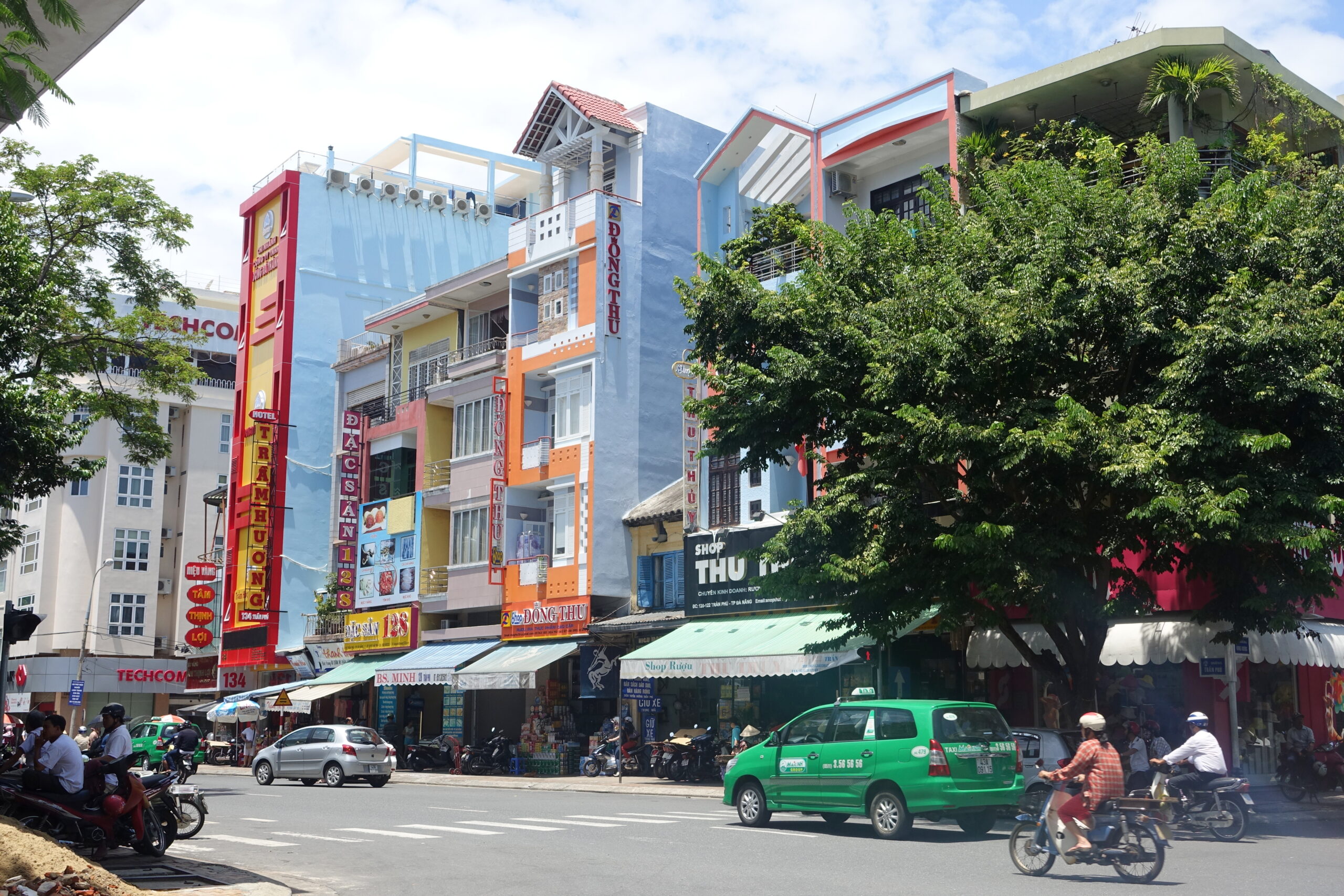
Street Scene in Da Nang by Daderot, Wikimedia Commons, CC0 1.0. Source: https://commons.wikimedia.org/wiki/File:Street_scene_-_Da_Nang,_Vietnam_-_DSC02417.JPG. License: https://creativecommons.org/publicdomain/zero/1.0/.
Utilities, AC, internet, and coworking
Utilities are where Da Nang can surprise newcomers. Vietnam Airlines’ cost guide gives a broad standard-apartment utilities range of 1.5 million to 3 million VND, roughly $65 to $130, and notes that electricity depends heavily on air-conditioning use. In Da Nang, that warning matters. Heat, humidity, apartment insulation, sun exposure, and your work-from-home schedule can all change the bill.
Home internet is usually not the scary part. The bigger issue is whether the apartment connection is reliable enough for your work, video calls, banking, and backups. Ask for a speed test from inside the unit and test mobile data as a fallback. If you need coworking, budget for it honestly. Coworking Danang lists 250,000 VND for a daily pass, 1.2 million VND weekly, and 3.5 million VND monthly. Other listings can be lower or higher, depending on the space and plan.
If your apartment desk is bad, coworking stops being optional. If your apartment is comfortable, cafe work may be enough. This is why a cheap apartment with bad work setup can end up costing more than a better apartment with a usable desk, chair, and internet.
Food: cheap if you build routines, expensive if every meal is foreigner-facing
Food is one of Da Nang’s strengths. Local meals, markets, small restaurants, coffee, and simple groceries can keep the monthly number low. But there are two versions of Da Nang food spending. One is an ordinary routine built around local places, markets, and a few reliable favorites. The other is a rolling vacation diet of brunch, Western meals, craft drinks, delivery, and beach-area restaurants. Both can feel normal while you are doing them. Only one keeps the budget low.
For a lean month, food discipline matters. For a comfortable month, mix local meals with the occasional foreigner-friendly option. For a flexible month, you can eat out often and still spend less than in many U.S. cities, but the gap narrows if you choose imported food and tourist-facing restaurants every day.
Transport and daily errands
Da Nang is easier to handle than Ho Chi Minh City or Hanoi for many newcomers, but it is not a simple American walking city. Your transport budget depends on where you live, whether you are comfortable with scooters or motorbikes, how often you use Grab, and whether your apartment is near groceries, cafes, pharmacies, beach, gym, and healthcare options.
The cheapest transport plan is usually not the best first-month plan. A reasonable budget should include ride-hailing while you learn the city, especially in heat, rain, or when you are carrying groceries. If the apartment is far from your daily routine, small rides can add up. If the apartment is well located, transport can stay modest.
Healthcare, prescriptions, and insurance buffer
Do not leave healthcare out of a Da Nang cost-of-living article just because the headline is about rent and food. The U.S. Embassy’s medical assistance page lists facilities in Da Nang, and the CDC Vietnam page points travelers toward routine vaccines, medication planning, and destination-specific health preparation. Those are budget issues as much as health issues.
If you take prescriptions, budget for pre-trip planning, documentation, a refill cushion, and a backup plan if your exact brand or dosage is not easy to replace. If you are Medicare-age, do not assume U.S. coverage will behave abroad. If you want private insurance or travel medical coverage, price it before calling Da Nang cheap. The healthcare-access framework is the right companion here.
First month vs settled month
The first month in Da Nang may be your most expensive month. That is normal. You may overlap temporary lodging while inspecting apartments. You may pay a deposit. You may buy household items, a SIM, adapters, medicine, laundry supplies, kitchen basics, or extra cafe time while the apartment setup settles. You may use more taxis because you do not know the city yet.
This is why the first-month budget should not be the same as the settled-month budget. Use the site guide on budgeting your first 90 days abroad before you decide Da Nang fits. A place can be affordable month to month and still require a bigger cash cushion at the start.
Who Da Nang is not cheap for
- People who need a premium apartment immediately. If you only accept a polished beach-area building, your budget starts higher.
- People who work from home all day with heavy AC. Electricity and comfort become real line items.
- People who eat in foreigner-facing places every day. Da Nang still costs less than many U.S. cities, but the cheap-food advantage shrinks.
- People with complex healthcare needs. Routine needs may be manageable, but buffers, insurance, and backup travel matter.
- People who treat the first month as settled life. Deposits, setup, taxis, and mistakes can distort the first budget.
A practical Da Nang budget framework
Use these bands as planning ranges, not guarantees. A lean but workable Da Nang test stay is roughly $900 to $1,300, or about 24 million to 34 million VND, if rent is controlled and lifestyle is simple. A comfortable first trial stay is roughly $1,400 to $1,900, or about 37 million to 50 million VND, with better housing, AC room, coworking/cafes, and a healthcare buffer. A flexible stay is roughly $2,100 to $2,700, or about 55 million to 71 million VND, for readers who want more comfort and less stress over the first month.
The best number is not the lowest number. It is the number that lets you test Da Nang honestly. If you underfund the month, you may end up judging stress instead of judging the city. If you overfund it with vacation habits, you may think Da Nang is more expensive than it needs to be. The middle path is to build a realistic monthly plan, track the first 30 days, and compare the result against a proper 30-day city test.
If Da Nang is becoming a serious first stay, the First 90 Days Abroad System is the worksheet version of this planning: first-month budget, apartment checks, money backup, phone setup, healthcare prep, and arrival-week tasks in one place.
Final verdict
Da Nang can be one of the better-value first bases in Southeast Asia for Americans, especially if you want a calmer Vietnam test with beach access and enough city services. But the useful cost answer is not “Da Nang is cheap.” The useful answer is: Da Nang is affordable when rent, AC, food routine, work setup, healthcare, and first-month cash flow are handled deliberately.
If you are trying to prove the lowest possible number, Da Nang can probably tempt you into a fragile budget. If you want to know whether the city actually fits your life, plan closer to the comfortable range for the first month, then let your tracked spending show what settled life might cost.
If Da Nang feels too soft and you need Vietnam’s deepest service layer, compare it with the Ho Chi Minh City monthly budget before assuming the bigger city will cost the same.
Before you book a Vietnam test stay: How to Plan a 30-Day Test Stay in Vietnam Before You Treat It Like a Move
Considering Da Nang for a longer routine? Da Nang Beyond the Beach: What Makes It Work for a Longer Stay
Choosing between Hoi An and Da Nang? Hoi An or Da Nang for a Longer Stay: Culture, Beach Time, and Everyday Reality
References
- Wise, USD to VND exchange rate history, https://wise.com/us/currency-converter/usd-to-vnd-rate/history
- Numbeo, Cost of Living in Da Nang, https://www.numbeo.com/cost-of-living/in/Da-Nang
- Nomad List / Nomads.com, Cost of Living in Da Nang, https://nomads.com/cost-of-living/in/da-nang
- Expatistan, Cost of Living in Vietnam, https://www.expatistan.com/cost-of-living/country/vietnam?currency=USD
- Vietnam Airlines, Living Cost in Vietnam, https://www.vietnamairlines.com/us/en/plan-book/travel/travel-guide/living-cost-in-vietnam
- Coworking Danang, pricing, https://coworkingdanang.com/
- U.S. Embassy and Consulate in Vietnam, Vietnamese visas and entry/exit, https://vn.usembassy.gov/vietnamese-visas-and-entry-exit/
- CDC Travelers’ Health, Vietnam, https://wwwnc.cdc.gov/travel/destinations/traveler/none/vietnam
- U.S. Embassy and Consulate in Vietnam, Medical Assistance, https://vn.usembassy.gov/medical-assistance-2/