
Quick answer
Quick answer: A month in Vietnam can tell you a lot, but only if you make it behave like ordinary life. Pick one workable neighborhood, use normal transport, buy normal groceries, test your internet and care routes, and keep a daily cost-and-friction log. The goal is not to prove that you can have a pleasant month. It is to find out whether the place still works on a humid Tuesday when you need a pharmacy, a quiet place to work, and a backup plan.

Decide what the month is meant to answer
Do not arrive with the vague question, “Could I live here?” Break it into decisions. Are you testing a lower-cost base, a future retirement option, a remote-work routine, or simply whether Vietnam belongs on a shortlist? Your answers decide the neighborhood, budget, and pace of the month.
Write down three non-negotiables and three preferences before booking. A non-negotiable might be a hospital you can reach without a long transfer, dependable home internet, a flat enough walking route, or a building with an elevator. A preference might be cafés, a beach, a large expat scene, or a lively evening street. This separation matters because a beautiful preference can otherwise hide a costly practical problem.
For city selection, start with the existing Vietnam city comparison. Da Nang can offer a smaller, coastal rhythm; Hanoi and Ho Chi Minh City provide more scale and more friction. None is universally “best.” The right first test is the place most likely to challenge the assumptions you are making.
Verify entry rules before you price the stay
Treat visa and entry information as a live task, not a paragraph copied from an old guide. Start with the Vietnam Immigration Department e-visa portal, then confirm your eligible entry point, document requirements, date window, and passport validity. Airline staff and border officials apply the current rules, so a group post from last year is not enough.
Also review the U.S. Department of State’s Vietnam country information before you go. It is useful for current local-law, safety, and consular context, not for choosing a neighborhood by itself. Build a small document backup: a secure digital copy of your passport and policy information, plus a way to reach your bank and phone carrier if your primary device fails.
Keep the first trip deliberately simple. One primary city and one short side trip will teach you more than trying to “do” the whole country in thirty days. Too many moves turn the month into a vacation itinerary and leave you with no ordinary routine to observe.
Rent for a normal week, not a highlight reel
For the first seven to ten nights, book flexible accommodation. Use that period to walk candidate blocks at the times you would actually be out: early morning, late afternoon rain, and after dark. Listen for construction, karaoke, traffic, and building noise. Notice whether the route to groceries, a pharmacy, and a café feels comfortable when you are carrying bags.
Then choose a longer stay that resembles the kind of housing you could realistically afford. Ask about the exact internet arrangement, power and water handling, laundry, building access, deposits, cleaning fees, and what happens if something breaks. The first-apartment questions guide is useful here even if you are only renting for a month.
Do not judge a unit by the listing photos alone. Sit inside during a video call. Test a shower at the time you would use it. Check whether your mobile data works indoors. Take one grocery walk in heat or rain. A cheaper unit that adds a daily motorbike ride, poor sleep, or unreliable connectivity is not automatically cheaper in the way that matters.
Run an ordinary-week experiment
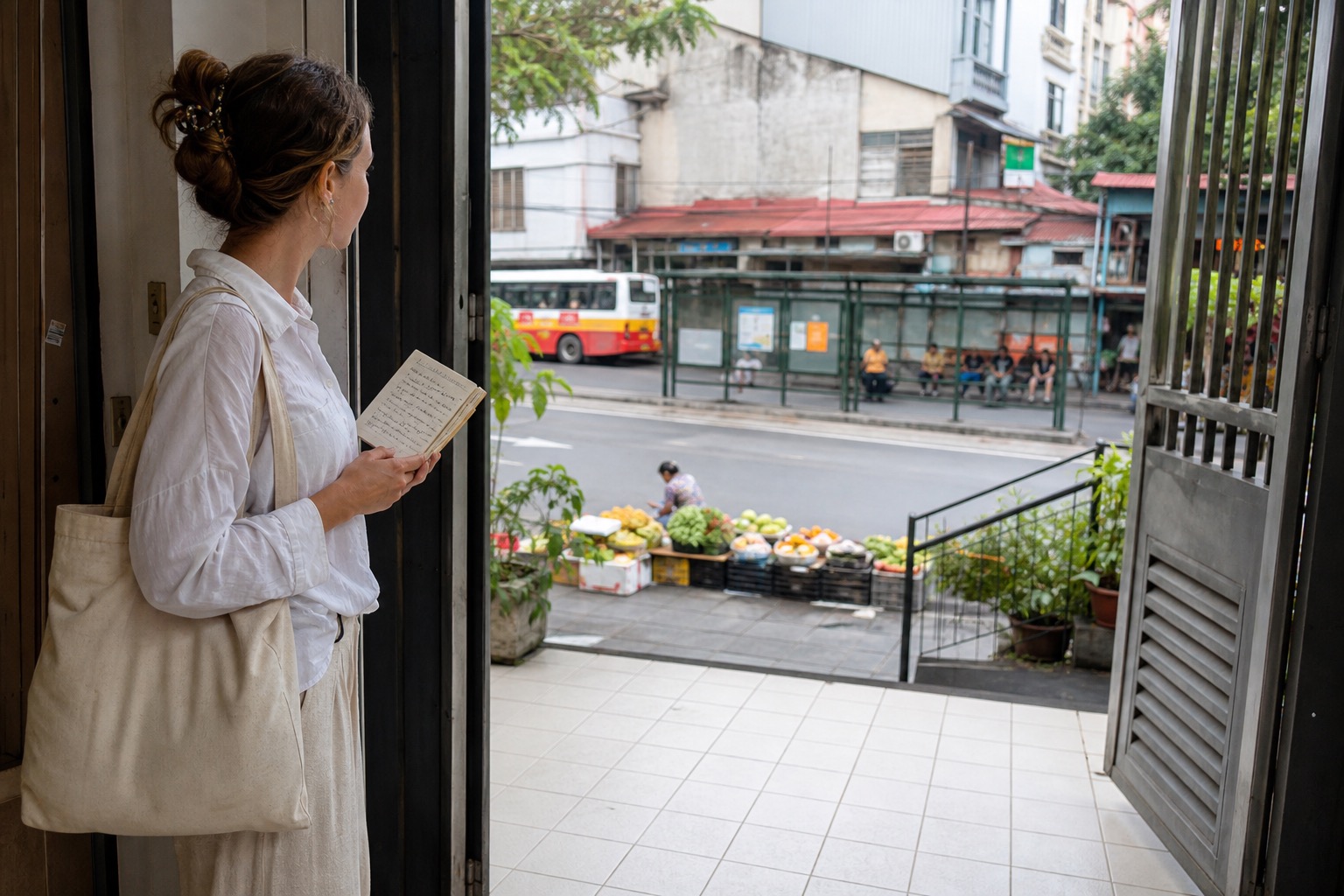
The middle two weeks are where the test becomes valuable. Build repeatable days instead of chasing new sights. Buy breakfast groceries. Use a local laundromat or the building laundry. Take the bus or a ride-hailing trip during a real errand window. Work from home for several hours. Make one appointment inquiry at a clinic or hospital; you do not need to manufacture a medical visit to learn where the front desk is and what language support exists.
Use a notebook with five daily lines: housing, food, transport, connectivity, and friction. Record actual spending in Vietnamese dong alongside an approximate U.S. dollar amount, using the rate your card or cash withdrawal actually delivered. Keep a separate column for one-off arrival purchases so they do not masquerade as a normal monthly budget.
For a Da Nang test, compare your ordinary spending against the site’s Da Nang cost guide, but do not expect your first month to match a settled resident’s number. Imported food, air conditioning, ride-hailing, short-term rent, and setting up a comfortable routine can all push a test-stay budget higher.
Test the care and money margin before you need it
A base can feel easy until something small goes wrong. Before you are sick, identify one nearby clinic, one larger hospital route, and a backup city or travel plan if the care margin feels too thin for your needs. The healthcare-access guide has a practical way to compare those routes. For personal medicines or ongoing conditions, use the CDC’s Vietnam destination page and your own clinician for pre-travel preparation; do not improvise with local availability after arrival.
Test two ways to access money, while following your bank’s security rules. Keep a small cash reserve separate from your daily wallet. Confirm that you can receive account alerts and complete two-factor authentication abroad. The point is not to create drama. It is to learn whether an ordinary bank interruption would become a day-long problem.
Include weather, mobility, and loneliness in the score
Weather is not background scenery. The same route can feel very different in heat, heavy rain, or poor air quality. During the month, ask: would I still use this sidewalk when it is wet? Could I comfortably carry groceries? Does the apartment become too hot, damp, or noisy at the hours I need to sleep? Your body is part of the budget.
Leave room for one quiet weekend. If the city only works when every day is full of novelty, you have learned something important. Call home at a normal time, do admin tasks, and see whether you can create a social routine without spending heavily. A viable long-stay base should allow a good ordinary life, not demand constant entertainment.
End with a decision memo, not a feeling
On the last two days, write a one-page memo. List what worked, what cost more than expected, what you could adapt to, and what would require a different city. Give the place a simple green/yellow/red mark for housing, care access, transport, money reliability, weather comfort, and social fit.
If the answer is “maybe,” that is a successful test. You may need a different season, a different neighborhood, or a second visit before making bigger plans. The next useful step is often to compare Vietnam with a different Southeast Asia option, not to rush into a lease because the first month was enjoyable.
If you want a structured way to keep the documents, budget, phone, money, and apartment checks from scattering across notes, the First 90 Days Abroad System is the worksheet version of this process.
References
- Vietnam Immigration Department e-visa portal: https://evisa.xuatnhapcanh.gov.vn/trang-chu-ttdt
- U.S. Department of State, Vietnam country information: https://travel.state.gov/content/travel/en/international-travel/International-Travel-Country-Information-Pages/Vietnam.html
- CDC, Vietnam destination page: https://wwwnc.cdc.gov/travel/destinations/traveler/none/vietnam
- Vietnam Airlines, baggage information: https://www.vietnamairlines.com/us/en/travel-information/baggage
Considering Da Nang for a longer routine? Da Nang Beyond the Beach: What Makes It Work for a Longer Stay
Choosing between Hoi An and Da Nang? Hoi An or Da Nang for a Longer Stay: Culture, Beach Time, and Everyday Reality