
Quick answer
The best second-step destination after a successful first stay abroad is not automatically the cheapest place, the farthest place, or the one everyone online is suddenly talking about. It is the place that helps you test one important new question while keeping the basics manageable. For many Americans, good second-step options can include Valencia or Alicante in Spain, Braga, Coimbra, or Setubal in Portugal, Penang or Ipoh in Malaysia, Cuenca in Ecuador, Tirana or Sarande in Albania, and Manizales or Pereira in Colombia. The right choice depends less on a ranking and more on what your first stay already taught you.
A first successful stay abroad proves something real. You learned that you can sleep in another country, buy groceries, manage phones and money, solve ordinary problems, and get through regular days without the whole idea falling apart. That is not small.
But it does not mean you should immediately pick a forever country, sign a long lease, or make the second trip harder just to prove you are serious. The second stay should be smarter than the first, not louder. Use the evidence you already collected.
First, decide what your second stay is supposed to test
Before you pick a destination, take a plain look at what actually happened during your first stay. Not the photos. Not the best dinner. The useful evidence.
- Did your budget feel calm, tight, or unpredictable?
- Did you miss family more than expected?
- Did language friction make you curious, tired, or both?
- Was healthcare easy enough to understand?
- Did the climate help your body or irritate it?
- Did you like having other foreigners nearby, or did the expat bubble feel limiting?
- Were you bored once the novelty wore off?
If you have not done that review yet, start with the guide to judging whether you would actually like a place after the honeymoon period ends. Your second destination should answer those questions. If the first stay proved that you need easy medical access, do not make the second stay a remote bargain town. If it proved that you can handle basic Spanish but struggle with heat, do not choose a hot coastal city just because rent looks good.
A useful rule is this: change one major variable at a time. Do not make the next stay farther away, linguistically harder, medically thinner, cheaper, hotter, and more isolated all at once. That is not brave planning. It is noisy testing.
1. Valencia or Alicante, Spain: a stronger Europe test without Madrid or Barcelona pressure
Spain can be a good second step if your first stay showed that you want more walkability, public spaces, healthcare depth, transit, and everyday structure. Valencia and Alicante are especially useful because they let you test Spanish city life without starting with Madrid or Barcelona intensity.
This is not the easiest budget move for every American. Spain belongs in the second-step category because it asks more planning from you: Schengen timing, visa rules if you want to stay longer, rental competition, bureaucracy, and enough Spanish to handle basic life respectfully. In exchange, it gives you a serious test of European routines. You can learn whether you like apartment living, markets, transit, medical systems, and slower administrative processes enough to consider a longer path.
Best after a first stay in: Mexico, Panama, Portugal, or another easier starter country where you learned that you want more European structure. Be careful if: your budget barely worked on the first stay, or you need more time than Schengen short-stay rules allow without a visa plan.
2. Braga, Coimbra, or Setubal, Portugal: Portugal without treating Lisbon as the whole country
Portugal is often one of the first countries Americans imagine when they start researching life abroad. The problem is that Lisbon and central Porto can disappoint people who expected simple bargains. A second stay in Braga, Coimbra, Setubal, or another carefully chosen smaller base can be more useful than another week of comparing famous neighborhoods online.
This is a good second step if your first stay taught you that you like Europe but need a calmer, more affordable daily rhythm. Smaller-city Portugal can offer beauty, good food, train links, and a softer pace. It can also show you the less glamorous parts: damp winter apartments, paperwork, healthcare wait times, housing pressure, and the reality that “cheaper than the U.S.” does not always mean cheap on a modest fixed income.
Best after a first stay in: Spain, Mexico, Panama, or a short Portugal scouting trip. Be careful if: you are relying on old Portugal cost stories or assuming every smaller city has the same rental depth and medical access.
3. Penang or Ipoh, Malaysia: a bigger geography stretch with a softer landing
Malaysia is one of the better second-step choices for Americans who want to test Southeast Asia without jumping straight into maximum culture shock. Penang, especially George Town, has food, private healthcare, English usage in many practical settings, regional flights, and enough foreign-resident familiarity to lower the first layer of friction. Ipoh can be calmer and more low-key if Penang feels too busy or too shaped by visitors.
The reason Malaysia belongs after a successful first stay is distance. Being far from the United States changes more than the flight time. It affects family visits, time zones, jet lag, emergency travel, medication planning, and how isolated you feel when something goes wrong. If your first stay proved that you are steady away from home, Malaysia can be a practical way to test a wider life radius.
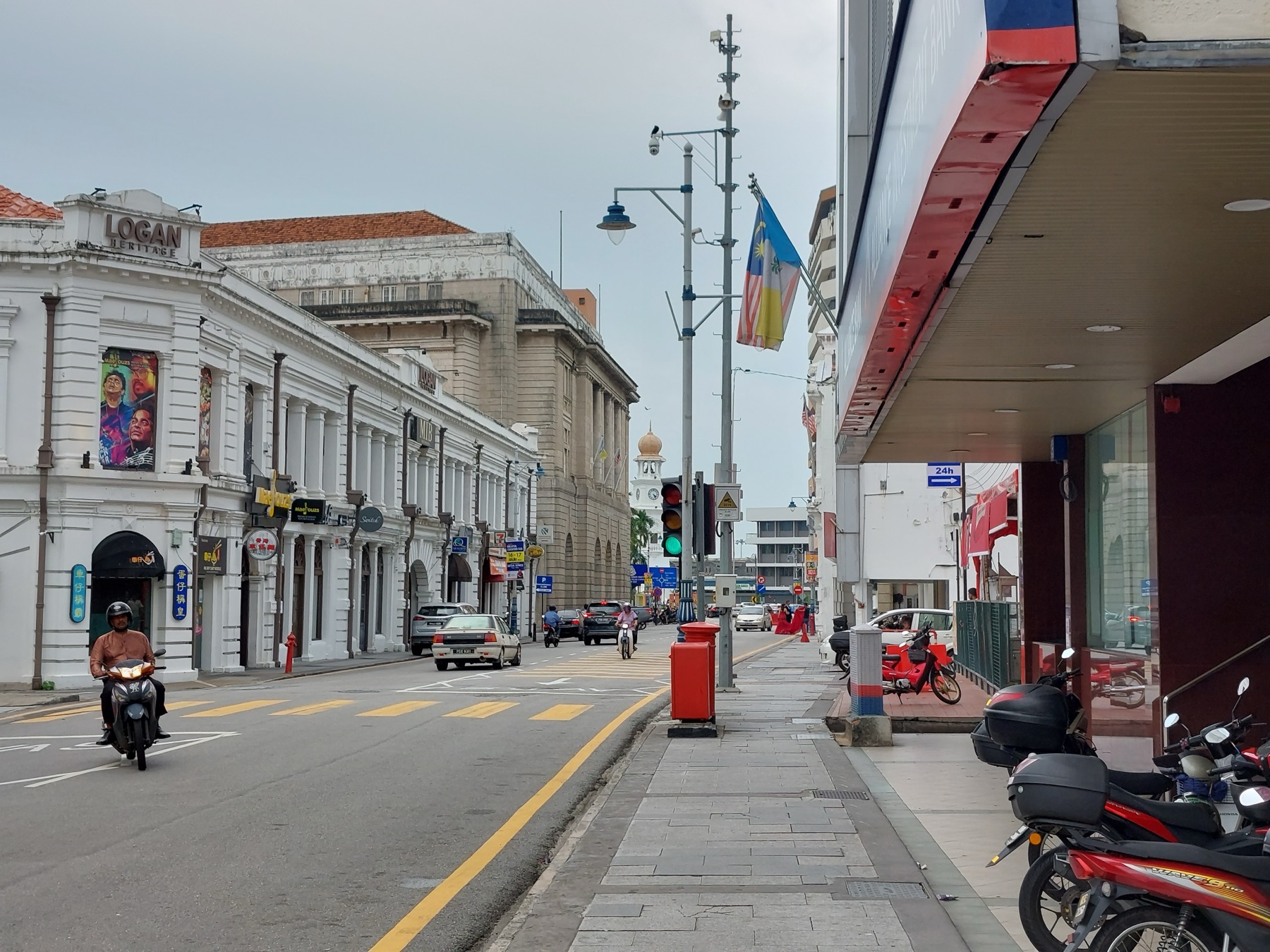
Best after a first stay in: Mexico, Portugal, Spain, Panama, or Thailand if you already know you want Asia but still need practical services. Be careful if: heat, humidity, long-haul flights, or time-zone separation from family would turn a good-value stay into emotional strain.
4. Cuenca, Ecuador: a more independent Latin America test
Cuenca is a strong second step for Americans who handled a first Latin American stay and want to test a lower-cost, slower, highland city with an established foreign-retiree path. It is not a secret, and it is not perfect, but it gives you a real chance to test Spanish, altitude, walkability, markets, private clinics, and a quieter routine than many bigger-city options.
Cuenca is especially useful if your first stay was in Mexico or Panama and you want to know whether you can function in a place that feels a little more independent. The city has enough structure to be practical, but it still asks more from you than a heavily Americanized beach or resort town.
The big caution is altitude. Do not treat it as a footnote. Spend long enough to learn how your sleep, breathing, energy, and mood respond after the first few exciting days. Also build a healthcare backup plan before assuming Cuenca can handle every need locally. The site’s healthcare backup plan guide is the right companion here.
5. Tirana or Sarande, Albania: Europe outside the usual Schengen path
Albania can make sense as a second step for Americans who liked Europe but need to test a lower-cost, less conventional path. Tirana gives you a capital-city base with cafés, services, apartments, and energy. Sarande gives you a coastal test that may appeal if you want sea views and a slower rhythm outside the main Western Europe route.
The attraction is easy to understand: Albania can feel European without the same pricing or Schengen calendar pressure as Spain, France, Italy, or Portugal. But that does not make it an automatic answer. Healthcare depth, infrastructure, winter life, rental quality, and seasonal pricing all need local verification. A summer coastal stay can tell you very little about February.
Best after a first stay in: Portugal, Spain, Italy, or another European destination where you learned that you like the region but need a different cost and stay-rule mix. Be careful if: you need deep medical backup, polished infrastructure, or a large English-speaking support network.
6. Manizales or Pereira, Colombia: a Colombia test beyond the Medellin default
Many Americans who consider Colombia start with Medellin. That makes sense, but it is not the only useful test. Manizales and Pereira can help you find out whether you like Colombia’s climate, culture, and Spanish-learning environment without automatically choosing the most discussed expat city.
These Coffee Triangle cities are usually better as a second stay than a first one because they require more judgment. Neighborhood choice matters. Hills and rain matter. Safety routines matter. Spanish matters. Healthcare may be good for many ordinary needs, but you still need to know when a larger city would be the smarter backup.
Best after a first stay in: Mexico, Ecuador, Panama, or Medellin if you want to test a less hyped Colombia base. Be careful if: terrain, rain, or conservative safety routines would make daily life feel tense instead of sustainable.
How to choose your second step without turning it into a fantasy draft
Use your first stay as a filter. If money was the stress point, make the second stay a budget-durability test. If healthcare was the stress point, make it a medical-access test. If loneliness was the stress point, choose somewhere with a clearer social landing. If boredom was the stress point, choose a place with more routine-life texture, not just prettier scenery.
The guides to narrowing 20 destination ideas down to 3 realistic choices and comparing countries for cost, healthcare, safety, and internet are useful at this stage. Your second stay should not be a random reward for surviving the first one. It should be a controlled experiment.
Also revisit your first-90-days budget. If your first stay cost more than expected, assume the second one will too. New countries create new setup mistakes: deposits, taxis, data plans, medical visits, adapters, bank fees, furniture gaps, bad bookings, and tired meals out when you meant to cook. Use the first-90-days budget guide before deciding that a second destination is affordable on paper.
When repeating your first country is actually the smarter second step
Sometimes the best second destination is not a new country. It is a different city in the same country. If your first stay went well but still left questions, repeating the country can remove unnecessary variables.
For example, if Mexico worked but the beach was too hot or tourist-priced, a second stay in a highland city may teach you more than jumping to another continent. If Portugal worked but Lisbon felt expensive, Braga or Coimbra may be more useful than starting over in Asia. If Panama worked but felt too small or too expat-shaped, a different Latin American city may be the right next comparison.
There is no prize for making the second stay harder. The prize is better information.
The bottom line
A successful first stay abroad gives you confidence. A good second stay gives you clarity. Spain can test European structure. Smaller Portugal can test whether Portugal works beyond the famous hubs. Malaysia can test distance and Southeast Asia with a softer landing. Cuenca can test a more independent Latin America base. Albania can test Europe outside the usual Schengen route. Colombia’s Coffee Triangle can test a less default version of Colombia.
Pick the destination that answers the question your first stay raised. If you do that, the second step does not have to be perfect. It just has to teach you something useful before you commit more money, time, or emotion.
If you are still choosing your first test, start with the best first countries for Americans who want an easier trial run abroad. If that first test is already behind you, use the second one to become more precise, not more reckless.
References and useful starting points
- U.S. Department of State: Traveler’s checklist and travel advisories
- European Commission: short-stay visas and Schengen-area rules
- CDC Travelers’ Health: Traveling abroad with medicine and pretravel consultation guidance
- Medicare.gov: Travel outside the U.S.
- Social Security Administration: Payments Abroad Screening Tool
- Selected article photos: Wikimedia Commons file pages for Planning for the weekend and Beach Street, George Town
.jpg)
