Quick answer
Quick answer: Treat every island change as a small relocation day. Keep the first night flexible, protect medicine and documents in the bag that stays with you, leave time for a missed connection, and verify the carrier or terminal directly before you start moving. The cheapest itinerary is not a bargain if a delayed ferry or late flight turns it into an unplanned overnight scramble.
Start with the place you need to reach, not the route that looks cheapest
The Philippines can make a map look deceptively simple. A straight line from Cebu to another island does not tell you whether you need a taxi at each end, a flight, a ferry, a port transfer, luggage time, or an overnight stop. For a longer stay, the useful question is: can you still arrive calmly enough to check in, buy water and food, and solve a problem if one link fails?
Work backwards from the receiving end. Confirm the check-in window, the last practical ride from airport or port to the building, and whether the host can accommodate a delayed arrival. If the answer depends on a chain of tight connections, book a buffer night or change the plan. A modest extra night can be cheaper than a rushed new booking, a missed appointment, or a deposit decision made while exhausted.
Build a transfer plan with three separate layers

First, list the long leg: flight or ferry. Second, list the ground legs at both ends. Third, list the failure plan: a later departure, a nearby hotel, a charged phone, and enough accessible money for food and transport. Do not let a booking confirmation stand in for those three layers.
Carrier and port practices can change. Check the operator directly close to departure for its current baggage, check-in, identification, and weather notices. The Philippine Coast Guard and PAGASA are useful context for maritime safety and weather, but neither one makes a particular sailing guaranteed. If a connection matters to a lease start, clinic visit, or immigration appointment, build the schedule around that uncertainty.
Keep a one-bag continuity kit
Your checked or larger bag can be delayed, wet, misplaced, or simply inaccessible while you are moving between terminals. The small bag that stays with you should carry your passport, medication in original containers, a few days of essentials, charging cable and power bank, a card plus a modest cash backup, and screenshots or offline copies of bookings and addresses.
This is not a recommendation to carry a large amount of cash. It is a reminder that an arrival after a late cancellation is a bad time to discover that one card, one phone, or one app is the only way you can pay. The money-backup guide explains how to create redundancy without turning a normal move into a security risk.
Make the first night deliberately easy
For a new island or city, avoid stacking a late arrival, a first viewing, and a long rental commitment on the same day. Give yourself a short, reversible landing stay. Use it to test the route from the terminal, mobile signal inside the unit, water pressure, walkability, noise, and the real grocery or pharmacy run.
That approach matters even more when the move is connected to a longer rental. A listing photo cannot tell you how a building feels after rain, whether the pickup point is practical with luggage, or whether the internet is stable at the hours you need it. The apartment-rental guide and neighborhood guide give a fuller checklist for that first inspection.
Budget the transfer as a system, not just a ticket
Include the ticket, local transport, baggage charges if any, food during a delay, one flexible night, and the cost of replacing a poor connection. Prices change by route, date, season, and operator, so this is not a claim that one number fits every island. The planning habit is what matters: keep enough room in the month for a change you did not choose.
If you use pesos, keep the peso amount visible in your own notes and also convert the meaningful total to an approximate U.S. dollar figure for your planning baseline. Recheck the exchange rate before travel rather than relying on an old spreadsheet. The right number is the one that still works if you need a taxi, meal, or room after the original plan changes.
Use weather information as a reason for margin, not fear
PAGASA explains the broad climate patterns of the Philippines, but a broad seasonal pattern is not a departure-time forecast for one terminal. During unsettled weather, avoid the itinerary that only works if every connection is perfect. Check official and carrier information shortly before you leave, keep alerts on, and be prepared to stay put when conditions make that the sensible choice.
The rainy-season guide has more context for choosing a base and building a weather-aware first week. For this travel day, the practical move is simpler: do not schedule an important obligation immediately after a connection chain you cannot control.
Decide when flying, ferrying, or pausing makes more sense
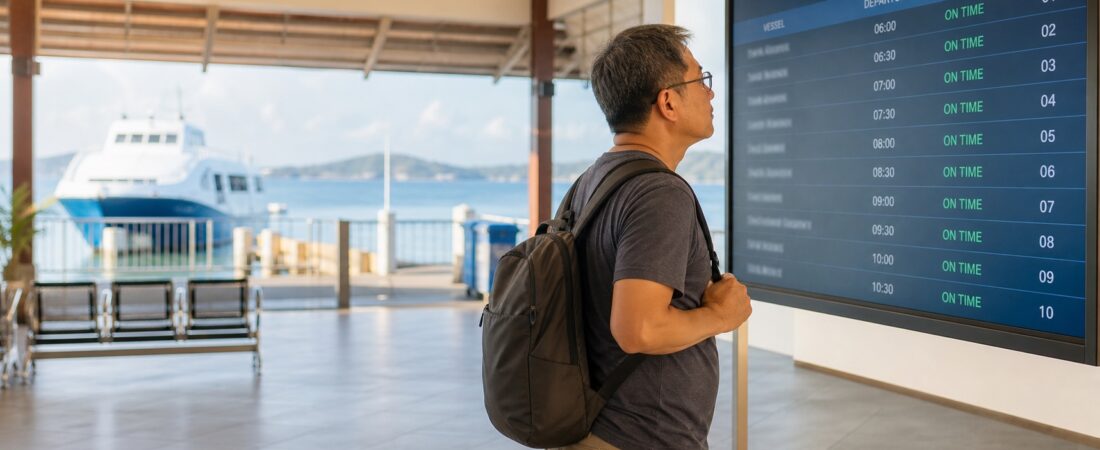
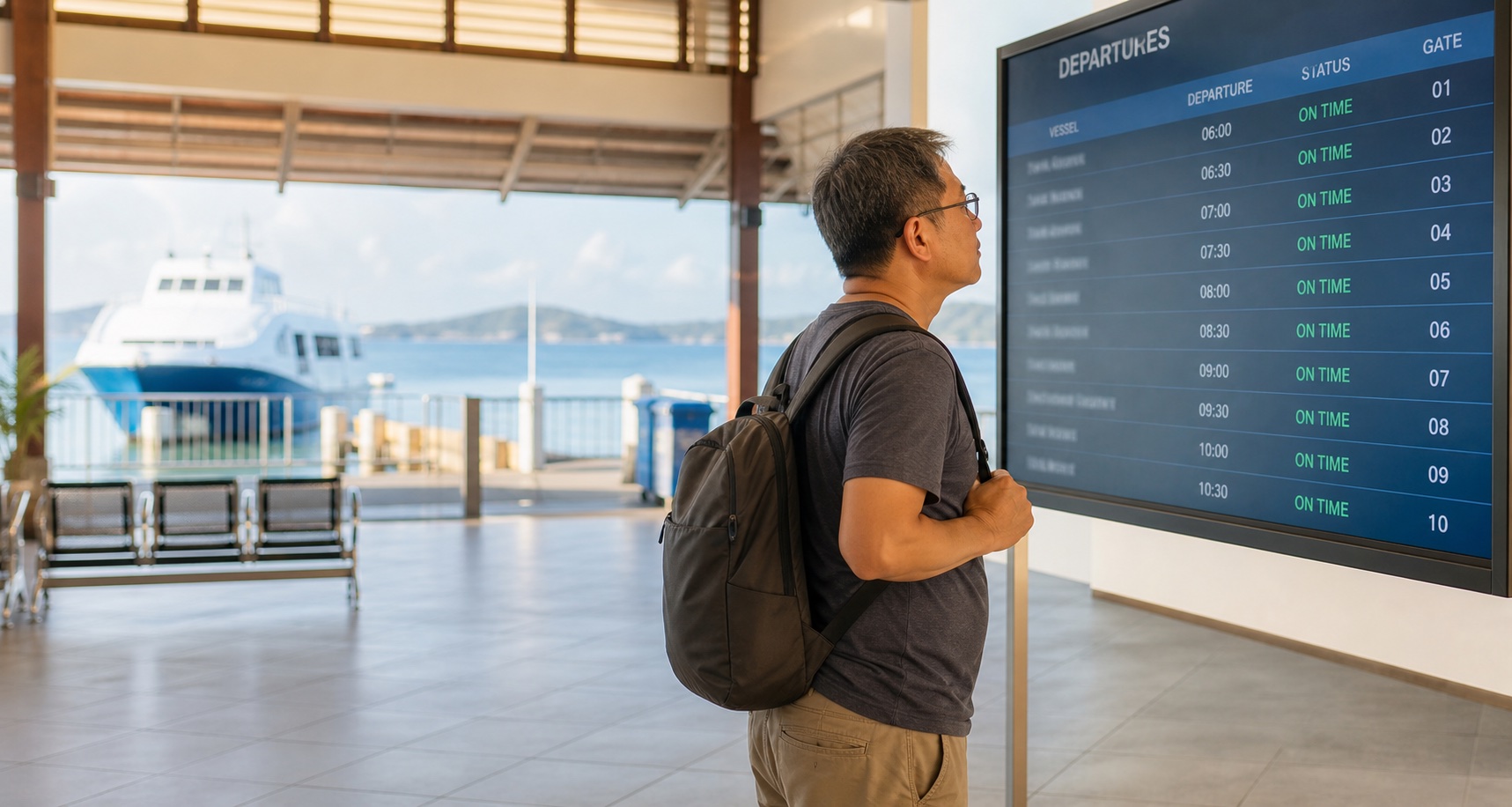
Flying can reduce a long distance but still leaves airport transfers, baggage timing, and city traffic. A ferry can be a good fit for a shorter coastal link, but it may be less forgiving when weather or port operations change. An overnight pause can feel inefficient, yet it can protect your first day in the new place.
Choose based on what the move needs to accomplish. If you are moving to Cebu for hospital access or a work routine, arriving rested may matter more than saving a small amount. If you are testing a smaller island base, a flexible landing stay gives you a chance to evaluate the services before moving all your belongings. The Cebu guide and city-vs-island guide are useful companions for that fit decision.
Before you leave: a practical checklist
- Confirm the operator, terminal, check-in requirement, baggage allowance, and arrival transfer directly from current sources.
- Save booking confirmations, addresses, and key phone numbers offline as well as in email.
- Carry documents, medication, payment backups, phone, charger, and one change of clothes with you.
- Tell the receiving accommodation your realistic arrival window and ask how a delay should be handled.
- Keep the first night and the next morning light enough to absorb a disruption.
- Do not send a long-rental payment until you have verified the unit and the route in person.
A calmer way to move between islands
Inter-island travel is part of daily-life planning in the Philippines, not a test of whether you can optimize every peso. Leave room for weather, terminal friction, and a tired arrival. The goal is to reach the next base with your essential items, a working payment method, and enough time to make a sensible decision.
For the rest of the system, read the Philippines long-stay guide, Cebu City guide, stay-rules and logistics guide, power, internet, and money backups guide, and Philippines apartment-rental guide.
Want a calmer arrival checklist? The First 90 Days Abroad System turns the documents, money, phone, and first-week setup into a practical worksheet.
References
- Civil Aviation Authority of the Philippines
- Philippine Coast Guard
- PAGASA: Climate of the Philippines
- Department of Information and Communications Technology
- Bangko Sentral ng Pilipinas
First-week Philippines setup: How to Set Up Your First Week in the Philippines Without Turning It Into a Scramble