
Quick answer
Quick answer: Before you settle into a one- to six-month Philippines stay, choose a realistic care route for the neighborhood you will actually use: one nearby facility to verify, one better-equipped fallback in a larger city, a way to reach both, and a payment-and-records folder you can open when tired or worried. The goal is not to predict an emergency or to pick a “best” hospital from afar. It is to avoid discovering, during a hard moment, that the appealing rental is far from the care, transport, cash, phone signal, or person who can help you make a clear decision.
Start with a care route, not an online ranking
An online review can be useful for a first list, but it is a poor emergency plan. Facilities change staffing, hours, equipment, payment processes, and referral patterns. A hospital that looks reassuring on a map may still be a difficult ride in heavy rain, a poor fit for the problem at hand, or unable to confirm the insurer arrangement you assumed.
Use the first days in a new base to make a small, local route. Ask your accommodation manager or a reliable local contact where residents go for urgent needs, then verify a facility yourself by checking its official contact channel. Confirm the address, current emergency or urgent-care intake process, payment expectations, and the route from your building. Save the number and location offline as well as in a map app. For a true emergency, follow local emergency instructions and the facility’s direction rather than trying to work from an article.
The Philippines Department of Health and PhilHealth are useful official starting points for health-system context. They are not a promise that a particular department, bed, specialist, or benefit will be available to a visitor at a particular time. Treat a provider check as a living task, especially after changing islands, neighborhoods, or seasons.
Choose a primary route and a bigger-city fallback
Many longer stays work best with two care decisions rather than one. The first is the practical route for a same-day problem near your everyday base. The second is the better-served fallback you would use if you needed more testing, a specialist, a higher-acuity department, or help beyond what a smaller island or town can reliably arrange.
Write both choices down in plain language:
- **Nearby route:** facility name, address, phone, route from home, and a local person or host who can help you verify the door or arrange a ride.
- **Fallback route:** larger-city facility or care hub, likely transport method, an overnight-bag plan, and the person who needs to know you may be moving.
- **Decision trigger:** not a diagnosis, but a simple rule such as “if the local facility recommends transfer, I do not argue from a map review” or “if I cannot verify appropriate care before signing a lease, I choose a better-served neighborhood.”
This is why city choice matters. The Cebu City guide explains why a larger urban base can make ordinary logistics easier, while the Cebu, Dumaguete, and Iloilo comparison helps show why a slower base may need a more deliberate backup. Neither article can choose care for you; both can help you decide whether the tradeoff is acceptable before the lease is long.
Make transport part of the plan
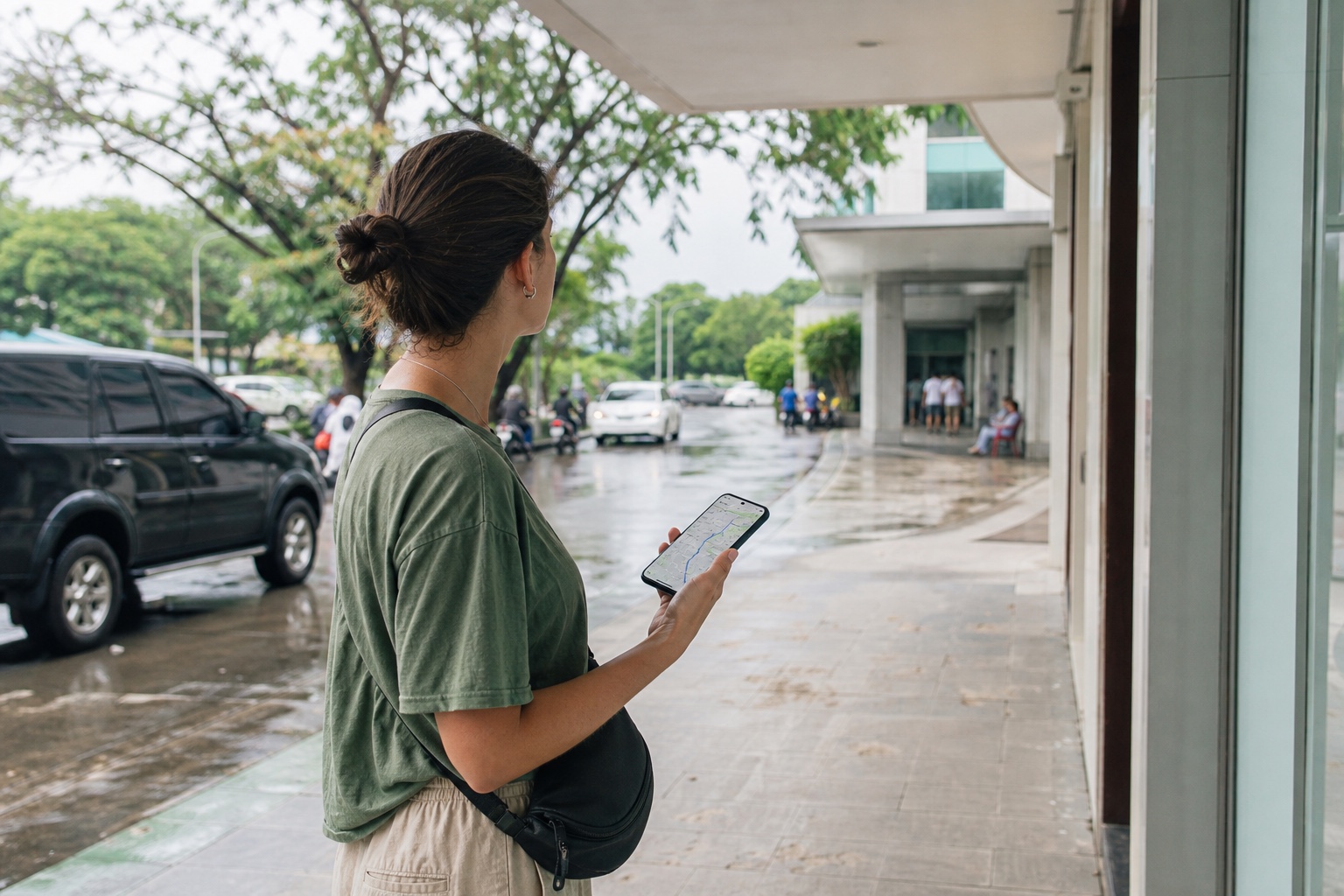
Do not assume that the same transport choice works at every hour, in every weather condition, or when you are unwell. During your arrival week, identify the building entrance an unfamiliar driver can find, the most reliable pickup point, a backup ride option, and the route a trusted contact would use if you could not explain it clearly.
If your base requires a flight, ferry, steep hill, or a long road transfer for higher-level care, say that out loud before booking the longer stay. That does not make the place unsuitable. It does mean the backup needs more margin: a charged phone, a practical overnight bag, money that works in more than one way, and a willingness to move earlier rather than waiting for a perfect answer.
Weather matters here as an operational variable, not a calendar prediction. The Philippines has regional differences, and rain or a disruption can make a normal route slower. The rainy-season base guide and inter-island logistics guide are useful planning companions when the fallback route is not simply across town.
Know what your insurer actually needs
Insurance language is often clearest before something happens. Call the insurer using the number on your policy or its official app and ask the narrow questions that affect a real decision: whether there is a required assistance line, whether pre-authorization may be needed for a hospital admission, how reimbursement documents should be collected, and what to do if a provider asks for a deposit or cash payment.
Write down the answer with the date, the official contact path, the policy identifier stored safely, and any reference number. Do not rely on a screenshot from a travel forum or a broad marketing promise about “international coverage.” Coverage, exclusions, payment mechanics, and medical decisions are personal. If you are unsure, plan for the possibility that you may need to pay first and seek reimbursement later—but verify that with your own insurer rather than assuming it.
Carry a limited medical summary that a clinician can use: conditions, allergies, current medicines by generic name, prescriber contact, insurance details, and an emergency contact. Keep it protected and separate from a full account-password list. The Philippines healthcare and prescriptions guide covers the before-departure medication and routine-care decisions; this guide is about having those facts ready when the day is no longer routine.
Keep payment, phone, and records usable under pressure
Medical planning often fails at a mundane point: a card is locked, the phone has no data, a message code arrives at an inaccessible number, or the only receipt is left with a family member. Make the care folder small enough to use.
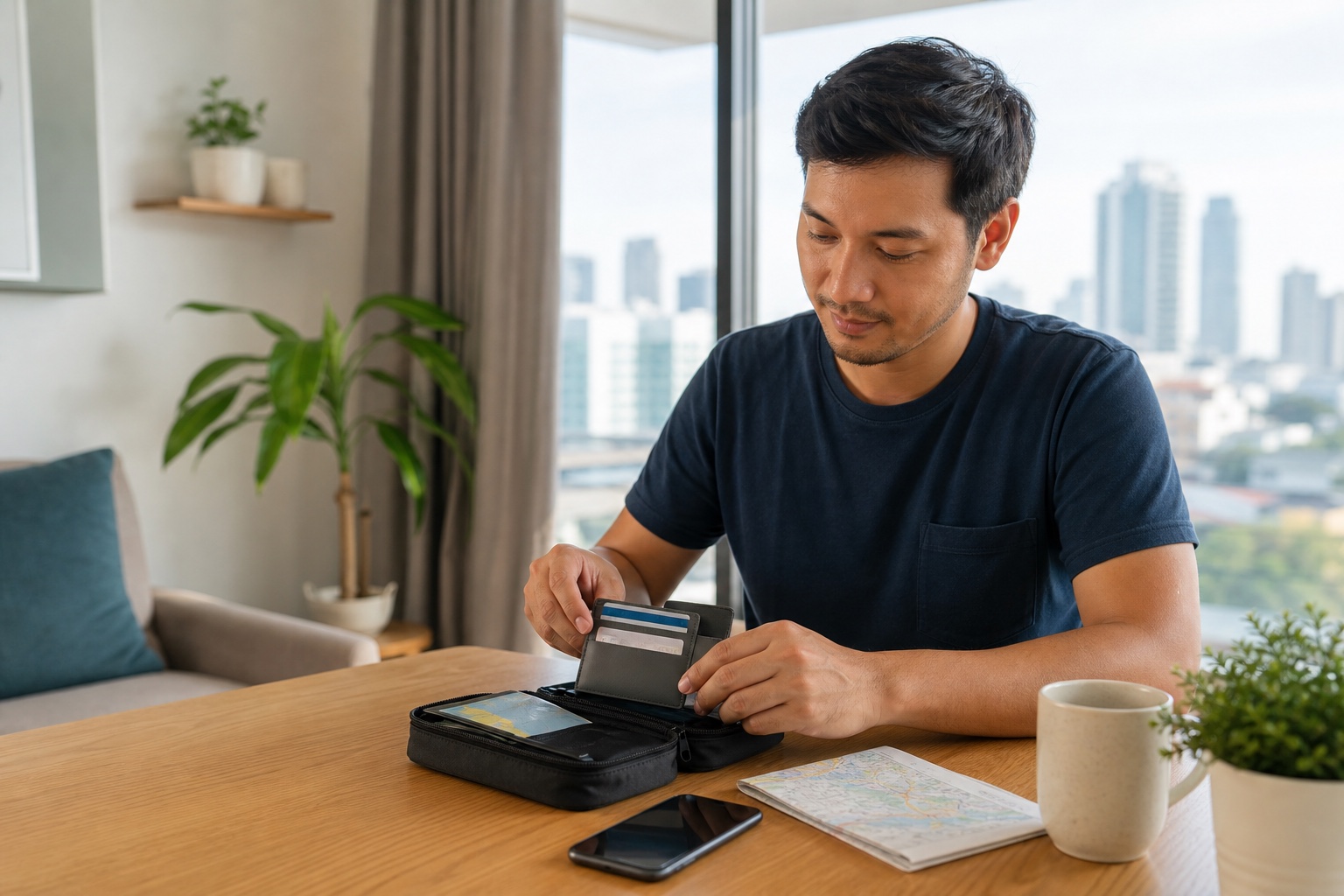
Keep one protected offline copy of your passport identification page, policy details, insurer assistance number, medical summary, local address, host contact, and emergency contact. Keep originals and primary payment cards under your control. Use a second payment path where practical, but do not hand full financial details to a host or a casual helper.
Test the basics while calm. Can you unlock your phone without the network? Can you call the insurer from another device? Does a trusted person know how to reach you without logging into your accounts? Does your bank have a current travel contact path? The power, internet, and money backups guide has a fuller resilience checklist, and the mail and documents continuity guide explains how to preserve access without scattering sensitive copies.
Decide what changes your location choice
The cleanest emergency plan can reveal that a particular rental is not a good long-stay fit. If you cannot establish a reasonable care route, cannot reliably reach it, or would not be comfortable with the fallback during a health setback, shorten the booking or choose a better-connected neighborhood. That is not a failure of the destination. It is information about your needs.
This matters especially for readers managing a condition, traveling with a medicine that needs close attention, or feeling uneasy about a remote setup. Speak with the relevant clinician and insurer before deciding that a lower rent offsets a thin care margin. The CDC’s Philippines traveler page is a useful general health reference, but your individual medical and insurance plan should be built with the professionals who know your situation.
For the broader first-base decision, start with the Philippines country guide. For first-week setup—phone, money, housing, and local testing—use the first-week arrival guide. A city or island can still be appealing; the point is to choose it with a backup that works on an ordinary bad day.
A one-page emergency-care checklist
- I have verified the contact and route for one nearby care option after arriving.
- I know the larger-city or higher-service fallback I would use if local care is not enough.
- I have asked my insurer how assistance, authorization, deposits, receipts, and reimbursement work for my own policy.
- My phone, offline location, medical summary, policy information, emergency contacts, and a second payment option are usable without hunting through email.
- I have thought through transport and weather friction, not just distance on a map.
- I will re-check official entry, safety, and health information before travel and follow local instructions in a true emergency.
Want a calmer medical-planning worksheet? The Medical Prep Abroad Kit helps you organize medicines, records, care questions, insurance details, and emergency contacts before you go.
References
- Philippine Department of Health
- PhilHealth
- CDC — Travelers’ Health: Philippines
- U.S. Department of State — Philippines country information
- Philippine Bureau of Immigration — Visa Waiver
Choosing a Philippines base: How to Choose a Philippines Base When Healthcare, Weather, and Travel Are Not Equal