
Quick answer
The best lower-cost Mexico city is not automatically the one with the lowest rent. For a one- to three-month stay, a part-time routine, or a retirement-minded trial run, the better question is simpler and more useful: can you afford a furnished place in a neighborhood where daily life actually works?
That means rent is only the first filter. You also have to compare healthcare access, climate, walkability, transport, airport usefulness, safety habits, internet reliability, language friction, and how much help you will need to handle ordinary errands. A cheap apartment can stop looking cheap if every doctor visit, pharmacy run, grocery trip, repair problem, or airport transfer turns into a project.
For a broader starting point, read the main Mexico guide for Americans wanting affordable longer-term living. If you want a shortlist first, pair this with lower-cost Mexico cities that do not feel too isolated. This article is narrower: it is a practical scorecard for choosing between places that all look affordable on paper.
Why rent is only the first filter
Rent is easy to compare because it gives you a number. The problem is that the number may not describe the life you would actually be buying.
A local unfurnished lease in Puebla or Aguascalientes is not the same product as a furnished short-stay apartment in Ajijic, San Miguel de Allende, Oaxaca’s popular neighborhoods, or Mérida’s foreigner-favored areas. A low listing may also be farther from clinics, less walkable, less English-friendly, weaker on internet, or harder to manage without a car.
Before falling in love with a rent estimate, ask whether you can afford a furnished place in a workable neighborhood. Then check the boring details: groceries, pharmacy, ATM, transport, cell signal, water pressure, AC or fans, noise, repairs, and the route to routine medical care. The guides on finding a good one- to three-month rental, reading apartment listings abroad, and checking an apartment in the first 24 hours are useful companions here.
Start with healthcare, not scenery
For retirement-minded readers, healthcare should sit near the top of the scorecard. The question is not just “Are there doctors?” It is: what care can you realistically reach from the neighborhood where you would live, and what happens if you need more than a routine appointment?
Mexico City is the depth benchmark, not a lower-cost pick for this article. Guadalajara matters because it supports the Lake Chapala and Ajijic area. Querétaro, Mérida, and Puebla are stronger examples of cities where a moderate-cost lifestyle can still come with real urban services and private medical options. Oaxaca City can work for many routine needs, but people with complex medical requirements should be more cautious about specialists, redundancy, and travel plans.
Lake Chapala and Ajijic are a different case. The area may feel easier for English-speaking retirees, but deeper medical planning often points back toward Guadalajara. That may be perfectly acceptable if you are comfortable with the trip. It is less acceptable if you assume “popular with retirees” means every level of care is right down the street.
Map four layers before choosing: routine visits, prescriptions, urgent care, and serious emergencies. U.S. Medicare generally is not everyday coverage abroad, so pair this city choice with a real backup plan. Start with building a healthcare backup plan and handling prescriptions and routine care abroad.
Climate can erase a bargain
A city can be affordable and still be wrong for your body.
Mérida is the obvious example. It has strong daily-life infrastructure, healthcare, shopping, an airport, and a clearer newcomer path than many places. But heat and humidity are not side details. If you need constant cooling, AC costs and physical fatigue can change the value calculation quickly.
Highland cities such as Querétaro, Puebla, San Miguel de Allende, Oaxaca, and the Lake Chapala area often feel more comfortable to many Americans than lowland or beach locations. Still, elevation is not automatically easy. Altitude, hills, cobblestones, traffic, dry air, rainy-season patterns, and air quality can matter if you have breathing issues, knee problems, balance concerns, or limited mobility.
This is where a trial stay earns its keep. A place that feels charming for four days may feel tiring after three weeks of real errands.
Compare the apartment’s walkability, not the postcard center
Many Mexico cities have beautiful centers. That does not mean the apartment you can afford is walkable enough for normal life.
Oaxaca and San Miguel are good examples. Their central areas can be charming, active, and easy to enjoy on foot. But the most convenient zones may be expensive, busy, hilly, tourist-priced, or hard to live in quietly. Move farther out for lower rent and you may need taxis or rideshares more often than expected.
Querétaro, Mérida, and Puebla are real cities with supermarkets, clinics, pharmacies, banks, repair shops, and services. That is a strength. It also means they are neighborhood-dependent. A workable life in one colonia can feel completely different from a cheaper apartment across town.
Lake Chapala and Ajijic require even more precision. “Near Ajijic” is not enough. Lakeside versus hillside, village center versus outskirts, and access to taxis, groceries, clinics, and friends can decide whether you feel independent or stuck.
Use a daily-errand test. From the apartment, can you reach groceries, a pharmacy, ATM, basic clinic, laundry, food, and safe transport without turning every errand into planning? The walkability guide gives a more detailed checklist.
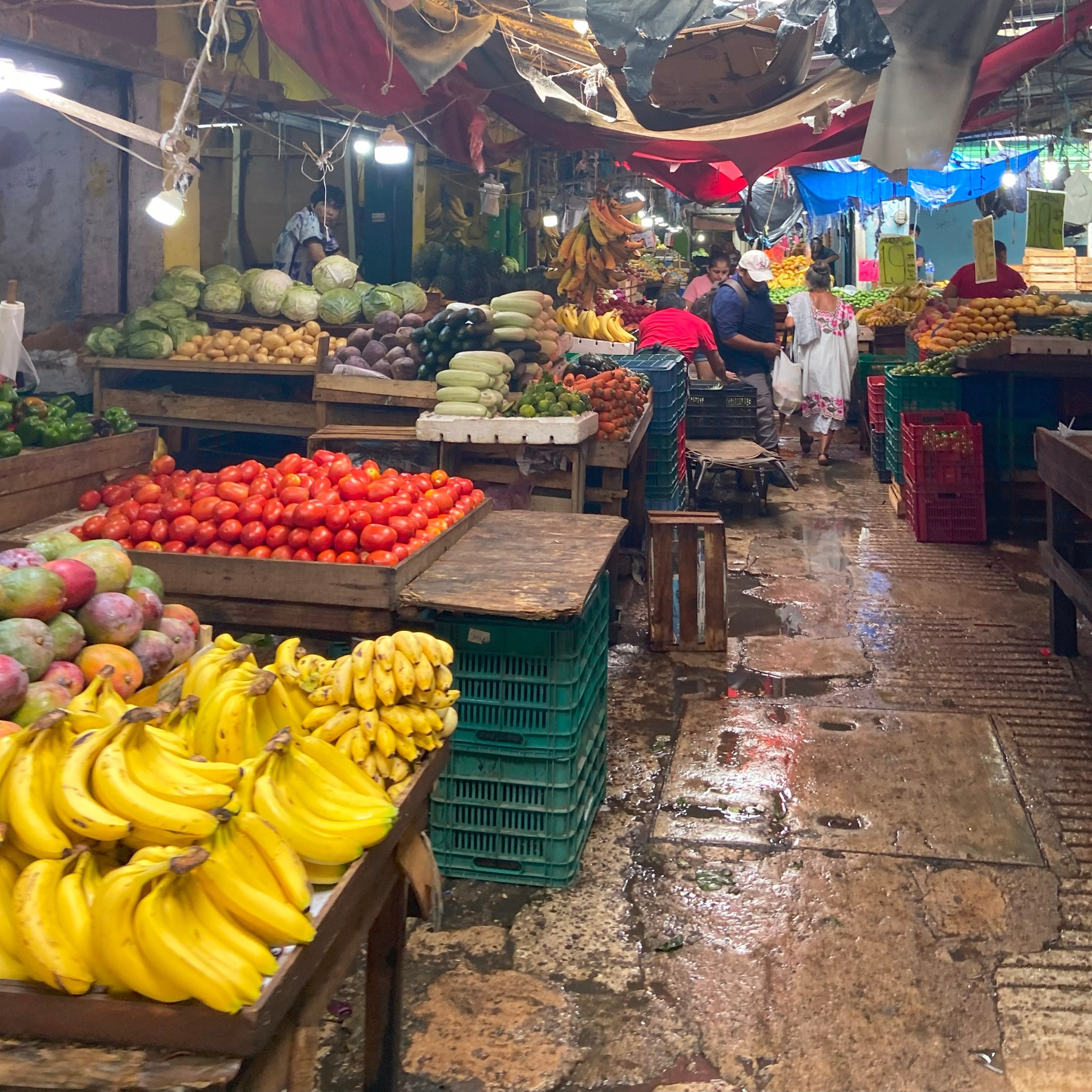
Fruit & Vegetable Market, Mérida, Yucatán by Eden, Janine and Jim, Wikimedia Commons; original Flickr credit URL listed on Commons: https://www.flickr.com/photos/edenpictures/53839543668/, CC BY 2.0. Source: https://upload.wikimedia.org/wikipedia/commons/6/69/Fruit_%26_Vegetable_Market%2C_M%C3%A9rida%2C_Yucat%C3%A1n.jpg. License: https://creativecommons.org/licenses/by/2.0
Airport usefulness matters more than airport existence
Do not give a city full credit just because it has an airport. Ask whether the airport is useful for your life.
Mérida and Oaxaca have passenger airport infrastructure and route information through ASUR pages. Querétaro has its own airport and a strong central-Mexico logistics position. Puebla has an airport, but Mexico City access may matter more for some trips. Lake Chapala and Ajijic depend heavily on Guadalajara’s airport, while San Miguel commonly means planning around nearby regional airports or Mexico City.
The practical questions are personal: can you reach family in the U.S. without a miserable transfer? If you had a medical or family emergency, would the first leg already be stressful? Are you comfortable with the ground transfer you would need at the start and end of most trips?
Route details change, so verify current airlines and schedules before making plans around a specific connection.
Safety: compare routines and routes, not slogans
No serious Mexico guide should label a city “safe” and move on. The U.S. State Department currently frames Mexico at Level 2, “Exercise increased caution,” with state-by-state differences and warnings tied to crime, kidnapping, terrorism-risk language, limited U.S. government ability to assist in some areas, and limited or unavailable emergency services in remote or rural areas.
The practical lesson is not panic. It is to build boring routines: check current state-specific advisories, avoid intercity travel after dark, use regulated taxi stands or app-based services, avoid remote solo travel, and choose neighborhoods where ordinary movements are simple and daylight-friendly.
This is one reason a remote bargain can be a poor fit. If saving on rent requires long drives, weak emergency access, or constant improvisation, the discount may not be worth it. Morelia is a good example of a place to treat carefully: it may appeal on climate, architecture, and value, but Michoacán’s state-level advisory context is too complicated for a casual “pretty and affordable” recommendation. Aguascalientes may be worth researching as a practical lower-saturation city, but it still needs current checks on housing, transport, healthcare, and safety before you build a plan around it.
English support has value, but it is not free
English-speaking support can lower stress during a first Mexico stay. That matters if you need help with doctors, rentals, repairs, banking, transport, or social connection.
Lake Chapala/Ajijic and San Miguel de Allende are the clearest soft-landing examples. Other foreigners have already built networks, services, social groups, and English-friendly routines. For a nervous first stay, or for someone with limited Spanish and medical concerns, paying extra for that cushion may be reasonable.
Just be honest about what you are buying. More foreigner comfort can mean more foreigner pricing and a stronger expat loop. Puebla often offers more ordinary city life and better value pressure, but less hand-holding. Oaxaca rewards local engagement. Querétaro and Mérida sit closer to the middle: practical, service-heavy, and easier than many places, but still neighborhood- and language-dependent.
Spanish ability is not a moral test. It is a cost and comfort factor. If your Spanish is minimal, a more expensive soft landing may be the smartest first step. You can always use the first stay to learn what you need before moving cheaper later.
Internet, utilities, and furnished rentals need unit-level checks
Country-level internet data can show that Mexico has modern broadband capacity. It cannot tell you whether the apartment you are about to rent has reliable wired service, strong Wi-Fi, usable cell signal, stable power, adequate water pressure, working AC, or a landlord who responds when something breaks.
Before committing beyond a short test stay, ask for a speed test from inside the unit, verify cell signal, check hot water and water pressure, understand electricity billing, test AC or fans, and confirm repair procedures. Digital workers should also have a phone-service backup; see how to set up phone service for a 1- to 3-month stay abroad.
For many Americans testing Mexico, the first stay is a visitor stay, not a settled-life decision. Mexico’s INM FMM page describes the electronic FMM for land entry as visitor status without permission to work, with a maximum validity of 180 calendar days and one entry, and notes that documents or payment do not guarantee entry. If you are considering residency, work, taxes, belongings, driving, or healthcare coverage, verify current rules with official sources or qualified help.
Also build a backup plan for cards, ATMs, emergency transfers, and account access. The money-access backup guide is a practical piece of the same decision.
How the tradeoffs look by city
- Puebla: A strong value-versus-services candidate, with real-city infrastructure, culture, and Mexico City access. Watch neighborhood choice, altitude or air-quality comfort, traffic, and Spanish friction.
- Querétaro: Often wins when order, healthcare access, internet, airport usefulness, and logistics matter more than the lowest possible rent. Comfortable areas may not be bargain-priced.
- Mérida: Strong for services, healthcare, shopping, newcomer comfort, and airport access. The tradeoffs are heat, humidity, AC costs, and rent pressure in foreigner-preferred areas.
- Oaxaca City: Excellent for culture, food, atmosphere, and a human-scale center. Harder for smooth infrastructure, housing value in popular zones, and logistics depth.
- Lake Chapala/Ajijic: Strong retirement soft landing with English support, community, and Guadalajara access. Town-by-town logistics, higher rents in favored areas, and expat-bubble risk matter.
- San Miguel de Allende: Beautiful, social, and English-friendly, but a reminder that social ease and lower cost are not the same thing. Count premium rents, hills, cobblestones, tourism pricing, and airport logistics.
- Morelia and Aguascalientes: Research-further candidates, not automatic recommendations. Verify current safety context, housing, healthcare, transport, airport usefulness, and neighborhood fit before treating either as a plan.
Final decision rule
Pick the city with the fewest unacceptable frictions, not the lowest rent.
For a first Mexico test, the safer plan is usually a 30-day stay in a practical neighborhood, not a long lease based on online research. Spend that month checking doctors, pharmacies, groceries, transport, internet, climate, noise, banking, safety routines, and how you feel after the novelty fades. The guide on choosing your first base abroad gives a useful decision structure.
If two cities both look affordable, choose the one where daily life has fewer weak links for your actual body, budget, language level, medical needs, and travel patterns. Cheap rent helps. A place you can actually live in calmly is better.
Source notes
- U.S. Department of State Mexico Travel Advisory and country information: state-by-state advisory framing, transport cautions, and emergency-service caveats.
- Instituto Nacional de Migración FMM page: visitor-without-permission-to-work framing, one-entry language, maximum validity language, and no-guarantee-of-entry caveat.
- ASUR passenger airport pages for Mérida and Oaxaca: airport services, land transport, maps, and route/airline context.
- Hospital Ángeles national site: private-hospital-network context only, not a guarantee of equal medical depth in every city.
- Ookla Speedtest Global Index for Mexico: country-level internet context only; exact apartment testing matters more.
For any lower-cost city shortlist, rent should be tested against the whole routine. The decision framework in how to choose between a cheap place and a livable place abroad is built for that tradeoff.
If Merida is on the shortlist, use Merida as a Yucatan city base to test the tradeoff: stronger services and coastal access than a small town, but serious heat, car/taxi dependence, and housing-standard due diligence.