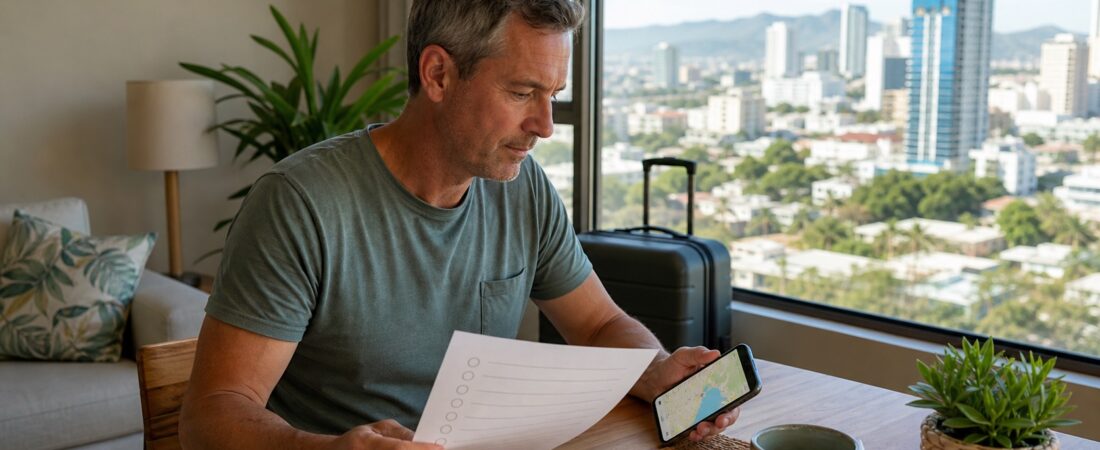
Quick answer
Quick answer: Start with the ordinary-week test, not the postcard test. Choose the city where you can realistically reach the level of care you need, buy groceries and handle errands without a heroic commute, and leave or get help when weather disrupts plans. Cebu is often the practical middle ground; Manila, Makati, and BGC offer the deepest services at a higher cost and traffic burden; Iloilo is a calmer mid-sized option; Dumaguete suits a slower pace if you accept thinner specialist depth; Baguio trades tropical heat for hills and distance; Davao can suit people who want a larger southern-city base. Visit before committing, and verify current stay rules directly with Philippine immigration.
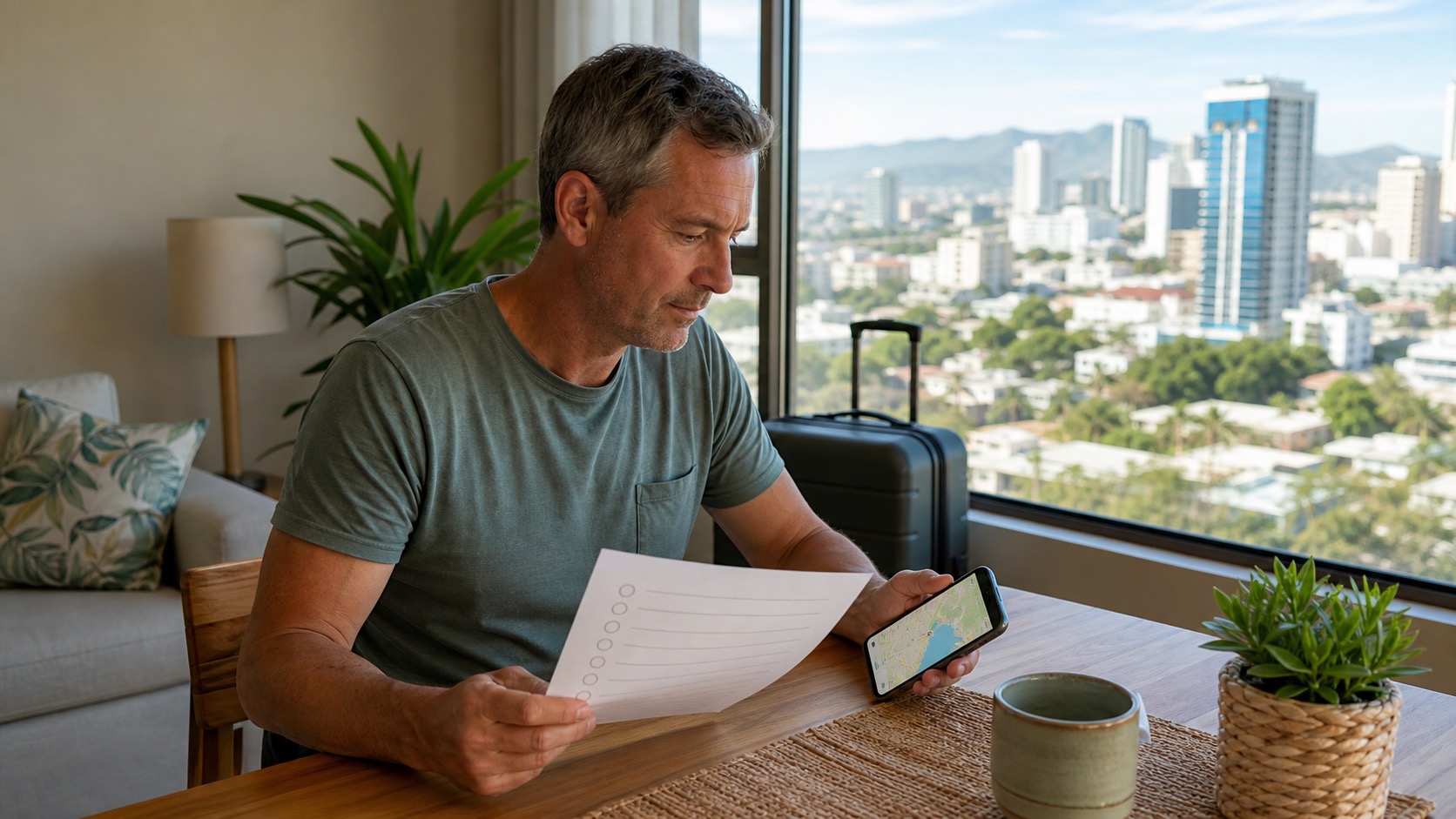
Pick the failure day before you pick the neighborhood
A Philippines base is not just a city choice. It is a chain of small systems: a building, a road, a clinic, a pharmacy, mobile data, cash access, the airport or ferry, and a backup when one link fails. The most useful question is not “Which place is cheapest?” It is “What happens here on a day when I am tired, wet, short on time, or need care?”
Write down the three failures you least want to manage. For one person that is a specialist appointment; for another it is a long airport connection, a steep walk, a power interruption during remote work, or a medication refill. That list should set the shortlist. A lower rent is not a bargain if it requires you to repeatedly buy expensive last-minute flights, tolerate a difficult transfer, or accept a care margin that makes you uneasy.
For a one- to six-month stay, make the first booking reversible. A furnished month is usually more informative than weeks of remote listing research. Test the building at the times you will actually live there: morning water pressure, elevator reliability, traffic at the clinic route, cellular signal in the apartment, grocery trip in rain, and the cost and availability of a ride home after dark.
Decide how much healthcare depth you need
Private hospitals and clinics are concentrated unevenly. That does not make smaller places unlivable; it means your care plan must fit the place. The Department of Health and PhilHealth are useful official starting points for system context, but a visitor should not assume public coverage or a particular service without verifying directly with the provider and insurer.
Manila, Makati, and BGC make sense when access to specialists, large hospitals, broad diagnostics, and frequent international connections outweigh the higher housing and traffic cost. They are not automatically the easiest first base: a short map distance can become a tiring trip, and neighborhood choice matters more than city branding.
Cebu City often works as the compromise for people who want urban hospitals, an international airport, English-friendly daily interactions, and more manageable scale than Metro Manila. It still asks you to be realistic about traffic, condo condition, and the distance between your actual address and the facilities you would use.
Iloilo can appeal to someone who wants a more orderly, lower-key city rhythm with practical services. Dumaguete is attractive for a slower university-town and expat-community feel, but it is wiser for people comfortable with a narrower specialist margin and a larger-city fallback. Davao has major-city services outside Luzon, but it deserves the same neighborhood and current safety due diligence as any large urban base. Baguio’s cooler temperatures are meaningful, yet hills, weather, and the trip to major gateways belong in the calculation.
Treat weather as a logistics variable
The Philippines is an archipelago, so “rainy season” is not a complete answer. Rain, heat, flooding exposure, ferry conditions, road access, and tropical-cyclone risk vary by region and by neighborhood. Check PAGASA forecasts and warnings near your stay, then ask a landlord or building manager specific questions: Has the street flooded? Does water enter the parking area? What happens to internet and power in severe weather? Is there a generator, and what does it actually run?
Avoid choosing an apartment from beach photographs alone. A beautiful waterfront can add wind, salt, long supply runs, seasonal rent pressure, or a more complicated evacuation and medical route. In a city, the practical version of weather planning is simple: walk the route from your front door to a grocery store, pharmacy, transport pickup point, and your likely clinic after rain.
Price the whole routine, not only rent
The existing Philippines cost comparison is a better place to start for city-by-city planning bands, but every budget needs a friction allowance. Imported groceries, air-conditioning, building fees, ride-hailing, private appointments, domestic flights, and short-notice hotel nights can move a “cheap” plan into a merely average one.
Make three columns: fixed housing, ordinary weekly costs, and failures. The failures column includes a late ride, a short domestic flight, a replacement SIM, a private urgent-care visit, a few nights near a hospital, or an unexpected move because the building was not as advertised. It should not be a prediction of disaster. It is the amount that keeps a normal problem from forcing a bad decision.
Run a four-route test in your first week
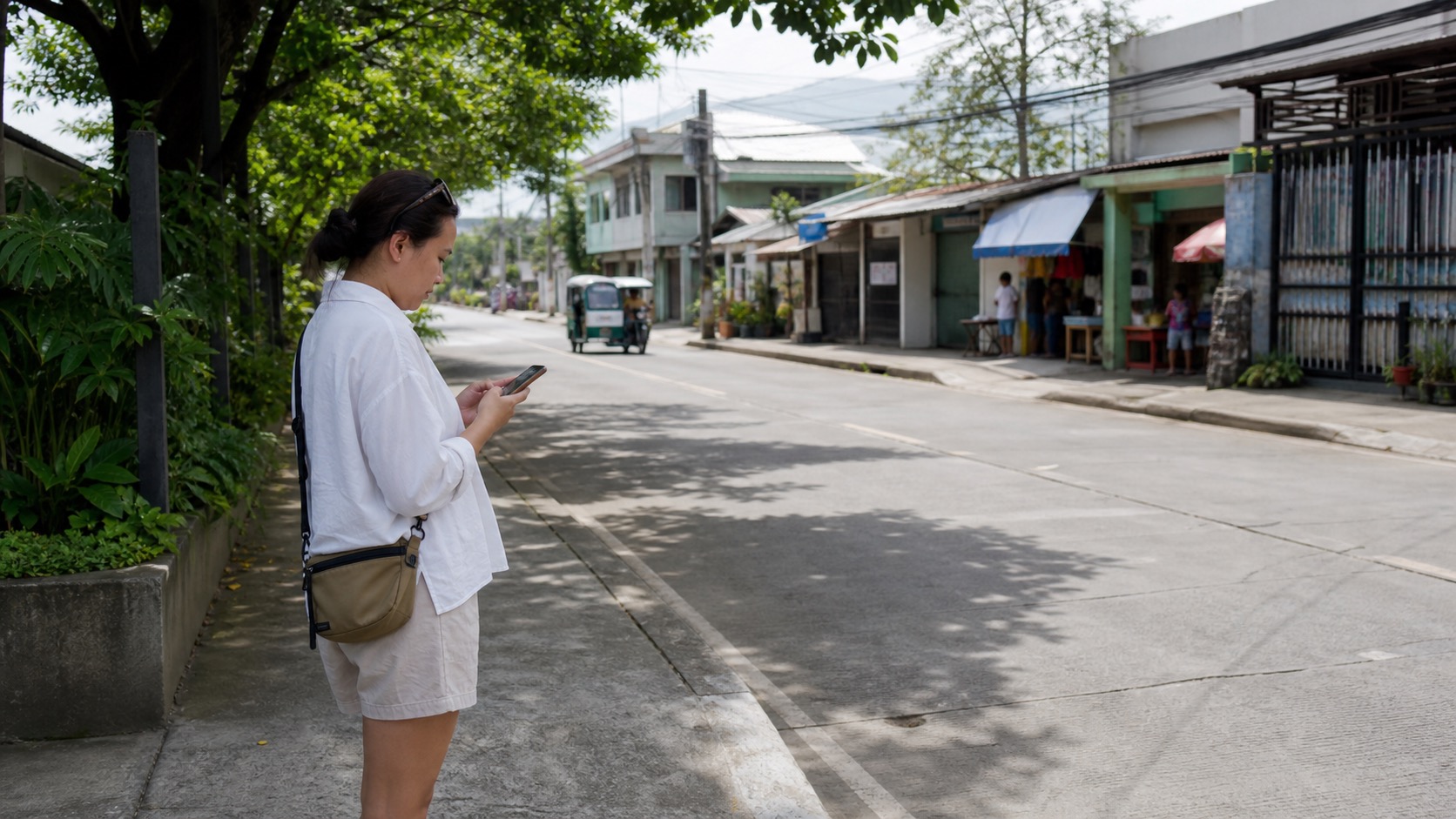
Use the first week to test four routes from the exact apartment, on foot or in the way you would normally travel.
- Grocery and pharmacy: Can you do this in heat or rain without making it the day’s main event?
- Care: Identify a routine-care option, a hospital route, and a larger-city fallback if needed. Ask about hours, payment, and what records you should bring.
- Transport: Test the airport, ferry terminal, or intercity bus route at a realistic time. Leave room for traffic and weather rather than trusting a best-case map estimate.
- Money and connection: Verify two ways to pay or withdraw and test primary plus backup mobile data where you sleep and work.
This is why city fit is personal. Someone happy with a scooter and flexible schedule may choose differently from a person who wants a short, air-conditioned ride to a hospital and an airport connection that does not consume a day.
A useful starting shortlist
Choose Cebu City if you want a broad practical middle: urban services, airport access, hospitals, and a large enough rental market to test neighborhoods. Choose Manila, Makati, or BGC if specialist depth, flights, and high-service convenience outrank cost and traffic. Choose Iloilo if you value a calmer mid-sized routine and are willing to confirm your particular care and flight needs. Choose Dumaguete if pace and community matter most and you have a credible larger-city care fallback. Choose Baguio if cooler weather is a priority and hills plus gateway travel are acceptable. Choose Davao if you want a substantial southern city and have done current location-specific diligence.
No label replaces a visit. A city can be a good choice in general and still be a poor fit for your mobility, prescription, budget, or tolerance for heat and traffic. Keep the first stay short enough to change course without drama.
Use the existing Philippines guides as a planning system
Read the Philippines long-stay starter guide for the big picture, then compare Cebu, Dumaguete, Iloilo, Baguio, and Davao. Pair that reading with the city cost comparison, healthcare and prescriptions guide, power, internet, and money backups, and emergency-care plan.
For official rules, verify entry and extension details directly with the Bureau of Immigration close to departure. Rules, documentation, and implementation can change.
Want a calmer way to compare options? The Destination Shortlist Kit turns healthcare, budget, weather, and logistics questions into a usable first-base worksheet.
References
- Philippine Department of Health: https://doh.gov.ph/
- Philippine Health Insurance Corporation: https://www.philhealth.gov.ph/
- Bureau of Immigration, visa-waiver information: https://immigration.gov.ph/visas/visa-waiver/
- PAGASA weather information: https://bagong.pagasa.dost.gov.ph/
- CDC Philippines traveler information: https://wwwnc.cdc.gov/travel/destinations/traveler/none/philippines
- U.S. State Department, Philippines country information: https://travel.state.gov/content/travel/en/international-travel/International-Travel-Country-Information-Pages/Philippines.html