Quick answer
On a moderate monthly budget, David usually gives you the most financial breathing room, Boquete buys cooler-weather comfort at a premium, and Panama City buys the strongest healthcare, transit, and service cushion while putting the most pressure on rent and everyday spending.
The common mistake is treating Panama like one budget number. The same income can feel relaxed in one place, tight in another, and quietly annoying in a third if the city does not match how you actually live. A cheaper apartment is not a win if the heat keeps you inside, every errand needs a taxi, or you keep leaving town for doctors, restaurants, social life, or cooler weather.
If you want the broader lifestyle frame first, start with the Panama City vs Boquete vs David retirement and budget guide. This follow-up is narrower: how the monthly budget behaves once rent, groceries, transport, healthcare logistics, climate, and first-month mistakes are included.
What “moderate budget” means here
Cost-of-living sites are useful for direction, not promises. Crowdsourced data can show relative pressure between cities, but it cannot know your rental standard, prescriptions, insurance, eating habits, tolerance for heat, or how many setup mistakes you make in the first 90 days. Treat the ranges below as planning bands, not guarantees.
| Base | Practical monthly planning range | What the budget is buying | Main risk |
|---|---|---|---|
| David | $1,400–$2,100 | Budget breathing room in a practical regional city | Heat, ordinariness, and less expat polish |
| Boquete | $1,800–$2,700 | Cooler climate, calmer rhythm, and retirement familiarity | Assuming small-town means cheap |
| Panama City | $2,200–$3,400+ | Healthcare depth, transit and service options, and easier problem-solving | Rent, convenience, restaurants, AC, and imported goods stacking up |
These are not luxury ranges. They are meant to leave room for deposits, short-term rental premiums, medical cash, prescriptions, phone and internet setup, taxis, occasional meals out, and a cushion while you learn the city. If the whole plan only works by using the cheapest rent estimate online, it is probably too fragile.
The better test is repeatability. Can you live an ordinary month in this place without feeling like every normal choice is a budget violation? If not, the city may be cheap on paper and expensive in practice.
David: the strongest budget defense, if the tradeoffs fit
David is usually the most budget-forgiving of the three. It is a functioning regional city rather than a polished retirement brand, and that matters. Housing pressure is generally lower than in Panama City, and daily spending can be easier to control than in a place built around expat comfort and mountain-town appeal.
But David is not a secret paradise. Its value comes partly from being ordinary. It is hotter, less scenic, less curated, and less likely to deliver the “dream retirement town” feeling that pulls many Americans toward Panama. If you choose David only because the rent looks better, you may spend the savings somewhere else: more taxis because walking feels unpleasant, more air conditioning, more trips to Boquete for cooler weather, or more travel to Panama City for specialized needs.
The rent math can still be attractive. Crowdsourced sources have shown one-bedroom David figures around the low-to-mid hundreds of dollars, depending on source, location, and property type. Treat those numbers as directional. A comfortable apartment in a safe, practical, livable location may cost more than the lowest listing. In a hot city, building quality, shade, noise, airflow, and access to errands are budget variables, not side details.
David is strongest for people who value function over image: ordinary shopping, regional services, western Panama access, and more local integration. It is weaker for people who need cooler weather, heavy expat infrastructure, scenic charm, or a polished international landing from day one.
Boquete: comfort value, not bargain value
Boquete is the emotional favorite for many retirement-minded Americans because the appeal is easy to understand. It is cooler, greener, calmer, and familiar to people who have researched Panama for more than a week. If heat affects your sleep, mood, energy, or health, Boquete’s climate can be a real quality-of-life advantage.
That does not make it cheap. The exact things that make Boquete attractive can create premiums: cooler weather, furnished rentals, walkable proximity to town, retiree demand, English-speaking services, and an established expat scene. Directional Boquete data suggests one-bedroom rents can often sit around the $600–$1,000 range depending on location and standard, with larger or more polished rentals above that.
Boquete can still be worth paying for. If cooler weather means you use less air conditioning, walk more comfortably, feel less fatigued, and do not need frequent escapes from lowland heat, higher rent may buy consistency. For a retiree, semi-retiree, or part-time resident, that can be rational.
The caution is logistics. Boquete is smaller. Healthcare planning often includes David and sometimes Panama City. Serious errands, specialist appointments, wider shopping, or bigger-city services may require travel. A rental that is “near Boquete” may not be practical without a car or regular taxis. If your budget depends on no-car living, test the exact location, not just the town name.
Panama City: best logistics, highest budget pressure
Panama City is the strongest base if your priority is reducing logistical friction. It has the deepest private-healthcare ecosystem, the broadest service economy, the best no-car infrastructure of the three, more shopping and restaurant variety, and the easiest international connections. For some Americans, that service cushion is worth paying for.
It is also where a moderate budget gets eaten fastest. Directional cost data places Panama City well above David and often above Boquete for total monthly cost with rent. A central or familiar-feeling one-bedroom can quickly become the defining line item. Then come air conditioning, taxis or ride-shares, restaurants, building fees, delivery, imported groceries, and the temptation to solve every inconvenience with money.
That does not make Panama City poor value. It may be the smartest value for someone with chronic health concerns, specialist needs, anxiety about emergency logistics, or a strong preference for urban systems. Paying more to be near better medical options and easier problem-solving can be rational. The mistake is expecting capital-city convenience to price like a small regional base.
No-car living is most plausible in Panama City, but only if housing is chosen carefully. A transit-aware, errand-friendly location can save money and stress. A badly chosen apartment can give you the worst version of the city: high rent plus constant taxi spending.
Groceries, restaurants, and imported-goods leakage
Panama’s use of the U.S. dollar makes life simpler for Americans, but it also removes a useful psychological speed bump. Spending feels familiar, which can make overspending easier. Imported groceries, familiar brands, craft beer, specialty snacks, wine, restaurant routines, and delivery habits can quietly move a Panama budget back toward a U.S.-style lifestyle budget.
Panama City has the widest selection and the most temptation. Boquete has fewer choices, but expat-oriented restaurants, cafés, and specialty goods can still be surprisingly expensive. David is usually the strongest practical value for groceries and simple restaurants, but those savings shrink if you keep traveling elsewhere for the things David does not give you.
The best budget move in all three places is boring: shop locally, eat simply most of the time, learn where ordinary residents buy basics, and treat imported goods as treats rather than defaults. The worst move is arriving with a “Panama is cheap” story while maintaining a fully American grocery and restaurant routine.
Transportation: no car does not mean no transport budget
Panama City is the best no-car candidate because it has the strongest mix of transit, taxis, ride-share options, services, and urban density. But even there, heat, rain, safety, medical appointments, airport trips, and heavy groceries can mean regular paid rides.
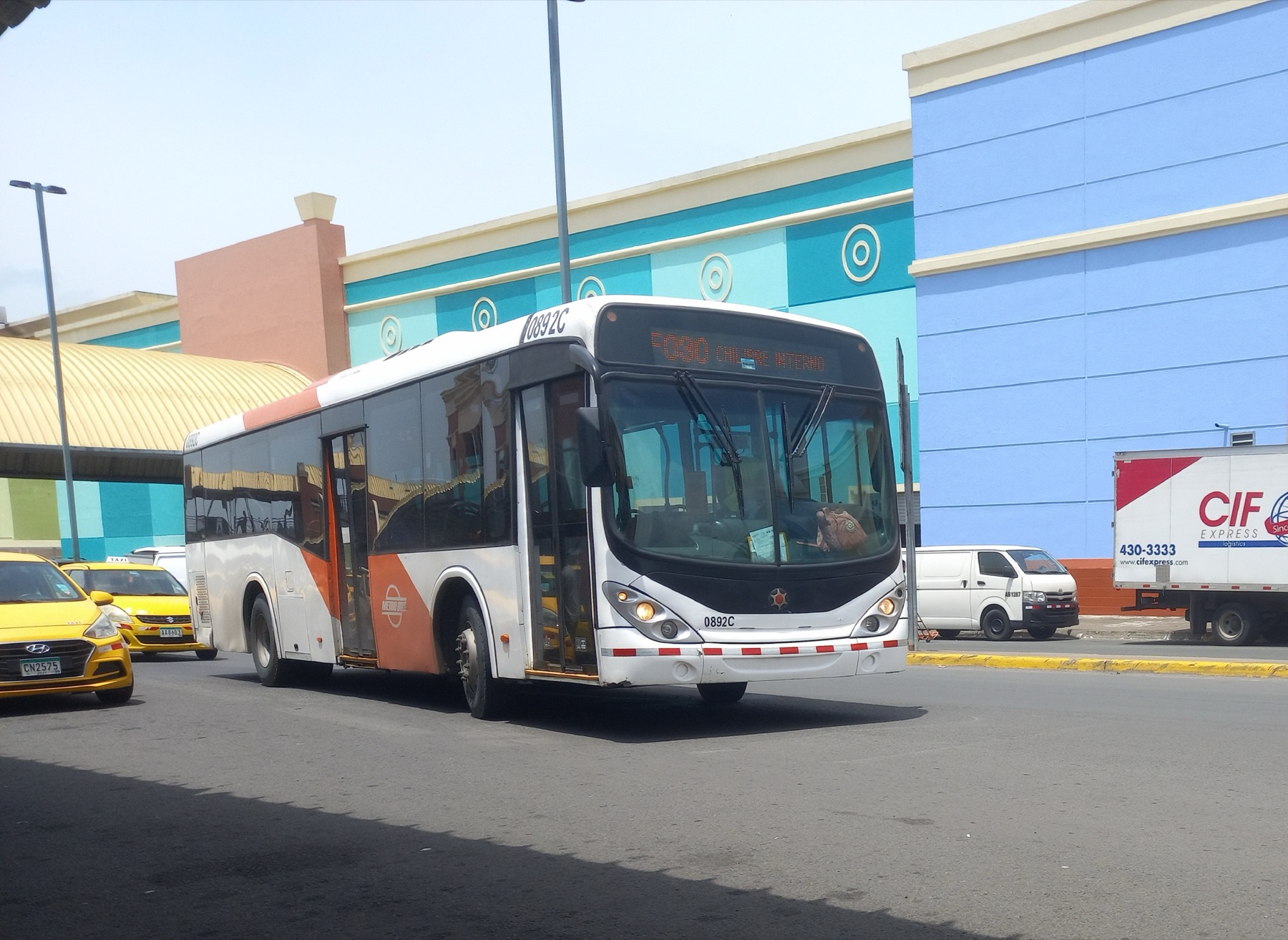
Metrobus-Panamá by Iamjosemom, Wikimedia Commons; own work, CC BY-SA 4.0. Source: https://upload.wikimedia.org/wikipedia/commons/1/10/Metrobus-Panam%C3%A1.jpg. License: https://creativecommons.org/licenses/by-sa/4.0/
Boquete is more location-sensitive. Being close enough to town for daily errands can make the budget work. Being outside the practical walking zone can make taxis, buses, or car access part of normal life. The phrase “near Boquete” needs inspection before you sign anything.
David has regional-city infrastructure, taxis, buses, shopping, and services, but heat can make walking less pleasant than the map suggests. A cheap apartment in the wrong part of town can become expensive in comfort and rides. If you are planning a no-car life, pair this decision with how to tell if a destination is actually walkable enough for daily life.
Healthcare logistics belong in the budget
For Americans, healthcare should not be an afterthought. The U.S. State Department notes that adequate health facilities are available in Panama City, while rural healthcare may not match U.S. expectations. It also warns that private hospitals may require upfront payment and that medical bills can be substantial. That is not a reason to panic. It is a reason to plan honestly.
Panama City has the strongest case for people with chronic conditions, specialist needs, or low tolerance for medical uncertainty. David is a credible regional healthcare base for western Panama; Hospital Chiriquí’s own materials point to a private hospital presence with urgent care, imaging, lab, operating room, ICU-related services, pharmacy, and insurance-related resources. Boquete can be very livable, but healthcare planning should include transport to David and possibly Panama City for higher-level needs.
This is why the cheapest rent is not always the cheapest life. If a lower-cost base creates more taxi rides, hotel nights, rushed appointments, medical cash stress, or specialist travel, those are real costs. Before choosing a base, build a healthcare plan, medication plan, and money-access backup. The practical guides on healthcare backup planning, refilling prescriptions overseas, and money access backup planning are worth pairing with this decision.
Climate is a budget category
Climate sounds like lifestyle, but it behaves like money. In Panama City, heat and humidity can mean more air conditioning, more taxis, better building requirements, delivery spending, and less tolerance for inconvenient errands. In David, heat is one of the main hidden costs: lower rent may not feel like a bargain if you are uncomfortable most afternoons. In Boquete, cooler weather may reduce some of those costs and improve daily comfort enough to justify higher rent.
This is where honest self-knowledge matters. If you are heat-tolerant and practical, David may make sense. If heat drains you, Boquete’s premium may be cheaper than fighting your body every day. If you tolerate tropical urban life because you value services, Panama City may be worth the higher monthly pressure.
Who should choose each base?
- Choose David if you want the most budget breathing room, can handle heat, and are comfortable with a more local, ordinary, practical city.
- Choose Boquete if cooler weather and a quieter retirement rhythm are important enough that you are willing to pay for them and accept smaller-town limits.
- Choose Panama City if healthcare depth, transit and service options, international connections, and easier everyday problem-solving matter more than keeping the monthly number as low as possible.
The worst fit matters too. David is a poor choice for someone who needs scenery, cooler air, and expat polish to feel settled. Boquete is a poor choice for someone chasing the cheapest possible Panama budget. Panama City is a poor choice for someone whose plan depends on Panama feeling dramatically cheaper every month.
Common budget mistakes Americans make in Panama
- Comparing cheapest-to-comfortable. Do not compare the cheapest David listing to the Panama City apartment you would actually rent.
- Ignoring the first 90 days. Deposits, setup costs, short-term rentals, doctors, taxis, phone service, and mistakes make the first months more expensive. See how to budget your first 90 days abroad.
- Assuming Boquete is cheap because it is smaller. Climate comfort and retiree demand can create premiums.
- Treating no-car as free transport. Taxis, buses, ride-shares, weather, and location still matter.
- Forgetting healthcare cash flow. Upfront payment expectations, prescriptions, specialist trips, and backup coverage should be part of the plan.
- Keeping U.S. imported-grocery habits. Familiar brands can quietly erase the savings.
- Choosing before testing the daily route. A rental can look fine online and still fail on groceries, clinics, heat, noise, or walkability.
Final verdict: cheapest is not automatically best
If the spreadsheet is the only judge, David usually wins. If comfort and climate are the judge, Boquete may be the better value even at a higher rent. If healthcare, transit, services, and problem-solving depth are the judge, Panama City may justify its higher monthly cost.
The right Panama base is the one where the budget supports the life you will actually live. David protects money best. Boquete protects climate comfort best. Panama City protects logistics best. The smartest choice is not the cheapest city; it is the place where you are least likely to spend the next six months compensating for a bad fit.
If you are still narrowing the bigger country list, compare this with best countries for Americans living on $2,000 to $3,000 a month and how to choose your first base abroad without overthinking it.
References and useful starting points
- U.S. Department of State: Panama International Travel Information and Panama Travel Advisory
- LivingCost: Cost of Living in Panama, Cost of Living in Panama City, and Cost of Living in David
- Numbeo: Cost of Living in Panama City, Cost of Living in David, and Cost of Living in Boquete
- Healthcare reference: Hospital Chiriquí
If the comparison points you toward city services, use Panama City as the big-services option to test the tradeoff: better logistics and healthcare depth, but more traffic, higher housing expectations, and less quiet-retirement pace than Boquete.
Readers leaning toward the cooler mountain option should pair this comparison with the standalone Boquete guide, which goes deeper on housing, healthcare backup, mobility, rain, hills, and small-town tradeoffs.