What Americans Should Know Before Planning a 1- to 6-Month Stay in the Philippines
Quick answer
Quick answer: For a 1- to 6-month Philippines stay, make the plan reversible at first. Confirm current entry and extension rules directly with the Philippines Bureau of Immigration and your airline before you pay for a long lease. Then use the first week to prove that your neighborhood works in rain, for groceries, phone service, money access, and a care route—not merely that the apartment photographs well.
Start with the stay rule, not a blog post
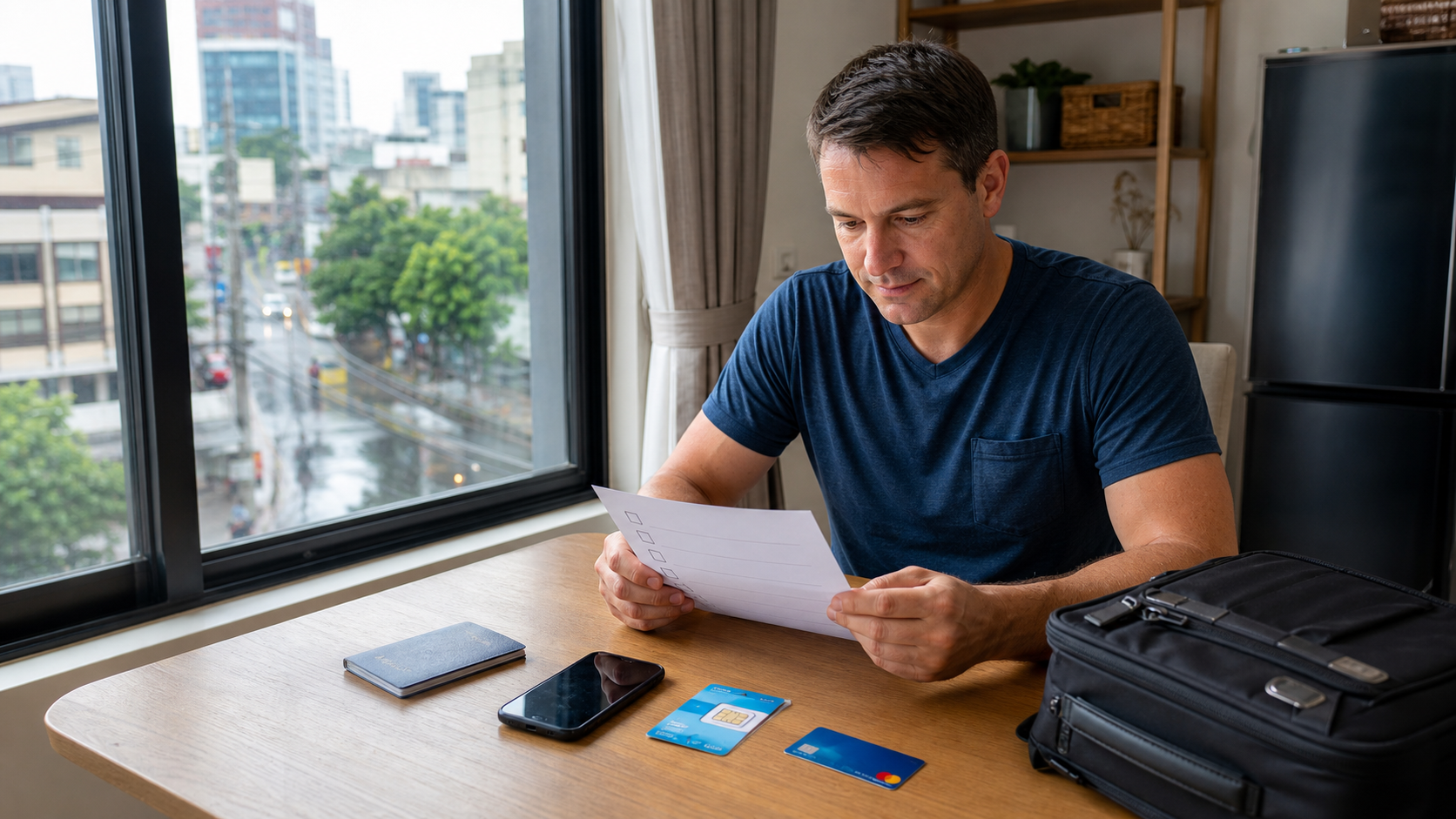
The Philippines Bureau of Immigration is the practical source of truth for visa-waiver and extension procedures. Its published pages can change, so do not build a six-month plan around a screenshot, an old forum answer, or a realtor’s assurance. Before buying a nonrefundable ticket, check the official page, confirm what applies to your passport and purpose of travel, and ask your airline what it will require at check-in.
Write down the date you can lawfully stay through, the extension point you are considering, the documents you will carry, and where you will re-check the rule. That small record is more useful than vague confidence. It also makes it easier to decide whether a 30-day test is enough evidence before committing to the next step.
The official eTravel portal is another item to verify close to departure. Use the government domain itself, not a paid third-party site that looks official. Requirements can change with little warning, so treat any pre-travel checklist as a prompt to verify rather than a substitute for verification.
Use a 7- to 14-night landing plan before a long lease
A month-to-month apartment can still be the right move, but it is rarely the right move from your sofa at home. Start with lodging that lets you walk the actual route to groceries, a pharmacy, an ATM or bank, a laundry option, and transport. Go at the time you would use it: after rain, at dinner, and when you are carrying bags.
That first stretch also gives you a chance to notice building details that listing photos hide: generator or water arrangements, elevator reliability, street noise, delivery access, sidewalk condition, and how far the nearest useful errand really feels in tropical heat. A lower rent is not a bargain if every ordinary task needs a ride.
Choose a city for the routine you need
Cebu City can work well for readers who want urban services without Metro Manila scale; our Cebu guide covers the neighborhood and hospital-access tradeoffs. Manila, Makati, and BGC offer the deepest concentration of services, but traffic and housing costs are part of the calculation.
For a slower first base, compare the smaller-city realities before assuming that cheaper means easier. The Cebu, Dumaguete, and Iloilo comparison is useful for that choice, and the broader Philippines guide explains the country-level tradeoffs.
Set up phone, money, and a document backup in the first week
Keep your U.S. number and two-factor authentication plan working before you rely on a local line. Do not make a local SIM your only recovery method for banking or account logins. Use more than one money-access method, tell your banks about travel where appropriate, and keep a separate emergency reserve that is not tied to a single card or phone.
Carry digital copies of passport identity pages, insurance details, prescriptions, key contacts, and proof of onward plans in a secure place you can reach if a device is lost. Our money-lockout guide and phone-service guide give the redundancy checklist; do not wait for the first account lockout to discover that a code only goes to a number you cannot access.
Test your real rainy-day routine
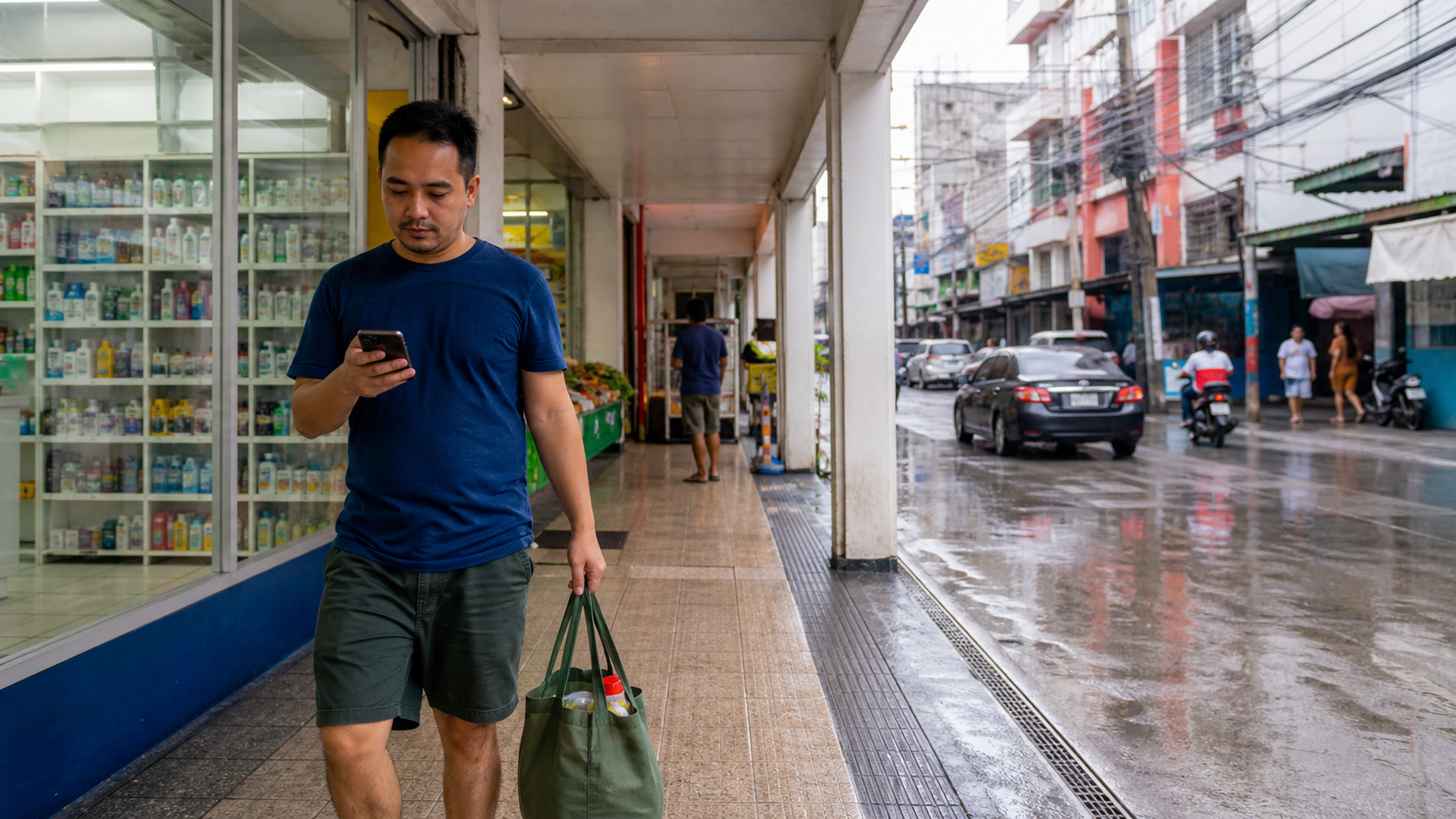
The Philippines can be wonderfully social and easy to navigate in the right neighborhood, but rain, heat, flooding, traffic, and island-to-island routing change the day-to-day picture. Do one ordinary errand loop during wet weather. Price a ride at the time you would normally leave. Check delivery coverage at your building. If a ferry or domestic flight is part of your plan, allow more buffer than a map makes it seem to need.
Before treating a place as a long-stay base, identify a clinic or hospital route and a pharmacy route. The Philippines healthcare and prescriptions guide explains why city choice and a medication backup matter. This is not about expecting trouble; it is about avoiding a stressful first problem.
Budget for setup friction, not only monthly rent
Your first month may cost more than later months. Add temporary lodging, deposits, a few ride-hailing trips, household basics, data, delivery, and the cost of changing a choice that does not work. Use the Philippines city cost comparison to compare broad city patterns, but make your own small cash-flow plan for the first 30 days.
For readers who are still deciding whether the Philippines belongs on a shortlist at all, the Destination Shortlist Kit offers a worksheet approach. It is most useful before you have talked yourself into a lease because one area looked inexpensive online.
A calm 1- to 6-month sequence
- Before booking: verify current entry and extension information with the Bureau of Immigration, check airline documentation expectations, and use the official eTravel portal if it is required for your trip.
- Before the lease: book a reversible landing stay, map daily errands, and confirm internet, water, building access, and transport at the hours that matter to you.
- During week one: establish phone and money backups, save documents securely, test wet-weather routes, and identify care options.
- Before extending or committing longer: re-check the official rule, compare your actual spending with the plan, and decide whether the neighborhood works for an ordinary Tuesday.
Who should slow down
Slow down if you need frequent specialist care, cannot tolerate heat or mobility friction, need flawless power/internet for paid work, or are depending on one card, one phone, or one interpretation of an immigration rule. A shorter test stay is not a failure; it is cheaper evidence than an early long lease.
References and current-rule re-checks
- Philippines Bureau of Immigration: Visa Waiver
- Philippines eTravel official portal
- U.S. Department of State: Philippines country information
- U.S. CBP: travel-document information
Choosing a Philippines base: City or Island? How to Choose a Philippines Base for a Longer Stay
Rainy-season base planning: Planning a Philippines Base During Rainy Season: What to Check Before You Book
Choosing a first neighborhood: How to Choose a Philippines Neighborhood for a Longer Stay
Backup planning for a longer stay: How to Set Up Power, Internet, and Money Backups for a Long Stay in the Philippines
Apartment setup for a longer stay: How to Rent an Apartment in the Philippines for a 1- to 6-Month Stay
Inter-island transfer planning: How to Plan Inter-Island Travel During a Longer Stay in the Philippines
First-week Philippines setup: How to Set Up Your First Week in the Philippines Without Turning It Into a Scramble
Mail and document continuity: How to Keep Mail, Documents, and Your Home Address From Becoming a Problem During a Longer Philippines Stay